“What will happen to prices?” is the question on every Phuket property investor’s mind. In 2026 the market is shaped by several durable factors: recovered tourism, a shortage of new beachfront supply on the western beaches, and the construction-stage value-growth model. Instead of guessing, here’s what really drives prices, where the potential remains, and how to read the market rather than the loud headlines.
Contents
- What drives prices
- Tourism and demand
- Supply shortage
- Villas vs condos: two growth speeds
- Construction-stage growth
- The currency factor
- Capital shifting from Bangkok to Phuket
- Prices by segment and area
- Branded residences as a driver
- What to watch in 2026
- How to assess the market
- Trend-reading pitfalls
- Case: an early entry
1. What drives prices
A Phuket property price is a balance of supply and demand, amplified by location and project stage. Key drivers:
- Rental demand — tourism and occupancy shape investment appeal.
- Land and supply shortage — especially beachfront on popular beaches.
- Construction stage — the price rises from launch to handover.
- Developer and project quality — strong brands hold value.
- Currency — the rate affects the entry price for a foreigner.
None of these factors works alone: tourism growth without a land shortage would simply mean more construction, and scarcity without demand would mean stagnation. What moves prices is their overlap in one place — and on Phuket in 2026 they overlap above all near the western beaches. Below we take each driver with 2025–2026 figures; the full market picture with inventory and demand structure is in our separate overview of the Phuket real estate market in 2026.
🔗 Live snapshot of the index, type medians and every weekly digest on one permanent page: Phuket property market hub →
2. Tourism and demand
Phuket is a resort with year-round international tourism. After the early-2020s dip, footfall has recovered and is growing, supporting short-term rental demand and, in turn, investment property. Add demand from relocators and remote workers, and you get a durable buyer base for quality projects.
What matters is not just the volume of demand but its structure. The foreign share of condominium transactions on Phuket exceeded 40% in 2025 — nearly double Bangkok’s 26%, per REIC data. And the mix of buyers is visibly changing:
| Buyer group | Dynamics (2025) |
|---|---|
| China | −38.8% year on year — yet still the largest group |
| Russia, Taiwan, India | Growing interest |
| UK, Europe | Growing interest |
| Middle East | Notable growth in enquiries |
For the market this is more a plus than a minus: demand spread across a dozen nationalities is more resilient to any single country’s news cycle. For an owner in a rental pool, diversified tenants and buyers mean steadier occupancy and better resale liquidity. The character of demand is shifting too: with international schools expanding, part of the buyer base is moving from a purely resort model toward long-term family living — demand for a life on the island, not just an investment.
3. Supply shortage
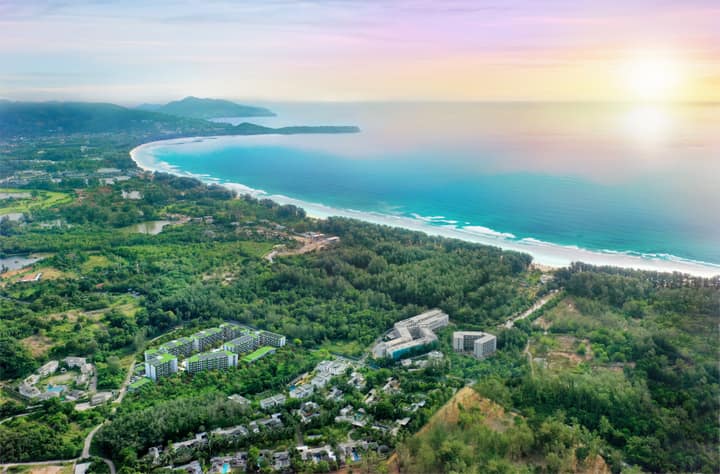
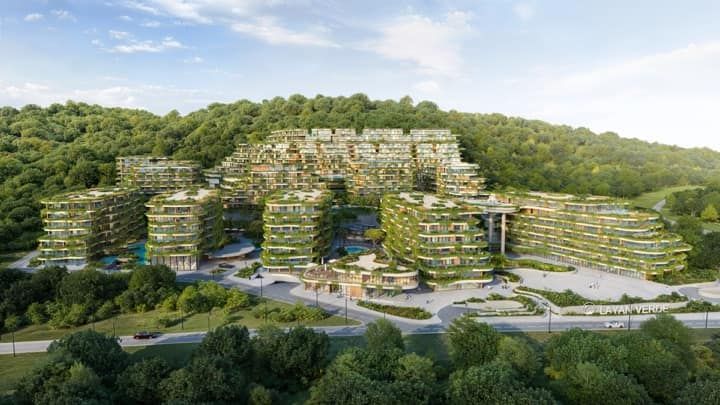
Beachfront land on the western beaches (Layan, Bang Tao, Surin) is limited, and quality new seaside projects are scarce. This structurally supports prices: beachfront demand outstrips supply. Projects like Layan Verde, 700 m from the beach, benefit precisely from this shortage.
The numbers confirm the shortage is not a figure of speech. By early 2026 the island’s total condominium inventory exceeded 37,000 units — the result of the 2023–2024 construction surge, including the record 2024 (14,718 units across 56 projects). But the pace is slowing sharply:
| Period | New supply (units) |
|---|---|
| 2024 (record) | 14,718 in 56 projects |
| 2025 (estimate) | 5,000–7,000 |
| 2026 (Colliers Thailand forecast) | 6,000–8,000 |
The key detail: new construction is concentrating in established locations, and buildable land near the water on the island’s west has almost run out. A condominium can still add supply through height on the same plot; a villa cannot — the number of villas is hard-capped by the number of buildable land lots. When supply is inelastic and demand keeps growing, prices react harder: coastal properties in Bang Tao, Kamala and Nai Harn have appreciated more than 20% versus 2023 levels. That is why the 2026 slowdown in launches is not market weakness but a shift to a more selective cycle — one that rewards projects that secured a first-line position in time.
4. Villas vs condos: two growth speeds
Within the same coastline, formats appreciate at different speeds. Per the Knight Frank Thailand assessment published by the Bangkok Post on 2 July 2026, the picture is:
| Segment | Annual price growth |
|---|---|
| Villas (Bang Tao, Cherng Talay, Layan, Kamala) | 12–18% |
| Condominiums (same locations) | 7–10% |
The gap is nearly twofold, and it matches the sales data: Phuket villa sales rose 12.9% in 2025, while island-wide condo demand was softer. The reason is the same — land: you cannot “stack a villa one floor higher,” so the plot shortage hits this format hardest. The full breakdown of the report is in our piece on west-coast villas appreciating 12–18% a year.
Does that mean condos aren’t worth buying? No — these are different strategies, not “better/worse.” A villa delivers stronger asset appreciation but a higher entry ticket and more management overhead. A condo grows more slowly but offers predictable rental income through a management company, a lower entry price and easier resale. The money, ownership and yield comparison is in condo or villa in Phuket; curated selections for both strategies — Bang Tao villas and sea-view condos.
5. Construction-stage growth
The main way to profit in a rising market is buying at launch. The developer sells lower early and raises the price as it nears completion. The investor locks a low price and instalments, and by handover comparable units cost more.
| Stage | What the price does | What the investor does |
|---|---|---|
| Launch | Lowest | Locks price + instalments |
| Construction | Gradual rise | Pays by milestones |
| Near handover | Above launch | Sells or rents out |
Why does the developer sell cheaper at the start at all? Early sales are its financing and its proof of demand to the banks, so the discount for entering “on paper” is the price of your trust and your waiting. As completion nears, risk falls and the price list climbs in steps — sometimes several times over one build. Two practical consequences follow. First: within a single project, your entry date affects returns as much as unit choice does. Second: milestone instalments amplify the effect — capital goes in piece by piece while appreciation applies to the unit’s full price, so the return on capital deployed is higher for an early buyer than for someone paying 100% for a completed unit.
The flip side is the waiting horizon and timing risk: the off-plan mechanic only works with a reliable developer that has delivered phases and a transparent construction site. Projects with milestone payment plans are collected in the developer instalment plans selection.
🔗 More: Off-plan or ready → · Investment guide →
6. The currency factor
For a foreign buyer the final entry price also depends on the currency rate: prices are quoted in baht or dollars, while rental income is in hard currency. The rate is a timing factor (when to bring funds in), not the main driver: you choose location and project for the long term, and rate swings smooth out over the horizon.
A practical nuance: to register freehold under the foreign quota, funds must be transferred into Thailand from abroad with the correct payment purpose — the transaction is backed by a transfer confirmation (FET). Milestone instalments also serve the currency strategy: instead of exchanging the entire sum at once, the buyer converts funds in tranches over the build, averaging the rate. This is not currency speculation but simple discipline: fix the unit price in the contract — then manage only the timing of each transfer.
7. Capital shifting from Bangkok to Phuket
To gauge how durable the Phuket trend is, it helps to look at it from the capital. Cushman & Wakefield Thailand’s H1 2026 data shows a paradox: the average new-condo price in Greater Bangkok has nearly returned to pre-crisis levels, yet the market itself is not healthy — the region carries around 350,000 unsold condominiums (Knight Frank Thailand estimate), and mid-segment buyers are blocked by Thai banks’ tightened mortgage criteria. The average price is rising because mostly expensive launches remain in the sample — not because demand has strengthened.
Large developers are responding with geographic diversification toward the resorts. Sansiri, one of the country’s biggest developers, allocated 2 billion baht for land acquisition focused on Phuket, directly citing durable foreign demand. Kiatnakin Phatra Securities analysts forecast the island’s prices to grow 8–10% in 2026 versus 5–7% for Bangkok. The logic is simple: Phuket’s buyer is a foreigner paying cash or developer instalments, independent of the Thai mortgage market. The full breakdown is in Bangkok condos: prices near the peak, focus on Phuket.
Two takeaways for an investor. First, incoming capital and brands from the capital intensify competition for west-coast land — which supports its price. Second, on the global resort-property map Phuket is now compared not with Pattaya but with Bali and Dubai — we have a dedicated comparison, Phuket vs Bali vs Dubai.
8. Prices by segment and area
An island-wide average hides what matters most: Phuket is Thailand’s least homogeneous region on price, and dynamics differ not only by area but by segment within one area. A few reference points as of 2025–2026:
- Bang Tao premium (26 projects): around 195,000 baht/m², nearly flat over the quarter (−0.6%) while available inventory grew 13.4%.
- Luxury: the only segment of the quarter with price growth (+1.6%) — on a 10.4% contraction in available supply. Scarcity at work in its purest form.
- West-coast first line (Layan, Bang Tao, Surin) — the island’s most expensive and most liquid segment.
- West-coast second and third lines — 20–40% cheaper at 5–15 minutes from the beach.
- East, south and the island centre — noticeably cheaper, but rental demand is weaker than at the top western beaches.
The conclusion: “Phuket prices rose X%” without a segment and a beach line means almost nothing. Compare a property with peers in the same area and the same class. How Thailand’s regions compare with each other is in Thailand property prices by region; choosing an area for an investment goal — in best areas of Phuket for investment. We maintain a live snapshot of prices across the island’s projects in our catalog price index — recalculated from developers’ current price lists.
9. Branded residences as a driver
A distinct 2026 price factor is branded residences — projects managed by international hospitality operators. Consultants surveyed by the Bangkok Post (July 2026) name Layan, Bang Tao and Kamala as the most promising locations for precisely this format. The logic of the premium: an operator’s brand brings service and rental-management standards plus recognition for tenants and resale buyers — the market pays a per-metre premium for that, and historically this premium holds up better in downturns than unbranded comparables.
On the west coast this trend is present in our portfolio too: Layan Verde — residences under Dusit management 700 m from Layan beach; the developer’s forecast of capital appreciation over the construction period is up to +45% (a forecast, not a guarantee — we recommend testing it against stage-by-stage price lists rather than taking it on faith). The full breakdown of the format — why a brand costs more and when the premium is justified — is in branded residences: what the premium buys; active projects of the format are in the Phuket branded residences selection.
10. What to watch in 2026
- Tourism dynamics — growth supports rental and prices; a weak season hits short-term rental first.
- New beachfront launches — a shortage or a surge in supply; the benchmark is 6,000–8,000 units of new supply for 2026 (Colliers Thailand forecast).
- The unsold-inventory share in your segment — a growing overhang pressures prices before it shows in price lists.
- Infrastructure projects (roads, airport, large developments) — affect areas.
- Developer terms — instalments and guarantees as a competition indicator: the more generous the promos, the fiercer the fight for buyers.
- Currency rate — the moment to bring in funds.
Entry timing deserves its own answer — when it pays to enter a rising, scarce market and why “waiting six months” usually costs money — covered in when is the best time to buy Phuket property.
11. How to assess the market
Instead of believing “growth forecasts of X%,” assess the market on facts:
- Price per metre versus comparables in the area.
- Occupancy and yield of similar properties.
- Project stage and the launch/handover price gap.
- Liquidity — how quickly similar units sell.
- Developer reliability — delivered projects.
How to turn that into a procedure — five steps:
- Collect 3–5 comparables in the same area, class and beach line; compare price per metre, not unit price.
- Request the project’s price-list history — how many times and by how much the developer has raised prices since launch. That is a fact, not a promise.
- Check the resale market in delivered phases by the same developer: what units actually resell for and how fast — that is measured liquidity (resale).
- Calculate yield conservatively: net yield after management costs, not the brochure’s headline percentage.
- Verify the legal side: the foreign freehold quota, ownership form, contract terms — price growth does not compensate for a weak legal structure.
That gives a sober picture, not a headline emotion.
12. Trend-reading pitfalls
- Believing exact growth percentages. “+20% a year” is marketing, not a guarantee. Even consultant-backed ranges (12–18% for villas, 7–10% for condos) are segment averages, not a promise for your specific unit.
- Waiting for the “bottom.” In a scarce segment, waiting usually loses.
- Viewing the island as one. Dynamics differ by area — and, as section 8 shows, even by segment within one area.
- Projecting Bangkok news onto Phuket. The capital’s oversupply and mortgage crunch describe a different market with a different buyer; mixing the signals leads to wrong decisions.
- Ignoring the stage. Growth comes from an early entry, not the purchase itself.
- Comparing price per metre without the beach line. The gap between the first and third lines is 20–40% — not an overpayment but a different asset with different liquidity.
- Forgetting yield. Price growth without rental is only half the ROI.
13. Case: an early entry
Consider a typical scenario. In 2026 an investor enters a beachfront project at launch from $235,995 on a 35% instalment plan. During construction, prices of comparable units rise as it nears completion. By handover the investor chooses to lock in the growth by reselling or to enter the rental management program from an appreciated asset. Thanks to instalments, the return on capital invested at each stage is higher than buying completed.
That this scenario is not just theory is shown by a neighbouring example from our own practice: phase 1 of Layan Green Park in Layan has been delivered and fully sold out, and it traces the entire trajectory from sales launch to unit handover — see the case study how Layan Green Park phase 1 sold out.
Takeaway: in a rising, scarce market the winner isn’t the one who guessed the percentage but the one who entered a strong beachfront project early.
I’ll assess a specific project on facts — price per metre, stage, yield — and select a unit with growth potential.
Project assessment and unit selection
By submitting this form you agree to the privacy policy.