Choosing a developer is the most important decision when buying off-plan: it determines whether the project is delivered on time and to standard. In 2026 Phuket has many new projects, and a systematic check separates a reliable developer from a risky one. Here’s the checklist.
Contents
- Why the developer matters most
- Who builds in Phuket: developer types
- Track record and delivered projects
- Land title and permits
- Finances and timing
- Contract and guarantees
- Payment schedule and protecting your money
- 10 questions to ask before reserving
- Red flags
- Comparison: reliable vs risky
- Case: due diligence saved the deal
1. Why the developer matters most
With off-plan you pay for what’s still being built. The main risk isn’t a “bad beach” but an unfinished project or a schedule slip. So vetting the developer matters more than the unit itself: a strong developer closes most off-plan risks.
The logic is simple. A layout can be changed, a different view chosen, another floor agreed. But if the developer halts construction halfway, no unit feature matters any more: you own a share of unfinished concrete. In Thailand an off-plan buyer has less statutory protection than under, say, the mandatory escrow model in the UAE: there is no compulsory escrow account for every project, and buyers’ money often flows straight into construction. That doesn’t make the market dangerous — Phuket has developers with decades of spotless history — but it shifts the burden of verification onto the buyer and their lawyer.
There’s a second reason to look at the developer first: off-plan economics rest on delivery discipline. The price at the excavation stage is below the price of a finished unit precisely because you take on construction risk. If the project is delivered on time, you’ve earned the price growth over the construction period. If the build drags on two extra years, the same profit gets spread over time, and the rental income you planned never accrues. In other words, developer reliability isn’t abstract “peace of mind” — it’s a direct component of the investment’s return.
🔗 More on the choice: Off-plan or ready → · New-build construction timelines →
2. Who builds in Phuket: developer types
Phuket’s market is heterogeneous, and how you vet depends on who you’re dealing with:
- Listed Thai developers (companies traded on the Thai stock exchange). Pros: audited reporting, access to bank financing, reputational constraints. Cons: for many, Phuket isn’t the home market, projects are more often standardized, and you pay extra for the brand.
- Local Phuket developers with history. They’ve worked on the island for years, know the locations, and often offer the best price-to-product ratio. Checks are still mandatory, but a confirmed portfolio of delivered projects from a strong local player is no less weighty an argument than a stock listing.
- International and foreign developers. The most active segment of recent years — and the one with the widest spread: from professional teams with several delivered phases to companies set up for a single project. This is exactly where verifying the track record and the legal entity is critical.
- Boutique developers and private builds — small projects of a few villas. Concentration risk is at its maximum: one plot, one contractor, often no external financing.
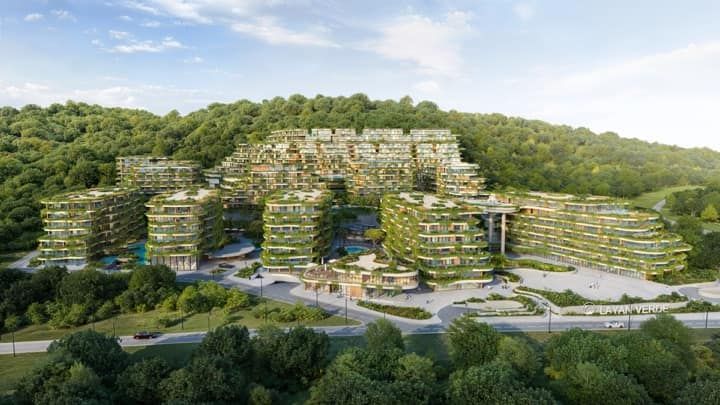
A separate category is branded residences: projects where a hospitality operator takes over management. The brand doesn’t build, but it audits the developer before signing the management agreement — an extra quality filter for the buyer. Example: Layan Verde in the Layan area is being built under management by hospitality operator Dusit; a selection of such projects is in Phuket branded residences.
🔗 Our review of specific companies: Best Phuket developers 2026 →
3. Track record and delivered projects
The main indicator is a history of projects delivered on time. What to check:
- How many projects are completed and whether they operate.
- Whether stated deadlines were met.
- The quality of what’s built (visit or request reports).
Example: VillaCarte Group is a developer with a Phuket portfolio; phase 1 of Layan Green Park (248 units) was completed in 2024 and is operating. A case like this can be verified in person: visit the completed project, walk the grounds, talk to the management company and owners. A numbers-based breakdown of this case is in how Layan Green Park phase 1 sold out →.
How to verify a track record in practice, not from a salesperson’s words:
- Visit the delivered projects. Look not at renders but at real finishing, the state of common areas after a year or two of operation, how the building services perform. Buying remotely? Request fresh video walk-throughs or commission an inspection from a representative.
- Compare promised and actual handover dates. Press releases, old brochures and the developer’s site archive let you reconstruct what was promised at sales launch. A 3–6 month delay is working practice in Phuket; systematic multi-year postponements are a worrying pattern.
- Talk to owners. Owners’ chats, reviews, agents you know. Key questions: how the unit handover went, how the developer closed out defects, how the management company performs.
- Check the legal entity via the DBD registry. Company registration date, registered capital, directors and related companies are all visible in the Department of Business Development registry. A company set up six months before sales launch with minimal capital is a reason to dig deeper: who are the beneficiaries and what have they built before?
- Separate the brand from the legal entity. In Phuket it’s common for each project to be built by a separate company (an SPV). That’s normal, but you need to check both the project SPV and the parent group: “big brand” guarantees don’t always legally extend to the specific construction entity.
4. Land title and permits
| What to check | Why |
|---|---|
| Land title (chanote) | Developer owns the land, free of disputes/encumbrances |
| Building permit | Project legality |
| EIA (environmental) | Especially beachfront and large projects |
| Foreign quota | Remaining freehold if full ownership matters |
A few practical notes on the table.
Title. The project land should be on a chanote — the highest form of title — held by the developer’s entity or a related structure with a transparent chain of rights. If the plot is mortgaged to a bank, that alone isn’t a deal-breaker (project financing is normal practice), but the lawyer must see the terms: how the mortgage is released from units as they transfer to buyers. How to read a title deed is covered in our separate chanote verification guide →.
Building permit. “Pre-permit” sales do happen in Phuket: the developer collects reservations while the paperwork is in progress. For the buyer that’s elevated risk — the project may change or never start. If you enter at this stage for a better price, the deposit must be refundable, and that must be written into the reservation agreement.
EIA. The environmental impact assessment is mandatory for condominiums above a certain scale and for projects near the shoreline. Phuket’s history includes projects without an EIA being stopped mid-construction. Ask for the EIA approval number and date — a developer with its documents in order answers within a day.
Quota. If freehold matters to you, the lawyer requests the remaining foreign quota (49% of the condominium’s area) for the specific building. In popular projects the quota runs out long before sales end; projects with available freehold are collected in freehold condos for foreigners.
5. Finances and timing
- Financial strength — resources to finish, not reliant solely on sales.
- Construction stage — real progress on site.
- Schedule — realistic timelines and late-handover penalties in the contract.
- Escrow/milestone payments — money tied to construction.
Let’s go deeper. The ideal financial model for a buyer looks like this: the developer has its own capital and/or bank project financing, and buyers’ money is just one of the supports. Then construction doesn’t stop when sales slow. The opposite situation — a build living only on incoming payments from new buyers — means any dip in demand hits the pace of work. A private developer likely won’t show you financial statements, but indirect signals are available: construction pace in low season, how quickly previous phases were closed out, the presence of a partner bank, how the developer behaved in crisis years.
Verify the construction stage with your eyes, not with percentages from a presentation. A useful habit: request the developer’s regular construction reports (systematic companies publish them monthly, with photos and drone video) and compare the dynamics over 3–6 months — you’ll see both the pace and its consistency.
Timelines. A realistic construction cycle for a Phuket condominium is around 2–3 years from the start of works; villas are faster. A promise to deliver a large building “in a year” is marketing, not a plan. Normal contract practice is a planned handover date plus a 6–12 month grace period, after which a penalty accrues in the buyer’s favour.
6. Contract and guarantees
The SPA should clearly state: unit specs, payment schedule, handover dates and late penalties, ownership terms (freehold/leasehold and conversion right), and build guarantees. Payment goes to the developer’s account per the contract, not to personal accounts.
What to scrutinize most closely:
- Late-handover compensation. A working market benchmark is a penalty of roughly 0.01–0.1% of the amount paid per day after the grace period. What matters is that the mechanism is specific: from what date, on what base, how it’s paid out.
- Termination and refund terms. What happens to your money if the project isn’t completed or you exit the deal. An asymmetry like “the buyer forfeits everything, the developer refunds with no penalty” is a matter for negotiation.
- A precise unit specification. Area and the price-adjustment rule if the as-built measurement deviates, finishing, fit-out, what’s included in the price (furniture package, air conditioning, meters).
- The right to convert leasehold to freehold, if marketing promises it: only what’s written in the contract works, including who pays the fees on conversion.
- The rental program. If the unit comes with a rental program, its terms (income-split model, who bears which costs, exit rights) belong in the contract or an annex, not in a presentation.
A good sign: the developer calmly hands the draft contract to the buyer’s lawyer before any reservation and is open to amendments. More on the first payment in deposit and reservation in Thailand →.
🔗 Legal check: Property due diligence →
7. Payment schedule and protecting your money
The payment schedule is how risk is split between you and the developer. The more you pay before getting the keys, the more construction risk you carry. Typical Phuket structures in 2026 look like this:
| Structure | How it works | Who it suits |
|---|---|---|
| Classic staged plan | 30–35% at contract, then tranches through construction, balance at handover | The baseline off-plan option |
| Milestone-linked | Payments against confirmed stages (foundation, structure, finishing) | Maximum linkage of money to progress |
| Post-handover installments | Part of the price is paid after the unit is handed over | Lightens the pre-completion load; not offered in every project |
Linking payments to actual milestones rather than calendar dates is the best protection available to a buyer in the absence of mandatory escrow: if construction slows, so do your payments. Projects offering installments after handover are collected in post-handover plans, and how these plans work is covered in post-handover payment plans →.
And one rule with no exceptions: payments go only to the developer’s corporate account named in the contract. Bank details sent via messenger, “the director’s personal account to speed things up”, requests to split a payment across individuals’ cards — that’s not an inconvenience, it’s a fraud flag. More on the schemes in property scams in Thailand →.
8. 10 questions to ask before reserving
Vetting starts with a conversation, not with documents. Here are the questions we ask on a client’s behalf; the reaction to them says as much about a developer as the answers:
- Which projects have you delivered, and on what dates? Can I visit them?
- Which legal entity holds the project land, and is it mortgaged?
- Have the building permit and EIA approval been issued? What are their numbers and dates?
- What is the remaining foreign quota in my building as of today?
- What is the payment schedule, and are tranches tied to dates or to milestones?
- What are the planned handover date, the grace period and the late penalty?
- Under what conditions is the deposit refunded in full?
- How is the price recalculated if the as-built area deviates?
- Who is the management company, and what are the CAM and sinking fund rates?
- Can you send the draft SPA for my lawyer to review before I reserve?
A developer with nothing to hide answers all ten points quickly and with documents. Evasiveness on land, permits or quota is a reason to stop before any payment.
9. Red flags
- No delivered projects — only promises and renders.
- Opaque land title or missing permits.
- “Buy today” pressure with no time to check.
- Payments to personal accounts and details from a messenger.
- A contract with no penalties for missed deadlines.
- A yield guarantee well above market with no clear payout source.
- A shell company: the entity was registered shortly before sales launch and the beneficiaries can’t be traced.
Each flag on its own is a reason for questions; several at once are a reason to look for another project. A full breakdown with examples is in the dedicated article developer red flags →.
10. Comparison: reliable vs risky
Let’s put the signs into one table — handy to hold up against any project you’re offered:
| Criterion | Reliable developer | Risky developer |
|---|---|---|
| Portfolio | Delivered phases you can visit | Only renders and “projects in development” |
| Land | Chanote held by the project entity, mortgage terms disclosed | Evasive answers about title and encumbrances |
| Permits | Building permit and EIA with numbers and dates | “In progress”, “coming later” |
| Finances | Own capital, bank financing | Construction funded solely by buyers’ money |
| Contract | Late penalties, refund terms, full specification | Vague dates, a non-refundable deposit |
| Sales | Time to verify, SPA handed to your lawyer | “Today only”, documents after payment |
| Payments | Corporate account per contract, staged | Personal accounts, requests for “split transfers” |
11. Case: due diligence saved the deal
Consider a typical scenario. An investor was about to wire a large deposit to a project with a polished deck but no delivered buildings. During due diligence the lawyer found the building permits weren’t yet issued and the land title had a disputed encumbrance. The deal was paused and the funds stayed put. The investor switched to a developer with a proven track record and a completed phase.
What set the second project apart is telling: the developer itself suggested visiting a delivered property, handed the draft SPA to the lawyer before reservation, showed the land and EIA documents and didn’t rush the decision. The check took a week; the lawyer’s fee was a fraction of a percent of the deal budget.
Takeaway: vetting the developer and documents isn’t a formality — it’s budget protection. One day of due diligence saves months of risk.
I’ll vet the developer and project with a lawyer and select a unit from a reliable developer.
Developer check and unit selection
By submitting this form you agree to the privacy policy.