“When is the best time to buy?” is one of an investor’s main questions. In Phuket the answer isn’t about a “lucky month” but about project stage, sales launch and your readiness. The season affects rental, not the property price itself. Let’s cover what really determines the entry moment, why off-plan sales launch matters so much, how a reservation locks the price, what the 2026 market data says, and whether to wait for the “bottom”.
Contents
- What determines timing
- Project stage
- Off-plan sales launch
- Reservation: locking the price
- The role of the season
- The 2026 market calendar: what the data says
- Money timing: exchange rate and transfers
- Payment timing: installments and post-handover
- Personal readiness
- Should you wait for price falls
- Exit timing: when to sell
- Pitfalls
- Case: the right entry moment
1. What determines timing
The purchase moment in Phuket is determined less by market “seasons” than by:
- project stage — off-plan, under construction, ready;
- sales launch — the lowest entry;
- personal readiness — budget, goal, visa;
- the specific property — does it fit your task.
The right moment is when the property and terms match your goal, not an abstract “lucky month”. Note the order: project stage comes first for a reason. In a growing market with land scarcity along the west-coast beaches, it’s the stage that sets the entry price — the gap between sales launch and a completed building in the very same project can run to tens of percent, while the difference between “buying in November” and “buying in May” doesn’t move the contract price at all.
🔗 Basics: Off-plan vs ready →
2. Project stage
The entry price depends most on the project stage:
| Stage | Entry price | Notes |
|---|---|---|
| Sales launch (off-plan) | Lowest | Installments, growth potential, wait for completion |
| Under construction | Medium | Price rises as completion nears |
| Ready | Higher | Income immediately, no waiting |
The earlier the stage, the lower the entry and the higher the price-growth potential to completion. This is the key timing lever for an investor.
It’s also important to understand the shape of the growth curve: most of the capitalization doesn’t happen evenly but in the early stages — between groundbreaking and mid-construction, when the buyer carries the most uncertainty. Closer to completion, when the buildings are up and the risk is visibly lower, growth slows, and after handover a completed property appreciates at ordinary market rates. A live example of this mechanic is the sold-out phase 1 of Layan Green Park: according to the developer, apartments appreciated by roughly 100% from sales launch to a completed, operating complex — and all of that growth went to those who entered early.
The practical timing consequence: if you’re looking at a project already in mid-construction, part of the growth potential has already been captured by earlier buyers. That doesn’t make the purchase bad — the risk is lower too — but calibrate your capitalization expectations against the remaining stretch to completion, not the “from groundbreaking” figures. How construction stages work and how long they take — in our breakdown of new-build timelines in Thailand.
3. Off-plan sales launch
Sales launch is the classic entry point for an investor:
- the lowest entry into the project;
- staged installments (e.g. a 35%/50% scheme);
- maximum price-growth potential to completion;
- the best choice of units (floor, view, layout).
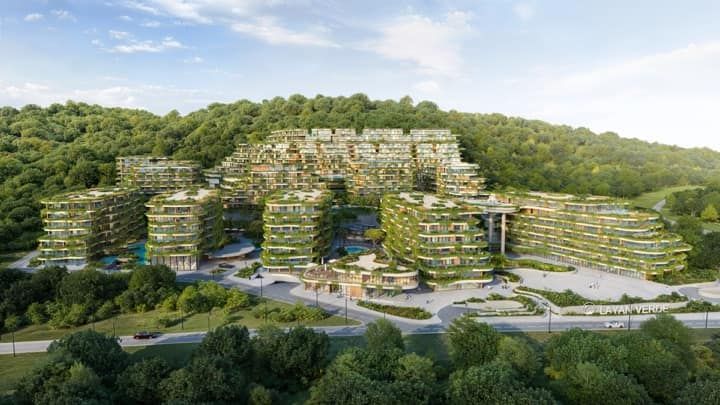
For example, entering Layan Verde from $224,776 at an early stage gives both a low price and growth headroom. For an “entry with potential” strategy, sales launch is the optimum.
Why does a developer sell cheaply at launch at all? It isn’t charity — it’s financing: early sales prove demand and give the developer working capital for construction, so they’re willing to share future growth with the first buyers. As completion nears, the need for “cheap” sales disappears — and the price list goes up. Layan Verde has already demonstrated this: on the price list from 01.09.2026, premium studios start at $235,995 versus the launch price of $224,776 — growth began while construction was still at an early stage. Per the developer’s forecast, capitalization over the construction period to 2028 could reach up to +45% — to be clear, that is a forecast, not a guarantee.
The second underrated advantage of launch is unit choice. The best positions (view floors, corner layouts, poolside units) go first, and six months after launch the selection is objectively thinner at a higher price. For a rental strategy this has a direct monetary expression: a view unit consistently commands a higher rate. Current early-stage projects are collected in our selection of new builds completing in 2026–2028.
4. Reservation: locking the price
Between “found the right property” and “signed the contract” there’s a short but important step — the reservation. It’s what turns good timing into locked-in terms: the unit is taken off the market and the price is frozen for an agreed period.
In practice it looks like this: at Layan Verde the reservation is 200,000 THB (~$6,010) and holds the unit for 3 working days until contract signing; the sum counts toward the first installment payment. On a studio from 7,833,125 THB that’s about 2.6% of the price — a small amount that stops the price growing for you specifically.
The rules of a safe reservation are simple but mandatory:
- pay only to the developer’s corporate account (never an agent’s personal card);
- get a written reservation agreement: unit, price, amount, term, refund conditions;
- clarify whether the reservation counts toward the first payment and what happens if either side withdraws;
- on resales — verify who the actual seller is and whether they have outstanding payments.
The detailed mechanics, the ways money gets lost at this stage and a checklist — in our article on reservations and deposits; what to check on the property itself before and after reserving — in the glossary entry on due diligence.
5. The role of the season
The season in Phuket affects not the purchase price but rental:
- high season (November–March) — peak occupancy and rates;
- low season (May–October) — lower rates, but not a “dead” period.
The property price itself is set by the project stage and developer, not the month. So the season is secondary for buying — stage and sales launch matter more. The season is factored into yield calculations (~8–10% net on average over the year).
The one practical use of the season for a buyer is viewing logistics. In high season you see the island “at work”: full occupancy, traffic, the beach atmosphere — useful for judging a location’s rental potential with your own eyes. Low season is worth a visit too: you see how the property and area handle the rains, and it’s easier to schedule time with project managers. But these are arguments about trip convenience, not about the contract price.
6. The 2026 market calendar: what the data says
Timing isn’t only about a specific project’s stage — it’s also about the market’s phase overall. Here are verifiable benchmarks as of 2025–2026:
| Indicator | Value | What it means for timing |
|---|---|---|
| Foreign share of condo transactions (2025, REIC) | over 40% | Demand is broad and international, not dependent on one country |
| Coastal-area price growth vs 2023 levels | over +20% | “Waiting for the bottom” on the west coast has been expensive for two years running |
| Consensus forecast for 2026, west of the island | +8–10% per year | A forecast, not a guarantee — but analysts agree on the direction |
| Hotel occupancy, Q1 2026 | 83.4% | Rental demand confirmed by actual occupancy |
A note on infrastructure: in February 2026 Phuket airport set a daily traffic record — 393 flights and over 71,000 passengers in a single day. The tourist flow that feeds the rental model is growing in fact, not in developers’ presentations.
The timing takeaway: the 2026 market is a market of scarcity by the sea, not a clearance sale. The full picture — inventory, demand structure and the regulatory backdrop — is in our Phuket market overview 2026, and the price drivers are broken down in the article on price trends.
7. Money timing: exchange rate and transfers
A cross-border purchase has a second timeline — the movement of money. For a foreign buyer the entry cost also depends on the THB rate against their savings currency, and that’s a legitimate timing element: with an installment schedule, payments are spread over time and you don’t need to bring in the whole sum upfront.
Practical guidelines:
- The rate is a transfer-timing factor, not a property-choice factor. Currency swings smooth out over the holding horizon; postponing a good project while waiting for a “better rate” is usually a losing trade.
- Transfer against the schedule. Construction-staged installments let you bring money in tranches — per payment, not in one go.
- Document transfers correctly. Registering freehold to a foreigner requires confirmation that the funds arrived from abroad with the correct payment purpose — see FET in the glossary. It’s a formality, but its mistakes are the costliest to fix after the fact.
- Fix the price currency in the contract. If the price is denominated in baht, rate movements between reservation and payments are your zone of attention: clarify this explicitly rather than by default.
8. Payment timing: installments and post-handover
The project stage determines not only the price but also your payment schedule — and therefore the load on your capital over time.
The classic Phuket installment plan is synchronized with construction: reservation, first payment at contract signing (usually 30–50%), then payments tied to construction stages — by completion the property is fully paid. The earlier you enter, the longer the schedule and the lower the peak load on your budget.
There’s also a rarer scheme — post-handover installments (PHPP): a significant share of the price is paid after the keys are handed over, when the unit can already be lived in or rented out. On the Phuket market roughly fifteen projects offer such terms — from Banyan Group plans of up to 5 years to southern projects with terms up to 10 years; they’re all collected in our selection of post-handover installment projects. How the scheme works, how it differs from a mortgage and how to weigh the payment against rental income — in our dedicated breakdown of post-handover plans.
For timing this means: even if you’ve “missed” a specific project’s sales launch, another project’s payment structure may compensate for the difference — compare not only the price per square metre but also when exactly that price is paid. Flexible schedules across current projects are also collected in the installment plans selection.
9. Personal readiness
For a personal-living purchase, timing is set by your readiness:
- area chosen for the goal (rental/living/both);
- budget counted (price + fees + upkeep);
- visa and relocation resolved;
- property check done (due diligence).
For living, the “right moment” is when you’re ready, not when the market signals. For investment — when there’s a suitable property at a favourable stage.
Readiness is also speed. At the launch of a strong project the best units go within weeks, and the buyer who has budget, ownership structure and money-transfer channel resolved in advance gets to choose — rather than taking “what’s left”. Preparing before the property appears is timing too, just on your side of the deal.
10. Should you wait for price falls
The temptation to “wait for the bottom” often ends in losses in practice:
- in in-demand locations with land scarcity, prices tend to rise;
- the best units in a project go first;
- as the project nears completion, the price rises.
Trying to catch the “perfect moment” often leads to missed projects. The right property at a favourable stage matters more than guessing the bottom.
A separate strand of waiting is regulatory rumours. Opposite scenarios for the foreign ownership quota in condominiums are under discussion: both lowering it from the current 49% and raising it in specific zones. But no bill has been introduced, and analysts don’t expect decisions before late 2026 or early 2027. Building your deal timing on assumptions about future rules means postponing the purchase indefinitely for a scenario that may never arrive. The current framework is known: the 49% quota on foreign ownership of a building’s area, with freehold within it.
To be fair: do favourable “non-standard” moments exist in Phuket? Yes — but they’re not seasonal sales; they’re one-off situations: the launch of a new phase, assignments from early buyers, the occasional motivated seller on the secondary market. Such windows aren’t published in a calendar — they’re caught by those already in the market and ready to transact. A price-and-terms comparison of new builds and resales is in the article resale vs new build.
11. Exit timing: when to sell
The entry moment has a mirror — the exit moment, and it’s worth thinking about before buying, not after.
The basic mechanic: most off-plan appreciation happens between sales launch and completion; once the complex is operating, the price grows at ordinary market rates. That yields two working exit strategies:
- Selling near completion — locking in the construction-period gain without entering the operating phase. Works in high-demand projects where a queue of “ready-property” buyers forms toward handover.
- Holding and renting — the unit stays in the rental pool, income at a guide of ~8–10% net per year, with the sale deferred until the right secondary-market situation.
An example of what the secondary market of a successful project looks like is that same phase 1 of Layan Green Park: the complex is sold out by the developer, and only occasional owner resales remain on the market at completed-operating-asset prices. For the seller that’s a comfortable position: the scarcity now works in their favour.
When planning your entry, estimate the horizon too: if you might need the money before the project completes, off-plan isn’t for you no matter how good the entry moment looks.
12. Pitfalls
- Waiting for a “lucky month”. Price is set by project stage, not the season.
- Chasing the bottom. Waiting often costs missed projects and rising prices.
- Ignoring sales launch. The early stage gives the best entry and unit choice.
- Buying without readiness. Budget, goal, visa and property check should be resolved.
- Confusing buying and rental seasons. The season affects income, not the entry price.
- Waiting for regulatory changes. The quota scenarios being discussed are not enacted laws; deals are calculated on the current rules.
- Measuring growth “from groundbreaking” at mid-construction. Part of the capitalization has already been captured by early buyers — calibrate expectations to the remaining stretch.
- Transferring money without documentation. A transfer without the correct payment purpose and confirmation of funds arriving from abroad creates problems when registering freehold.
13. Case: the right entry moment
Consider a typical scenario. An investor delayed buying, “waiting for prices to fall”. Meanwhile a suitable project reached sales launch, the best units began to sell, and the price rose as completion neared. In the end they entered later and pricier than they could have at launch. They took a second project differently: they prepared in advance — budget, ownership structure, money-transfer channel — and when the off-plan sales launch opened, they locked a unit with a reservation in the first days: a low entry from $224,776, staged installments and growth potential to completion. Rental yield — a guide of ~8–10% net via the pool. The right moment turned out to be not a “month” but a stage — plus the readiness to act when the stage arrived.
The market’s counter-example is the phase 1 buyers of Layan Green Park who entered at launch: by the complex’s completion in 2024 their units had, according to the developer, appreciated by roughly 100%, while a buyer of the “ready” product on the secondary market pays the full price of an operating asset. Both buyers acted sensibly — but only the one who chose the early stage earned on the construction period.
Takeaway: the best time to buy in Phuket is the right project stage (usually off-plan sales launch) plus your readiness, not a “lucky season”. Don’t wait for the bottom — choose a suitable property at a favourable stage.
I’ll help catch the right entry moment: I’ll select a project at a favourable stage with installments and a yield calculation.
Entry at a favourable project stage
By submitting this form you agree to the privacy policy.