When buying property in Thailand you immediately meet two words — freehold and leasehold. They’re often contrasted as “full ownership” versus “just a lease”, but for an investor in 2026 the picture is subtler: leasehold is often better as an entry point — it’s cheaper, more flexible on payment, requires fewer formalities and usually converts to freehold later. Let’s cover both forms honestly: what the law says, what registration costs, how the paperwork goes step by step, what to check in the contract and where investors most often go wrong.
Contents
- Freehold: full ownership
- Leasehold: 30+30+30 lease
- What the law says: the Code, the Condominium Act, registration
- Underrated leasehold advantages
- Comparison table
- Fees at registration and resale
- Step-by-step procedure
- What to check in a leasehold contract
- Effect on yield and resale
- Scenarios by holding horizon
- Pre-deal checklist
- Pitfalls
- Case: entering leasehold with conversion to freehold
- What an investor should choose
1. Freehold: full ownership
Freehold is perpetual ownership: your name on the chanote (ownership certificate); the property can be sold, rented, gifted and inherited with no time limit. For foreigners, freehold on apartments is available within the foreign quota — 49% of a building’s saleable area.
Pros: maximum rights protection, a higher resale price, no renewal question. Cons: the quota is limited; registration needs currency inflow and an FET certificate — more formalities and a narrower set of payment options.
A note on land: a foreigner cannot own land in Thailand directly, so freehold in its pure form is about condominium apartments. Villas use other tools — a land lease with ownership of the house, superficies, usufruct or ownership through a Thai company, each with its own risks.
🔗 317 villas and condos where ownership confirms freehold: Freehold Property for Sale in Phuket →
2. Leasehold: 30+30+30 lease
Leasehold is a long-term lease, usually 30 years with a renewal right. In new projects developers typically offer a 30+30+30 structure (up to 90 years total). The lease right is registered at the Land Department, can be assigned and inherited.
Importantly: in strong projects leasehold is a flexible starting position, not “second class”. Below — why.
To argue the pros and cons properly, let’s first see what exactly the law protects and what is left to the parties’ contract.
3. What the law says: the Code, the Condominium Act, registration
Three rules shape how both forms work in practice.
The foreign quota — the Condominium Act. The Act caps the aggregate foreign share of unit ownership in one building at 49% of the total floor area. That is where the “quota” comes from: while it isn’t exhausted, the developer can sell freehold to foreigners; once it is, only leasehold or purchase through a Thai entity remains. How to check the remaining quota before paying a deposit is in our article on checking the condo quota.
Lease term and registration — the Civil and Commercial Code. The Code sets the maximum lease term for immovable property at 30 years; a longer term is automatically cut to 30, but the parties may renew — again for no more than 30 years. A lease of immovable property longer than three years must be registered at the Land Department — otherwise it is enforceable for three years only. A registered lease is endorsed on the back of the chanote and survives a change of owner: if the building or land is sold, the new owner is bound by your lease.
What the law does not do automatically. The Code does not oblige the owner to renew — the second and third terms exist only as a contractual commitment, and its enforceability depends on who gave it and whether they will still exist in 30 years. Under the Code, assigning the lease to a third party is possible only with the owner’s consent unless the contract expressly allows it. Inheritance of a lease is not implied either — a clause passing the right to heirs must be in the contract. That is why sections 8 and 11 below are about the contract text, not the law.
🔗 How to read a chanote and check encumbrances: Verifying the chanote →
4. Underrated leasehold advantages
These pluses are rarely covered in general guides, but they often make leasehold the preferable entry for an investor:
- A lower entry price. A leasehold unit is usually more accessible, raising the yield on invested capital and lowering the entry threshold into a premium project.
- More payment options. Freehold requires mandatory money inflow to Thailand in foreign currency with an FET. Leasehold doesn’t require this, so payment can be made via a wider set of methods and without tying to one currency channel.
- Fewer formalities and higher deal privacy (on the Thai side). Without FET no source-of-funds proof is needed for Land Department registration. The deal is simpler and more private. (Reporting in your own jurisdiction remains with the buyer.)
- Conversion to freehold anytime while quota lasts. Developers typically grant a right to convert leasehold to freehold while free foreign quota (49%) remains in the building. So you can enter cheaper on leasehold and register full ownership later.
- Resale flexibility. The unit can be resold both as leasehold and re-registered to freehold — to suit the buyer and the quota situation.
- A lower registration fee at entry. 1.1% to register the lease versus a 2% transfer fee for freehold (details in section 6).
That’s why leasehold in a strong project isn’t a compromise but a tool: cheaper to enter, more flexible to pay, and the freehold right stays in your pocket.
5. Comparison table
For context, how the forms split in real supply: across our catalogue of 348 Phuket projects, 306 offer both forms, 26 freehold only, 11 leasehold only. In most projects “freehold or leasehold” is a question of your strategy, not a developer constraint.
| Parameter | Freehold | Leasehold |
|---|---|---|
| Ownership term | Perpetual | 30 years + renewals (30+30) |
| Entry price | Base | Usually lower |
| Payment options | Narrower: currency inflow + FET needed | Wider: no FET needed |
| Formalities (source of funds, Thai side) | More (FET) | Fewer |
| Registration fee | 2% transfer fee on appraised value | 1.1% of the lease value |
| Conversion to freehold | — | Yes, while quota lasts |
| Resale | Freely | As leasehold or to freehold |
| Inheritance | Yes, full | Yes, per contract terms |
| Availability to a foreigner | Within the 49% quota | No tie to quota |
| Resale price | Higher | Depends on term and exit form |
6. Fees at registration and resale
The difference in fees is one of the most underrated lines when comparing the forms. Here is how it looks at current rates; who pays is set by the contract.
| Fee | Freehold | Leasehold |
|---|---|---|
| At registration of the right | 2% transfer fee on the Land Department’s appraised value; split with the seller/developer per contract | 1.1% of the rent for the term (1% registration fee + 0.1% stamp duty); usually paid by the lessee |
| Recurring fees | None | 1.1% at each renewal (every 30 years) |
| At resale: specific business tax (SBT) | 3.3% if held under 5 years | Not applied to an assignment of the lease in the same way; terms per contract and lawyer |
| At resale: stamp duty | 0.5% if held 5 years or more (instead of SBT) | — |
| At resale: withholding income tax | Withheld at transfer registration, calculated by holding period | On assignment — calculated case by case |
Two caveats. First: the transfer fee is calculated on the Land Department’s appraised value, which may differ from the contract price — so freehold figures are always an estimate until appraisal. Second: the reduced 0.01% transfer fee, extended by the government to 30 June 2027, targets properties up to 7 million baht and does not apply in practice to foreign buyers’ deals — budget the full rate.
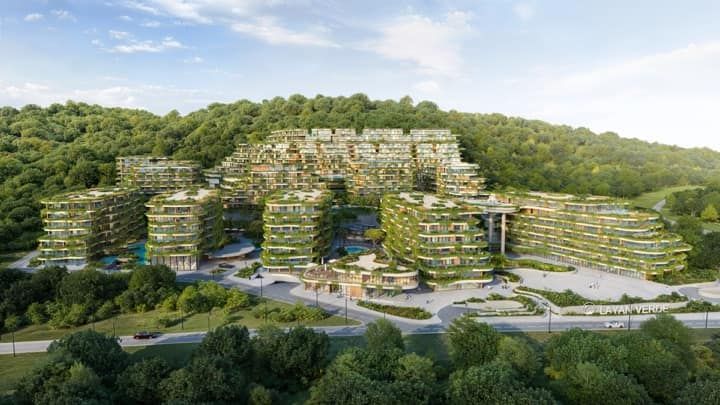
An example from our real cost breakdown for buying a Layan Verde studio: leasehold registration cost 86,242 THB (1.1%), whereas a 2% transfer fee on the same price would be about 149,600 THB, or about 74,800 THB if split equally with the developer. At entry the forms are roughly equal on fees only when the transfer fee is split; with the buyer paying it in full, freehold costs almost twice as much. Over a long horizon leasehold brings the fee back every 30 years — irrelevant for a 10–15-year hold, relevant for “forever”.
🔗 Exit taxes in detail: Capital gains tax in Thailand →
7. Step-by-step procedure
Both forms go through the Land Department, but the documents and the order of steps differ.
Freehold (apartment within quota):
- Reservation and sale-and-purchase agreement; check of the remaining foreign quota with the juristic person or developer.
- Transfer of money from abroad in foreign currency with the purpose “purchase of a condominium unit”; the Thai bank converts it to baht and issues the FET — without it the Land Department will not register the right in a foreigner’s name. Details in our article on FET: how to transfer money correctly.
- The developer or juristic person issues a letter confirming the sale does not breach the 49% quota, and a debt-free certificate for the unit.
- Registration of the transfer at the Land Department: payment of the transfer fee and taxes, your name goes on the chanote. From that moment you are the owner.
Leasehold:
- Lease agreement with the owner (the developer or its lessor company) — this is the text to check against section 8.
- Payment by any agreed method — no FET required.
- Registration of a lease over three years at the Land Department: 1.1% fee, endorsement on the back of the chanote. An unregistered lease is protected for three years only — do not accept “we’ll register later”.
- If you later want to convert to freehold — check of the remaining quota, sale-and-purchase agreement and registration of the transfer. Which documents on the origin and inflow of funds the Land Department will require in your specific case, confirm with a lawyer in advance — conversion is easier when the currency trail has been preserved.
Deal timelines and the typical payment schedule in a new build are in our guide to the Phuket property buying process.
8. What to check in a leasehold contract
Leasehold’s flexibility works when it’s fixed on paper. A technical checklist:
- Right to convert to freehold — an explicitly written option to move the unit to ownership if quota is available, with the price or top-up formula.
- Renewal clause — a renewal right (30+30+30) with a mechanism, not “by agreement of the parties”; who is obliged to renew and what happens if the lessor changes.
- Renewal cost — a fixed sum/formula, not “at market price at renewal time”.
- Assignment right — the ability to sell the lease to a third party without the lessor’s separate consent (under the Code, consent is required without such a clause).
- Inheritance — transfer of the right to heirs expressly stated (without it the lease may end on the lessee’s death).
- Registration — a lease over 3 years is registered at the Land Department, and the duty to register lies with the developer within a set deadline.
- Who the lessor is — the developer, its subsidiary or a third-party landowner; that entity’s stability matters more than the project’s brand.
9. Effect on yield and resale
The ownership form doesn’t affect current rental yield: both freehold and leasehold participate equally in the rental-management programme and give a guide of ~8–10% net owner yield a year via the rental pool. The difference is at the exit horizon, and here leasehold has a trump card:
- You can hold cheap leasehold and offer the buyer freehold at resale (via conversion if quota is available) — this widens the buyer pool.
- Freehold resells more easily and dearly “as is”, with no quota actions.
- “Pure” leasehold without a conversion right is valued with the remaining term in mind — which is why checking the freehold conversion right in the contract matters so much.
There is an arithmetic effect too: with a lower entry price, the same rental income gives a higher yield on invested capital. If a leasehold unit costs less than its freehold equivalent and both receive the same share of pool profit, the leasehold’s percentage on price is higher — other things being equal.
🔗 How to count yield per unit: Phuket property yield → · Yield calculator
10. Scenarios by holding horizon
The ownership form is largely a question of how many years you are entering for. Three typical horizons:
| Horizon | What matters most | What is usually better | Watch especially |
|---|---|---|---|
| 3–5 years (enter during construction, exit after handover) | Low entry price, payment flexibility, a wide buyer pool at exit | Leasehold with a conversion right: cheaper to enter, can be sold as freehold | Remaining quota at exit time; 3.3% SBT on a sale within 5 years |
| 10–15 years (rental income, then sale) | Net yield and ease of exit | Either form; freehold is easier to sell “as is”, leasehold wins on entry price | The assignment clause; the cost of conversion in 10 years |
| Forever / for heirs | Perpetuity, inheritance without conditions | Freehold if quota is available; leasehold only with inheritance and renewal written in | Who the lessor is in 30 years; the renewal price formula |
The conclusion is simple: the shorter the horizon, the stronger the case for leasehold; the longer, the more valuable freehold’s perpetuity. Most investors buying during construction for resale or income sit in the first two rows.
🔗 How and when to exit: Exit strategies in Phuket → · How to resell property →
11. Pre-deal checklist
| Item | Freehold | Leasehold |
|---|---|---|
| Quota | A dated free-quota letter from the juristic person / developer | Remaining quota if you plan to convert, and how long the conversion right lasts |
| Chanote | Document type, owner, encumbrances on the back | Whose chanote it is and whether the lease will be endorsed on its back |
| Money | Transfer in foreign currency, FET for the full amount | The agreed payment method and how the contract reflects it |
| Contract | Transfer terms, deadlines, developer penalties | Renewal, conversion, assignment, inheritance, lessor |
| Fees | Who pays the 2% transfer fee and in what share | Who pays the 1.1% and who pays at renewal |
| Registration timing | Land Department registration date tied to handover | Lease registration within a fixed period after payment |
| Lawyer | Independent review of the contract and chanote | The same, plus a check of the lessor |
The full procedure for checking the project, developer and documents is in our guide to due diligence on Phuket property.
12. Pitfalls
- “We’ll register the lease later.” Until registered at the Land Department, a lease is protected for three years only. Registration should be a condition of the final payment, not a promise.
- Renewal “by agreement of the parties”. Without a mechanism and a price this is hope, not a right. In 30 years you’ll be negotiating with whoever turns out to own the land.
- A lessor with no assets. If the land is held by a separate entity, vet it as strictly as the developer: a commitment to renew is worth exactly what the party giving it is worth.
- No inheritance clause. A lease is a personal right; without an express clause passing it to heirs, the family may be left with a problem instead of an asset.
- Assignment without consent not allowed. Under the Code, without such a clause selling the lease needs the owner’s consent — and the owner can set conditions.
- Bringing money in baht while planning freehold. Funds that did not arrive in foreign currency get no FET — conversion or freehold registration will have to be documented retrospectively, and that isn’t always possible.
- Treating leasehold “for 90 years” as a given. The law knows only 30 years; the rest is contractual commitment.
- Ignoring exit fees. 3.3% SBT on a freehold sale within five years noticeably changes the net result of a short deal.
- Buying the “form”, not the project. Both freehold and leasehold in a weak project are a poor investment; the ownership form doesn’t compensate for a poor location and operator.
13. Case: entering leasehold with conversion to freehold
Consider a typical 2026 scenario. An investor picks a unit in a strong project where the foreign freehold quota isn’t yet exhausted. To enter cheaper and without tying to a currency channel, they take leasehold: a lower entry price, payment made by a convenient method, minimal source-of-funds formalities on the Thai side, and the lease registered at the Land Department with the 1.1% fee.
Later a task arises: sell at the maximum price. Since quota still remains in the building, the investor uses the developer’s right to convert leasehold to freehold and brings the unit to market as full ownership — this attracts a wider buyer pool and lifts the price. The alternative is to sell as leasehold to someone who values deal simplicity and privacy.
Takeaway: leasehold gave a cheap and flexible entry, while the conversion right preserved the freehold option by exit time. That’s the “best of both worlds” — provided the conversion right is written into the contract and the remaining quota has been verified, not taken on trust.
14. What an investor should choose
- Want the simplest exit and ready for currency inflow with FET — take freehold if it’s available in the quota.
- Want to enter cheaper, more flexibly on payment and with a private deal — leasehold with a freehold conversion right is often better: you keep the full-ownership option and widen resale choices.
- A “forever” horizon — freehold, or leasehold with renewal and inheritance firmly written in.
In strong projects (Layan Verde, Layan Green Park) both forms are available within the quota, and the developer sets out a transparent renewal structure and a freehold conversion right — that’s what to check when choosing a unit. How our agency works, and why we review developers’ contracts more strictly than usual, is explained separately.
I’ll help choose the form for your goal
I’ll analyse a specific unit: which form is available, whether there’s a freehold conversion right, what the contract says on renewal, and how it affects payment, yield and resale.
Unit and ownership-form analysis
By submitting this form you agree to the privacy policy.
Informational only, not legal or tax advice; contract terms, quota availability and current rules are checked with a lawyer before the deal. Home-country reporting obligations remain with the buyer.