Condo or villa is one of an investor’s first questions in Phuket. They’re different asset classes: a condominium apartment is simpler, more liquid and cheaper to enter; a villa is more private and premium but more complex on land and maintenance. Here’s what’s smarter in 2026 for different goals: we compare catalogue prices, ownership forms, income models, owner running costs, transaction taxes and liquidity on exit.
Contents
1. Condo: investor pros
A condominium apartment (condo) is the clearest, most liquid entry in Phuket:
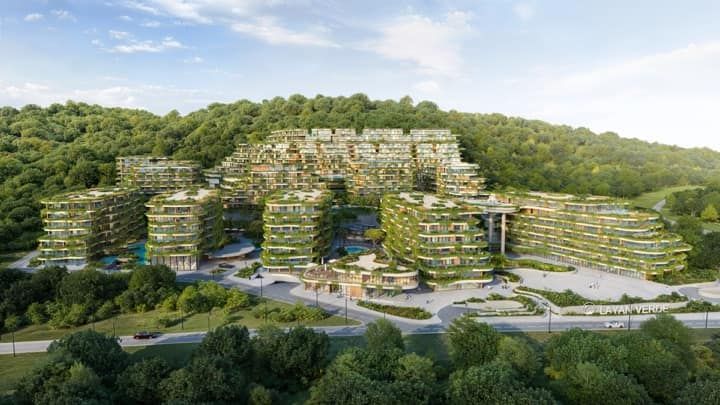
- Lower entry point — for example, studios in Layan Verde from $235,995.
- Simpler ownership — freehold within the 49% foreign quota or leasehold.
- Less hassle — maintenance via the MC, rental via a management program.
- Higher liquidity — a wider buyer pool on resale.
The key word here is “predictability.” The condo format is standardised by the Condominium Act: a clear foreign quota, fixed maintenance tariffs, a management company responsible for the common areas. An investor from another country can calculate a unit’s economics before the deal to within a hundred dollars — and that is exactly why the condo remains the “first purchase” format on the island.
An additional plus is scalability: having started with a studio, an investor buys a second unit a couple of years later in the same or a neighbouring project, knowing the mechanics and the pool’s real numbers from the inside.
2. Villa: pros and nuances
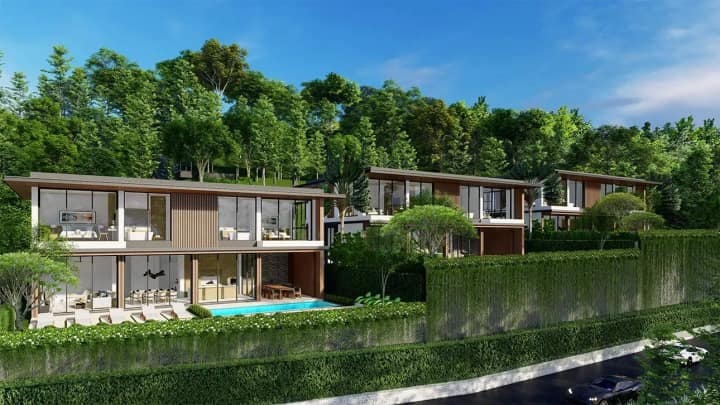
A villa means privacy, space, a private pool and garden, a premium rental rate. But there are nuances:
- Land is held via leasehold or a Thai company (a foreigner doesn’t own land directly).
- Maintenance is pricier and on the owner: pool, garden, security, repairs.
- Rental operations are harder: a villa needs its own management and marketing.
That said, a villa is not a “bad investment” but a different asset profile. It wins on ticket, not turnover: families and groups willing to pay for a private pool and no neighbours book villas for holidays and high season at rates apartments cannot reach. A villa is also stronger as “a home for yourself”: you can genuinely move in with a family, which cannot be said of a studio. Whether a private pool pays for itself in a rental model — we covered separately in the article on villas with a private pool.
There is a structural quirk of the market too: there are physically more villa projects in Phuket than condo projects (see the numbers below), yet fewer deals in that segment — supply is wider than the demand funnel, so a villa buyer has a richer choice and more room to negotiate.
3. Comparison
Numbers first. Calculated from our Phuket project catalogue as of 26 August 2026 — the same calculation published in the price index:
| Metric | Condos | Villas |
|---|---|---|
| Projects in the catalogue | 101 | 210 |
| Median entry price | $148,816 | $882,979 |
| Median $/sqm | $3,978 | $2,579 |
| Off-plan / completed | 63 / 38 | 132 / 78 |
The paradox worth understanding before choosing: a condo square metre costs 54% more than a villa one, while the entry threshold is six times lower. The format is bought by floor area, not by the metre: a villa is a lot of cheap metres in one large cheque, a condo is a compact expensive metre in a small one.
Now the qualitative side:
| Parameter | Condo | Villa |
|---|---|---|
| Entry price | Median ~$149k | Median ~$883k |
| Ownership | Freehold (quota) / leasehold | Land leasehold / company |
| Maintenance | Common area fee + MC | Own (pool, garden, security) |
| Yield | Steady via MC | High rate, harder occupancy |
| Liquidity | Higher | Niche |
| Privacy | Medium | Maximum |
The sixfold gap in median entry is not only about budget but about risk concentration: for the price of one median villa you can assemble a portfolio of five or six condo units across different projects and locations. For an investor who values diversification, that is an argument in its own right.
4. Ownership
Condo. Can be held as freehold within the 49% foreign quota or as leasehold. Leasehold is often the smarter entry — cheaper, more flexible on payment (no mandatory FET) and usually convertible to freehold later while quota remains.
Villa. Land via leasehold (30+30) or a Thai company; the building can be registered separately to the foreigner.
The difference runs deeper than it looks. A freehold condo is the only format in which a foreigner receives full, perpetual ownership registered at the Land Office with no additional structures. A villa always needs a structure: either a long leasehold with correctly drafted renewals and rights (inheritance, assignment, alterations to the property), or a Thai company — a working tool where there is genuine business activity, but a risk under nominee ownership, which Thai regulators scrutinise with growing attention. A breakdown of the company route and its requirements — in the article on owning a villa through a Thai company.
The practical conclusion: legal review on a villa purchase is not an option but a mandatory line in the deal budget, whereas for a condo from a developer with a clean history it comes down to checking a standard document package.
🔗 Ownership breakdown: Freehold vs leasehold → · Foreigner ownership →
5. Yield: two models
A condo in a condo-hotel gives steady occupancy via a management program — an owner net yield benchmark of ~8–10% via the pool. A villa earns a high nightly rate, but occupancy and operations are harder, and upkeep (pool, garden, staff) is higher and on the owner.
It helps to see the market context. Across Phuket as a whole, rental net yield usually sits in the ~4.5–6.5% a year range. The condo-hotel pool model lifts the bar to ~8–10% net through the program’s scale and a transparent split (60% of the pool’s net profit to the owner, 40% to the MC). A villa can deliver comparable and even higher figures in good years, but with greater variance: its income depends more heavily on season, marketing and the quality of management of that specific house. In a condo pool the result is averaged across dozens of units — with a villa, every vacant night hits your account directly.
The second structural difference is what the income is made of. For a villa a significant share of revenue goes to operating costs (staff, pool, garden, utilities on a large floor area), so the gap between the “gross” and net figure is wider. When comparing formats, compare the owner’s net money under the same methodology — the detailed breakdown of villa rental maths is in the article on villa rental yield.
🔗 How income works: Rental management program → · Calculator
6. Owner running costs in numbers
Condo. Two standard items: the monthly CAM fee and the one-off sinking fund. Phuket’s market range is 30–100 THB/m²/month and 200–850 THB/m² respectively. On the specific example of Layan Verde (85 THB/m²/month, 850 THB/m²): a 36.2 m² studio costs roughly $92 a month (~$1,109 a year) plus ~$924 one-off. Everything else is the MC’s concern.
Villa. There is no fixed tariff — there is your own upkeep budget: pool cleaning, a gardener, security or estate fees, insurance, repairs and depreciation on a large floor area, utilities. In managed villa estates part of this is packaged into fees similar in logic to a CAM fee, but the total on a large villa is in any case several times an apartment’s — and it must go into the net-yield calculation before the deal, not after.
The rule that saves you from unpleasant surprises: with a condo the costs of ownership are fixed and known before purchase; with a villa they are variable and depend on you. Tariffs for specific projects and the dollar conversion on real units — in the article on sinking fund and CAM fees.
7. Transaction taxes and fees
Transaction costs differ less between the formats than ownership costs do, but they are worth knowing:
| Item | Who pays | Benchmark |
|---|---|---|
| Transfer fee (freehold) | Buyer / by agreement | ~2% of appraised value |
| Leasehold registration | Buyer | 1.1% (once per 30 years) |
| SBT or stamp duty | Seller | 3.3% or 0.5% |
| Withholding tax | Seller | On a scale from appraised value |
| Sinking fund (condo) | Buyer | One-off, per project tariff |
For a villa held through a Thai company the deal structure can differ (a transfer of company shares instead of re-registering the property) — a separate tax story that requires professional support. A full purchase estimate on a live example — in the article on buyer costs.
8. Liquidity and entry point
A condo is easier to sell: lower ticket, clear ownership, more buyers. A villa is a premium but niche asset: fewer deals, longer exposure, yet a higher absolute price. For a first investment property a condo is usually more practical.
The entry point is structured differently too. In new-build condos, construction-stage instalments have become the standard — at Layan Verde, for example, a plan of 35% + five payments of 13% every 6 months lets you start on a studio with around $86,000. In the villa market instalments are rarer and shorter, and resale villas are almost always paid in full. A shortlist of projects with staged payment — instalment plans in Phuket →.
Liquidity should be matched to your horizon in advance. A condo in a project with a working pool is sold “on the numbers”: the unit has a payout history, and an investor-buyer values it as a going business. A villa is sold “on the viewing”: the buyer flies in, looks, compares with a dozen alternatives — the deal cycle is longer, and the quality of the photos and the state of the garden and pool affect the price as much as the location. The exit mechanics for both formats — from pre-sale preparation to the seller’s taxes — we covered in the article on how to resell property in Phuket.
9. The hybrid: branded residences and managed villas
In 2026 the “condo or villa” dilemma is increasingly resolved by hybrid formats:
- Branded residences — legally a condo, in service terms a hotel: residences run by an international operator. An example is Layan Verde managed by Dusit: the owner gets hotel service standards, infrastructure and the brand’s occupancy while staying in simple condo ownership. A breakdown of the format — in the article on branded residences, a shortlist of projects — in the catalogue.
- Villas with a rental program — villa projects where a management company takes on marketing, check-in and maintenance, and the owner gets a villa-level rate with condo-like passivity. Such projects are gathered in the rental-income villas → shortlist.
Hybrids remove each format’s main drawback: the condo stops being “just an apartment,” the villa stops being “a second job.” The price is the operator’s commission, so net yield needs to be calculated just as carefully here.
10. Pitfalls
- Underestimating villa costs. Pool, garden and security eat into yield.
- Villa land structure. A nominee company “to get around” the rules is a risk; you need a correct structure.
- Pricing villa income at peak rate. Villa occupancy is more seasonal than a condo-hotel’s.
- Ignoring liquidity. A villa takes longer to sell.
- Comparing the median metre head-on. A cheap villa metre does not make a villa a cheap purchase: look at the full ticket and the full cost of ownership.
- Buying a villa as a first asset remotely. The format needs presence or a strong manager; from a distance it is easier to start with a condo.
- Skipping the lawyer on a villa deal. Checking the land, the leasehold contract or the company structure is a mandatory budget line.
11. Case: choosing for your goal
Consider two investors. The first wants simple liquid income with minimal hassle — a studio-condo in a condo-hotel where rental and maintenance sit with the MC. The second buys for living and status, comfortable with upkeep costs — a villa with a private pool, holding the land via leasehold.
In numbers: the first enters with ~$150–230k (the catalogue’s condo median is $148,816, Layan Verde studios from $235,995), targets ~8–10% net via the pool and knows the costs in advance — around $1,100 a year to maintain a studio. The second works with a budget from the median ~$883k, allows for an upkeep budget of their own and a legal structure — and gets an asset they can live in themselves and let at a premium rate in high season.
Takeaway: a condo is more practical and liquid for investment; a villa is about lifestyle and premium when you’re ready for the costs. And if you want “both” — look at branded residences and managed villas.
I’ll select both condos and villas for your goal and budget, with a yield and cost calculation.
Find a condo or villa
By submitting this form you agree to the privacy policy.