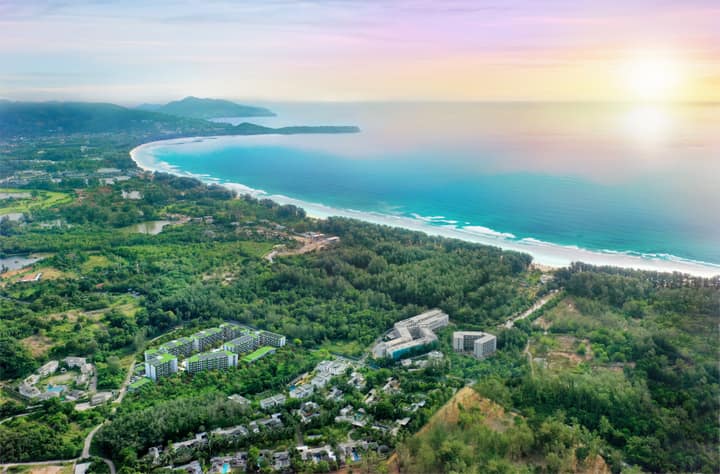
Phuket’s west coast is the sunset side of the island, home to both the quietest premium coves and the busiest tourist beaches. For an investor, choosing a location means choosing an audience, an occupancy pattern and the character of the asset. Let’s walk the main west-coast beaches north to south: how they differ, where it’s quieter and more premium versus where life buzzes, and what that means for buying to rent or to live.
Contents
- Geography of the west coast
- Nai Thon and Nai Yang
- Layan
- Bang Tao
- Surin
- Kamala
- Patong and the south
- Sea season and rental occupancy
- Logistics: distances from the beaches
- Comparison for investment
- Beach by asset type
- Layan in detail: Layan Verde and Layan Green Park
- One-day beach inspection checklist
- Pitfalls when choosing
- Case: a beach for your goal
1. Geography of the west coast
Phuket’s west faces the Andaman Sea — the side of sunsets, sandy beaches and most resort projects. Roughly, the coast splits into three zones:
- Northwest (Nai Thon, Nai Yang, Layan) — quiet, green, close to the airport.
- Central-west (Bang Tao, Surin, Kamala) — mature infrastructure and premium projects.
- Southwest (Patong, Karon, Kata) — the tourist centre, density and nightlife.
The further north, the quieter and more premium as a rule. The further south toward Patong, the busier and more mass-market.
There’s a second axis people often forget: terrain. The west coast is a chain of coves separated by headlands and hills. Each cove lives its own life: its own wave pattern, its own road in from the “mainland”, its own set of cafés and its own crowd. So beaches that sit side by side on the map (Surin and Bang Tao, Layan and Nai Thon) feel like different districts in practice. For a buyer that means comparing not “west versus east” but one specific cove against another — ideally on foot.
🔗 Full district map: Phuket districts → · Where to stay in Phuket →
2. Nai Thon and Nai Yang
The far north of the west coast, next to the airport and Sirinat National Park. Nai Thon is a small, quiet cove with clean water and almost no beachfront development. Nai Yang is a long beach with a pine park and local cafés. People here value seclusion and nature; there’s less infrastructure, but the airport is 10–15 minutes away.
For investors these are niche spots: the audience wants quiet and airport proximity, not active resort life.
One important nuance: national-park status means not just pretty pines but a limit on first-line development. That is why there are so few new projects right by the water here, and those that exist sit slightly inland. For an owner it’s protection against “a hotel going up in front of the windows”; for a rental business it’s limited supply that supports prices on a small but steady demand.
🔗 Detailed guide: Nai Thon and Nai Yang →
3. Layan
Layan is one of the cleanest, calmest coves on the island, between Bang Tao and Nai Thon. Soft sand, calm sea in season, greenery all around. Its key edge is combining quiet with access to Bang Tao’s mature infrastructure minutes away and the airport ~20 minutes off.
That balance is what makes Layan premium and promising: seaside land is scarce, new projects (e.g. Layan Verde) add their own infrastructure, and demand for a clean shore keeps growing.
Layan beach is essentially the northern continuation of Bang Tao, separated by a small river and an islet offshore. There’s no row of sunbeds and beach clubs in the Surin style — a handful of cafés and plenty of open sand. That is its “product”: a guest who picks Layan pays for space and quiet, and drives 10 minutes to Boat Avenue for shopping and restaurants.
🔗 More on the area: Layan infrastructure → · Surin vs Layan → · Layan beach guide →
4. Bang Tao
Bang Tao is one of the island’s longest beaches and the west’s most mature hub. Here you’ll find Laguna (a complex of hotels and golf), Boat Avenue and Porto de Phuket with supermarkets, restaurants and shops, plus international schools and clinics nearby in Cherng Talay.
For investors Bang Tao is a “safe” pick: a developed environment, steady rental demand, a wide choice of projects. The downside is higher build density than quiet Layan.
Bang Tao has its own “storeys” too. The southern end near Surin is denser and louder; the centre is Laguna territory with hotels, lagoons and golf; the north, toward Layan, is calmer and greener. The same “Bang Tao” address can mean a very different environment, so look at the specific stretch of beach, not the district name.
🔗 Comparison: Kamala vs Bang Tao → · Layan vs Bang Tao → · Bang Tao guide → · Laguna cluster →
5. Surin
Surin is a compact premium beach south of Bang Tao, historically associated with villas and high-end projects. A pretty cove, beach clubs, a prestigious setting. Land is scarce and development dense and expensive, so the entry point here is usually higher.
The audience is the premium segment valuing location prestige and proximity to Bang Tao.
As a rental asset Surin works as a “showcase”: a guest who wants a status location and is willing to pay for it chooses Surin deliberately. The flip side is that the high entry price eats part of the yield, so people here more often buy “for themselves and occasional letting” than as a pure rental instrument.
🔗 Detailed guide: Surin beach →
6. Kamala
Kamala sits between Surin and Patong — calmer than Patong but with growing infrastructure and premium hillside projects with sea views. It suits those who want to be close to lively Patong yet live in a quieter setting.
Sea views from Kamala’s hills are a strong argument for projects with view units.
Kamala’s signature is the contrast between “down” and “up”. Down by the beach is a family village with a market and cafés; on the hills around the bay are villas and residences with a sunset panorama. For an investor a hillside view unit is a distinct product with its own audience, with one caveat: getting to the beach means a car or scooter ride down, not a walk.
🔗 Detailed guide: Kamala →
7. Patong and the south
Patong is Phuket’s tourist heart: nightlife, maximum density, heavy footfall. To the south, Karon and Kata are more family-oriented but still busy. Short-term rental occupancy is high here, but so is competition, density and noise.
This is a choice for the mass short-term flow, not quiet premium.
Patong’s economy is an economy of turnover: many guests, short stays, price competition among hundreds of units. Occupancy can be high, but the average nightly rate and the “net” result after management costs are often lower than in premium coves with less supply. And an asset in Patong depends more heavily on mass tourism and its swings.
🔗 Deep dive: Investing in Patong →
8. Sea season and rental occupancy
The west coast runs on the Andaman Sea’s calendar, and that shapes both the beach and the income.
- High season (roughly November — April). Calm, clear sea, beaches at their best, peak occupancy and rates. This is when the marketing photos are taken — and exactly what you should not base an annual income model on.
- Low season (roughly May — October). The southwest monsoon: waves and currents appear on west-coast beaches, lifeguards put up red flags. The beach stays beautiful, but swimming is restricted. Occupancy drops, rates fall, but a different audience arrives — remote workers, families on longer stays, “green season” guests.
What this means in practice:
- Count the year, not the month. Management companies and rental pools report average annual occupancy — that’s the figure to compare across projects.
- Quiet coves suffer less. In low season the gap between Layan and Patong narrows: mass tourism dips harder than the premium segment.
- Look for a “second product” for low season. A project with pools, sports facilities and a coworking space sells itself even when the sea is closed. That is why flagship condo-hotels carry such a large set of on-site amenities.
🔗 More: Rental seasons and occupancy in Phuket → · Short-term vs long-term rental →
9. Logistics: distances from the beaches
For renting and for living, distances matter more than they seem: the airport transfer is a guest’s first impression, the school run is a family’s daily routine. Reference points for the northwest (from project cards in the Layan area):
| Point | From Layan / Bang Tao |
|---|---|
| HKT airport | ~20–25 min by car |
| Boat Avenue / Porto de Phuket | ~10 min |
| Laguna Phuket (golf) | ~8 min |
| International schools (UWC, HeadStart) | ~20–25 min |
| Bangkok Hospital Phuket | ~25 min |
The further south you go toward Patong and Karon, the longer the drive from the airport — over the hills and through Patong traffic — and the more it matters to guests on short stays. On the other hand, the southern beaches are closer to Phuket Town and its services.
A separate category is walking time to the water. “700 m to the beach” (as at Layan Verde — about 9 minutes on foot) and “700 m across a busy road and up a hill” are two different 700 metres. Check the route on foot, in the midday heat, not on a map.
🔗 Getting around Phuket → · International schools in Phuket →
10. Comparison for investment
| Location | Character | Infrastructure | Best for |
|---|---|---|---|
| Nai Thon / Nai Yang | Quiet, nature | Minimal | Seclusion, airport proximity |
| Layan | Quiet premium | Nearby (Bang Tao) | Balance of quiet and convenience |
| Bang Tao | Mature hub | Maximum | Steady demand, families |
| Surin | Premium villas | Developed | Status segment |
| Kamala | Calmer than Patong | Growing | Sea views, near the centre |
| Patong / Karon / Kata | Mass tourism | Maximum | Short-term flow |
For managed rental in a condo-hotel, a clean beach, premium surroundings and nearby infrastructure matter — they support occupancy and an owner net yield of around 8–10% (the owner receives 60% of the pool’s net profit).
It also helps to look at a beach through the lens of supply: the fewer new projects in a cove, the less competition for the guest and the steadier the rate. In Layan and Nai Thon buildable land is objectively scarce; in Bang Tao and Patong supply is broad. That doesn’t make mature areas worse — demand runs deeper there — but their income model is built on volume, while quiet coves rely on scarcity.
🔗 How income is counted: Calculating ROI in Phuket → · Calculator · What is a rental pool → · Net yield →
11. Beach by asset type
The “best beach” depends not only on your goal but on the property format. The same Layan works differently for a studio in a condo-hotel and for a pool villa.
| Asset type | Where it works best | Why |
|---|---|---|
| Studio / 1BR in a managed condo-hotel | Layan, Bang Tao | Guests want a walkable beach and services nearby; the management company fills the unit without your involvement |
| Family unit 2–3BR | Bang Tao, north Layan | Schools, clinics, supermarkets within 10–25 minutes; demand for longer stays |
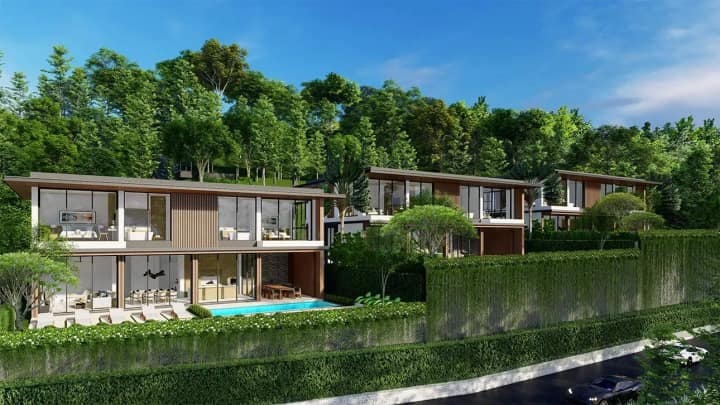
| Pool villa | Layan, Bang Tao, Kamala hills | Privacy and views; the audience pays for seclusion, not proximity to bars |
| Hillside view apartments | Kamala, Surin | The sunset panorama is a product in itself for the premium guest |
| Budget short-term flow | Patong, Karon, Kata | High turnover under price competition |
The general rule: the less “service from a management company” a property has, the more the beach and infrastructure need to be nearby on their own. A condo-hotel with a rental pool will survive even a less-hyped cove — a villa without management is better placed where the guest already knows why they came.
🔗 Catalogue collections: Sea-view condos → · Villas in Layan → · Beachfront → · Condo or villa →
12. Layan in detail: Layan Verde and Layan Green Park
Since the Layan–Bang Tao pairing wins the comparison so often, let’s look at two VillaCarte Group projects by this beach — they show well how one shoreline yields different investment products.
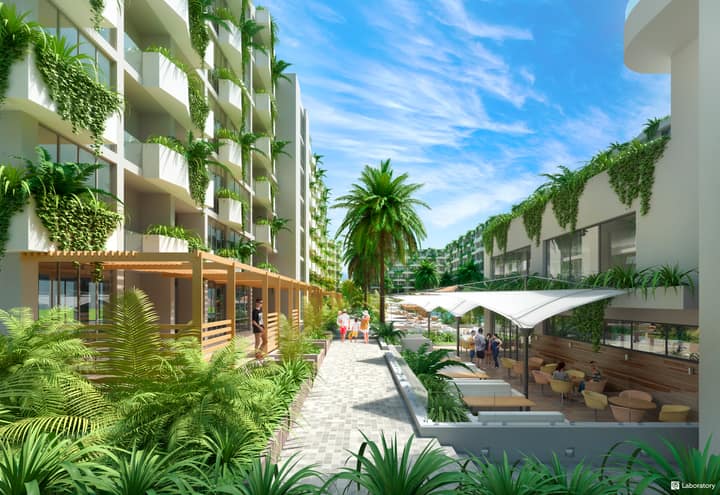
Layan Green Park — the island’s first condo-hotel with EDGE green certification, about 700 m from the beach (2 minutes on the free shuttle). Phase 1 (248 units) was completed in 2024 and sold out by the developer before handover — today you can only enter it via resale from owners, with full payment and no installment plans. Resale studios from $142,602. It’s a ready asset: the hotel operates, the rental pool is formed, income starts from the moment of transfer. How the phase sold out and what it means for resale is covered in the Layan Green Park case.
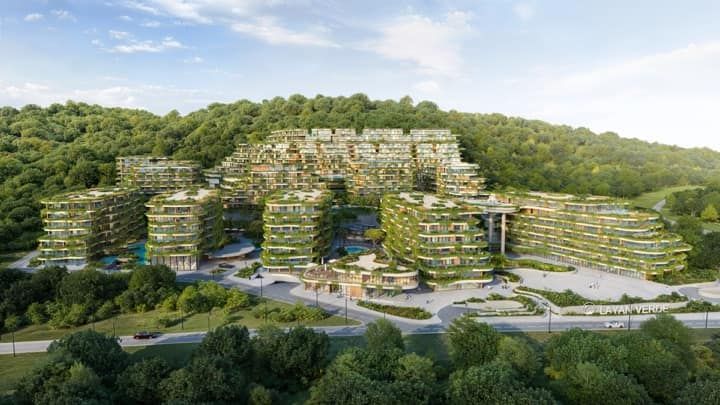
Layan Verde — a seaside quarter under construction on 7.5 ha: 774 residences, premium buildings and a hotel operated by Dusit International, its own community mall, ocean club and lagoon pools. ~700 m walk to Layan beach, ~20 minutes to the airport. Entry from $235,995, a construction-period installment plan is available, handover in 2028. The developer forecasts around +45% capital growth during construction — a forecast, not a guarantee, and one to weigh alongside construction-stage risks.
| Layan Green Park | Layan Verde | |
|---|---|---|
| Status | Completed, phase 1 operating since 2024 | Under construction, handover 2028 |
| How to buy | Resale only, 100% payment | From the developer, construction-period installments |
| Entry (studio) | from $142,602 | from $235,995 |
| Operator | In-house management | Dusit International (premium buildings) |
| Income | Right after the deal | After handover |
| Pool model | Owner gets 60% of net profit, forecast ~8–10% | Owner gets 60% of net profit, forecast ~8–10% |
Choosing between them is choosing between “money works immediately” and “cheaper entry at the construction stage, counting on growth”. Full comparison: Layan Verde vs Layan Green Park → · What is resale → · Off-plan →
13. One-day beach inspection checklist
If you’ve come to Phuket to choose a location, one day on the west coast can be spent productively along this route:
- Morning — the northwest. Start at Nai Thon: see what “quiet” looks like in practice and judge whether the local infrastructure is enough for you. Then Layan — walk from the project you’re considering to the water and time it.
- Midday — Bang Tao and Cherng Talay. Boat Avenue, Porto de Phuket, the drive to a school or clinic if those matter. Gauge weekday traffic.
- Afternoon — Surin and Kamala. Compare build density and the price of “status”. In Kamala go up the hill and look at the view people pay for.
- Evening — Patong. Not to buy, but to calibrate: after Patong you’ll know exactly what noise level you can live with.
At each beach answer five questions: are the water and sand clean; are there waves and flags (in low season); how many minutes’ walk to a café and a shop; who holidays here — is it your audience; what is being built around and when will it finish. The answers will tell you more than any sales presentation.
🔗 Before the deal: Property due diligence → · How to choose a developer →
14. Pitfalls when choosing
- Judging by “beauty” alone. For rental, the “beach + infrastructure + logistics” combination matters more.
- Confusing formats. Quiet premium (Layan) and mass Patong serve different audiences — income is modelled differently.
- Ignoring the season. Sea and occupancy depend on the season; look at annual occupancy, not the peak month.
- Forgetting the area’s stage. Developing zones offer growth potential but “construction around” early on.
- Assessing the beach without distances. Time to the airport, schools and retail matters for renting and living.
- Trusting the word “beachfront”. Check the actual route to the water and whether there’s a road to cross.
- Not looking at supply. A beach with a dozen new projects means competition for guests for years ahead; ask what else is being built in the cove.
15. Case: a beach for your goal
Consider a typical scenario. A buyer wanted a premium rental asset plus occasional family stays. Patong was out for noise and density; clean Nai Thon lacked infrastructure for kids. Layan was the sweet spot: a clean beach and quiet, with schools, clinics and retail 10–15 minutes away in Bang Tao and the airport close. A unit in a managed condo-hotel rents between visits.
Next came the choice within Layan. The completed Layan Green Park delivered income right away but required full payment on a resale; Layan Verde, under construction, offered a construction-period installment plan and the Dusit brand, but with a wait until 2028. The buyer weighed not “which project is better” but “which cash schedule suits me” — and that’s the right question.
Takeaway: the “best” beach isn’t abstract — it’s the one that fits your goal. For a balance of quiet, infrastructure and rental demand on the west coast, the Layan–Bang Tao pairing often wins.
I’ll match a location and project to your goal — rental, living or both — with a yield calculation.
Choosing a west Phuket location
By submitting this form you agree to the privacy policy.