You bought an apartment to rent — and immediately the question: rent it short-term to tourists or long-term? This drives yield, hassle and even legality. In Phuket short-term rental has an important legal nuance (the Hotel Act) that condo-hotels resolve. Here are both models by yield, operations, taxes and risk, plus a third option — 30-day-plus long-stay — and a worked calculation on real price ranges, so you choose for your strategy rather than for a pretty number from a presentation.
Contents
- Short-term rental
- Long-term rental
- Long-stay from 30 days: the third option
- Comparison
- Yield of the models
- Running the numbers
- A unit’s seasonal calendar
- Legality of short-term rental
- Operations and management
- The long-term lease: what to check
- Taxes
- How the model shapes your choice of property
- Pitfalls
- Model-selection checklist
- Case: by strategy
1. Short-term rental
Short-term (daily) rental means renting to tourists for days and weeks.
- Pro: higher gross yield in high season, flexible nightly pricing.
- Pro: you can occasionally stay yourself between bookings.
- Con: it needs operations — check-in, cleaning, marketing, 24/7 support.
- Con: seasonality and the legal nuance (Hotel Act) for sub-30-day stays.
In resort projects a management company runs this. It helps to see “short-term rental” in Phuket for what it is: a hotel business in miniature. A guest expects cleaning, fresh linen, a reply on messenger within five minutes and the air-conditioning fixed the same day. While you are in another country, every such detail becomes either a cost for a local helper or a bad review that drags occupancy down for months. That is why the short-term model only truly works where operations are centralised.
🔗 Looking for a long-term rental? Ranges by area, seasons, contract basics and an enquiry passed to vetted partners: Long-term rent in Phuket →
2. Long-term rental
Long-term rental means renting for months and years (residents, expats, long-stay).
- Pro: steady income, minimal operations, one tenant for a long time.
- Pro: no Hotel Act issues (rentals of a month or more).
- Con: a lower gross yield than short-term in season.
- Con: less flexibility for your own use.
The long-term audience on Phuket’s west coast is expat families with children in international schools, hotel and clinic staff, remote workers and retired Europeans. This demand barely depends on the tourist season: a child goes to school all year, not just from November to March. The flip side is that a tenant expects a “residential” standard: a washing machine, a desk, a kitchen people actually cook in and reasonable utility bills. A hotel-style studio without a kitchen rents noticeably worse on a long lease than a one-bedroom apartment.
3. Long-stay from 30 days: the third option
Between the two classic models sits an intermediate one that is often forgotten — long-stay for 1–3 months. These are winter residents, families on school holidays and remote workers who come to “live” for a season. For the owner this format combines the best of both worlds:
- A term of 30 days or more takes the rental outside the Hotel Act — the license question does not arise.
- The monthly rate is higher than under an annual lease: the tenant pays for flexibility and the season.
- Few operations: two or three arrivals per high season instead of dozens of daily check-ins.
The downside is the same as with short-term: demand concentrates in high season, and from May to October the unit either sits empty or rents cheaper. So long-stay more often works as part of a hybrid strategy: in winter the unit goes to winter residents for 2–3 months at a seasonal rate, and for low season the management company either finds an annual tenant starting in April or moves the unit into the daily pool. How exactly the seasons work and what happens to occupancy month by month is covered in our guide to Phuket rental seasons and occupancy.
4. Comparison
| Parameter | Short-term | Long-stay 1–3 months | Long-term |
|---|---|---|---|
| Gross yield | Higher (season) | Medium, seasonal | Lower, steadier |
| Occupancy | Seasonal | Seasonal | Even |
| Operations | High (or MC) | Low | Minimal |
| Legality <30 days | Needs hotel license | Not required | Not required |
| Audience | Tourists | Winter residents, remote workers | Residents, expats |
| Own use | Flexible | In summer | Limited |
| Wear and interior refresh | High | Moderate | Low |
| Dependence on reviews and rating | Critical | Moderate | Low |
The last two rows often drop out of the calculation. A short-term unit hosts dozens of guests a year — suitcases, children, sand from the beach — so furniture and appliances live noticeably shorter than with one careful tenant. And the rating on booking platforms directly controls occupancy: a run of bad reviews in December can cost an owner half the high season.
5. Yield of the models
Short-term rental in a condo-hotel with a management program benchmarks at an owner net yield of ~8–10% via the pool (owner — 60% of the pool’s net profit). Long-term usually gives a slightly lower pool gross revenue but higher stability and predictability. Many MCs flexibly switch a unit between models by season to maximise annual occupancy.
The crucial point is what exactly you compare. The short-term model has three levels of numbers: the pool’s gross revenue, the pool’s net profit after VAT, city tax, service charge and platform commissions, and finally the owner’s share after the 60/40 split. Presentations love the first line; an investor needs the third. Long-term rental has fewer levels — annual rent minus owner costs — so its “raw” number looks more modest, even though the gap between gross and net is precisely what is small there. The only fair comparison between models is by net yield — after all deductions but before the owner’s personal tax.
🔗 How to calculate: Rental management program → · Phuket rental yield → · Calculator
6. Running the numbers
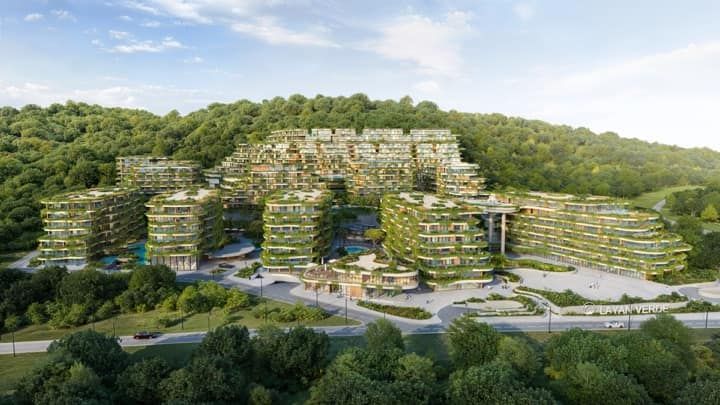
Take an illustrative calculation on two real price points: a unit in the under-construction Layan Verde from $235,995 and a resale studio in the completed Layan Green Park at $142,602. The long-term rent ranges come from our 2026 review of rental prices in Thailand: a studio or 1BR near the Layan–Bang Tao infrastructure rents for $700–1,500 a month.
| Metric | Short-term via the pool | Long-term, self-managed |
|---|---|---|
| Unit at $235,995 (1BR) | ~8–10% net → ~$18,000–22,500 a year | $900–1,500/month → $10,800–18,000 gross a year |
| Studio at $142,602 (LGP, resale) | ~8–10% net → ~$11,400–14,300 a year | $700–1,000/month → $8,400–12,000 gross a year |
| What else to deduct | Owner’s personal tax, CAM fee, insurance | CAM fee, insurance, vacancy between tenants, repairs, personal tax |
| Resulting gross yield | — | ~5–8% depending on the rate |
Owner costs then come off the long-term figure: the CAM fee (the Phuket benchmark is 85 THB/m² a month — around 3,800 THB for a 45 m² 1BR, about 2,550 THB for a 30 m² studio), insurance, a month of vacancy at tenant changeover and cosmetic repairs every few years. After that, long-term yield usually lands at ~4–6% net before tax — below the pool, but with almost zero volatility and no dependence on tourist flows.
The takeaway from the table is not “short-term always wins”: the 2–4 percentage-point gap is the price of seasonality, wear and reliance on a management company. If your horizon is a steady stream for ten years and you do not want to read monthly MC reports, long-term rental at 4–6% may be the more honest answer than the pool. If the goal is maximum income plus your own visits, short-term via a licensed MC wins.
7. A unit’s seasonal calendar
To choose a model, picture the unit’s year month by month:
- November–March — high season. Peak occupancy and rates; short-term rental earns most of the annual income. Long-stay winter residents book the same period, but at a monthly rate.
- April — transition month. Songkran and Easter still hold demand, then the tourist flow tails off.
- May–October — low season. Rain, waves on the west-coast beaches, lower rates; occupancy rests on Asian tourists and long-term residents.
The key conclusion for an investor: calculate on average annual occupancy, not on December. A moderate rate at 70% occupancy year-round often earns more than 90% on peak winter nights and an empty summer. A management program smooths the dip with a guest mix, corporate bookings and switching part of the units to monthly rental — that is what keeps the target ~8–10% net over the year rather than only in season.
Long-term rental barely notices this calendar: an annual lease with an expat pays the same in January and July. It does have a “season” of its own, though — tenants with children look for housing in July–August before the school year, and winter residents in October–November.
8. Legality of short-term rental
Key point: in Thailand renting a home for under 30 days on a regular basis falls under the Hotel Act and requires a hotel license. Private daily rental (e.g. self-run Airbnb) without a license risks fines.
The legal solution is condo-hotels and projects with a hotel license: a licensed management company runs the short-term rental, and the owner receives a share of income lawfully. That’s exactly why investment projects like Layan Verde and Layan Green Park are built around a built-in rental management program.
On top of the hotel license there is a second, less-known layer — the rules of the condominium itself. The by-laws of many residential condominiums explicitly prohibit daily rental, and the condominium juristic person can fine the owner, restrict guests’ access to the pool or refuse to issue key cards. So even if you are willing to carry the Hotel Act risk, in an ordinary residential condo the neighbours and the management committee will shut down the short-term model before the regulator does. Checking is simple: before buying, request the by-laws and house rules and look for a clause on the minimum rental term.
9. Operations and management
- Short-term: marketing, booking channels, check-in, cleaning, guest support. Hard to run yourself from abroad — handed to the MC.
- Long-term: find a tenant once a year, minimal operations; feasible without an MC, though an MC is still convenient.
Break short-term operations down line by line and you get roughly this list: photography and listings on platforms, dynamic seasonal pricing, answering guest enquiries, coordinating arrivals and departures, cleaning and linen change after every guest, consumables, minor repairs, monitoring the unit’s condition, reporting and taxes. In a rental pool all of this sits inside the management company’s 40% — and that is essentially what the owner is paying for. Ask separately what is not included: the CAM fee, insurance and replacing furniture and appliances as they wear usually stay with the owner.
Self-managing a long-term rental from abroad is also possible, but in practice you need at least one local contact: to show the apartment, take the deposit, hand over keys, call a repairman. Many agencies and MCs charge a fixed fee for this (usually one month’s rent for finding a tenant) plus a small percentage for administering the lease.
🔗 Remote ownership: How to buy remotely →
10. The long-term lease: what to check
Long-term rental looks simple until you get to the contract. Points worth fixing in writing:
- Term and early exit. The Phuket standard is a 6- or 12-month lease; termination conditions (30–60 days’ notice, forfeiting the deposit) are spelled out explicitly.
- Deposit. Usually 1–2 months’ rent; state what it can be withheld for (damage, unpaid utilities) and the return deadline.
- Utilities and CAM fee. Electricity and water are normally on the tenant, the CAM fee and sinking fund on the owner; internet and common-area cleaning are split by agreement.
- Rent review. The rate may be revised on renewal; agree the mechanism upfront so you don’t lose a good tenant over a dispute about 5%.
- Registration of leases over 3 years. Under Thai law a lease longer than three years is only enforceable if registered at the Land Office; for a typical one-year lease this is not required.
- Subletting and daily re-letting. Expressly prohibit the tenant from renting the unit daily — otherwise the Hotel Act and condominium-rules risk lands on you as the owner.
11. Taxes
Income tax applies to rental income regardless of the model. In a condo-hotel the MC fee and taxes are factored into net-yield calculations. Long-term rental is simpler to administer, but income tax applies the same way.
For an individual owner the mechanics are identical under both models: rental income falls under section 40(5) of the Thai Revenue Code, the 0–35% progressive scale applies, preceded by a deduction — either the standard 30% of gross rent or actual documented expenses. The difference between the models is who pays and how tax is withheld:
- Pool / short-term via an MC. The owner’s share is paid by a juristic entity, so the MC withholds 5% withholding tax at source and issues a certificate. This is not a separate tax but a prepayment: it is credited in the annual return, and with modest income from a single unit an overpayment due for refund is common.
- Long-term rental to an individual. An individual tenant withholds nothing; the owner declares the income at year end. If the tenant is a company (e.g. renting for an employee), the 5% withholding reappears.
Under both models a non-resident owner should establish in advance whether the income is also taxed in their country of tax residence and whether a double-tax treaty applies. A detailed breakdown with a worked example is in our article on rental income tax in Thailand.
🔗 Cost of ownership: Phuket taxes & fees →
12. How the model shapes your choice of property
Choose the rental model before buying, not after: different models suit different properties.
- For short-term — a condo-hotel with a hotel license, a built-in management program, reception, pool and hotel-grade service. Studios and 1BRs work best here: they are easier to fill and give the highest yield per dollar invested. A ready example is the Layan Green Park phase 1 sell-out case, where a resale studio at $142,602 joins the running program immediately.
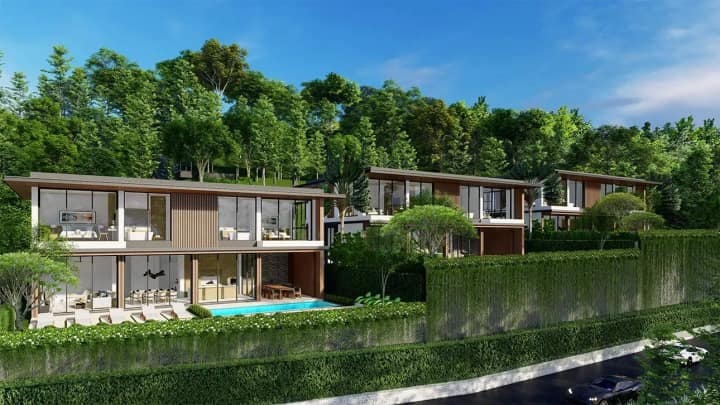
- For long-term — a residential condo or villa near international schools, clinics and supermarkets: 1–2 bedrooms, a full kitchen, parking. Bang Tao, Layan and Cherng Talay with their infrastructure are the classic choice for expat families; our collection of villas with rental income covers exactly this segment.
- For a hybrid — a project where the MC is willing to switch the unit between the pool and monthly rental; check these terms in the management agreement beforehand. For those who want predictability at the start, there are projects with a guaranteed rental for the first years followed by a transition to the pool — the pros and cons of that scheme are covered in our article on contracted rental yield in Phuket.
A word on stage: the under-construction Layan Verde offers entry from $235,995 with an instalment plan during construction and a projected capital gain before completion in 2028 (the developer projects +45% — a projection, not a guarantee), but income only starts after handover. The completed Layan Green Park is available only by resale with full payment, but rental income runs from the first month of ownership. A comparison of the two stages is in off-plan vs ready in Phuket.
13. Pitfalls
- Short-term without a license. Self-run sub-30-day Airbnb risks a fine.
- Pricing at peak season. Annual occupancy is below peak.
- Underestimating operations. Without an MC, short-term eats time and money.
- Ignoring net yield. Gross ≠ what’s in hand.
- Forgetting seasonality. Low season lowers average income.
- Buying a “residential” condo for the short-term model. The by-laws may prohibit stays under 30 days — check the house rules before the deal.
- Taking a hotel-style studio for long-term. Without a kitchen and washing machine an annual tenant either won’t come or will pay below market.
- Not budgeting for wear. In the short-term model furniture and appliances are replaced more often; a replacement reserve is part of the calculation, not a surprise.
- Forgetting withholding tax. The 5% the MC withholds is a tax prepayment — claim it in your return, or you simply gift the overpayment to the state.
14. Model-selection checklist
Go through these points before buying — most answers will determine the model automatically:
- How many personal visits a year do you plan? More than two or three weeks in season — the long-term model is already inconvenient.
- Are you prepared for seasonal income swings? If you need an even monthly stream — long-term or a hybrid with an annual tenant.
- Does the project have a hotel license and a management program? If not, the short-term model is closed regardless of your plans.
- What do the condominium’s house rules say about the minimum rental term?
- What is each model’s net yield after all costs? Compare the third line of the calculation, not gross revenue.
- Who will manage from abroad? An MC, an agency or a local contact — and what it costs.
- How is the management agreement structured? Income split, what the service includes, the option to switch between models, the exit procedure.
- How will you pay tax in Thailand and in your country of residence?
🔗 Full breakdown of the yield parameters: How to calculate ROI in Phuket →
15. Case: by strategy
Consider two investors. The first wants maximum income and doesn’t mind seasonality — a unit in a condo-hotel where a licensed MC legally runs short-term rental. The second values stability and minimal hassle — renting long-term to an expat for a year, earning steady income with no operations.
Add a third. A family from Europe plans to spend two winter months in Phuket themselves and rent the rest of the time. The daily pool is awkward for this scenario: their own visits fall in the most profitable period and the MC loses peak revenue. An annual tenant does not fit at all. The solution is a hybrid: a unit in a project where the MC switches it between monthly rental and the pool; in winter the family lives there and rents the remaining winter months to winter residents, and from April to October the unit goes into the pool at low-season rates. The yield is lower than the first investor’s, but it honestly accounts for their own use instead of fighting it.
Takeaway: short-term wins on income potential (but via a licensed MC); long-term on stability and simplicity; the hybrid is for those who want both to live and to rent. In a condo-hotel all the models are available and flexibly combined; in an ordinary residential condo only long-term really works.
I’ll select a unit for your rental strategy and calculate yield under both models.
Selection by rental strategy
By submitting this form you agree to the privacy policy.