Living by the sea year-round stops being a dream once there’s a clear plan. Phuket is one of the easiest islands to relocate to: international schools and clinics, an expat community, developed infrastructure and a warm climate. But moving is more than the beach: visa, housing, budget and daily life matter. Here’s a step-by-step guide to relocating to Phuket deliberately.
Contents
1. Why Phuket to live
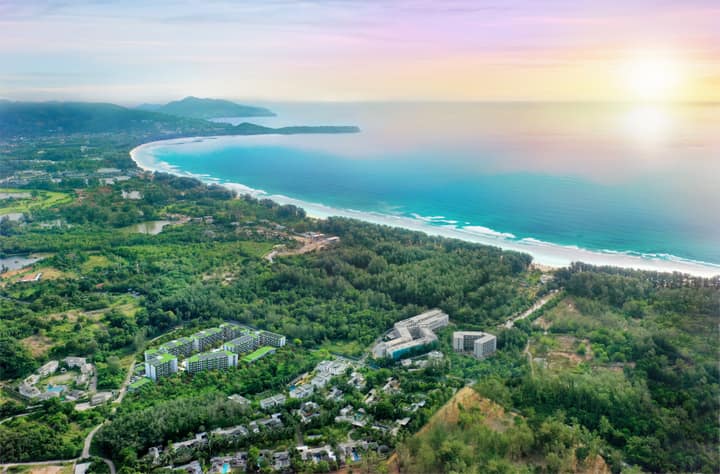
Phuket combines a resort with full urban infrastructure: an airport with direct flights, international schools, private clinics, supermarkets, restaurants and a large expat community. A warm year-round climate and the nature of the west coast (Layan, Bang Tao, Surin) make the island convenient for families and remote work alike.
It’s important to grasp the scale: the island stretches roughly 48 km north to south, and “Phuket” is not one place but a dozen very different areas. The northwest has quiet beaches and resort clusters near the airport, the mid-west has touristy Patong, the south has a community of long-term expats. So relocating to Phuket starts not with a suitcase but with two decisions: which legal status you arrange and which area you will live in. Everything else follows from those two answers.
Another argument for the island is the flexibility of scenarios. It works equally well for a few months of “wintering”, a full family move with children in an international school, and a hybrid format where you live on the island part of the year while the home is rented out during your absences, covering part of the costs.
2. Visa and legal stay
Living here needs a legal status. The main long-term options:
- Thailand Privilege (Elite) — a multi-year visa for a membership fee (packages from $12,700): minimal bureaucracy, concierge service, suits those who value simplicity.
- DTV (Destination Thailand Visa) — for remote work for a foreign employer and freelancing: a fee from 10,000 THB, proof of 500,000 THB (~$14,930) in your account, a 5-year term with stays up to 180 days and in-country extension.
- Retirement visa (Non-O/O-A) — for those 50+: 800,000 THB in a Thai account or income from 65,000 THB per month; insurance is mandatory for O-A.
- LTR (Long-Term Resident) — up to 10 years of stay for wealthy and high-income categories (thresholds from $40,000–80,000 annual income depending on the track), with tax benefits and once-a-year reporting.
How to choose in practice:
| Profile | Working visa option |
|---|---|
| Remote work / freelance | DTV; with high income — LTR |
| 50+ living on passive income | Retirement Non-O/O-A; with high income — LTR Wealthy Pensioner |
| “No bureaucracy, please” | Thailand Privilege (Elite) |
| A relocating family | Main visa + dependant statuses for spouse and children |
Owning property alone doesn’t grant residency, but it eases daily life and renting. Two practical points people often forget. First: most long-term statuses involve regular reporting to immigration — the classic scheme is a notification every 90 days, while LTR eases it to once a year. Second: if you spend 180 days or more in the country in a calendar year, you become a Thai tax resident — this affects taxation of foreign income and should be factored into planning before the move, not after. For a family, check that the chosen program grants dependant statuses to the spouse and children — then the whole family lives on one basis.
🔗 More: Visas for owners → · Thailand Elite → · DTV visa → · Retirement visa → · LTR visa → · 180-day tax residency →
3. Housing: rent or buy
- Rent first — to choose an area and understand daily life.
- Buy — stability, your own home, rental income while away.
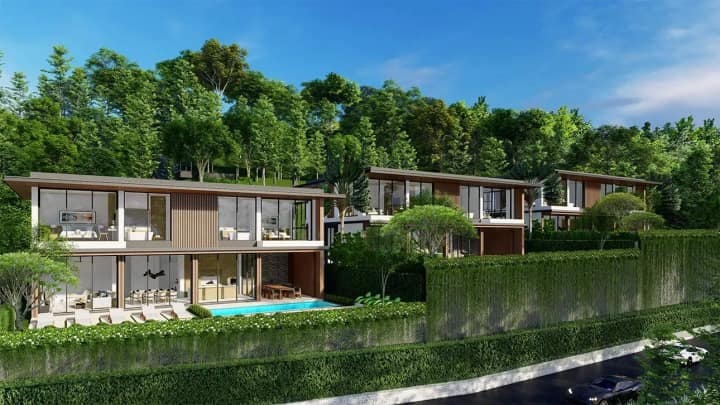
Many relocators rent 6–12 months, then buy. Long-term rent benchmarks on the west coast (2026 data): a studio or 1BR in the Layan–Bang Tao cluster — roughly $600–1,500/mo, a 2–3 bedroom villa — $1,500–4,000/mo, premium villas by the sea — from $3,000/mo. In high season (November–April) rates are noticeably higher, so an annual contract beats month-to-month.
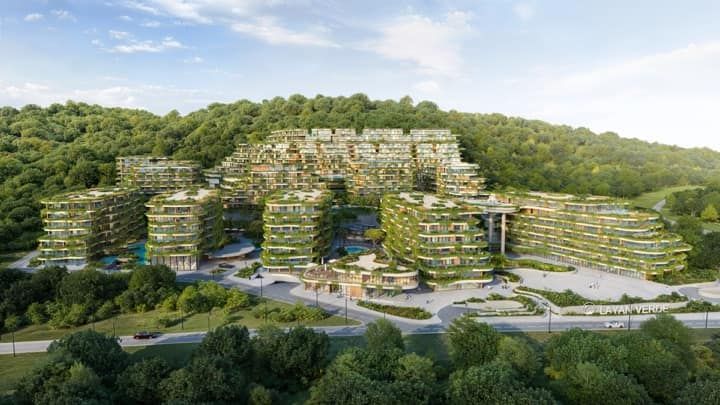
Buying in Phuket is available freehold (full ownership within a condominium’s foreign quota) or leasehold (a long lease, typically 30 years with renewals); a rental management program lets you rent the unit out when you travel. For entry-point reference: in the Layan cluster a studio resale in the completed phase 1 of Layan Green Park starts from $142,602, and units in the under-construction Layan Verde from $235,995 with stage-based instalments (2026 price lists; for Layan Verde the developer forecasts up to +45% value growth over the construction period — a forecast, not a guarantee).
A few long-term rental nuances worth knowing before signing. The deposit is usually one to two monthly rates and is returned on move-out after a condition check. Electricity and water are almost always billed separately, and the landlord’s per-kilowatt-hour rate should be confirmed in writing — it is often above the state tariff. Also check what the rate includes: cleaning, internet, pool and garden service in villas may be billed separately.
Moving with a dog or cat? Narrow the search to pet-friendly buildings from the start — not every complex allows animals.
🔗 How to buy: Step-by-step buying process → · Rent prices in Thailand → · Pet-friendly homes in Phuket →
4. Cost of living
The budget depends on lifestyle: rent/mortgage, food, transport, schools, insurance. Comfortable living in Phuket is usually pricier than the Thai average but more affordable than many Western resorts.
Realistic benchmarks from our 2026 breakdowns: a minimal single budget is $700–1,000/mo (local food, a bike, housing away from the beach), a comfortable one — $1,300–2,200/mo. A family of two adults and a child without an international school fits into $2,000–2,800/mo; a comfortable family scenario with a school and a car — $4,000–6,500/mo. The heaviest items are housing and the international school ($8,000–20,000+ per year per child), and those are the ones to count first.
A detailed breakdown of every item is in a separate article.
🔗 More: Cost of living in Phuket → · Family budget →
5. Healthcare, schools, transport
| Area | What Phuket has |
|---|---|
| Healthcare | Private international clinics (Bangkok Hospital, etc.) |
| Schools | International schools (British, American curricula) |
| Transport | Car/bike rental, taxis, airport with direct flights |
A few practical notes. Healthcare on the island is mostly private and paid, so insurance is a mandatory budget line: allow roughly $100–300+/mo per adult depending on age and coverage. International schools are concentrated mainly in the Bang Tao–Cherng Talay cluster and around it — families usually pick the school first and then housing 10–15 minutes from it, not the other way round. For transport the key figure is airport proximity: from the northwest (Layan, Bang Tao) the drive takes about 20–30 minutes, from the island’s south — 60–75 minutes, and for a life with frequent flights those are different realities.
🔗 Details: International schools → · Healthcare → · Transport →
6. Areas to live
- Layan, Surin — quiet, nature, privacy.
- Bang Tao — everything-on-hand infrastructure, Laguna, schools.
- Rawai, Nai Harn — expat community, more affordable, south.
A bit more on the logic of choosing:
| Area | Who it suits | Logistics |
|---|---|---|
| Layan | Quiet + Bang Tao infrastructure 10–15 minutes away | ~20 minutes to the airport |
| Bang Tao / Laguna | Families: schools, clinics, Boat Avenue nearby | ~30 minutes to the airport |
| Surin, Kamala | Calm west, the “Millionaires’ Mile” | 30–40 minutes to the airport |
| Rawai, Nai Harn | Long-term expats, the south, community | 60–75 minutes to the airport |
| Phuket Town | Urban life, the most affordable rent | 30–35 minutes to the airport |
A common mistake is choosing an area based on holiday impressions. The tourist rhythm and everyday life are different things: on holiday it doesn’t matter how far the school is or whether there’s a supermarket with familiar products nearby. So the rule is simple: list the family’s daily routes (school, sport, shops, clinic) and fit the area to that list.
🔗 Comparison: Best areas → · Layan vs Bang Tao → · Phuket districts map →
7. Daily life: internet, bank, language
- Internet — fast fibre, convenient for remote work.
- Bank — an account can be opened (terms depend on the visa); cards, transfers.
- Language — English is common in tourist zones; Thai helps for daily life.
- Communities — active expat chats and groups help you settle in.
What else is worth knowing about everyday life. Fibre is available in most residential complexes on the island’s west, with plenty of headroom for video calls — but when choosing a villa in a remote spot, check provider availability before signing. A bank account is easier to open with a long-term visa; you’ll also need it for utility payments and, when buying property, to confirm the inbound currency transfer. Utilities are billed separately from rent: landlords’ electricity rates are often above the state tariff — a normal practice, but one to fix in the contract upfront.
Seasonality is part of daily life, not just weather. High season (November–April) is dry, sunny and busy; the rainy season (May–October) brings short downpours, fewer tourists and lower rents. The island is comfortable year-round, but moving, renovation and flights are easier to plan with the season in mind.
🔗 Useful: Utility bills → · Phuket for remote workers →
8. A step-by-step relocation plan
A working sequence that saves money and nerves:
- Visa. Pick a status for your profile (remote work → DTV, 50+ → retirement, “no bureaucracy” → Privilege) and gather documents in advance.
- Scouting trip. 2–4 weeks on the island in resident mode, not tourist mode: see areas on weekdays, schools, clinics, roads at rush hour.
- Rent for 6–12 months. Choose the area where you’ll likely live long-term; an annual contract is cheaper than monthly.
- School and healthcare. For a family — a school place first, then housing nearby; for everyone — insurance from day one.
- Daily setup. Bank account, local SIM, transport (bike or car), basic services.
- Buying a home. Once the area is proven by living there — move from renting to buying: it removes the rent expense, and while you’re away the unit earns via a rental pool (~8–10% net in Layan projects — a benchmark, not a guarantee).
A realistic horizon for the whole chain is 3 to 12 months. Skipping steps usually costs more than walking them: buying “from photos” without living in the area is the most common reason homes are resold within the first year.
A minimal document pack to prepare while still at home: passports with validity to spare for the whole family, bank statements matching the chosen visa’s requirements, proof of income or remote employment (for DTV and LTR), marriage and birth certificates with translations (for dependant statuses), school records and references for enrolling children, an international driving permit. A pack gathered in advance turns the bureaucratic part of the move from stress into routine.
9. Relocation pitfalls
- Moving with no visa plan. Legal status is the first thing to solve.
- Buying without living first. Rent first, then buy for your chosen area.
- Underestimating the budget. Schools and insurance affect costs notably.
- Ignoring the rainy season. May–October has its own character.
- Not checking internet/logistics. Critical for remote work.
- Forgetting the 180 days. Tax residency kicks in automatically — plan your stay calendar in advance.
- Choosing an area “from holiday”. Tourist impressions don’t replace fitting the area to the family’s daily routes.
10. Case: moving as a family
Consider a typical scenario. A family with children first rented a house in Bang Tao for a year: close to an international school and infrastructure. Meanwhile they chose an area and bought a unit in a project near Layan — quieter and with growth potential. While they travel home, the unit works in a rental management program, covering part of the costs. The visa question was solved with a long-term program.
Takeaway: a successful relocation is the sequence “visa → rent → choose area → buy,” not a spontaneous move. Phuket lends itself to that.
I’ll help with area choice, housing for living and rental, and orient you on visas via partners.
Relocation and housing search
By submitting this form you agree to the privacy policy.