Layan and Bang Tao are two neighbouring areas of west-coast Phuket that investors most often choose between. Both sit by top Andaman beaches but solve different goals: one offers mature infrastructure and guest footfall, the other quiet, nature and growth potential. Here’s where it’s smarter to buy in 2026 — with catalogue figures, a report on the Bang Tao condo market, distances, running costs and a pre-deal checklist.
Contents
- Layan: calm and growth
- Bang Tao: hub and footfall
- Comparison by catalogue
- Bang Tao in numbers: the condo market in Q1 2026
- Infrastructure and audience
- Distances and logistics
- Prices and projects
- Cost of ownership: CAM and sinking fund
- Yield by area
- Seasonality and tourist flow
- What to check before buying in each area
- Area-choice pitfalls
- Case: choosing for your goal
- What to choose
1. Layan: calm and growth
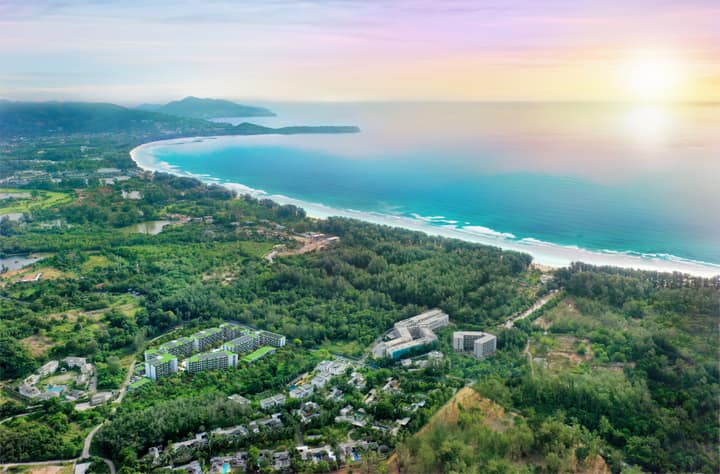
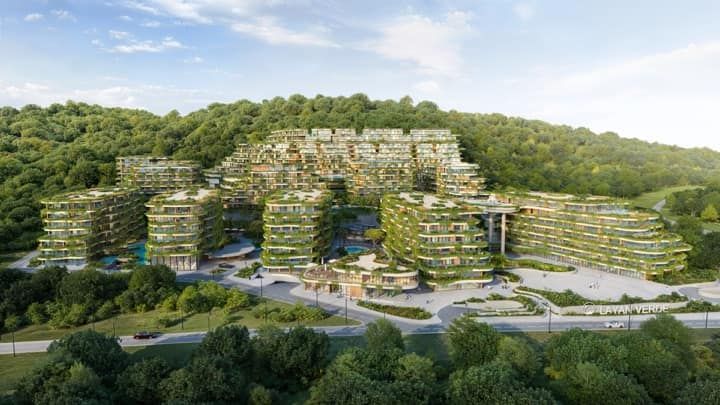
Layan is a calm, green area with its namesake beach, considered one of the cleanest and quietest on the island. Less dense development, more privacy, a premium feel. New beachfront projects are rising here — for example Layan Verde, 700 m from the beach: a 7.5-hectare quarter with 774 residences, its own community mall, an ocean club and Dusit hotel infrastructure. Growth potential comes from the shortage of new supply and the area’s gradual development.
Keep the scale in mind: our catalogue lists 25 projects in Layan against 132 in Bang Tao. It is not an “empty” area, but supply is limited, so every new quarter noticeably moves the local market. A detailed guide to the beach, access and development is in our Layan beach guide and on the Layan area page.
2. Bang Tao: hub and footfall
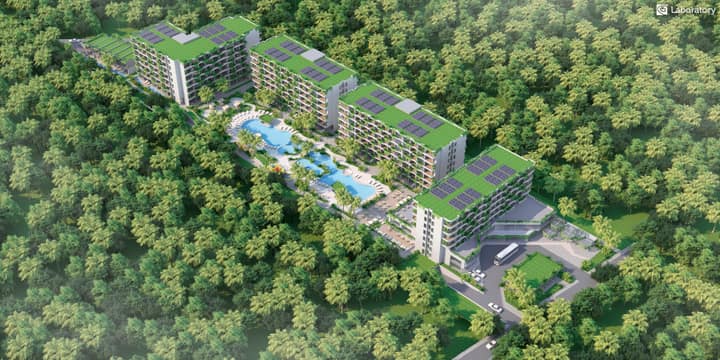
Bang Tao is west Phuket’s major resort hub: the Laguna complex, the Boat Avenue promenade, restaurants, international schools, clinics, gyms and beach clubs. Mature infrastructure drives steady, year-round rental demand — both short and long stay. The Layan Green Park condo-hotel, whose first phase is already completed and operating, sits nearby.
The flip side of maturity is competition. The more completed complexes there are, the more a specific unit’s yield depends on the management company, the finish grade and marketing rather than on the mere fact of “being in Bang Tao”. Guides to the area and its sub-districts: the Bang Tao beach guide, the Laguna cluster guide and the Bang Tao area page.
3. Comparison by catalogue
Start with what can be checked. The figures below come from our Phuket project catalogue as of 26 August 2026 — the same calculation published in the price index.
| Metric | Layan | Bang Tao |
|---|---|---|
| Projects in the catalogue | 25 | 132 |
| Median entry price | $688,924 | $676,921 |
| Median $/sqm | $4,809 | $3,496 |
| Off-plan / completed | 18 / 7 | 83 / 49 |
The third row is the one that matters. A square metre in Layan costs 38% more, while the median entry price is almost identical. The reason is the shape of supply: Layan has 25 projects and little completed stock, Bang Tao has 132 and nearly half of them already delivered. A similar budget buys less floor area in Layan — in a district where supply is limited.
And now what numbers cannot capture:
| Parameter | Layan | Bang Tao |
|---|---|---|
| Atmosphere | Quiet, green, private | Active resort hub |
| Infrastructure | Developing | Mature (Laguna, Boat Avenue) |
| Rental demand | Growing | High, stable |
| Entry price | Competitive at launch | Higher for completed |
| Growth potential | High (new projects) | Moderate |
| Audience | Privacy, nature | Families, long-stay, tourists |
4. Bang Tao in numbers: the condo market in Q1 2026
Bang Tao has something Layan doesn’t yet — a dedicated condominium market report. The data below comes from the VCG Analytics & Research review “Premium Real Estate Market in Phuket” for Q1 2026, which we publish in the price index. An important note on scope: the report covers only Bang Tao condominiums and only off-plan stock as of the end of Q1 2026. It is a different dataset from the catalogue in the table above (whole island, villas and condos, under construction and completed), so the report’s averages must not be added to the catalogue medians — they answer different questions.
| Metric (Bang Tao condos, off-plan, Q1 2026) | Value |
|---|---|
| Projects / developers | 57 / 30 |
| Units announced / on sale | 9,478 / 5,221 |
| Unsold share | 55% |
| Average unit price | 12,373,571 THB |
| Average price per sqm | 194,862 THB |
| Average unit size | 63 sqm |
| New launches in the quarter | 0 (671 units added — new phases) |
| Transactions in the quarter across 23 measured projects | 211 (average 9 per project) |
What an investor should take from this. First: half of the announced volume is still unsold — a buyer in Bang Tao has choice and room to negotiate, especially in the comfort segment, where supply shrank 8% over the quarter and the average price per metre fell 4.8%. Second: the market is layered. In the comfort class (16 projects) the average metre costs 141,400 THB, in premium (26 projects) 195,005 THB, in luxury (11 projects) 243,198 THB; 45% of all active supply sits in the 140,000–180,000 THB per sqm band. Third: sales are uneven — 44% of the quarter’s transactions were in the comfort class, while premium projects sold 6 units each on average. So “Bang Tao sells” is true for some projects and false for others, and picking the complex matters more here than picking the area.
By unit type, the average Bang Tao studio is 31 sqm at 5,261,719 THB, a one-bedroom 45 sqm at 7,562,417 THB, a two-bedroom 85 sqm at 16,901,766 THB. These are useful anchors for judging whether the specific lot you’re shown is expensive or cheap.
🔗 The report’s full tables by segment and price band: Phuket price index →
5. Infrastructure and audience
Bang Tao is “everything on hand”: schools (including international), supermarkets, healthcare, dozens of restaurants. That environment attracts families and long-stay tenants, giving even occupancy regardless of season. A family relocating to Phuket almost always starts its search in Bang Tao: a school within 20 minutes, a clinic, familiar shops — everything is covered from day one. More on schools in our guide to Phuket’s international schools.
Layan appeals to those who value quiet and nature — couples, remote workers, premium guests. Infrastructure here is younger but catching up alongside new projects: Layan Verde is building its own community mall and ocean club, so part of the “urban” environment will appear inside the quarter. For an investor that means entering “on the growth” of the area — and, at the same time, depending on those construction timelines. What exists and what’s being built is in our review of Layan’s infrastructure.
The practical takeaway: if your guest is a family staying a month with children at school, Bang Tao wins almost every time. If your guest is a couple for a week who wants an empty beach and a sunset without crowds, Layan offers what people pay more per night for.
6. Distances and logistics
Both areas are in the island’s north-west, roughly 20–25 minutes from the airport — one of their shared advantages over Patong, Karon or Rawai, where the transfer takes noticeably longer. The distances below come from the catalogue’s project cards.
| Point | Layan Verde (Layan) | Layan Green Park (near Bang Tao) |
|---|---|---|
| Layan beach | ~700 m, ~9 min on foot | ~700 m, 2 min by free shuttle |
| Boat Avenue / Porto de Phuket | — | ~5 km, ~10 min by car |
| Laguna Phuket (golf) | — | ~4 km, ~8 min by car |
| HKT airport | ~20 min by car | ~14 km, ~23 min by car |
| UWC / HeadStart schools | — | 20–25 min by car |
| Bangkok Hospital Phuket | — | ~25 min by car |
“—” means the Layan Verde card does not list that landmark; both projects stand by the same Layan beach, so their times to Boat Avenue and Laguna are comparable, but we don’t quote a figure that isn’t in the source.
For rental income, logistics matter more than they seem. A short airport transfer is one of the most frequent points in guest reviews, and a beach shuttle removes the main “second line” objection. How to get around the island and what car and bike hire costs is in our guide to getting around Phuket.
7. Prices and projects
| Project | Area | Price from | Status |
|---|---|---|---|
| Layan Verde | Layan | $235,995 | Handover December 2028, 700 m to beach |
| Layan Green Park | near Bang Tao | resale from $142,602 | Phase 1 (248) operating since 2024, phase 2 (296) in 2026 |
Layan Green Park is notable because phase 1 is already operating — “ready rental” here and now. The entire phase-1 price list is owner resales, while the developer offers phase 2 with handover in 2026. Layan Verde is a bet on growth toward the 2028 handover: premium-class studios from 36.2 sqm, a 35% or 50% instalment plan with payments every six months, a 200,000 THB reservation.
Price dynamics are the strongest argument for entering during construction: Layan Verde studios rose from a launch price of $224,776 to $235,995 at the price list of 1 September 2026, and phase-1 resale prices at Layan Green Park have roughly doubled since sales began.
🔗 Detailed project comparison: Layan Verde vs Layan Green Park →
🔗 Every villa in Bang Tao and Layan in one list, with developer prices: Villas for Sale in Bang Tao, Phuket →
🔗 Layan only: 16 villa and mixed-use projects with prices and floor plans: Villas for Sale in Layan, Phuket →
8. Cost of ownership: CAM and sinking fund
The entry price isn’t the only number. A unit has to be maintained, and in areas with different building classes these costs differ. Let’s compare the two flagships by their cards.
| Cost item | Layan Verde | Layan Green Park |
|---|---|---|
| CAM fee (common area maintenance) | 85 THB/sqm a month | 75 THB/sqm a month |
| Sinking fund (one-off capital reserve) | 850 THB/sqm | 650 THB/sqm |
| Leasehold registration | 1.1% every 30 years | per contract terms |
| Electricity and water | metered | state tariff |
| Pets | — | not allowed |
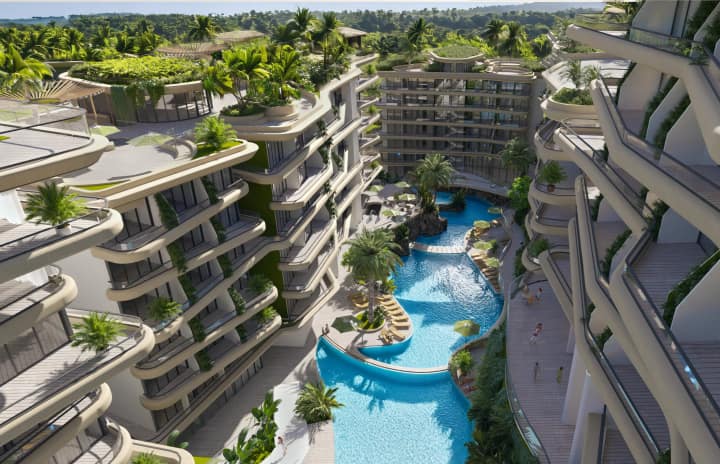
In money terms, for a studio. At Layan Verde a studio from 36.2 sqm: CAM about 3,077 THB a month, or ~36,900 THB a year, plus a one-off sinking fund of ~30,800 THB. At Layan Green Park a phase-2 studio from 36.7 sqm: CAM ~2,750 THB a month, or ~33,000 THB a year, plus ~23,900 THB one-off. The annual difference is about 4,000 THB: Layan Verde costs more to run because of the quarter’s richer infrastructure (lagoon pools, community mall, ocean club). At Layan Green Park part of the saving comes from the EDGE certificate — up to 40% off utility costs.
In a rental pool the CAM fee is usually accounted for before profit is distributed, so it affects the owner’s yield indirectly; but for owner use or long-term letting it is a direct expense. How these charges work and what to check with the juristic person is in our article on the sinking fund and CAM fee.
9. Yield by area
It matters not to confuse the scale here. The ~8–10% net to owner figure describes specific rental pools (Layan Verde, Layan Green Park), where the owner receives 60% of the pool’s net profit. It does not describe the districts.
Across the whole catalogue the picture is more modest and more honest: 281 of 348 projects quote a yield forecast, the median is 6% a year, the range 3–15%. And these are developer forecasts, not confirmed returns: the actual result depends on occupancy, the management programme and the specific unit.
The difference between the districts is less about the percentage than about where it comes from. Bang Tao is steadier on occupancy — infrastructure and guest footfall work year-round. Layan adds capital growth during construction, but asks you to wait for handover. Format is a separate dimension: villa and condo yields are calculated differently, and Bang Tao has noticeably more villa supply. Format comparisons are in condo vs villa in Phuket and villa rental yield.
🔗 How income is built: Rental management programme → · Yield calculator
10. Seasonality and tourist flow
Both areas live by the same climate rhythm: the high season is the dry period from roughly November to March/April with a peak in December–February, the low season runs May to October. The difference is what fills the low season. In Bang Tao it is smoothed by long-stay tenants and families tied to schools; in Layan the low season is more pronounced, but in the high season the premium guest pays more per night for quiet. In pool programmes, owner nights are usually allocated to the low season — worth bearing in mind if you plan to stay yourself.
The island’s overall tourist flow sets the ceiling for both areas. According to the Bangkok Post, Phuket received about 7 million visitors in the first half of 2026 and tourism revenue reached 263 billion baht. TAT statistics for January–August 2026 show 9.2 million visitors (−1.76% year on year), revenue of around 356 billion baht and average hotel occupancy of 66.2%. The dip is small, but it means “tourists will come anyway” is no longer a strategy: the winners are locations and complexes that know how to hold occupancy, not those that merely appear on the map. The mix is shifting too — per Nation Thailand, growth is driven by short-haul Asian markets led by China, a different guest in trip length and budget.
🔗 How an investor should read tourism statistics: Phuket’s tourist flow in numbers → · Rental seasons and occupancy →
11. What to check before buying in each area
Different areas — different checklists. Here they are side by side.
| What to check | Layan | Bang Tao |
|---|---|---|
| Construction stage and pace | The key point: read progress reports building by building, not renders | For completed stock — year of handover, condition of common areas, CAM payment history |
| Competition | 25 projects, 18 of them off-plan: find out what completes at the same time as yours | 132 projects, 55% of condo supply unsold: negotiate and compare with the Q1 2026 report anchors |
| Beach access | On foot or shuttle, how many minutes really, is there a public road | Which stretch of beach exactly, and how many complexes share one access point |
| Management company | Who will operate after handover, do they have running properties | Actual occupancy and reviews for the building already operating |
| Infrastructure | What the project itself is building and when | What already exists and how far — schools, clinic, supermarket |
| Legal form | Freehold quota and leasehold terms | The same, plus a check of the remaining quota in a completed building |
| Running costs | CAM and sinking fund per the card, who pays in the pool | The same, plus the accumulated sinking fund held by the juristic person |
How to run the checks technically — chanote, quota, developer, contract — is covered in detail in our guide to due diligence on Phuket property.
12. Area-choice pitfalls
- Looking only at the nightly rate. Average annual occupancy matters more, and infrastructure plus MC marketing drive it.
- Ignoring the area’s stage. In Layan some infrastructure is still developing — both a risk and a source of growth.
- Confusing completed and off-plan. Bang Tao is more about completed (income now), Layan about growth toward handover.
- Overlooking the audience. Bang Tao’s family demand and Layan’s private demand are different rental models.
- Comparing unlike numbers. A catalogue median for the whole area and a report average for off-plan condos are different datasets; compare a lot with an anchor of the same type.
- Buying “the area” rather than the complex. Half of Bang Tao’s condo supply is unsold — some projects sell 23 units a quarter, others 6. Yield is made by the complex and the operator.
- Forgetting running costs. The CAM difference between projects is small per month, but over 10 years of ownership it adds up.
- Not counting the transfer and the shuttle. A unit “700 m from the beach” without a shuttle and one with a shuttle have different occupancy at the same brochure figure.
13. Case: choosing for your goal
Consider two typical investors. The first wants income now with minimal hassle — a completed unit near Bang Tao (Layan Green Park phase 1), where infrastructure and footfall already work: a resale studio from $142,602, the unit joins the rental pool immediately, running costs of 75 THB/sqm a month, and the sinking fund is usually already paid by the first owner (to be confirmed with the juristic person). The second is happy to wait for capital growth — entering Layan Verde at the construction stage in Layan, locking a price from $235,995 on a 35% or 50% instalment plan and counting on appreciation toward the December 2028 handover, with the studio price rise from $224,776 to $235,995 as the reference point.
A third option is a combination: a studio in the operating phase 1 as the cash-flow source and a unit under construction as the growth bet. A two-position portfolio in neighbouring areas diversifies both the stage and the audience. More in our article on diversification in Phuket.
Takeaway: the “best” area depends not on the beach but on the goal — cash flow now or capital growth over the horizon.
14. What to choose
- Income now, family audience, completed → Bang Tao (Layan Green Park, phase 1).
- Capital growth, privacy, early entry → Layan (Layan Verde on the beachfront).
- Both → one position in each area.
I’ll select specific units in both areas for your goal and budget — with floor plans, a payment schedule and a net-yield calculation. Our agency selects for the client’s brief rather than for its own developments, and vets other people’s projects more strictly precisely because it knows construction from the inside.
Find a unit in Layan or Bang Tao
By submitting this form you agree to the privacy policy.