For a family with children, choosing property in Phuket often starts not with the beach but with the school. International education on the island is high-quality but paid, and schools are concentrated in certain areas — which directly affects housing choice. Let’s cover which programmes exist, where schools are located, how admission works, what to look for and why the Layan–Bang Tao area is so convenient for families.
Contents
1. Education as a choice factor
For families with children, the school is one of the main factors when relocating and buying housing:
- it determines the area of residence (proximity to school);
- it affects the budget (tuition is a big item);
- it sets the logistics of daily life.
Often it’s the school, not the beach, that determines where a family lives. So plan school and housing choice together.
There is a flip side that matters to an investor: a school cluster stabilises housing demand around it. Families rent and buy for the long term, depend less on the tourist season and move out less often — an area with schools gets “long” residents and a resilient rental market. That is why property near educational infrastructure is usually more liquid.
🔗 Basics: Cost of living → · Moving to Phuket →
2. Which programmes exist
Phuket offers various international programmes:
- British — widely represented, familiar structure and exams;
- IB (International Baccalaureate) — an international programme with a flexible path;
- other international — by various standards and languages.
To make an informed choice, it helps to understand the logic of the two main systems:
| Parameter | British programme | IB |
|---|---|---|
| Structure | Key Stages, then IGCSE and A-Level | PYP (primary), MYP (middle), Diploma (final) |
| Specialisation | Early subject choice at A-Level | Broad profile to the end of schooling |
| Exams | IGCSE (~age 16), A-Level (~age 18) | IB Diploma based on the final two years |
| Easiest entry to | UK, Commonwealth | Universities worldwide |
The British system is convenient for its early specialisation: by the final years the child concentrates on a few subjects for their future field. IB, by contrast, keeps a broad profile to the end — something US and European universities value. Both paths work; the question is which higher-education system the family is aiming for.
The programme choice depends on the family’s plans: which system the child will progress into, the language of study, and the preferred path. If the plans are still undecided, a sensible guide is the programme that is easier to transfer from: changing school within the same system is always easier than changing the system altogether.
3. Where schools are located
The main concentration of international schools is in the west and centre:
| Zone | Notes |
|---|---|
| Bang Tao–Cherng Talay | Main school cluster, next to Layan |
| Centre (Phuket Town and around) | Some schools, urban environment |
| Kamala | Kajonkiet International right in the area |
| Other areas | Individual schools around the island |
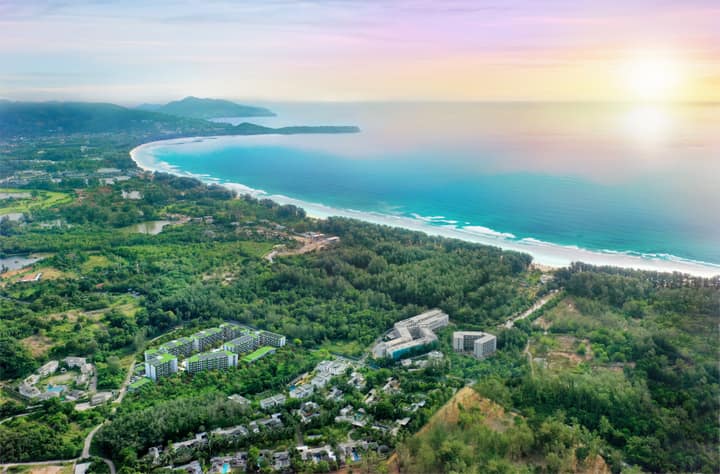
The Bang Tao–Cherng Talay cluster is especially convenient: several schools together, in the area next to Layan. Among the well-known schools in this part of the island are UWC Thailand and HeadStart: from Bang Tao it is about a 15–20-minute drive. For a family living in Layan–Bang Tao, schools are a short drive away, with the Boat Avenue supermarkets and clinics on the way.
The south of the island (Rawai, Nai Harn, Chalong) has its own schools too, but the choice there is narrower, and the drive to the “western” cluster across the whole island takes too long for daily trips. So families targeting a specific school lock it in first and then choose housing within a reasonable commute.
🔗 Layan infrastructure → · Bang Tao guide → · Kamala guide →
4. How admission works
The admission process at Phuket’s international schools is broadly standard but takes time:
- Application and documents. A form, passport copies, previous report cards and references (for transferring pupils), sometimes recommendations.
- Level assessment. Language and academic testing: the school needs to know whether the child can cope with the programme in English. For younger years this is usually play-based diagnostics, for older ones — full tests.
- Interview. Separately with older children, and with parents — about the family’s goals and expectations.
- Offer and fees. On enrolment, registration and/or entrance fees are paid, then tuition on the chosen schedule (year/term).
Practical nuances: popular schools and year groups have waiting lists, especially at the turn of the academic year; the academic year usually follows the Western calendar (starting in August–September), but many schools admit pupils mid-year too; children without fluent English are often offered EAL (English as an Additional Language) support — check its format and cost. It makes sense to apply several months before the planned move — in parallel with the housing search.
5. What to look for
- Programme — British, IB or other, for the child’s future path.
- Accreditations — recognition of the programme and diplomas.
- Language of instruction — the main and additional languages, EAL support.
- Location and logistics — time to school from home in the morning rush, not on an empty road.
- Atmosphere and reviews — environment, approach, community.
- Extracurricular life — sport, music, clubs: on the island this is part of the school ecosystem.
- Pupil mix — the ratio of nationalities shapes the child’s language environment.
The best way is to visit schools and talk to administration and other parents. It pays to come on a scouting trip before the move: in two or three days you can realistically see several schools in the cluster and the areas alongside — so the family sees the “school + home + commute” combination at once. The choice is individual and depends on the child’s age and the family’s plans.
6. School and housing choice
School and housing are linked decisions:
- proximity to school saves time and transport (daily trips);
- the cluster area (Layan–Bang Tao) is convenient: school, home, infrastructure nearby;
- housing as an asset — a bought unit removes rent, and while away earns ~8–10% net via the rental pool.
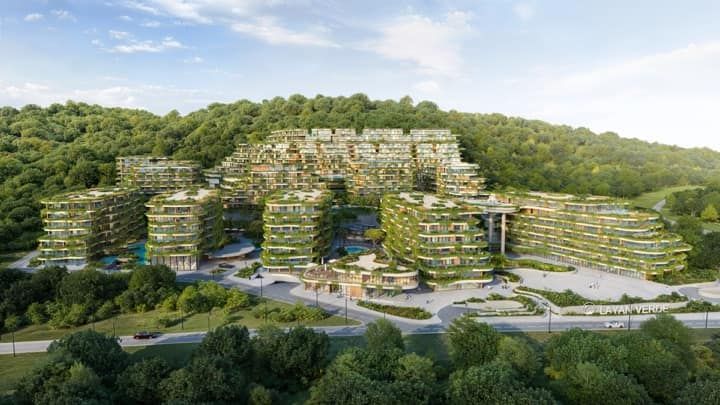
Many families choose housing right around the school cluster to minimise logistics. For example, Layan Verde in the Layan area — next to Bang Tao’s schools; the operating Layan Green Park is the “move in straight away” option: its first phase was completed and has been running since 2024, with units available only on resale with full payment.
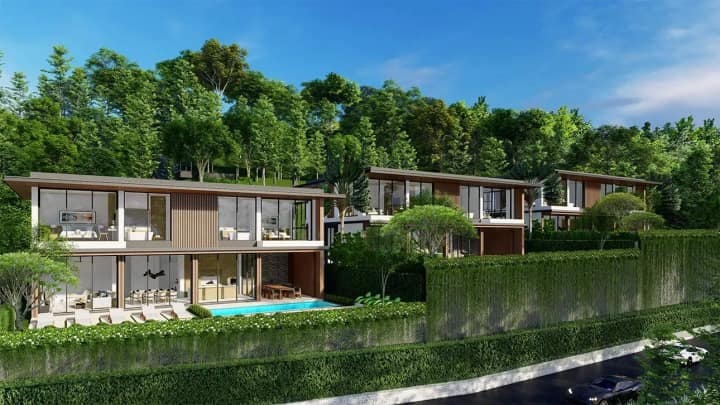
For families considering a villa instead of an apartment, the logic is the same: villas in Bang Tao keep the school cluster within 10–15 minutes. And if the family plans to leave for the summer (school holidays coincide with low season), a unit with a management programme works in rental during that time — the family’s schedule and the rental calendar complement each other nicely.
7. Education budget
An international school is one of the largest items of a family budget:
- tuition is paid, the cost depends on the school, programme and grade;
- extra expenses add up (uniform, transport, clubs);
- it’s a recurring item budgeted years ahead.
What the full cost consists of — it helps to see every line, not just the “tuition fee”:
| Item | Nature |
|---|---|
| Tuition | The main one, rises with each stage of schooling |
| Entrance/registration fees | One-off at enrolment |
| Deposit | Usually refundable, per school rules |
| Uniform, textbooks, devices | Annual |
| School transport | Optional, by route |
| Clubs, sport, trips | At the family’s discretion |
It is important to budget for the whole educational path: senior years usually cost noticeably more than junior ones, and with two or three children the item multiplies (ask schools about discounts for the second and subsequent children: the practice exists). Confirm current fees directly with the schools. When planning the budget, count education alongside housing.
🔗 The full picture of family expenses: Family budget in Thailand →
8. The school-day logistics
The daily drive to school is what really defines a family’s quality of life:
- morning hours — the busiest time on the roads of the island’s west; a trip that takes 10 minutes at midday can take longer in the morning;
- school buses — many schools offer route-based transport, which takes two trips a day off the parents;
- the afternoon — clubs and sport mean picking the child up later; it is convenient when school and home are close and logistics don’t eat the day;
- two children in different schools — a scenario worth calculating in advance: better to choose schools in the same zone.
This is where the advantage of living within the cluster’s radius shows: a family from Layan or Bang Tao spends minimal time on school logistics, and the parents keep a full working day. More on getting around the island — in the guide to transport in Phuket.
9. Relocation timeline with a child
School, housing and stay status are three parallel processes of different lengths. A working schedule that brings them together on the date of the first school day:
| Time to start | School | Housing and status |
|---|---|---|
| 6–9 months | Shortlist of 2–4 schools, enquiries about places, applications to the priority ones | Set the budget: tuition + housing + cost of living for the family |
| 4–6 months | Testing and interviews, school replies, payment of registration fees | Scouting trip: schools + areas + the morning route; choice of housing format (ready or off-plan) |
| 2–4 months | Place confirmation, deposit, uniform and device list | Purchase or rental contract; arranging the family’s visa status (retirement, LTR, DTV or Elite — overview of visas for owners) |
| 1–2 months | Medical certificates, vaccination record, translation and legalisation of report cards | The move, internet and utilities connection, bank account |
| First week | Induction days, meeting the class, transport | Checking the route in real conditions, settling in |
Three practical rules from this schedule. First: the school application goes in before a specific unit is chosen — a place in the right year group determines the area, not the other way round. Second: the child’s visa status is tied to the parent’s (dependant categories), so the family’s visa strategy is chosen before the transaction, not after. Third: documents from the previous school (report cards, references, certificates) are easier to gather before departure — requesting them from Thailand takes longer. If the family buys an off-plan unit completing in a year or two, they plan to rent in the same cluster for that period: the children land in “their” area straight away, and the move into their own home happens without changing school.
10. Pitfalls
- Choosing housing without the school in mind. A distant school = daily long trips.
- Underestimating the education budget. It’s a big, recurring item — count in advance and for the whole path, not for one year.
- Ignoring the programme. British and IB lead to different paths — choose for your plans.
- Delaying enrolment. Popular schools have limited places and waiting lists — check availability early.
- Looking only at price. Programme, logistics and atmosphere matter as much as cost.
- Judging the commute on an empty road. Test the route to school in the morning rush specifically.
- Not checking language support. A child without fluent English needs an EAL programme — not available everywhere and not always included in the base price.
11. Case: a family and a school
Consider a typical scenario. A family with two children was moving to Phuket and choosing a school with a British programme. Suitable schools were in the Bang Tao–Cherng Talay cluster; they applied several months ahead, the children went through language diagnostics, and the elder was offered six months of EAL support. To avoid hours on the road, the family bought a unit in neighbouring Layan: school, shops and clinics 10–15 minutes away, with the morning route tested in advance on a weekday.
They budgeted for the whole path: tuition for two, uniform, transport and clubs — the second-largest item after housing. But housing stopped being an expense: the unit removed the rent, and during the summer holiday absences it works in rental at ~8–10% net via the pool — the school calendar and peak rental demand fell neatly into different seasons. School and housing came together into a single convenient solution.
Takeaway: international schools in Phuket are concentrated in Bang Tao–Cherng Talay, and for a family this often determines housing choice. Plan school and property together — you save on logistics and get an asset-home next to the school.
Compare the 12 verified options in our Phuket property near international schools collection.
I’ll help choose an area for the right school and select nearby housing with a rental-yield calculation.
Housing near a school
By submitting this form you agree to the privacy policy.