Phuket has long been one of Asia’s hubs for remote work: good internet, coworking spaces, a comfortable climate and the sea outside your window. For a digital nomad and remote worker, the practicalities matter: where the internet is stable, where to live, which visa fits and how to combine productive work with seaside downtime. Let’s cover it all in order — from choosing an area and time zones to the DTV visa and the budget — and show how buying housing stabilizes the budget.
Contents
1. Why Phuket for remote work
Phuket attracts remote workers with a mix of factors:
- climate and sea — warm year-round, beaches, nature;
- infrastructure — coworking, cafés, shops, healthcare;
- community — a large expat and digital-nomad community;
- logistics — an international airport, convenient flights.
It’s a balance of productivity and quality of life: you can work and live by the sea at the same time.
It also helps to understand how Phuket differs from other remote-work bases in Asia. Compared to Bangkok, there’s no megacity bustle or traffic on that scale, and you get the sea and nature instead; the flip side is fewer “urban” options and higher dependence on your own transport. Compared to Bali, a major airport with direct international flights is closer and infrastructure is more stable. Phuket is the choice for those who want a resort lifestyle without losing the connection to the “big world”.
🔗 Basics: Moving to Phuket → · Phuket vs Bangkok: cost of living →
2. Internet and connectivity
For remote work the internet is a critical factor:
- home fibre internet in residential areas — usually enough for video calls and work;
- mobile networks — good coverage in populated zones;
- backup — many keep mobile internet as a fallback.
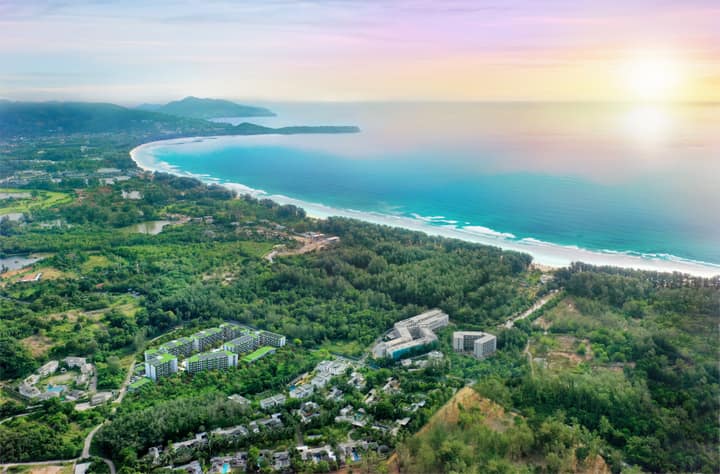
In remote corners of the island quality can be lower, so check connectivity in advance when choosing housing. In infrastructure areas (Layan–Bang Tao) it’s usually fine.
A practical checklist before renting or buying:
- Check providers at the address. Fibre doesn’t reach every house; new condo projects usually have connectivity built in at the construction stage, older villas — not always.
- Run a speed test on site. Measure speed and, crucially, ping stability during working hours — daytime and evening, when the network is loaded.
- Check the mobile network indoors. Thick walls and low-lying spots weaken the signal; your backup channel must work exactly where your desk is.
- Ask about electricity. Short outages happen on the island, especially in the rainy season; a router on an uninterruptible power supply and a charged laptop solve the problem, but it’s worth knowing in advance.
- Clarify who holds the contract. With rentals, the provider contract is often in the owner’s name — agree in advance on what happens with the plan and payments.
For video calls and normal office loads, home fibre is more than enough; questions arise for those who need a guaranteed channel for streaming or heavy file transfers — they should pick projects with modern network infrastructure and keep two independent channels.
3. Coworking and work environment
Besides home, the island has coworking spaces and cafés with a work environment:
- stable Wi-Fi and meeting rooms;
- community and networking with other remote workers;
- a change of scene for productivity.
Coworking is handy when home lacks a work atmosphere or you need networking. Many combine: some days at home, some in coworking.
Payment formats are usually flexible: single visits, day bundles, monthly memberships, separate rates for meeting rooms for calls. The main concentration of workspaces is in the island’s west, around Bang Tao–Cherng Talay and towards Rawai — exactly where most remote workers live. Wi-Fi cafés are a workable alternative for a couple of hours, but for long calls a coworking space is more reliable: a guaranteed socket, a quiet zone and a meeting room.
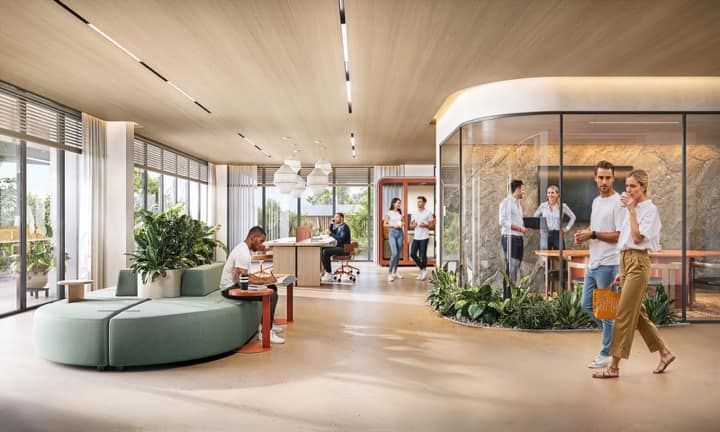
There’s a third option that’s often underrated: work zones inside residential complexes. New condo-hotel-grade projects build lounges and coworking areas right on site — for a resident it’s an “office an elevator ride away” with no rent for the desk.
4. Where to live as a remote worker
| Area | Best for |
|---|---|
| Layan–Bang Tao | Quiet, beaches, coworking and schools nearby, families |
| Rawai–Nai Harn | Community, island’s south, more budget |
| Centre (Phuket Town) | Urban environment, cafés, logistics |
| Patong | Active life, but noisy |
For a balance of quiet, internet and infrastructure, remote workers often choose Layan–Bang Tao: calm but with everything nearby. The choice depends on priorities and budget.
A few area-specific nuances that surface only after moving:
- Layan–Bang Tao — the most balanced option for those working through the day: quiet and green, yet Boat Avenue with supermarkets and restaurants is minutes away and the airport is ~20 minutes. The downside — prices are higher than in the south.
- Rawai–Nai Harn — the historically “nomadic” south with a strong community and more affordable rent. The downside — the airport is a drive across the whole island, noticeable with frequent flights.
- Phuket Town — an urban environment, cafés and low everyday costs, but you need to drive to the beaches.
- Patong — suits few: noise and tourist traffic mix poorly with daily calls.
If you’re planning a purchase, the starting point is the catalog: ready condos in Phuket → for immediate move-in and budget-friendly condos → for the lowest entry threshold.
5. Time zones and work schedule
Thailand runs on UTC+7 all year round, with no daylight saving. For a remote worker this shapes the structure of the day more than it seems before the move:
- European teams — working hours overlap in the local afternoon: mornings in Phuket are free, calls start after lunch and can stretch into the evening;
- Asian teams — almost a full overlap, a normal office schedule;
- US teams — the hardest scenario: the overlap falls on late evening and night Phuket time.
In practice, a distinctive rhythm of the “European-schedule” remote worker takes shape: early morning — sea, sport, personal matters, while the beaches are empty and the heat hasn’t built up; daytime — deep work; evening — calls. Many call this the island’s main everyday perk: a free morning by the sea every day, not just on holiday.
Seasonality barely affects work: low-season rains (roughly May–October) come in episodes and interfere with the beach, not with video calls. If anything, the opposite — the low season is quieter and cheaper, and some remote workers deliberately choose it for their “work-heavy” months.
6. Remote-work visas
For a long stay there are several routes:
- remote-work / extended-stay visas — for digital nomads;
- Thailand Privilege (Elite) — for a membership fee, multi-year stay;
- other long-term visas — by profile.
The main tool for a remote worker since 2024 is the Destination Thailand Visa (DTV). Key parameters: the visa is valid for 5 years with multiple entry, each visit — up to 180 days with an option to extend by another 180 days in-country; the financial requirement is at least 500,000 THB in your account at the time of application (with no mandatory “seasoning” of the sum); the base visa fee is 10,000 THB or the consular equivalent. It suits employees of foreign companies and freelancers with clients abroad — a Thai employer is neither required nor allowed.
How the main options compare:
| Visa | Who it’s for | Money | Term |
|---|---|---|---|
| DTV | Remote workers, freelancers | 500,000 THB in the account | 5 years, 180-day visits |
| LTR | High-earning professionals | Income/asset requirements | 10 years |
| Thailand Elite | Those paying for simplicity | Membership fee | Multi-year membership |
Terms and durations depend on the programme and change periodically — confirm current requirements with visa specialists. Owning property doesn’t grant a visa but eases daily life and is compatible with long-term visas: more in our guide to visas for property owners.
Taxes are a separate topic: staying in Thailand for 180+ days in a calendar year makes you a tax resident. That’s no reason to give up the island, but a reason to plan your income structure in advance — see tax residency under the 180-day rule.
7. A remote worker’s budget
A remote worker’s budget in Phuket is built from the same items as any resident’s, with a work-specific twist:
- housing — rent or the upkeep of your own unit; the main item;
- utilities — electricity at the state PEA tariff costs around 4–5 THB/kWh, but with rentals the meter is often in the owner’s name and the tenant’s rate can be 7–10 THB/kWh — check this before signing the lease;
- air conditioning — the main electricity consumer: it accounts for most of the bill, and a workday at home means the AC runs longer than for a “beach” tourist;
- food — flexible: local cuisine and markets are noticeably cheaper than Western supermarkets and restaurants;
- transport — a bike is cheaper, a car more comfortable; living near infrastructure cuts down on trips;
- connectivity and coworking — mobile plans are moderate; a coworking membership is optional.
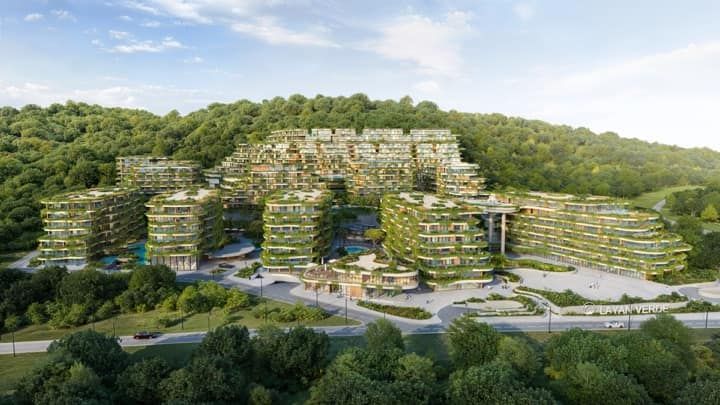
For an owner, rent is replaced by upkeep contributions: the common-area benchmark is ~85 THB/m²/month in projects like Layan Verde, plus utilities at state tariffs paid directly. For a compact studio that’s a predictable, moderate sum that’s easy to build into a monthly plan.
🔗 Item by item: Cost of living in Phuket → · Utility bills → · Living on $1,000 a month →
8. Housing as an asset
For a remote worker with a long stay, buying housing beats long-term renting:
- removes rent from the monthly budget;
- while away it earns income ~8–10% net via the rental pool;
- provides a stable base: address, bank, comfort.
For example, Layan Verde from $235,995 with staged installments — housing in a quiet area with infrastructure and working internet that also works as an asset. This turns “rent expense” into an investment.
Here’s what it looks like in numbers, using a Layan Verde studio:
| Parameter | Value |
|---|---|
| Studio 36.18 m², leasehold | $235,995 |
| Construction-stage installments | 50% + 5×10% every 6 months |
| Net yield via the rental pool | ~8–10% (owner gets 60% of net profit) |
| Net income at 8% | ~$17,982/year |
The mechanics are flexible for a remote worker: live in the unit yourself — save on rent; leave for months (say, sitting out the rainy season or visiting family) — the unit works in the rental pool and earns income meanwhile. What matters is looking at the net yield — after operating costs, not at gross promises.
One nuance: in a condo-hotel with a management programme, your own stays are usually planned in advance under the programme’s rules. Those who want to live in the unit permanently should look at formats without a mandatory pool — a project-choice question worth discussing before buying.
9. Pitfalls
- Not checking internet in advance. In remote zones connectivity can be weaker — check before renting/buying.
- Ignoring the season. Low-season rain affects activities but not work; factor in lifestyle.
- Confusing tourism and a long stay. Living needs a long-term visa, not a tourist entry.
- Living far from infrastructure. Saving on location turns into spending on transport and logistics.
- Treating housing as expense only. Your own property can earn ~8–10% net while away.
- Not clarifying the electricity rate when renting. The gap between the state 4–5 THB and a landlord’s 7–10 THB/kWh noticeably changes the monthly bill when the AC runs all day.
- Forgetting the 180-day rule. A long stay makes you a Thai tax resident — plan your income structure in advance, not after the fact.
10. Case: a remote worker in Phuket
Consider a typical scenario. An IT specialist working remotely was choosing a base in Asia. Phuket fit: stable internet, coworking, community and the sea. For the first year they rented an apartment in Bang Tao, working a “European” schedule: morning — sea and sport, calls after lunch. Daily life confirmed the choice, but the bills revealed the nuances: the landlord charged electricity at 8 THB/kWh, and with the AC running all day utilities turned out to be a noticeable item.
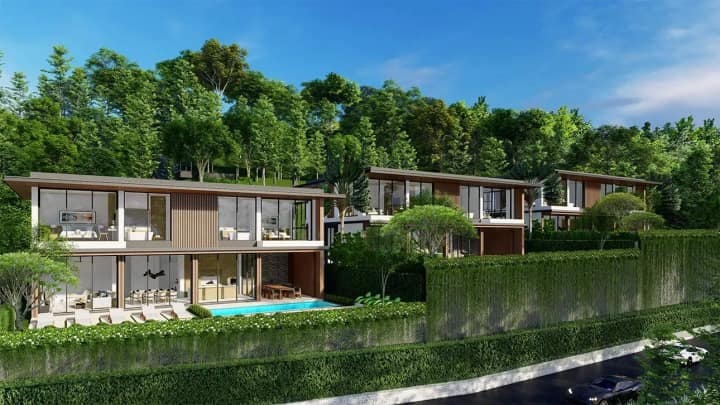
For a long stay they calculated that buying was better: a unit in Layan–Bang Tao removed the rent expense, the meter is registered directly at the state tariff, and during trips the apartment works in rental at ~8–10% net via the pool. They arranged a long-term visa for their profile — a DTV with proof of income from a foreign employer. Productivity and quality of life came together, and housing turned from an expense line into an asset.
Takeaway: Phuket is a strong base for remote work: internet, coworking, community and climate. The UTC+7 time zone is convenient for working with Europe and Asia, the DTV visa settles legal long-term stay, and over a long horizon buying housing stabilizes the budget and turns it into an income-earning asset.
I’ll select housing for remote work — with working internet, nearby infrastructure and rental yield.
Housing for remote work
By submitting this form you agree to the privacy policy.