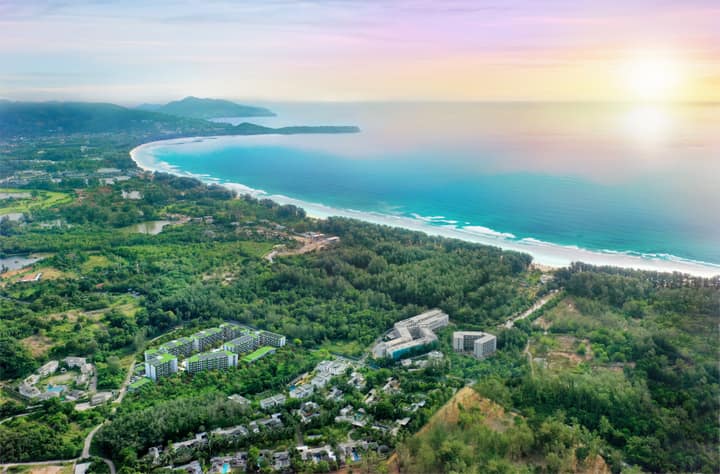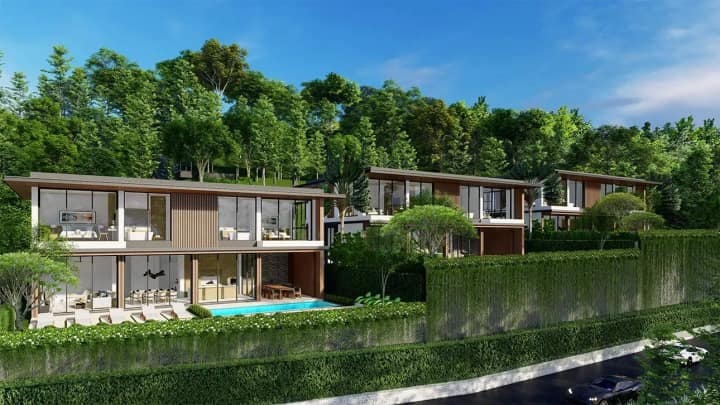
An overseas property investor often chooses between three popular destinations: Phuket, Bali and Dubai. Each has its own logic on entry price, yield, ownership form, taxes and risks. Phuket balances affordability and quality of life; Bali is cheap entry with elevated risk; Dubai is a large market with freehold and a high threshold. Let’s compare by parameter to choose for your strategy.
Contents
- Three markets in brief
- Entry price
- Rental yield
- Ownership form
- Taxes and costs
- Liquidity and risks
- Visas and residency
- Currency and moving money
- Worked example: $225k across three markets
- Quality of life: climate, logistics, environment
- Comparison table
- Who each suits
- Exit strategy
- Step-by-step selection algorithm
- Pitfalls
- Case: choosing a destination
1. Three markets in brief
- Phuket (Thailand). A resort island with strong tourism, growing infrastructure and a price/quality-of-life balance. Freehold condos in a quota + flexible leasehold.
- Bali (Indonesia). Cheap entry, heavy tourism, but more often leasehold/structures for foreigners and elevated legal risk.
- Dubai (UAE). A large, mature market, freehold in designated zones, high liquidity, but a higher entry threshold and different tax/visa logic.
It’s also important to grasp the scale: Dubai is a metropolis with hundreds of thousands of apartments and exchange-like liquidity; Phuket and Bali are resort islands where the market is measured in hundreds of projects and demand is tied to tourism and relocation. Hence a different nature of cycle: Dubai reacts to global rates and capital inflows, the islands to tourist flow, air connectivity and visa policy.
2. Entry price
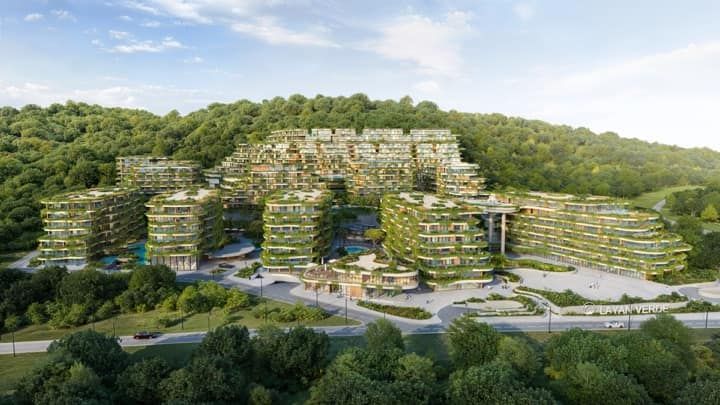
- Phuket. Projects from ~$150–225k with staged installments. E.g. Layan Verde from $235,995 (unit B4-319, leasehold) with a construction-period installment plan; Layan Green Park — resale only in the completed phase 1, studios from $142,602 with full payment.
- Bali. Often the lowest entry, but “cheap” frequently means leasehold with restrictions and legal nuances.
- Dubai. Quality projects usually cost more to enter; the market is more premium and “pricier” psychologically.
Phuket is the middle ground here: accessible entry plus developer installments.
Mind the difference between “entry price” and “first payment”. In Dubai developers widely use payment plans with a small initial deposit and a long schedule, so the first payment can be lower than in Phuket even at a higher unit price. In Phuket installments are usually limited to the construction period (at Layan Verde — 35% or 50% down with the balance paid before handover). In Bali developer installments are rarer and terms depend heavily on the specific developer. Compare not just the total but the cash flow by year.
🔗 Payment methods → · Resale vs new-build → · Projects with installment plans →
3. Rental yield
- Phuket. Across our 348-project catalogue the median quoted forecast is 6% a year (range 3–15%) — developer forecasts, not verified returns. Flagship rental pools (owner — 60% of net profit) quote ~8–10% net. Strong tourism supports occupancy.
- Bali. Yields can be high at tourism peaks, but with more volatility and management risk.
- Dubai. A steady rental market, but pricier entry, and “net” yield is counted with fees and specifics.
In any location it’s not the “promised percent” that decides, but the real model: occupancy, costs, management form.
Another difference is the type of rental that produces income “by default”. In Dubai a large share of income comes from long-term leases to city residents: the rate is steadier, but growth is capped. In Phuket and Bali the main instrument is short-term resort rental through a management company or rental pool, where seasonality and operator quality play the key role. Here Phuket beats Bali on operator maturity: international hotel brands (e.g. Dusit at Layan Verde) run pools with transparent reporting.
🔗 Calculating ROI → · Calculator · What is a rental pool → · Guaranteed yield: what’s behind it →
4. Ownership form
- Phuket. Freehold condos within a foreign quota and flexible leasehold (lower price, fewer formalities, convertible to freehold while quota lasts).
- Bali. A foreigner more often has leasehold or structures — needing caution and checks.
- Dubai. In designated zones — full freehold in the foreigner’s name.
Dubai wins on freehold “cleanliness”, Phuket on flexibility (freehold quota + convenient leasehold), Bali needs the most caution.
A practical note on Thailand: the quota is 49% of a condominium’s floor area that may be owned by foreigners; the rest goes to Thai persons or leasehold. When a project’s quota is exhausted, a foreigner can only take leasehold — a normal, legally clean form: a 30-year lease registered at the Land Department with renewals. What to avoid in Phuket are nominee Thai companies “for show”: the authorities are tightening control over such structures, and there the risks converge with Bali’s.
🔗 Leasehold vs freehold → · Foreign quota → · Villa ownership via a Thai company →
5. Taxes and costs
Each market has its own system:
- Phuket. Transfer fees, taxes on rental and sale, leasehold registration (~1.1% for 30 years), sinking fund, common areas. Reporting in your home country is on the buyer.
- Bali. Its own taxes and ownership-structure specifics.
- Dubai. No usual personal income tax, but deal/registration fees and service charges apply.
Count the final “net” yield after all costs of the specific market, not on a “gross” rate.
Let’s break down the Thai side in more detail, because it’s the easiest to compute in advance. On purchase: the Land Department transfer fee (split with the seller by agreement), and for leasehold a registration fee of ~1.1%. During ownership: a monthly CAM fee for common areas (at Layan Verde — 85 THB/m² per month) and a one-off sinking fund (850 THB/m²). On rental: tax on rental income, usually withheld at source for non-residents. On sale: the transfer fee and withholding tax, plus an additional specific business tax if you sell within five years of ownership. All of these are known quantities that can be built into the model before the deal.
In Dubai the main item is the Land Department fee on registering the deal (4% of the price) plus annual service charges, which can be significant in premium projects. In Bali the tax structure depends on how ownership is arranged — one more argument for thorough checks.
🔗 Property taxes → · Rental income tax → · Sinking fund and CAM → · Transfer fee →
6. Liquidity and risks
- Phuket. Liquidity is higher in in-demand locations (Layan, Bang Tao) with a management company; risk is removed by choosing a reliable developer.
- Bali. Higher legal risk (ownership structures, land status); liquidity depends on location and paperwork.
- Dubai. High liquidity of a large market, but more supply competition and cycle sensitivity.
There’s also “developer risk”, which looks different in each place. In Dubai it’s partly removed by regulation: off-plan buyers’ money sits in escrow accounts under regulator oversight. In Thailand escrow is a voluntary option, so vetting the developer (track record of completed projects, permits, EIA) falls on the buyer. In Bali you add verification of the land status itself. The good news for Phuket: major developers have a transparent completion history that is easy to check.
7. Visas and residency
For many buyers property is not just an asset but a “key” to the country. Here the three markets diverge fundamentally.
- Dubai. A property investment above the threshold set by UAE rules (AED 2 million as of 2025) opens the path to a long-term “golden” visa for the investor and family. This is one of the main non-market arguments for Dubai.
- Phuket. Buying a condo grants no visa by itself. But Thailand has a broad range of separate instruments: LTR (a long-term visa for wealthy residents and remote professionals with tax advantages), DTV (a five-year “digital nomad” visa), Thailand Privilege (paid membership with a multi-year visa) and the classic retirement visa. Property ownership helps as proof of ties to the country, but the visa is arranged separately.
- Bali. Indonesia is developing investor and “second home” visas, but ownership via leasehold or a structure grants no status on its own — the visa category has to be matched to your situation.
Practical takeaway: if residency through purchase is the priority, Dubai is simpler. If you want to live by the sea without tying status to the deal, Thailand’s visa range is flexible enough, and some categories (LTR) also reduce the tax burden.
🔗 LTR visa → · DTV visa → · Thailand Privilege (Elite) → · Visas for property owners →
8. Currency and moving money
Overseas property is always a currency position, and it differs across the three markets.
- Dubai. The dirham is pegged to the US dollar, so for a dollar investor currency risk is minimal. Transferring money to the UAE is technically simple, but banks are demanding on source of funds.
- Phuket. The baht is a free-floating currency with moderate volatility. The key technical point is FET: to register freehold in a foreigner’s name, funds must arrive from abroad in foreign currency and be converted to baht in Thailand; the bank issues a Foreign Exchange Transaction confirmation, without which the Land Department will not register the quota. For leasehold the requirements are softer, but source of funds is still checked.
- Bali. The Indonesian rupiah is historically more volatile, and by law settlements are made in rupiah. For an investor that’s an extra layer of risk on entry and exit.
Think separately about the return path of the money: how you’ll repatriate rental income and sale proceeds. In Thailand the documents on inbound funds (that same FET) simplify later repatriation — keep them.
🔗 FET and bringing currency into Thailand → · What is FET → · Buying with crypto →
9. Worked example: $225k across three markets
Let’s take the budget investors most often bring to us — about $225k — and see what it means in each market. This is an illustration with assumptions, not a forecast.
Phuket. This sum buys a premium-class studio at Layan Verde (from $235,995, ~36 m², leasehold, construction-period installments until 2028) or a resale of a completed studio at Layan Green Park (from $142,602, full payment, income right away) with room left for costs. The developer’s rental-pool model assumes ~8–10% net to the owner: on $225k that’s roughly $18–22k a year by the developer’s forecast. Recurring costs are known in advance: CAM fee 85 THB/m² per month (around 3,000 THB a month for a 36 m² studio), a one-off sinking fund of 850 THB/m², leasehold registration ~1.1%. Ask the operator which of these items are already deducted in the “net” yield.
Bali. For the same budget you can often buy a larger property or a villa — but usually on a leasehold with a limited term and no international operator. Advertised yields can be higher than Phuket’s, but they need to be discounted for ownership-structure risk, self-management and rupiah volatility.
Dubai. As of 2025 data, $225k is the lower segment of the market: a studio or a small apartment in districts away from the centre. Long-term rental yield is steadier, but to get into a quality project in an in-demand location the budget usually needs to be higher. On the other hand, once the visa threshold is met the investor gets a “golden” visa.
| Parameter (guide) | Phuket | Bali | Dubai |
|---|---|---|---|
| What ~$225k buys | Premium-class studio by the beach with an operator / completed resale | Larger property on leasehold | Studio/1BR outside the centre |
| Income model | Rental pool, ~8–10% net (developer forecast) | Self-managed / local operator | Long-term rental |
| Known costs | CAM, sinking fund, registration, taxes — computable in advance | Depend on structure | DLD fee 4%, service charges |
| Bonus | Developer installments | Low price per m² | Path to residency at the threshold |
🔗 Detailed ROI calculation → · Purchase costs → · Layan Verde → · Layan Green Park →
10. Quality of life: climate, logistics, environment
If you plan not only to rent out but also to live, compare the “non-market” parameters.
- Climate. Phuket and Bali are tropics with dry and wet seasons; living is comfortable year-round, while swimming on Phuket’s west coast is mostly a high-season affair. In Dubai winter is ideal, but the summer months are spent in air-conditioned spaces.
- Logistics. Phuket: an international airport 20–25 minutes from Layan and Bang Tao, direct flights to Europe, Asia and the Middle East. Dubai is the region’s largest air hub. Bali has one airport in the south of the island and chronic road congestion.
- Environment. Phuket has built up family infrastructure: international schools, private clinics of Bangkok Hospital’s standard, supermarkets and restaurants in Bang Tao. Dubai offers the urban “everything is here” format, but without nature at the doorstep. Bali has a strong community and nature, but infrastructure is unevenly distributed.
- Cost of living. Phuket and Bali are noticeably cheaper than Dubai on daily expenses; for a family with children in school the gap is especially tangible.
🔗 Relocating to Phuket → · International schools → · Healthcare in Phuket → · Cost of living in Thailand →
11. Comparison table
| Parameter | Phuket | Bali | Dubai |
|---|---|---|---|
| Entry price | Condos from ~$149k (catalogue median), installments | Low | Higher |
| Yield (net) | Median forecast 6%, pools up to ~8–10% | Volatile | Steady |
| Ownership form | Freehold quota + leasehold | Leasehold/structures | Freehold |
| Legal risk | Moderate | Higher | Low |
| Taxes | Moderate | Own system | Fees, no income tax |
| Visa via purchase | No (separate visas: LTR, DTV, Privilege) | No (separate categories) | Yes, at the investment threshold |
| Currency | Baht, floating | Rupiah, volatile | Dirham, pegged to USD |
| Quality of life | High | Medium | High (city) |
12. Who each suits
- Phuket — those wanting a balance of entry, income (median forecast 6%, flagship pools up to ~8–10%) and resort quality of life, with a flexible ownership form and installments.
- Bali — those seeking minimum entry and ready for elevated risk for potential (with thorough checks).
- Dubai — those valuing freehold, a large liquid market and a city format, at a higher entry threshold.
Often the right answer is not one market but a combination: a core asset with a clear yield in Phuket and a separate property in Dubai for a visa objective, if there is one. The main thing is not to mix goals within a single purchase.
13. Exit strategy
The exit is the last thing people think about, yet it determines the real return.
- Phuket. Resale goes through agencies and the developers themselves; in in-demand locations with a management company, completed units with an income history sell more confidently than “empty” ones. A telling example is phase 1 of Layan Green Park: 248 units sold out by the developer before handover, and today you can enter only via resale from owners (according to the project card, phase 1 prices have roughly doubled since the sales launch). For Layan Verde under construction, the developer forecasts capital growth of around +45% over the construction period — a forecast, worth checking against actual stage-by-stage price rises: studios have already gone from $224,776 to $235. On sale, budget the transfer fee and withholding tax.
- Bali. The exit depends on how “sellable” your ownership structure is to the next foreign buyer: the remaining leasehold term and clean paperwork directly affect the price.
- Dubai. The most liquid of the three markets, but also the most competitive on supply — in a downturn you sell against thousands of similar units.
🔗 How to resell property in Phuket → · Case: LGP phase 1 sell-out → · Resale → · Capital gains tax →
14. Step-by-step selection algorithm
- State the goal in one sentence. “Income in hard currency”, “a seaside home for the family”, “residency”, “capital growth” — these are four different purchases.
- Fix the budget and cash flow. How much up front, how much in installments, what reserve for costs and low season.
- Screen markets by ownership form. If you need maximum legal simplicity — Dubai; if registered leasehold is acceptable — Phuket; if you’re ready for structures — Bali.
- Check the visa objective. Do you need a visa through the purchase, or will a separate category do.
- Compute net yield with one method for all candidates: occupancy × rate − all costs − taxes.
- Check the exit. Who will buy from you in 5–7 years, and how.
- Visit in person. Especially the islands: the distance to the beach and school in a brochure and in real life are different things.
15. Pitfalls
- Comparing by “promised percent”. Count net yield after each market’s costs.
- Ignoring ownership form. Bali structures need special checks; in Phuket understand the quota and leasehold.
- Forgetting liquidity. Cheap entry with no exit demand risks getting stuck with the asset.
- Measuring all by one ruler. Taxes, visas and law differ across the three — don’t carry one market’s logic to another.
- Choosing without a goal. “Better” is always relative to your strategy: income, living or capital growth.
- Confusing the first payment with the price. A long payment plan in Dubai doesn’t make the property cheaper — it stretches the outlay.
- Not keeping money-transfer documents. FET and bank confirmations are needed both for registration and for repatriating funds.
16. Case: choosing a destination
Consider a typical scenario. An investor with a budget around $220–250k compared the three markets. Bali deterred them with ownership-structure nuances; Dubai demanded more entry for a quality project in the desired location. Phuket delivered the balance: accessible entry with installments, a quoted ~8–10% net in a specific rental pool, flexible leasehold with the option to live by the sea. They chose Phuket as the optimum of entry price, income and quality of life.
Within Phuket the decision was two-step as well. A completed resale at Layan Green Park delivered income from the first month but required full payment; Layan Verde allowed entry on a construction-period installment plan with an expected price rise by handover in 2028. The investor chose the latter: the payment schedule mattered more, and income until 2028 came from other assets. The visa question was settled separately — via DTV.
Takeaway: Phuket, Bali and Dubai aren’t rivals “in general” but tools for different goals. For a balance of affordability, yield and seaside living, Phuket often turns out to be the middle ground.
I’ll help compare destinations for your goal and budget and select a specific Phuket property with a yield calculation.
Matching to your strategy
By submitting this form you agree to the privacy policy.