On July 2, 2026, Bangkok Post published a Phuket property market assessment from a Knight Frank Thailand consultant: villas in the Bang Tao - Cherng Talay - Layan - Kamala corridor are appreciating 12-18% a year, while condominiums in the same locations are growing at roughly half that pace, 7-10%. Here’s what’s behind those numbers and what they mean for anyone planning a purchase on the west coast, Layan included.
Contents
- What was published
- The numbers: villas vs. condos
- Why villas specifically are outpacing condos
- Who is buying villas: demand structure
- Layan in the report
- Layan Verde and Layan Green Park against the trend
- 2026: consultant consensus
- How the news squares with other market signals
- What this means for investors
- Villa, condo or branded residence
- Ownership structures for foreign villa buyers
- Pitfalls: don’t confuse the average with a specific deal
- Checklist: how to verify the trend before a deal
- Quick example
- Takeaway and next step
1. What was published
The source is a Bangkok Post piece, “Phuket property set to stay strong in 2026,” published July 2, 2026, citing a Knight Frank Thailand consultant’s assessment of the island’s luxury west-coast residential market. The core claim: the luxury and branded segment in priority locations will keep outperforming the broader market throughout 2026, driven by sustained foreign demand, rising land prices, and strong appetite for branded residences.
🔗 Live snapshot of the index, type medians and every weekly digest on one permanent page: Phuket property market hub →
2. The numbers: villas vs. condos
The report’s headline figures:
| Segment | Annual price growth |
|---|---|
| Villas (Bang Tao, Cherng Talay, Layan, Kamala) | 12-18% |
| Condominiums (same locations) | 7-10% |
That’s nearly a two-to-one gap. It lines up with 2025 sales data: Phuket villa sales rose 12.9%, while island-wide condo demand stayed softer - a share of buyers is shifting toward villas for privacy and long-term asset value, not just investment math.
3. Why villas specifically are outpacing condos
The main driver is land scarcity. Developable beachfront villa plots in Bang Tao, Laguna, Layan and Kamala are nearly gone - these are long-established, densely built west-coast locations. A condominium can add supply on the same plot of land by building taller; a villa cannot - villa count is hard-capped by the number of suitable land lots. When supply is inelastic and demand keeps rising (foreign buyers, relocation, branded projects), price responds more sharply.
4. Who is buying villas: demand structure
Behind the 12-18% figure stands a very specific buyer. Judging by 2025 sales and consultant observations, west-coast villa demand comes from three overlapping groups. The first is investors who would previously have chosen a condo but have shifted toward villas for stronger appreciation and the ability to rent the property at a high average daily rate (ADR) in peak season. The second is families relocating to Phuket full-time: remote work, international schools and long-stay visas have turned the island into a place of permanent residence rather than just vacations, and these buyers want privacy, a plot and a pool - not a studio in a condominium. The third is branded-residence buyers, for whom a villa under hotel-operator management combines personal use with rental income and none of the operational hassle.
Crucially, all three groups compete for the same limited pool of west-coast land lots - and each is willing to pay for its own priorities. Hence the gap with condos: demand is shifting into a segment where supply cannot respond with volume. Whether a private pool is worth the premium is covered separately in is a private-pool villa worth it, and the rental-demand seasonality all three groups depend on is covered in Phuket rental seasons and occupancy.
5. Layan in the report
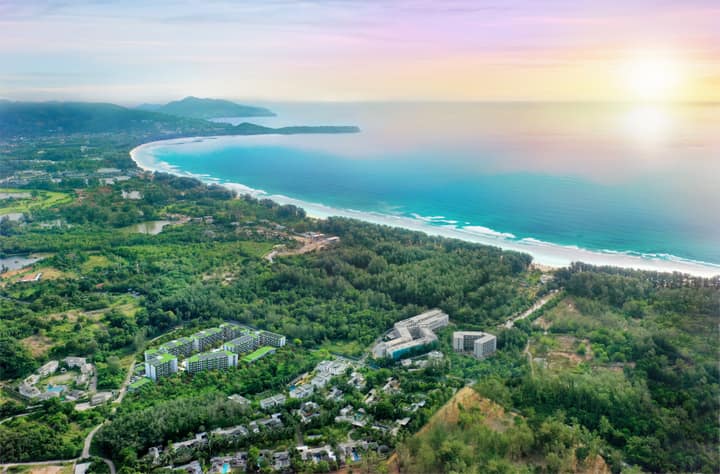
Layan is named directly among the locations where land values are rising, and consultants flag it as one of the most promising zones for branded residences and premium villas in 2026, alongside Bang Tao and Kamala. For an area with a capped number of developable plots, that’s a structural factor, not a one-season blip - land scarcity doesn’t disappear in a quarter.
More on the area itself: Layan vs. Bang Tao and Layan vs. Surin.
6. Layan Verde and Layan Green Park against the trend
For Layan, the report’s trend isn’t abstract - you can see it in specific projects. Layan Green Park shows how supply scarcity works in practice: the project’s first phase has been completed and fully sold out - the breakdown is in the Layan Green Park Phase 1 sell-out case. When lots in an area run out, the next phase and neighboring projects launch from a higher base - that is exactly the “land growth translates into unit growth” mechanic Knight Frank describes.
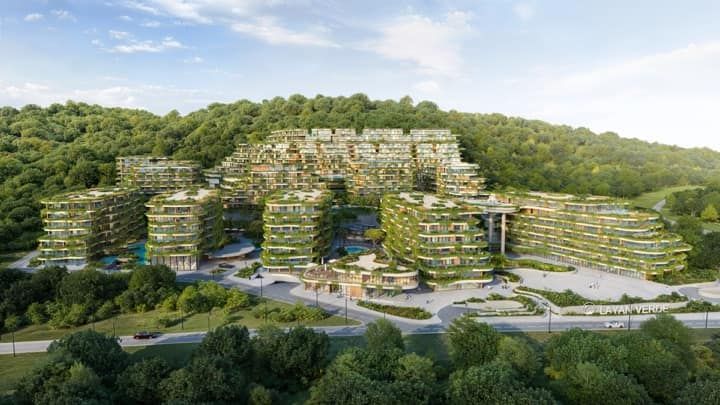
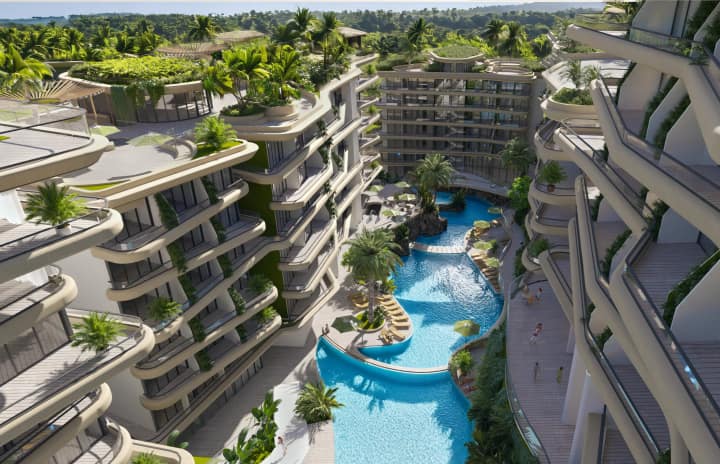
Layan Verde illustrates the report’s second driver - branded residences. The project comes to market as residences managed by hotel operator Dusit, landing precisely in the segment consultants call the most promising on the west coast for 2026. The developer projects +45% capitalization over the construction period - to be clear, that is the developer’s forecast, not a guarantee, and it should be weighed against the segment’s overall 12-18% annual range. What a hotel brand actually gives a buyer, and why such projects sell at a premium, is covered in premium branded residences.
7. 2026: consultant consensus
The consultants Bangkok Post surveyed agree on one point: west-coast land values will keep rising through 2026 given the limited number of available plots in Bang Tao, Laguna, Layan and Kamala. They also note competition among developers will intensify - particularly among off-plan projects launched over the past 3-4 years, competing for buyers on price, promotions and payment terms. For a buyer, that means land and finished villas keep getting pricier, while entry terms during construction stay competitive precisely because developers are fighting for early buyers.
8. How the news squares with other market signals
A single report is more convincing when independent signals point the same way - and summer 2026 delivered several. Thailand’s largest developers are expanding on the island: see Sansiri’s Phuket expansion - national-scale developers don’t enter locations where they don’t see sustained, solvent demand. In parallel, demand is shifting from Bangkok condos toward Phuket: resort property is outpacing the capital, and some of the capital that would previously have settled in Bangkok is arriving on the west coast.
The island’s price structure - with the west coast at a premium to the east and south - is mapped out in Phuket property price trends 2026, and we keep a current per-project price snapshot in the catalog price index. All fresh market news is collected in the Thailand real estate news hub. Taken together, these signals describe the same picture: demand is concentrating in scarce resort locations, and the Knight Frank figures are its quantitative expression, not an isolated estimate.
9. What this means for investors
- The better play isn’t waiting for a dip - it’s entering at launch. With inelastic supply and rising land, prices rarely fall - they rise, just at varying speeds. More in when to buy in Phuket.
- The villa/condo gap is also a strategy gap. Villas deliver stronger asset appreciation (12-18%), condos offer more predictable rental income through a management company and a lower entry threshold. Compare the income models in how to calculate ROI in Phuket.
- Off-plan remains the working entry model precisely where land is scarce: the later you enter, the fewer lots remain and the higher the price. The mechanics are covered in off-plan vs. ready in Phuket.
- Micro-location matters more than an island-wide average. Beachfront proximity is the main multiplier, which the report itself confirms by naming Bang Tao, Cherng Talay, Layan and Kamala specifically rather than the island as a whole.
10. Villa, condo or branded residence: comparing strategies
The report compares two segments, but in practice a west-coast buyer chooses among three models. Here they are side by side:
| Criterion | Villa | Condominium | Branded residence |
|---|---|---|---|
| Price growth (Knight Frank estimate, 2026) | 12-18% a year | 7-10% a year | premium segment, typically with a brand premium |
| Entry threshold | high | low to mid | mid to high |
| Rental model | short-term rental with high ADR, pronounced seasonality | steady occupancy via a management company | hotel-operator management, often a rental pool |
| Owner costs | grounds, pool and staff upkeep | CAM fees | CAM plus operator service charges |
| Resale liquidity | depends on location and lot | higher in the mass segment | supported by the brand name |
The choice is driven by the goal, not by the average percentage. Maximum capital growth, with a high entry threshold accepted - a villa in a scarce location. Regular cash flow and a minimal ticket - a condo: the formats are compared in detail in condo vs. villa in Phuket. A hybrid of personal use and income without operational load - a branded residence. A separate fork within the villa segment is short-term versus long-term letting: both models’ arguments are laid out in short-term vs. long-term rental in Phuket.
11. Ownership structures for foreign villa buyers
The 12-18% figure says nothing about how a foreigner legally holds a villa - yet that affects resale, inheritance and net returns. Foreigners cannot own land in Thailand outright, so there are two basic routes. The first is a long-term land lease, leasehold: usually 30 years with renewal options, registered at the land office. The second is a Thai company holding the land freehold: this route requires genuine corporate substance and careful structuring - details in owning a villa through a Thai company. How each structure affects resale price and speed is covered in freehold vs. leasehold in Thailand.
For comparison: a condominium unit can be held freehold by a foreigner directly, within the building’s foreign quota - another structural difference between the segments worth weighing alongside the growth percentages. Ownership structure is one of the items verified during due diligence before the deposit is paid, not after.
12. Pitfalls: don’t confuse the average with a specific deal
- 12-18% is a segment range, not a guarantee for a specific plot. Actual growth depends on exact location, developer, construction stage and unit type.
- Rising land value doesn’t automatically mean a rising finished-unit price. Construction costs, developer competition and market conditions at handover also shape the final price.
- One report is a reference point, not a guaranteed forecast. It’s worth checking it against actual sales performance on specific projects rather than deciding based on a single percentage from an article. Common mistakes of this kind are covered in investor mistakes in Phuket.
- Price appreciation is only half the picture. Villa rental yield is calculated separately and isn’t included in that 12-18% - see villa rental yield in Phuket.
13. Checklist: how to verify the trend before a deal
The report sets the backdrop, but the decision is made on a specific lot. The minimum set of checks before paying a deposit:
- The project’s own price trajectory. Request the developer’s price-list history since the sales launch - real phase-by-phase increases say more about a project than any segment-average percentage from a report.
- Land title. Make sure the plot carries a full Chanote title - step-by-step instructions in how to verify a Chanote title.
- Legal review of the project. Construction permit, environmental clearance, encumbrances and litigation - the full list is in the Phuket property due diligence guide and the glossary entry on due diligence.
- Construction stage and developer track record. For an off-plan purchase, the developer’s history of delivering previous phases and projects is the main risk factor: delays eat into that very “construction-period return.”
- Exit scenario. Before entering, understand who you will sell to and how: the resale mechanics are covered in how to resell property in Phuket.
- Compare against alternatives. Benchmark the lot against other offers in the area - for example, via the Layan villas and private-pool villas collections.
If all six checks confirm the report’s picture, the segment trend is working for you. If even two of them raise questions, a segment-average 12-18% will not rescue a specific deal.
14. Quick example
A beachfront villa in Layan priced at $500,000 at launch, growing at the segment average of 12-18% a year, could theoretically appreciate by $130,000-200,000 by handover in two years - before any rental income - purely from land scarcity and construction stage. Putting the same capital into a condominium growing 7-10% a year, but with more predictable rental income through a management company from day one after handover, could deliver a comparable total return with a fundamentally different income structure: asset appreciation versus regular cash flow. The right choice depends on the investor’s horizon and goal, not on which number in the report is bigger.
15. Takeaway and next step
The Knight Frank Thailand report confirms what 2025 sales already showed: land scarcity on Phuket’s west coast makes villas a faster-appreciating asset than condominiums, and Layan remains among the locations where that scarcity is most pronounced. For an investor, this isn’t a signal to buy anything - it’s an argument for evaluating a specific project and entry stage against the structural trend, not against it.
I can send current villa and apartment options in Layan matched to your budget, with appreciation and yield projections - submit a request or check out Layan Verde and Layan Green Park. See partner network and terms on the Layan Real Estate page.
This material is informational and not investment advice. Price growth data is Knight Frank Thailand’s assessment as of July 2026; actual performance depends on the project and location - verify current figures at the time of a transaction.