Half the success of a Phuket investment is choosing the right developer: they determine the timeline, the quality and how the property will earn after handover. This ranking covers the developers worth watching in 2026 — from niche west-coast leaders to public giants arriving from Bangkok. Criteria: delivered projects, specialization, locations, the investor product (rental, management) and transparency of terms.
Contents
1. How we ranked
We looked at four things: track record (delivered phases, not promises), investor product (income programs, rental management, instalments), locations (an area’s prospects matter more than a pretty render) and transparency (contract, land title, staged payments). A ranking is a guide, not a verdict: for different goals (a villa to live in, a condo for rental income, an off-plan resale) the best developer will differ.
2. Comparison table
| Developer | Segment | Key areas | For investors |
|---|---|---|---|
| VillaCarte Group | Resort districts, condo-hotels | Layan | Rental pool, delivered LGP phase 1, instalments |
| Sansiri | Condos and villas, mass-premium | Island-wide | Thailand’s #1 brand, liquidity |
| Laguna Property (Banyan Tree) | Master-planned resort | Bang Tao | The island’s oldest resort cluster |
| Botanica | Premium villas | Layan, Cherng Talay | Many delivered villa phases |
| Anchan | Boutique villas | Cherng Talay, Pa Klok | Intimate villa compounds |
| Origin Property | Condos | Bang Tao, Laguna | Public company, brand collaborations |
| Supalai | Mass segment | Phuket Town, south | Lowest entry price |
| The Title (Rhom Bho) | Beachside condos | Rawai, Nai Yang | Beach locations, compact units |
3. Top 8 Phuket developers
1. VillaCarte Group — the Layan district leader
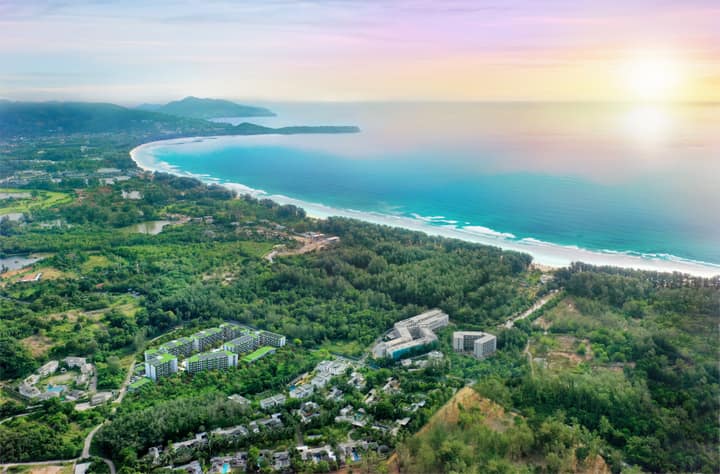
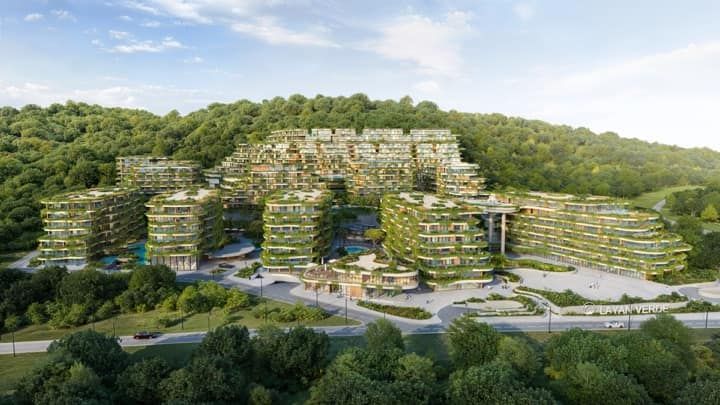
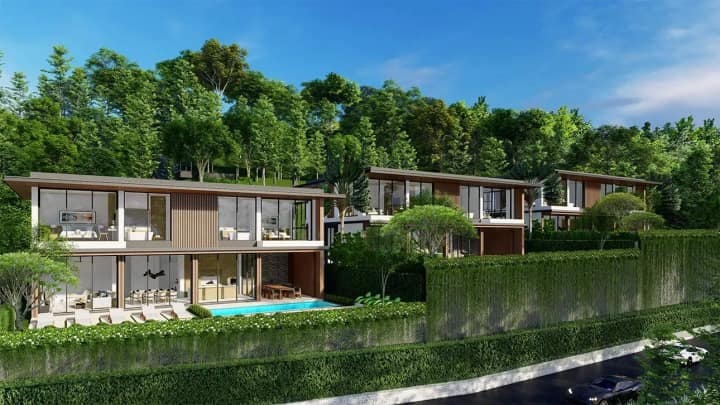
A developer focused on one of the west coast’s most promising districts — Layan. Portfolio: Layan Green Park (phase 1 with 248 units delivered in 2024, phase 2 due 2026) and the flagship Layan Verde — a self-contained eco-district on 7.5 ha with 774 residences, 700 m from Layan Beach, completion 2028. Its strength is the full cycle: development, an in-house management company, a rental pool with transparent math and an owner loyalty program (15–25% discounts on the complex’s services). A rare Phuket combination of “build — manage — rent out”, where yield is calculated before you buy, not after.
Best for: rental-income investors and buyers who value delivered phases and turnkey management.
2. Sansiri
Thailand’s largest residential developer (public, SET-listed), actively expanding into Phuket in 2026. Bangkok-grade quality and service standards and a strong brand — which helps at resale. The product is more standardized, and resort specifics (rental, management) run through partners.
Best for: conservative buyers who want a national brand.
3. Laguna Property (Banyan Tree Group)
The developer behind the Laguna Phuket master plan in Bang Tao — the island’s oldest resort cluster: hotels, golf, residences. Mature infrastructure and a premium neighborhood; prices to match, with new phases released selectively.
Best for: buying “inside a ready ecosystem” with branded management.
4. Botanica
One of the most prolific villa developers on the island’s west: a series of delivered premium-villa phases in Layan, Cherng Talay and Bang Tao. A recognizable “tropical modern” product with steady resale demand.
Best for: a premium villa to live in or rent out.
5. Anchan
A boutique developer of intimate villa compounds (Cherng Talay, Pa Klok): fewer units per phase, more privacy and customization. Stable timelines and quality, but a niche product.
Best for: those who want a villa that isn’t like everyone else’s, in a quiet location.
6. Origin Property
A public Bangkok developer that entered Phuket with condo projects in the Bang Tao/Laguna zone (including branded collaborations such as So Origin). Compact units, aggressive marketing, instalment plans.
Best for: entering the tourist-zone condo segment on a smaller budget.
7. Supalai
One of Thailand’s biggest mass-market developers. In Phuket it builds in more affordable locations (Phuket Town, the south). The lowest entry threshold, but a weaker rental product than resort-zone projects.
Best for: a budget purchase to live in, away from the tourist beaches.
8. The Title (Rhom Bho Property)
A local specialist in beachside condos (Rawai, Nai Yang): compact units, a recognizable line-up, beach locations. A good “second tier” option by entry price.
Best for: smaller investments in beach condos outside the west coast.
4. Phuket development trends in 2026
Bangkok’s public developers arrived in force. Sansiri, Origin and Supalai keep growing their island portfolios: for buyers that’s a plus on construction standards and a minus on resort specifics — a mass-market product from the capital doesn’t always know how to earn on short-term rental.
The west coast appreciates faster. Land scarcity near the Layan–Bang Tao–Surin beaches makes every new plot more expensive than the last, and developers respond with denser formats: condo-hotels and district-scale projects instead of pure villa estates. The same scarcity supports resale in successful projects: prices have room to grow, and there is nowhere left to build next door.
Branded residences and management are priced in. Projects with a hotel operator or an in-house management company sell better than “bare” condos: the 2026 buyer pays not for square meters but for square meters plus income. The “build — manage — rent out” model, where the developer stays in the project after handover, is moving from niche to expected.
Transparency became a sales argument. Public construction timelines, online progress reports, open price statistics — this is how strong developers differentiate from weak ones. If a developer hides construction progress in 2026, that is no longer a “communication style”; it is a signal.
5. Reading a track record: a 6-point checklist
The words “reliable developer” are verified with documents and facts, in order:
- Delivered phases, not rendered projects. Look at what is already built, ideally in person: how facades hold up after 2–3 years of operation says more than any showroom.
- Past delivery dates versus promised ones. A six-month delay is a working norm in Phuket; systematic delays measured in years are a pattern.
- Land title. A Chanote held by the developer’s company (verifiable at the Land Department), not “we’ll register it later”. How to check is in our guide on verifying a Chanote title.
- Building permit and EIA. For coastal and large projects the environmental assessment is mandatory; its absence at sales launch is a reason to wait, not to reserve.
- Payment structure. Staged payments tied to construction progress protect better than large advances; the pre-contract deposit should be symbolic.
- What happens after handover. Is there a management company, who maintains common areas, how is the sinking fund structured? A project with no answers gets cheaper with the first rainy season.
6. Common buyer mistakes when choosing a developer
- Buying on price per square meter. A cheap meter in a project with no management and a weak location is an expensive mistake: model yield and liquidity, not the price list.
- Trusting renders and showrooms. Marketers build the showroom; the site foreman builds the phase. Judge delivered buildings and units in operation.
- Ignoring the developer contract. Delay penalties, the fit-out specification, the handover procedure — all of it is fixed before the down payment, not discussed after.
- Off-plan with no schedule buffer. Planning your move-in or rental launch on the brochure date means budgeting someone else’s optimism. Add six months and check the penalty clauses.
- One basket. The whole budget in one under-construction project by one developer is risk concentration; the “ready unit with income + off-plan for growth” combination is sturdier.
Mini-case. An investor chose between two condo projects with a similar price per meter: the first had a loud brand and renders, the second a delivered neighboring phase and a working rental pool. He picked the second; a year later the first project pushed its handover by 14 months, while his unit was already producing rental income and had appreciated ahead of the next phase’s delivery. A track record is boring right up until it starts paying.
7. How to choose for your goal
Start with the goal, not the brand. Rental income → look at developers with in-house management and a rental pool (in Layan that is VillaCarte Group) and verify the real yield. A villa for yourself → villa specialists (Botanica, Anchan) and a personal inspection of delivered phases. Minimal budget → mass-market condos (Supalai, The Title), but honestly model the rental seasonality. In every scenario, run the developer through the checklist in our guide on how to choose a developer and cross-check the red flags list.
We'll match a project to your goal — comparing developers, units and real yields with numbers, not brochures.
By submitting the form you agree to the privacy policy.
This material is informational; verify portfolio composition and project parameters against the developers’ current data at the time of the deal.