A fresh batch of Phuket market numbers: the Phuket Property Exchange disclosed data on 54,628 enquiries over six months, Colliers Thailand updated its villa and condo statistics, the baht keeps weakening against the dollar, and authorities are again debating the fate of the 49% foreign condominium ownership quota. Here is what actually matters for an investor — and what is background noise.
Contents
- Demand: 54,628 enquiries and THB 272 billion in six months
- Rental dominates: 71% versus 29%
- Villas get pricier, yields spread wide
- Condos: supply is cooling
- The baht rate: what it means for a buyer
- Regulation: the 49% quota is back in question
- This week’s pitfalls: how to read market news
- Mini-case: the numbers on a specific unit
- What this means for Layan and the rental pool
- Conclusion and next step
1. Demand: 54,628 enquiries and THB 272 billion in six months
On June 11, 2026, the Phuket Property Exchange presented demand data for December 2025 - May 2026: 54,628 enquiries across 1,258 projects, totaling roughly THB 272 billion in stated budgets. This is the freshest and largest snapshot of real interest in the island over recent months.
| Metric | Value |
|---|---|
| Period | December 2025 - May 2026 |
| Total enquiries | 54,628 |
| Projects in the sample | 1,258 |
| Total stated budget | ~THB 272 billion |
| Share of international demand | 62% (from 141 countries) |
International demand is led primarily by buyers from the US, the UK and Russia — the island remains a genuinely global market, not one dependent on a single country.
2. Rental dominates: 71% versus 29%
The demand structure skews sharply toward rental rather than purchase:
| Segment | Enquiries | Share | Median budget |
|---|---|---|---|
| Rental | 39,042 | 71% | THB 35,000/mo |
| Purchase | 15,586 | 29% | THB 7.5 million |
Choeng Thale leads demand — 6,628 rental and 3,326 sale enquiries — followed by Rawai with 5,108 rental and 2,428 sale enquiries. Patong and Kathu form the so-called “yield corridor” — areas absorbing most mid-budget renters. This confirms what is already visible on the ground: rental demand on Phuket structurally exceeds purchase demand, meaning the rental-pool model remains a working monetization strategy rather than a niche option.
3. Villas get pricier, yields spread wide
Colliers Thailand’s “Phuket Residential Report 2025-2026” records a structural shift toward villas: transactions rose more than 20% in 2025, 1,263 new villa projects launched (+51% versus 2023), and the cumulative sales rate for luxury villas priced above $2.6 million (THB 90 million) reached 76%.
Meanwhile, average gross rental yield across the island sits at 5.8% per year — but that figure hides a wide spread:
| Location type | Gross yield |
|---|---|
| Oversupplied areas | ~3.2% |
| Island-wide average | 5.8% |
| Well-chosen niche locations | up to 9.1% |
The takeaway is simple: an averaged yield figure is nearly useless without tying it to a specific location and management model — the 3.2% to 9.1% spread is wider than the average rate itself.
4. Condos: supply is cooling
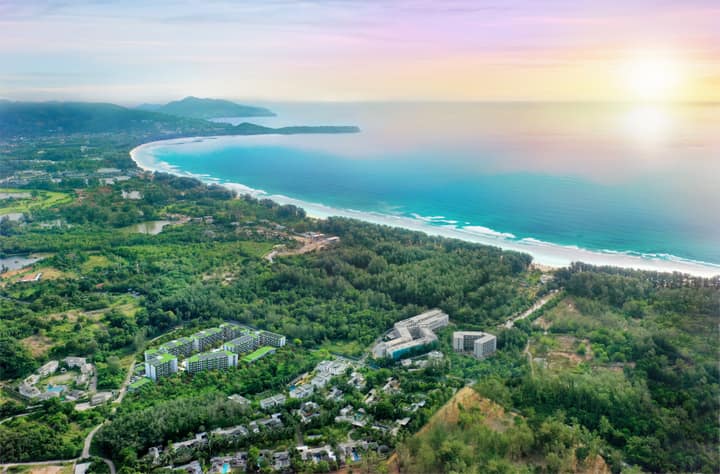
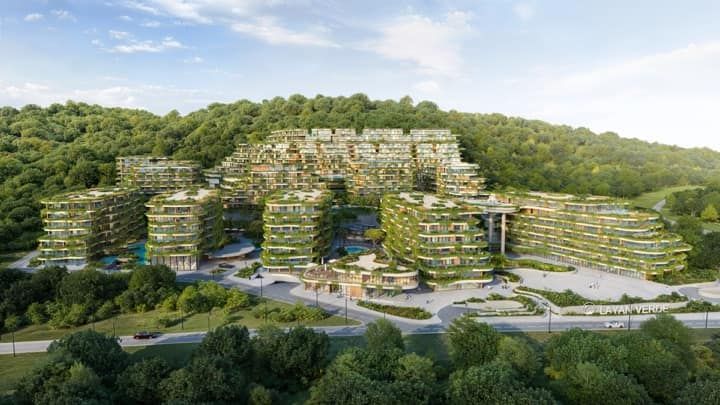
After a two-year boom that brought nearly 25,000 new units to market, Colliers Thailand forecasts new condominium supply slowing to 6,000-8,000 units in 2026. For a buyer, that means fewer competing off-plan projects and less price pressure from mass supply — particularly in niches like eco-certified complexes near Layan beach, where there is almost no new comparable supply.
5. The baht rate: what it means for a buyer
On July 6, 2026 the rate stood at roughly 33.19 baht per dollar. The baht weakened about 1% over the past month and 1.7% over the year — per trading platforms, the move reflects diverging rate expectations between the US Fed and the Bank of Thailand.
| Parameter | Value |
|---|---|
| USD/THB on 07/06/2026 | ~33.19 |
| Change over the month | -1% (baht weaker) |
| Change over the year | -1.7% (baht weaker) |
For a buyer converting dollars or another hard currency into baht for a deal, a weaker baht means slightly more local currency for the same budget. Over a single transaction the effect is modest, but for a multi-year payment plan, currency movement is worth tracking when timing installments.
6. Regulation: the 49% quota is back in question
The current foreign ownership quota in condominiums — 49% of a building’s floor area — has stood unchanged for 47 years, since the Condominium Act B.E. 2522 was passed. In Q1 2026, Thailand’s cabinet received recommendations on amendments but approved only further study of the issue, not the law itself. Two opposite scenarios are on the table: raising the quota to 75% (alongside extending land leases to 99 years) — or, conversely, discussion of lowering it to 30-39% alongside a tighter definition of “undesirable” ownership through nominee structures. In parallel, 2026 saw tighter enforcement against nominee companies, previously used to work around land-ownership restrictions.
Market consensus: the realistic timeline for any amendments is no earlier than late 2026, since Thailand’s legislative process typically takes 8-18 months from bill introduction. For a buyer, this means the current rules stand unchanged, but verifying the legal ownership structure — freehold, leasehold, or company — remains a mandatory step, not a formality: see chanote title verification and full property due diligence.
This material is informational and not legal advice. Before a transaction, verify the current text of the Condominium Act and the status of the specific property with a lawyer.
7. This week’s pitfalls: how to read market news
- Average yield is not a guarantee. 5.8% island-wide says nothing about a specific unit: the 3.2%-9.1% spread depends on location and management, not the overall market trend.
- Discussing a law ≠ a law. The cabinet approved studying amendments to the 49% quota, not the bill itself — treating this as a “rule change” is premature.
- The exchange rate is background, not a strategy. A 1-2% monthly move in the baht should not be the sole reason to rush or delay a deal — look at the property’s fundamentals.
- One report is not a trend. The Phuket Property Exchange and Colliers data cover a specific window (December 2025 - May 2026 and 2025, respectively); drawing multi-year conclusions requires tracking several reporting cycles, as with common investor mistakes in Phuket.
8. Mini-case: the numbers on a specific unit
An investor is considering a 37 sqm studio in phase 2 of Layan Green Park for THB 7,424,784 ($227,894 at the rate used in this article). At 33.19 baht per dollar and stage-based construction payments, monthly currency swings of 1-2% barely move the total in foreign currency — they matter far more when comparing the rate at booking to the rate at each installment. Through the rental pool the owner receives 60% of the pool’s net profit — a benchmark of roughly 8-10% net per year, giving a payback period of around 12 years at the entry price. Neither the 49%-quota news nor a single 1% baht move changes that math — they form the backdrop against which the actual figures should be re-checked before signing.
9. What this means for Layan and the rental pool
The week’s three storylines add up to one picture for a buyer near Layan beach and in Bang Tao: demand is structurally skewed toward rental (so the rental-pool model is demanded by the market, not invented by a developer), new condo supply is cooling (fewer competitors on entry), and the baht rate currently favors a buyer converting foreign currency. Yield through the pool — 60% of net profit to the owner, roughly 8-10% net per year, payback around 12 years — does not depend on weekly news, but benefits from the broader picture: a scarcity of new niche projects and structurally high rental demand. How the pool model works is covered in the rental management program article, and the yield methodology is in how to calculate ROI in Phuket.
10. Conclusion and next step
The week brought more data than drama: rental and purchase demand remains high and global (54,628 enquiries, 62% from abroad), condo supply is cooling, villa yields depend heavily on location, the baht weakened slightly, and the 49% quota is still under discussion, not changing. For an investor, that is neither a reason to rush nor to wait — it is a reason to check the actual numbers for a project of interest against the broader market picture.
I can send you current pricing, a yield calculation for your budget, and unit availability at Layan Verde and Layan Green Park — leave a request or see the partnership terms on the Layan Real Estate page.
This material is informational and not investment or legal advice. Figures are sourced as of the publication date; verify current numbers at the time of the transaction.