Long-Term Resident (LTR) is Thailand’s visa for people who don’t fit the retirement visa’s age bracket or the narrow, freelancer-focused DTV format. The Board of Investment (BOI) program groups four distinct applicant profiles — from $1 million in capital to a skilled-specialist status in a priority industry — and grants up to 10 years of stay with a digital work permit and meaningful tax perks. Here’s a breakdown of all four categories, the exact money thresholds, how the tax mechanics work, and how it fits together with owning property on Phuket.
Contents
- What LTR is and who it suits
- Wealthy Global Citizen: capital from $1 million
- Wealthy Pensioner: high-income retirees
- Two professional tracks
- Money: threshold summary table
- Tax perks: 17% or full exemption
- Perks, application and renewal
- LTR vs the retirement visa vs DTV vs Elite
- Pitfalls
- Mini case study and conclusion
1. What LTR is and who it suits
Long-Term Resident (LTR) is a non-immigrant visa category administered by the BOI rather than the standard immigration service. The program isn’t built for everyone — it targets four specific profiles: wealthy individuals with substantial capital, high-income retirees, remote employees of large foreign companies, and skilled professionals in industries Thailand has flagged as priorities. What all four categories share is a notably longer visa term (5+5 years instead of an annual renewal cycle), a digital work permit that skips the standard 4:1 Thai-to-foreign employment ratio, and lighter reporting.
2. Wealthy Global Citizen: capital from $1 million
The first category is for wealthy foreigners with no age limit:
- Assets of $1,000,000 or more — global capital, verified through statements and declarations.
- At least $500,000 of that in qualifying Thai assets — real estate, Thai government bonds, or direct investments all count toward this portion of the requirement.
- The income requirement was dropped in the 2025 update — applicants previously had to prove annual income too; now capital alone is enough.
- Health coverage — insurance of at least $50,000, participation in Thai social security, or a $100,000 deposit held for at least 12 months.
This is the most flexible category on paper: age, employment and the source of the capital don’t matter — only its size and the portion invested in Thailand.
3. Wealthy Pensioner: high-income retirees
The second category overlaps in spirit with the standard retirement visa, but trades a noticeably higher financial bar for a longer term and added perks:
- Age 50 and up — the only personal requirement, same as Non-O/O-A.
- Pension or passive income of $80,000 a year or more, or
- From $40,000 a year with an additional $250,000 or more in Thai assets — a combined route for those with lower income but existing investments in the country.
- Health coverage — same conditions as Wealthy Global Citizen.
The difference from the standard retirement visa is significant: that route requires 800,000 THB on deposit (~$23,880) with no income test, while LTR asks for $40,000–80,000 a year in income but grants a 5+5-year visa instead of an annual renewal, with no mandatory “seasoning” of a deposit on a fixed schedule.
4. Two professional tracks
The third and fourth categories target working foreigners, but with different ties to an employer:
- Work-from-Thailand Professional — a salaried employee of a foreign company that’s been operating for at least 3 years with combined revenue of $50 million or more. The applicant’s income needs to average $80,000 a year or more over the last 2 years. A prior work-experience requirement was dropped in a 2025 BOI update.
- Highly-Skilled Professional — a specialist employed in Thailand within a BOI-targeted industry: automotive, electronics, tourism, agriculture and biotechnology, logistics, robotics, aviation, chemicals, digital technology, medical services, defense, the circular economy, or international business centers. Income starts at $80,000 a year, with the bar dropping for a relevant master’s degree or exceptional qualifications.
The first track suits a remote worker on a high salary at an overseas corporation; the second suits a specialist hired by a Thai company or local office in a priority industry.
5. Money: threshold summary table
| Category | Age | Financial threshold | Health coverage |
|---|---|---|---|
| Wealthy Global Citizen | No limit | Assets from $1M (at least $500,000 in Thai assets) | $50,000 / social security / $100,000 deposit |
| Wealthy Pensioner | 50+ | Income from $80,000/yr, or from $40,000/yr + Thai assets from $250,000 | $50,000 / social security / $100,000 deposit |
| Work-from-Thailand Professional | No limit | Income from $80,000/yr, employer revenue from $50M, 3+ years operating | $50,000 / social security / $100,000 deposit |
| Highly-Skilled Professional | No limit | Income from $80,000/yr (lower with relevant advanced degree) | $50,000 / social security / $100,000 deposit |
All thresholds are stated in US dollars under the BOI’s official methodology — actual asset and income assessment uses the exchange rate on the application date.
6. Tax perks: 17% or full exemption
What sets LTR apart from other long-term visas is a real tax benefit, not just a longer stay:
- Wealthy Global Citizen, Wealthy Pensioner, Work-from-Thailand Professional — exempt from Thai tax on foreign-sourced income, even when that income is remitted into Thailand. For anyone regularly bringing in $100,000+ a year, this exemption alone can justify the entire cost of the visa.
- Highly-Skilled Professional — a flat 17% rate on income from a Thai employer instead of the progressive scale that runs up to 35%. The savings are meaningful above the point where Thailand’s progressive brackets bite.
None of this removes the need to understand tax-residency rules: spending 180+ days a year in Thailand triggers resident status regardless of visa category, and the final tax picture still depends on double-taxation treaties with your home country.
7. Perks, application and renewal
Beyond the tax benefits, all four LTR categories share the same package:
- A 5+5-year term — 5 years on first issuance, another 5 on renewal while category conditions hold, with multiple entry throughout.
- A one-time government fee of 50,000 THB (~$1,495) for the whole term — no annual visa payments.
- A digital work permit for the working categories, exempt from the standard 4:1 Thai-to-foreign employment ratio required for regular work permits.
- Annual reporting to immigration instead of the 90-day cycle most other long-term visas require.
- Fast-track service at Thailand’s international airports.
- Spouses and children under 20 can be included as dependents on the application.
Applications run online through the BOI portal: assemble the document package for your category → upload it to the portal → receive preliminary approval (an endorsement letter) → collect the visa at an embassy or on arrival. The full process typically takes a few weeks — noticeably faster than the repeat immigration-office visits that come with the retirement visa’s annual renewal cycle.
8. LTR vs the retirement visa vs DTV vs Elite
| Visa | Age | Money | Term | Tax perk |
|---|---|---|---|---|
| LTR | Depends on category (none, or 50+) | From $40,000/yr income or $1M in assets | Up to 10 years (5+5) | Exemption on foreign income, or 17% flat |
| Retirement (Non-O/O-A) | 50+ | 800,000 THB on deposit, or income from 65,000 THB/mo | 1 year, annual renewal | None |
| DTV | 20+ | 500,000 THB on deposit | 5 years, 180-day visits | None |
| Thailand Privilege (Elite) | No limit | One-time fee from ~$12,700 | 5–20 years by package | None |
LTR beats the others specifically on tax mechanics and the digital work permit — but the entry bar is meaningfully higher than DTV or Elite. For a full overview of visas for property owners, see Thailand visas for property owners.
9. Pitfalls
- Mixing up capital and income. Wealthy Global Citizen requires assets; Wealthy Pensioner and both professional tracks require annual income. Submitting the wrong kind of documentation is a common reason for a rejected endorsement letter.
- Failing to document the Work-from-Thailand employer properly. The $50M revenue and 3-year operating requirement are checked separately from the applicant’s personal income — you need corporate documents, not just a salary letter.
- Treating LTR as a visa for buying property. In none of the four categories does owning a unit qualify on its own — for Wealthy Global Citizen, it’s specifically investments of $500,000 or more that count, not any purchase.
- Ignoring tax residency. The exemption on foreign-sourced income doesn’t cancel resident status after 180+ days in the country — the filing process still applies, even if the tax due is zero.
- Assuming the second 5-year period renews automatically. The category conditions — income, assets, employer status — need to hold at renewal time, not just at first application.
10. Mini case study and conclusion
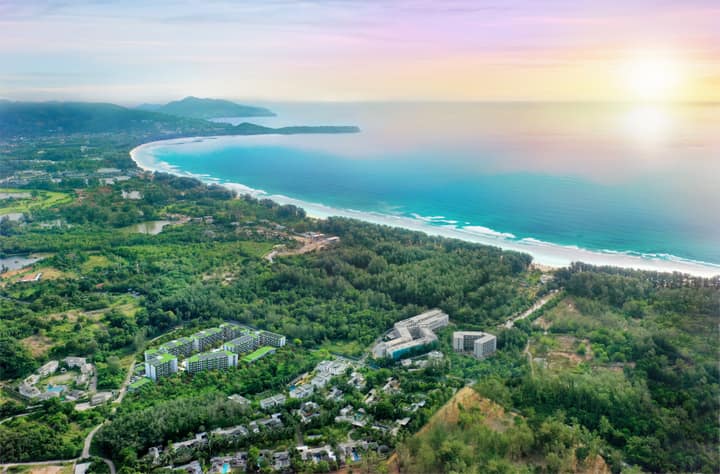
An investor, 46, a UK national, built capital from selling a business. Personal assets of $1.2 million cleared the Wealthy Global Citizen bar, but he still needed to cover the $500,000 Thai-assets requirement. The solution was buying a unit at Layan Verde for an amount that fully covered that portion of the threshold — a freehold apartment near Layan Beach that counted toward the visa assets and joined the rental pool at ~8–10% net a year at the same time. The rest of the capital was verified through overseas bank statements, he took out $50,000 in health coverage, and filed the package through the BOI portal. LTR granted 5 years of stay with annual reporting instead of the 90-day cycle, plus an exemption on foreign-sourced income — with regular transfers from abroad, that exemption alone paid for the whole application cost within the first year.
Conclusion: LTR is the most rewarding long-term Thai visa in terms of perks, but also the most demanding on money — without $1 million in capital, $40,000–80,000 a year in income, or a status in a BOI priority industry, it won’t open. For anyone who clears the bar, a ready-made unit in the rental pool near Layan Beach solves two problems at once — it covers part of the financial requirement and generates income during the months the owner isn’t using their 30-day annual stay allowance. For moving funds into Thailand to cover LTR assets or a deposit, structure the currency transfer correctly — see our guide to the FET form.
We’ll match a property to your LTR category’s requirements, run the numbers in the yield calculator, and recommend accredited application consultants — leave a request and the Layan Real Estate team will be in touch.
This material is informational only and is not legal, immigration or tax advice. LTR requirements, thresholds and tax rules are updated periodically by the BOI — verify current conditions on the BOI LTR Visa portal or with an accredited visa consultant before filing.