Phuket remains one of the few resort markets where a foreigner can buy a completed asset with a working rental model and transparent, verifiable yield. But the first step is where most people get stuck: how much money is actually needed, which deal type to pick, and in what order to act. This is a step-by-step guide for a first entry into the market — thresholds, typical deal types and an action plan, without the theory.
Contents
- Where to start: budget and goal
- Entry thresholds: how much money you need
- Typical deals: 4 entry scenarios
- How yield is calculated: the 60/40 rental pool
- Step-by-step plan for your first deal
- Freehold or leasehold: what a beginner should choose
- Where to buy: Layan vs Bang Tao
- Beginner traps
- Mini case: a first investment with $150,000
- Takeaway and next step
1. Where to start: budget and goal
Before browsing price lists, answer two questions — they shape every choice that follows.
- How much capital are you ready to commit now — a free-to-deploy amount, not everything you have. Some projects run on installment plans, so the first payment is well below the full price.
- What matters more to you — income or capital growth. A completed unit in a rental pool delivers predictable cash flow from month one. Buying at the construction stage offers more upside by handover, but no rental income until then.
Answering these two questions immediately narrows the field and saves weeks of browsing listings.
2. Entry thresholds: how much money you need
Real entry thresholds from the price list dated 01.09.2026, from the most affordable option to the premium tier:
| Format | Size | Price from | Status |
|---|---|---|---|
| Studio, resale, Layan Green Park phase 1 | from 30.3 m² | $142,602 (5,000,000 THB) | completed, in rental pool since 2024 |
| Premium studio, Layan Verde | from 36.2 m² | $235,995 (7,833,125 THB) | under construction, delivery 2028 |
| Studio, Layan Green Park phase 2 | from 36.7 m² | $224,043 (7,424,784 THB) | under construction, delivery 2026 |
| 2-bedroom, Layan Green Park phase 2 | from 55.6 m² | $348,968 | under construction, delivery 2026 |
| 1-bedroom, Layan Verde | — | $331,796 | under construction, delivery 2028 |
| Unit with private pool, Layan Verde | — | $667,050 | under construction, delivery 2028 |
The 4–5x spread between the top and bottom rows of the table isn’t about “cheap” versus “expensive” — it’s different deals with different horizons and different roles in a portfolio. Here’s how to tell them apart.
3. Typical deals: 4 entry scenarios
- Completed unit on resale. A phase-1 Layan Green Park studio from $142,602 is the lowest entry point — the complex has been operating since 2024, and income starts right after closing. The catch: the resale price already includes the growth that happened since the sales launch (about 100% for this project).
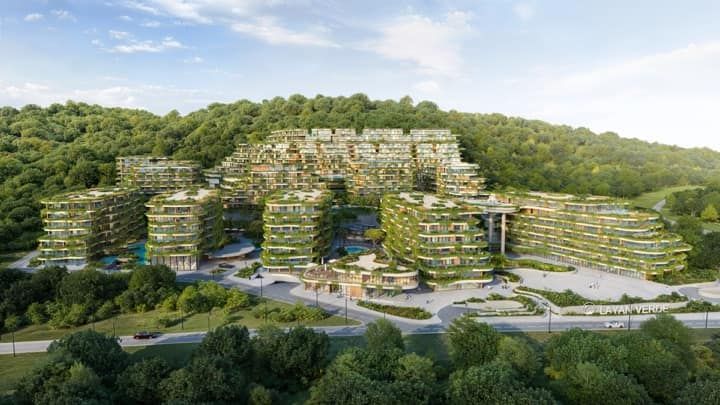
- Off-plan with construction-period installments. Layan Green Park phase 2 (delivery 2026) or Layan Verde (delivery 2028) — a cheaper entry with staged payments, but income only starts after handover.
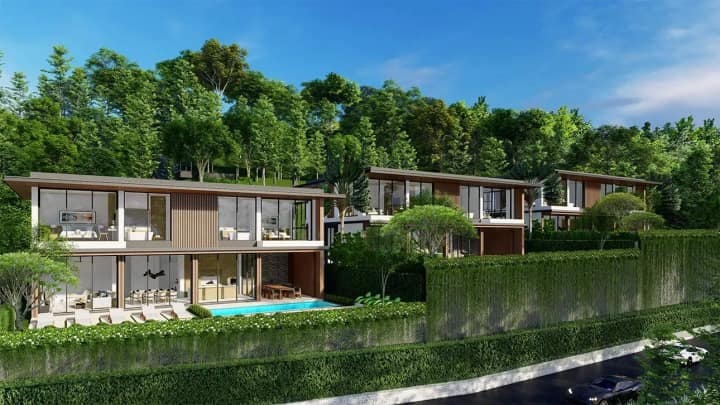
- Unit with a private pool or pool terrace. The premium segment starts from $667,050 at Layan Verde — a higher entry point, but also a higher rental premium thanks to the private pool, with the management company handling pool maintenance.
- Penthouse. The top tier at Layan Verde, up to ~$4.1M — a one-off product for investors who already have a first deal behind them and are growing a portfolio.
For a first investment, it’s reasonable to choose between the first two scenarios — they offer the clearest math at the lowest entry threshold.
4. How yield is calculated: the 60/40 rental pool
Both projects run on the rental pool model: identical unit types are pooled together, the management company rents them out and distributes the pool’s net profit — 60% to unit owners, 40% to itself for management. This isn’t a guaranteed fixed rate but a distribution model: the higher the pool’s seasonal occupancy, the higher the payout.
The benchmark for owners is ~8–10% net annually, with payback of around 12 years. The full methodology, accounting for unit size, seasonality and currency, is in how to calculate ROI in Phuket. Plug in your own numbers in the yield calculator to see the math for your budget.
5. Step-by-step plan for your first deal
- Set your budget and horizon — a free amount and your willingness to wait for handover (0 years for a completed unit, 1–3 years for off-plan).
- Choose the format — studio, 1–2 bedrooms, or a private-pool unit — based on the budget tiers in section 2.
- Review the project’s documents — licenses, the site plan, land status. The verification checklist is in Phuket due diligence.
- Reserve the unit — a reservation deposit locks in the price and size while the contract is prepared.
- Sign the contract and pay per the schedule — staged during construction for off-plan, or in a lump sum or installments for a completed unit. The full process, including documents and currency transfer, is in the Phuket buying process.
- Register ownership — freehold or leasehold, depending on the project structure and quota (section 6).
- Enroll the unit in the rental pool — rental income starts accruing from this point.
Every step can be done remotely via power of attorney — an in-person visit to Phuket isn’t required, though many investors combine their first property visit with the deal.
6. Freehold or leasehold: what a beginner should choose
A foreigner cannot own land in Thailand directly, but can own a condominium unit as freehold — as long as the project hasn’t exceeded its 49% foreign quota. For a beginner, this is usually the simplest path: the property is registered in the buyer’s personal name with no intermediate structures.
| Parameter | Freehold (condo) | Leasehold |
|---|---|---|
| Who owns it | The foreigner directly | A land lease, typically 30 years with renewal |
| Where it applies | Condos within the 49% quota | Villas, land, condos outside the quota |
| Complexity for a beginner | Lower | Higher — renewal terms need checking |
| Inheritance | Simpler | Requires separate arrangements |
The full breakdown, including renewal terms and risks, is in freehold vs leasehold in Thailand.
7. Where to buy: Layan vs Bang Tao
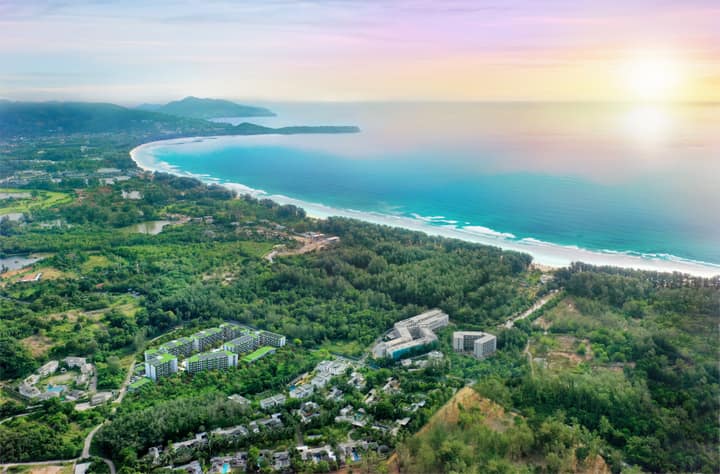
Both projects covered in this guide sit within the Layan and Bang Tao beach cluster on the west coast — today one of the island’s most liquid areas for rentals.
| Criterion | Layan | Bang Tao |
|---|---|---|
| Character | Quiet, secluded, new developments | Developed infrastructure, Boat Avenue |
| Distance to the airport | ~20 minutes | ~25–30 minutes |
| What’s here | Layan Verde, Layan Green Park | Villas, condos, beach clubs |
| For a first investment | A turnkey managed asset | More formats and budgets to choose from |
For a first deal with a ready-made rental model and minimal hands-on management, the Layan/Bang Tao cluster remains the island’s most predictable choice.
8. Beginner traps
- Calculating yield off the full price without fees. Your ROI math should include not just the purchase price but registration, upkeep and tax costs too.
- Confusing “promised” yield with the pool model. 8–10% is a benchmark under the 60/40 model, not a guaranteed rate from the developer.
- Skipping document checks on a resale. A completed unit is a private-party deal — verify outstanding payments and the assignment as carefully as you would with off-plan.
- Underestimating the currency trail. The transfer for a freehold purchase must be structured correctly, or you’ll run into problems repatriating funds later.
- Waiting for the “perfect” moment. In a rising market, waiting usually costs more than the price difference between quarters.
9. Mini case: a first investment with $150,000
A European investor with a budget of around $150,000 weighed two options: a completed resale studio in Layan Green Park phase 1, and an off-plan studio in phase 2. They chose the completed unit — slightly above budget at $142,602, but with no wait for handover: the unit joined the rental pool immediately, and the first payout arrived the following season. The investor checked the yield math, accounting for seasonality, in the site’s calculator, and ran the full pre-deal checklist from the due diligence article. For their second investment, the same buyer is now considering off-plan at Layan Verde, betting on capital growth toward the 2028 handover.
10. Takeaway and next step
A first investment in Phuket property isn’t about picking the “best” project — it’s about matching budget, horizon and goal: income now, or growth by handover. The entry threshold starts at $142,602 for a completed unit already in the market, there are four typical entry scenarios, and the yield model — a 60/40 rental pool at ~8–10% net — is the same across every format.
I’ll send the current price list, available units for your budget and a yield calculation — leave a request, check out Layan Verde and Layan Green Park, or learn more about VillaCarte Group.
This material is for informational purposes only and does not constitute individual investment advice. Prices and availability follow the price list dated 01.09.2026 — please verify at the time of the deal.