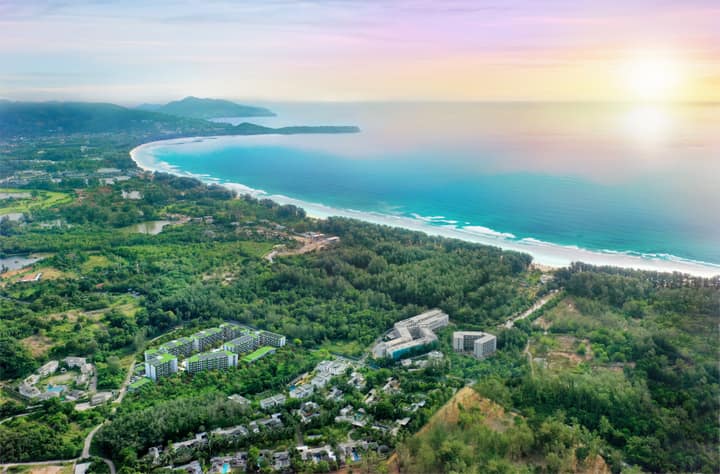
This week delivered a contrast worth unpacking piece by piece: Thailand’s condominium market as a whole is heading toward a 20-year low in new launches, while the resort segment where Phuket sits is moving the opposite way — the branded residences market grew 13.3% year-on-year, and the island leads that niche across Asia. In parallel, the mix of foreign demand keeps shifting: Russian buyers are outpacing Chinese buyers in condo-transfer growth, and Phuket is the province with the fastest-growing transfer value. Here is what actually matters for a buyer near Layan beach, and what is background noise from a national market that runs on different rules.
Contents
- The baht rate: a week in a narrow range
- Thailand’s national condo market: a 20-year low in launches
- Russia overtakes China in condo-transfer growth
- Branded residences: Thailand is #1 in Asia, Phuket leads the resort segment
- Pitfalls of the week
- Mini-case: how this plays out on a real deal
- What it means for Layan and the rental pool
- Conclusion and next step
1. The baht rate: a week in a narrow range
Per Trading Economics, over the week of August 2–7, 2026, the USD/THB rate held in a roughly 32.91–33.45 range, easing to about 33.04–33.08 by August 7 — down 0.25% from the prior session. The figure that actually matters for a buyer isn’t a single day’s reading but the monthly trend.
| Metric | Value |
|---|---|
| USD/THB on 07.08.2026 | ~33.04–33.08 |
| Weekly range (02–07.08) | 32.91–33.45 |
| Baht move over the past month | +1.26% (strengthening) |
| Baht move over 12 months | −2.19% (weakening) |
The baht strengthened roughly 1.26% over the past month, yet it remains about 2.19% weaker over 12 months — meaning a dollar-denominated deal budget is on average slightly pricier than a year ago, though a single week’s swing barely changes the picture. For anyone paying in instalments on a developer schedule, it makes more sense to check the rate before each transfer than to anchor on the rate at reservation date.
🔗 Live snapshot of the index, type medians and every weekly digest on one permanent page: Phuket property market hub →
2. Thailand’s national condo market: a 20-year low in launches
The week’s main macro story isn’t about Phuket — it’s about Thailand as a whole: analysts forecast new condominium launches nationwide in 2026 at around 17,000 units, the lowest level in 20 years. The pressure is coming from several directions at once.
| Metric | 2026 value |
|---|---|
| New condo launches (forecast) | ~17,000 units — a 20-year low |
| Mortgage application rejection rate | 40–50% |
| Average project sell-through time | up from 2–3 years to 5–6 years |
| Construction cost increase | +10–20% |
| Foreign buyers’ share of demand | 18–20% |
A 10–20% rise in construction costs (energy, logistics, materials), combined with weak domestic demand and tight bank lending standards, is a combination that hits Bangkok’s mass-market segment hardest, where the typical buyer relies on a Thai mortgage. Foreign buyers, who account for 18–20% of demand, remain the one stabilising factor for the market overall — and they are the same buyers shaping demand on Phuket, where we covered the broader market picture in our earlier deep-dive, “Phuket Real Estate Market 2026”.
3. Russia overtakes China in condo-transfer growth
Against the backdrop of a cooling overall market, the mix of foreign demand keeps shifting. In Q1 2026, condominium transfers to Chinese buyers fell 38.8% year-on-year, while transfers to Russian buyers rose 33% — by both value and growth rate, Russia became the second-largest foreign buyer group in the country.
| Buyer | Units, Q1 2026 | YoY change | Transfer value |
|---|---|---|---|
| China | 906 | −38.8% | THB 3.49bn (−42.9%) |
| Russia | 383 | +33% | THB 1.67bn (+68.7%) |
| Phuket (all nationalities) | — | transfer value +34.9% YoY | best growth among provinces |
Phuket posted the strongest growth in condo-transfer value among all provinces nationwide — up 34.9% year-on-year, which analysts link to demand for high-priced and luxury housing specifically in the resort zone. The shift in the leading buyer isn’t a one-off headline: we flagged a similar diversification trend in foreign demand in “Market Digest, Week 31”, and the Q1 numbers now back the trend with actual transfers rather than just sentiment.
4. Branded residences: Thailand is #1 in Asia, Phuket leads the resort segment
A separate report this week covers the branded residences market — homes managed or certified by a recognised brand. Thailand has cemented its position as Asia’s largest market by launched supply.
| Metric | Value |
|---|---|
| Thailand’s branded residences market | THB 205.3bn (+13.3% YoY) |
| Thailand’s share of Asia’s supply | 26% — the highest in the region |
| Units in Bangkok | 5,031 |
| Units in Phuket | 3,465 — leads Asia’s resort segment |
| Share of non-hotel brands (fashion, auto, lifestyle) | 22% vs. 17% Asia average |
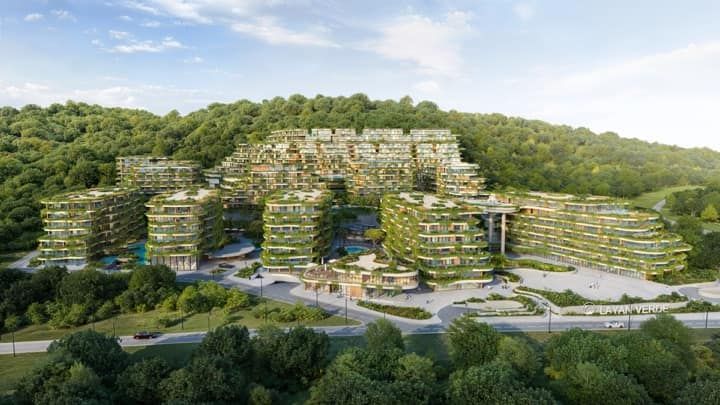
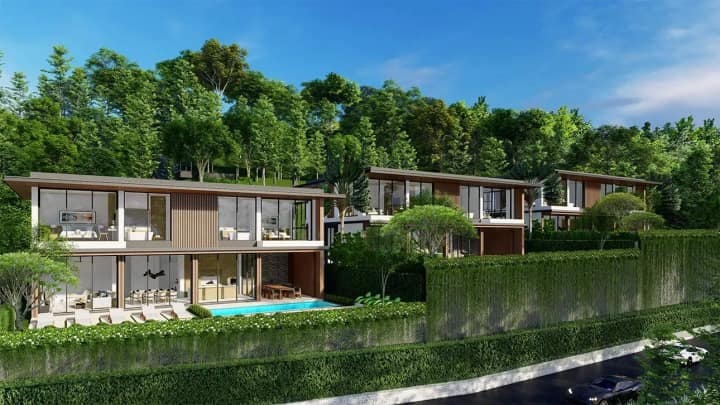
Bangkok leads by volume as an urban branded-housing market, but Phuket is Asia’s leading resort market for the format, drawing long-stay buyers, villa investors, and families who value international schools and infrastructure. The format sits close to the model behind both of our own projects near Layan beach: Layan Verde, with a full resort-style infrastructure set, and Layan Green Park, the island’s first EDGE-certified eco condo-hotel with a managed rental pool.
5. Pitfalls of the week
- “A 20-year low in launches” is a Bangkok story, not a Phuket one. The weakness in the national condo market is tied to Thai mortgage lending and domestic demand; the island’s resort segment runs on a different cycle with different buyers.
- 13.3% growth in branded residences is a segment-wide annual figure, not a guarantee that any single unit will appreciate. The decision still gets made at the project level, not the segment level.
- “Russia overtakes China” is about growth rate, not absolute numbers. China remains the largest foreign condo buyer nationally — just with a shrinking share.
- The 40–50% mortgage rejection rate is about Thai banks. A foreign buyer paying directly or on a developer instalment plan doesn’t face that barrier — which is exactly why it pays to understand the payment structure upfront rather than the bank lending cycle.
- A baht range of ±1% over a week is no reason to rush or wait. It barely moves a dollar-denominated deal budget; the instalment schedule and unit status matter far more.
6. Mini-case: how this plays out on a real deal
A buyer from Germany is considering a one-bedroom residence at Layan Verde at the price list from 01.09.2026 — from $331,796. The news about Thailand’s 20-year low in condo launches doesn’t touch his deal directly: that’s mass-market Bangkok data tied to Thai mortgages, while his purchase runs on a developer schedule with no bank involved. What does matter is the 13.3% growth in the branded residences market and Phuket’s status as Asia’s resort-segment leader — external confirmation that the format he’s buying into is growing faster than the national average. At a rate of about 33.05 baht per dollar (August 7), that’s roughly THB 10,761,043. The diversification of foreign demand — Russia’s rising share as China’s share shrinks — doesn’t change his deal terms, but it does confirm the island isn’t dependent on a single buyer nationality. The yield math through the rental pool at roughly 8–10% net per year follows the method in how to calculate ROI in Phuket.
7. What it means for Layan and the rental pool
This week’s three stories add up to one picture: Thailand’s national condo market is cooling where Thai mortgages and domestic demand call the shots, while the resort segment near Layan beach runs on the rules of a global branded and managed-housing market that’s growing faster than average. Diversifying foreign demand — Russia’s rising share as China’s shrinks — reduces the risk of yield depending on a single buyer nationality, and Phuket’s status as Asia’s leading resort-branded-residences market supports the asset’s capitalisation over the medium term. The baht rate remains in its usual narrow range and creates no urgency in either direction. For more on how the managed rental pool model differs from classic renting, and why Layan and Bang Tao compete for the same pool of capital, see Layan vs. Bang Tao.
8. Conclusion and next step
This week showed a rare divergence: Thailand’s condo market as a whole is heading toward a 20-year low in new launches amid weak mortgage lending and rising costs, while the resort segment anchored by Layan is growing alongside Asia’s branded residences market and continuing to attract diversified foreign demand — from China toward Russia and other countries. The baht rate stays stable. For a buyer, that’s not a signal to rush or to wait, but a reason to separate market-wide noise from what actually affects a specific asset near Layan beach.
I’ll send you the current price list, a yield calculation for your budget, and unit status at Layan Verde and Layan Green Park — leave a request or check the partnership terms on the Layan Real Estate page.
This material is for informational purposes only and does not constitute legal or investment advice. Figures are sourced as of the publication date; verify current figures at the time of your transaction.