Headlines about the Phuket market contradict each other: some tout record tourist arrivals and prices catching up with Bangkok, others warn of slowing new launches and cooling demand from China. Both pictures are true at once — they just describe different layers of the same market. We pulled the 2025–2026 numbers into one place — inventory, demand structure, prices by segment, yield and the regulatory backdrop — so you get a working map instead of an emotional reaction to a headline.
Contents
- Market overview: how much property is on the island
- Who’s buying: the demand mix is shifting
- Prices: what’s happening by segment
- Price growth forecast for 2026
- Condos vs villas: a shift in buyer motivation
- Yield and rental income
- Infrastructure and tourist flow
- Regulatory framework: the 49% quota and transparency
- Pitfalls: how to read market headlines
- Mini case study and takeaway
1. Market overview: how much property is on the island
By early 2026, Phuket’s total condominium inventory had passed 37,000 units — the result of a two-year construction surge of nearly 25,000 units, including a record 2024 (14,718 units across 56 projects). New construction is now slowing noticeably.
| Period | New supply (units) |
|---|---|
| 2024 (record) | 14,718, 56 projects |
| 2025 (estimate) | 5,000–7,000 |
| 2026 (Colliers Thailand forecast) | 6,000–8,000 |
The slowdown isn’t a sign of weakness — it’s the market shifting from a peak phase to a more selective development cycle. Developers are concentrating in already-established locations — Bang Tao, Cherng Talay, Rawai, Kata, Karon, Phuket Town — while the less-developed north grows more slowly. For the full picture by area, see our guide to Phuket’s districts.
2. Who’s buying: the demand mix is shifting
Foreign buyers accounted for over 40% of Phuket condominium transactions in 2025 — nearly double Bangkok’s 26%, according to REIC. The nationwide volume of foreign transactions is trending back toward pre-pandemic levels — around 13,000 units a year — but the buyer mix is changing markedly.
| Buyer group | Trend |
|---|---|
| China | −38.8% year on year, to 906 units — still the largest group |
| Russia, Taiwan, India | Growing interest |
| UK, Europe | Growing interest |
| Middle East | Notably rising enquiries, including for Phuket |
The key detail: Phuket is drawing stronger interest from these new buyer groups than Bangkok is — continuing the long-running shift of investment demand from the capital to the island’s resort destinations, covered in more depth in our week 31 market digest. For a rental-pool owner, buyer-nationality diversification is a plus: yield depends less on any single country’s news cycle.
3. Prices: what’s happening by segment
Average price movement varies sharply by segment. In Bang Tao’s premium tier (26 projects), price barely moved quarter on quarter — around THB 195,000/m² (−0.6%) — while available inventory grew 13.4%. The luxury tier tells the opposite story: available supply shrank 10.4%, and it was the only segment to post a price gain this quarter — +1.6%.
| Segment | Supply change (QoQ) | Price change (QoQ) |
|---|---|---|
| Premium (26 Bang Tao projects) | +13.4% (inventory) | −0.6% (~THB 195,000/m²) |
| Luxury | −10.4% (available inventory) | +1.6% |
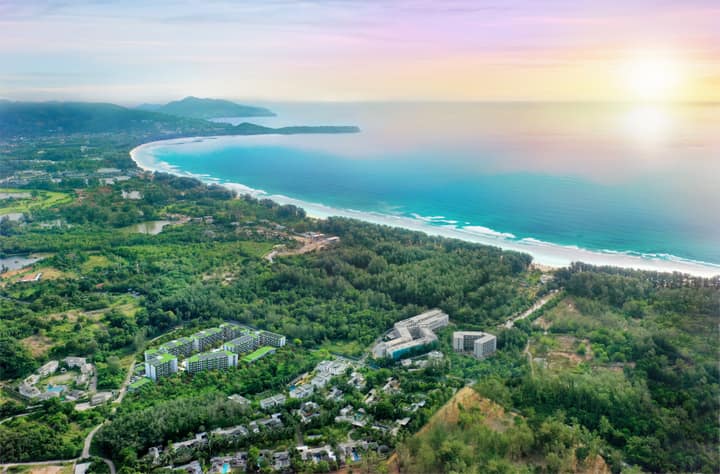
On an annual basis, coastal property in Bang Tao, Kamala and Nai Harn is up more than 20% versus 2023. Almost no vacant beachfront land remains for new development in this part of the island — and that shortage is exactly what’s pushing prices up near Layan beach, where projects like Layan Verde are landing. For a deeper look at growth drivers, see what’s driving Phuket property prices.
4. Price growth forecast for 2026
The industry consensus for 2026 is 8–10% annual growth for the island’s western coastal areas — the strongest figure among Thailand’s markets. Analysts increasingly compare the pricing of the premium tier in Layan, Bang Tao and Surin to Bangkok’s Sukhumvit district — a comparison that used to be reserved for Pattaya.
The practical takeaway for a buying decision: in a supply-constrained market, most of the capital gain goes to whoever enters during construction, not after handover — a mechanic laid out in detail in our case study of Layan Green Park’s sold-out phase 1, where prices rose roughly 100% from launch to a finished, operating complex.
5. Condos vs villas: a shift in buyer motivation
According to Knight Frank Thailand, villa sales rose 12.9% in 2025, outpacing demand for condominiums. A Knight Frank partner links this to a shift in wealthy buyers’ motivation — from a pure investment play toward privacy, space and lifestyle on a longer horizon.
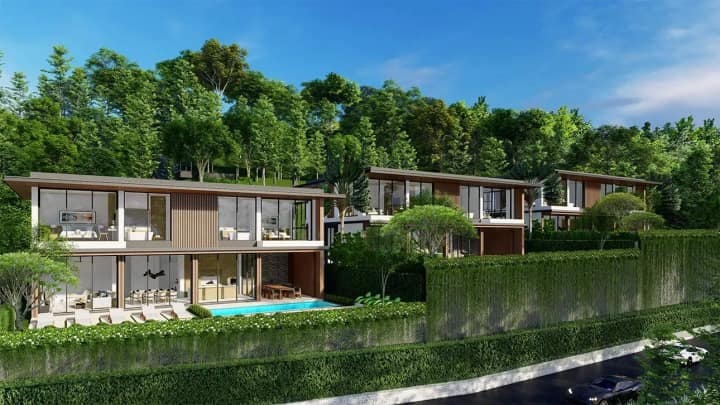
For a condo buyer in a managed pool, this isn’t competition — it’s two different products for two different goals: a villa means private ownership and self-management, while a condo in a rental pool is a managed asset with predictable yield and no operational burden on the owner. A detailed comparison of formats near Layan beach is in Layan vs Bang Tao.
6. Yield and rental income
The model behind most new Phuket condo projects, including Layan Verde and Layan Green Park, is the rental pool: like-for-like units are pooled together, and rental profit is split 60/40 — 60% to the owner, 40% to the management company.
| Metric | Benchmark |
|---|---|
| Owner’s net yield | ~8–10% per year |
| Owner’s share of pool profit | 60% |
| Management company’s share | 40% |
| Typical payback on a unit | ~12 years |
This is a model benchmark, not a guaranteed rate — actual yield depends on seasonal occupancy and the specific project. Phuket hotel occupancy hit 83.4% in Q1 2026, the highest of any destination in Thailand, which confirms strong demand on the rental side. For the calculation method, see how to calculate ROI in Phuket; for how the pool itself works, see the rental management program. Run your own numbers in the yield calculator on the homepage.
7. Infrastructure and tourist flow
An 83.4% Q1 2026 occupancy rate isn’t a one-off spike: in February 2026, Phuket Airport set a daily traffic record — 393 flights and 71,613 passengers in a single day. Infrastructure is expanding to meet demand that already exists, not a hypothetical forecast.
| Airport phase 2 parameter | Value |
|---|---|
| Investment | ~THB 10 billion |
| Added capacity | +5.5 million passengers/year |
| Total resulting capacity | ≥18 million passengers/year |
| Terminal target | 2027 |
| New parallel runway target | 2029 |
For the island’s north, home to Layan and Bang Tao, this means a shorter travel time and growing passenger flow into exactly the part of the island where the premium segment is concentrated.
8. Regulatory framework: the 49% quota and transparency
The existing cap on foreign ownership at 49% of a condominium building’s area has not changed. Two mutually exclusive scenarios remain under discussion — a cut to 30–39% and a rise to 75% in special economic zones alongside extending land leases for foreigners to 99 years — but no bill has been filed, and analysts don’t expect a decision before late 2026 or early 2027.
In parallel, as of 1 January and 1 April 2026, the Department of Business Development (DBD) tightened checks on Thai companies: founders must now verify the actual source of funds. This isn’t a ban on villa ownership via a Thai company — it’s a stricter entry check, and a legitimate structure with real business activity passes it without issue. For more, see villa ownership via a Thai company.
9. Pitfalls: how to read market headlines
- “Demand is falling” is an oversimplification. A 38.8% drop in Chinese purchases doesn’t mean the overall market is shrinking — total foreign transaction volume is growing thanks to other countries.
- Quarterly growth isn’t annual growth. +1.6% in luxury for the quarter isn’t the same as an 8–10% annual forecast — don’t conflate the two timeframes.
- There’s no single “island average” price. Dynamics differ sharply by area and segment — compare a specific project, not a headline about “Phuket overall.”
- “Villas outpacing condos” doesn’t mean condos are declining. It reflects one buyer group’s shifting motivation, not falling interest in managed investment formats.
- “Under discussion” isn’t “changed.” Neither 49%-quota scenario has been adopted — don’t base a deal on assumptions about future rules.
- Slower new launches isn’t a shortage of choice. 6,000–8,000 units in 2026 is still a substantial volume — the market is more selective, not smaller.
10. Mini case study and takeaway
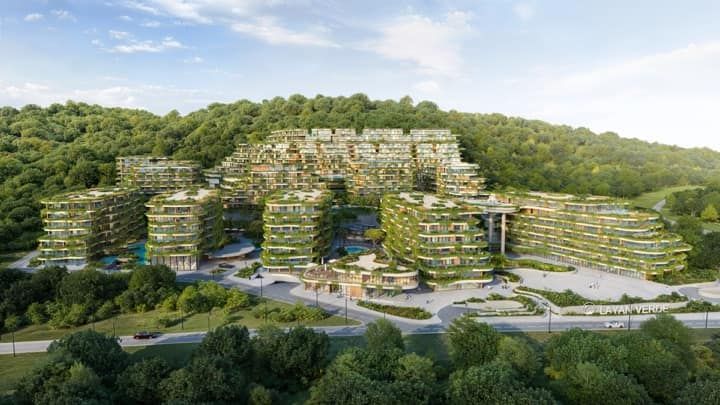
An investor is comparing two entry strategies for 2026. Option A: a studio at Layan Green Park phase 2 (handover in 2026), priced as of 1 September 2026 — from 36.7 m² from $224,043, with stage-based construction payments. Option B: a residence at Layan Verde (774 residences, handover 2028), where a premium studio from 36.2 m² now starts at $235,995, up from a launch price of $224,776 — growth already under way from the construction stage and the land shortage near Layan beach. Both options rest on the same figures from this overview: a luxury-segment shortage (+1.6% quarter on quarter), an 8–10% annual forecast for the area, ~8–10% net yield through the rental pool, and rising tourist flow supporting occupancy. The difference is horizon: phase 2 is closer to handover and rental income, while Layan Verde offers more time for capital appreciation before 2028.
The 2026 Phuket market isn’t a single story of growth or cooling — it’s several parallel trends: a shrinking but still meaningful construction cycle, a diversifying buyer base, supply-constrained price growth along the island’s western beachfront, and a stable income model through the rental pool. For a buying decision, what matters isn’t the headline but how these numbers line up for a specific project and area.
I’ll send you the current price list, a yield calculation for your budget, and unit availability at Layan Verde and Layan Green Park, plus partnership terms on the Layan Real Estate page — leave a request.
This material is for informational purposes only and does not constitute investment advice. Figures are based on industry reports (Colliers Thailand, Knight Frank Thailand, REIC) and our own market digests as of the publication date; verify current figures and pricing at the time of your transaction.