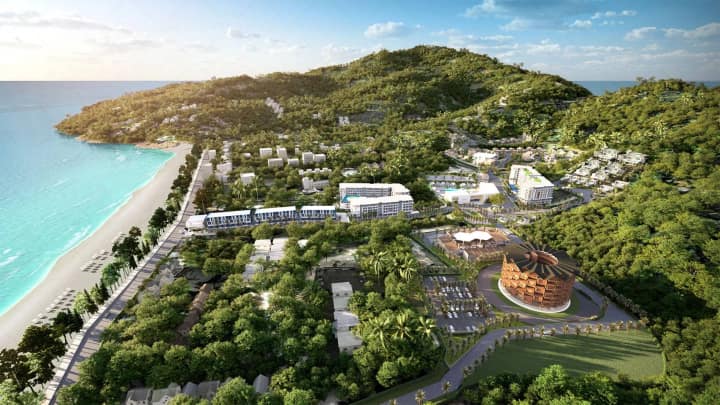
Naithon and Nai Yang mark the northernmost point of Phuket’s west coast — the part of the island where the dense resort strip ends and a pine park, calm water and an airport runway a couple of kilometres away begin. For some, it’s the ideal place to live: quiet, nature, five minutes to your flight. For others, it’s a sign that infrastructure and a clear rental market aren’t here yet, and neighbouring Layan is the smarter look. Here’s an honest breakdown of both areas: what’s here, what isn’t, and who they suit.
Contents
- What Naithon and Nai Yang are, and who they suit
- Geography and beaches: what’s the difference
- Sirinat National Park and nature
- Infrastructure: what’s here, what isn’t yet
- Airport proximity: a plus and a minus at once
- The property market in the north
- Rental and yield: why investors look further south
- Comparing the areas
- Pitfalls
- Mini case and takeaway
1. What Naithon and Nai Yang are, and who they suit
Naithon and Nai Yang are neighbouring locations at the very north of the west coast, between the airport and a growing Layan. What unites them: minimal development and maximum quiet compared to the rest of the island.
Who it suits:
- Anyone who values quiet over service — there’s no dense resort infrastructure or nightlife here.
- Frequent flyers and digital nomads — 5–15 minutes to the airport saves hours a year.
- Retirees and long-stay 50+ who prioritise nature and calm (more in property for retirees).
- Early-stage investors — willing to look at an area before mature infrastructure arrives, knowing value growth often starts exactly where it’s quiet now.
The area does not suit those looking for a rich infrastructure scene and high short-term rental occupancy right now — for that, look to Bang Tao or Patong.
2. Geography and beaches: what’s the difference
Naithon is a small, quiet bay with clean water and almost no beachfront development. The beach is shorter and more secluded than most of the island’s west-coast beaches — a typical pick for those seeking seclusion rather than a beach club scene.
Nai Yang is a long beach lined by a pine park along the shore, local Thai cafés, and a noticeably more “natural” character: fewer sunloungers and bars, more shade from the trees. Part of the beach and the land behind it falls within Sirinat National Park.
Both locations sit 20–30 minutes south of Layan — sharing its “quiet west” profile, but without comparable infrastructure and projects yet.
3. Sirinat National Park and nature
Nai Yang and the neighbouring Mai Khao beach are part of Sirinat National Park — a protected area that safeguards the pine forest along the shore and the beaches where sea turtles nest in season (roughly November–February).
For living, that’s a plus: less dense development on adjacent land, more greenery and open space than in the built-up resort zones of the south and centre of the west coast. For buying land, it’s an important practical point: construction inside the park and near its boundary is restricted or banned, and the status of any specific plot needs to be checked separately (see the pitfalls section).
4. Infrastructure: what’s here, what isn’t yet
Infrastructure in Naithon and Nai Yang consists of a handful of local cafés, minimarts and Thai restaurants along the road — no malls, large supermarkets or a dense restaurant cluster. There are no international schools or specialised clinics in the area itself either.
For a fuller service scene — supermarkets, restaurants, schools, clinics, spas — people head to Bang Tao (the Laguna complex) or growing Layan, 20–30 minutes south. Island logistics overall are covered in how to get around Phuket.
For remote workers: there are no coworking spaces in Naithon/Nai Yang itself — the nearest ones are in Layan and Bang Tao, more in Phuket for remote workers.
5. Airport proximity: a plus and a minus at once
This is the area’s defining feature — and it cuts both ways.
The plus: from Naithon, and especially from Nai Yang, the airport is literally 5–15 minutes away. For frequent flyers or anyone meeting guests, that’s a real time saving compared to 20–30 minutes from Layan and Bang Tao, or 45–50 minutes from Patong.
The minus: Nai Yang beach sits right next to the airport runway, and planes landing are clearly visible and audible — some tourists come specifically to plane-spot, but for year-round living this is a factor worth assessing in person, at different times of day, at the specific plot or building, rather than relying on general impressions from reviews.
6. The property market in the north
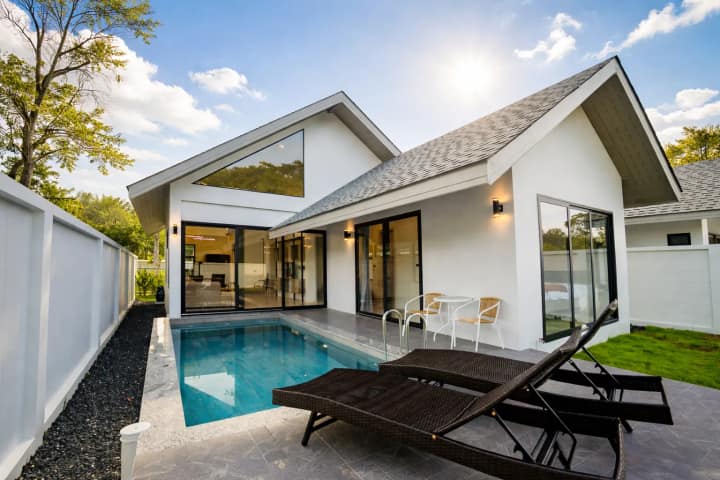
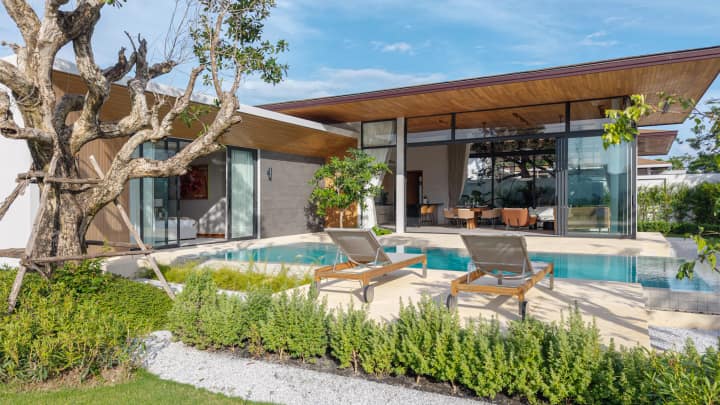
The property market in Naithon and Nai Yang is early-stage and fragmented: mostly villas and small projects from local developers, without large branded complexes or a transparent rental-management model comparable to projects further south.
| Parameter | Naithon / Nai Yang | Layan (20–30 min south) |
|---|---|---|
| Development type | Villas, small projects | Large managed projects (Layan Verde, Layan Green Park) |
| Income model | Usually self-managed rental | Rental pool with transparent reporting |
| Market maturity | Early stage | Operating and under-construction complexes |
| Resale liquidity | Limited, local demand | Higher, thanks to brand recognition and a pool of landlords |
Anyone who wants the quiet of the north but with a clear yield and management model would do well to consider projects in Layan — the same natural belt of the island, but with an operating model already in place.
7. Rental and yield: why investors look further south
There are currently no large rental-pool projects in Naithon and Nai Yang themselves — most villas are rented out by owners directly or via local agents, without guaranteed occupancy or transparent reporting.
Neighbouring Layan runs a different model: the owner pools a unit with similar apartments and receives 60% of the pool’s net profit — a benchmark of around 8–10% net per year, with payback around 12 years. That’s how the already-operating Layan Green Park works — Phuket’s first eco condo-hotel with EDGE certification (up to 40% savings on utilities) — and the under-construction Layan Verde will follow the same model: 774 residences on 7.5 ha, 700 m from Layan beach, delivery in 2028.
The difference in approach matters: renting out a villa in Nai Yang yourself is active management with variable income; buying into a pool unit in Layan is a passive model with a predictable yield benchmark. More on the mechanics in self-managed rental vs. the rental pool; run your own scenario in the yield calculator.
8. Comparing the areas
| Criterion | Naithon | Nai Yang |
|---|---|---|
| Beach | Small, quiet bay | Long beach with a pine park |
| Nature | Minimal development | Part of Sirinat National Park |
| Infrastructure | Minimal | Minimal, slightly more cafés |
| Airport noise | Audible, but lighter | Noticeable — right next to the runway |
| Who it suits | Seclusion, quiet | Nature, aviation fans, close to departure |
| Island belt | Infrastructure | Rental yield | Time to airport |
|---|---|---|---|
| Naithon / Nai Yang | Minimal | Forming, mostly self-managed rental | 5–15 min |
| Layan | Growing | ~8–10% net via rental pool | 20–30 min |
| Bang Tao | Maximum (Laguna) | Stable, predictable occupancy | 25–35 min |
9. Pitfalls
- Land near the Sirinat park boundary. The title status and the reserve boundary must be checked separately before any deal — construction on protected land is restricted or banned. General methodology is in due diligence in Phuket.
- Betting on infrastructure that “will show up soon”. The north is developing, but the pace isn’t guaranteed — don’t build a financial model on assumed future restaurants and schools.
- Airport noise judged only from photos or video. Noise level depends heavily on the specific plot, building and time of day — assess it in person.
- Expecting Layan-level yield without the pool model. Self-managed villa rental is a different risk and income profile from participating in a rental pool with reporting.
- Ignoring seasonality and distance from tourist clusters. Lower tourist flow past the area also means lower demand for short-term rental — see Phuket rental seasons.
10. Mini case and takeaway
Mini case. A couple who work remotely and frequently fly to Europe for meetings considered a villa in Nai Yang — drawn by the five-minute drive to the airport. After weighing the landing noise and the lack of nearby infrastructure, they chose a compromise: they rented a villa in Nai Yang to live in (airport nearby, nature, quiet), and put their investment budget into a studio at the under-construction Layan Verde 25 minutes south — the same quiet, natural belt of the island, but with a transparent rental-pool model and a yield benchmark of ~8–10% net once it launches.
Takeaway: Naithon and Nai Yang are an honest choice for anyone who ranks quiet, nature and airport speed above service and predictable rental. For living, there’s little downside besides the lack of infrastructure. For investing with a clear yield, it makes more sense to look at the same northern belt of the island, but in Layan — where the rental model already works and can be verified.
We’ll help you pick the right option for your goal — from a quiet villa in the north for living to a rental-pool unit in Layan for income. Browse the project portfolio at VillaCarte Group or leave a request below.
Find the right area and unit for your goal
By submitting the form, you agree to the privacy policy.