Phuket consistently ranks among the top destinations where retirees from Europe, the CIS and Asia move for the winter season or for good — warm weather year-round, developed private healthcare, an unhurried pace of life and, unlike renting an apartment somewhere in Europe, the option to own housing outright. But buying at retirement age has its own specifics: a visa isn’t tied to ownership, freehold and leasehold work differently, and the question of “what happens to the unit later” looms larger than for a 30-year-old buyer. Here’s how to choose property in Thailand deliberately as a retiree — from visas and healthcare to budget and inheritance.
Contents
- Why Thailand tops retiree lists
- Visas for a long stay after 50
- Does buying property grant residency
- Freehold vs leasehold: what matters at this age
- Healthcare and insurance: a mandatory budget line
- Condo in a rental pool or a villa: which is easier to manage
- Where to live: the area matters
- How much per month: a retiree’s budget
- Pitfalls
- Mini case and conclusion
1. Why Thailand tops retiree lists
Three reasons keep pushing Thailand, and Phuket specifically, to the top of retirement-living lists:
- Climate and health. Year-round warmth eases pressure on joints and the cardiovascular system — a common reason for moving after age 55–60.
- Developed private healthcare. Hospitals with English-speaking staff and modern equipment — more detail in healthcare on Phuket.
- Lower cost of living than Europe. At comparable or higher service quality — baseline figures in the cost of living in Thailand.
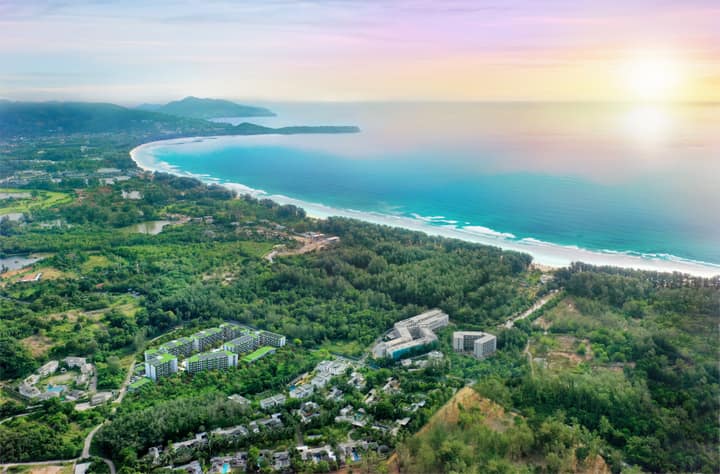
Add to that the growing infrastructure of areas like Layan and Bang Tao: restaurants, spas, golf courses and clinics within a 10–15 minute drive.
2. Visas for a long stay after 50
There’s no direct “visa for property” purchase in Thailand, but three schemes realistically work for a long stay after age 50:
| Visa | Who it suits | Idea |
|---|---|---|
| Retirement (non-immigrant O-A / O-X) | Age 50+, financial criteria | Annual renewal against income/deposit |
| Thailand Privilege (Elite) | Any age, no work needed | Multi-year package for a membership fee |
| LTR (Long-Term Resident) | High-net-worth residents, high-income retirees | Multi-year status against income/investment criteria |
The classic retirement visa requires annual renewal and proof of a financial threshold (a deposit in a Thai bank or verified income) — exact amounts and terms change periodically, so confirm the current regulations with a visa agent before applying. Thailand Privilege is covered in detail in Thailand Elite visa; a general overview of all categories is in visas for property owners.
3. Does buying property grant residency
No — and it’s worth understanding before the deal. Owning a condo or villa in Thailand doesn’t replace a visa: it’s a separate legal track. But the combination of “own housing plus a long-term visa” delivers what retirees usually move for in the first place:
- a predictable address, so there’s no need to hunt for a new rental every year;
- an asset that can be rented out while away and generate income;
- a base for opening a local bank account, insurance and healthcare access.
In other words, property solves the “where to live” question, while the visa needs to be handled separately and in advance — before the current stay status expires.
4. Freehold vs leasehold: what matters at this age
For a retiree, the difference between freehold and leasehold isn’t an abstract legal detail — it’s a matter of long-term planning:
| Parameter | Freehold (condo, 49% quota) | Leasehold (usually land under a villa) |
|---|---|---|
| Term | Perpetual | Fixed-term contract, needs renewal |
| Inheritance | Like ordinary property | Requires a separate legal structure |
| Transparency for a foreigner | Maximum | Lower, depends on contract terms |
| Typical format | Units in condo projects | Villas on leased land |
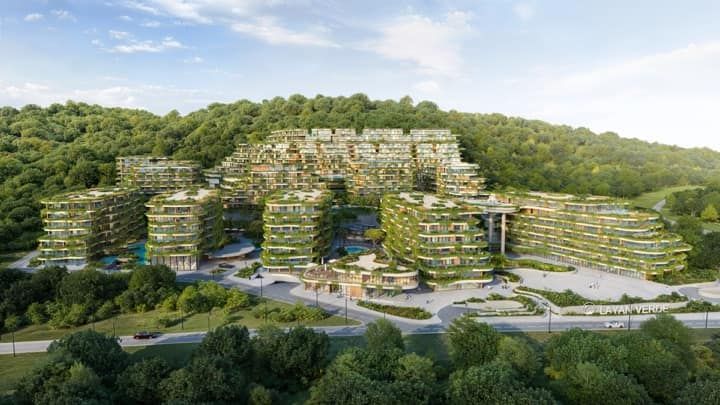
Freehold condo units within the 49% foreign quota are the simplest format in this respect: ownership is registered at the Land Department with no expiry. That’s how units at Layan Verde and Layan Green Park are sold. A detailed comparison of formats is in freehold vs leasehold in Thailand.
5. Healthcare and insurance: a mandatory budget line
The likelihood of needing a doctor rises with age, and private healthcare on Phuket, for all its quality, is paid. Health insurance isn’t optional — it belongs in the budget alongside utilities:
- covers scheduled and emergency treatment at private hospitals;
- is often a requirement for renewing certain visas;
- reduces the financial risk of an unplanned hospitalisation, which without insurance can cost more than a year of rent.
Where the main hospitals are located and how the system works overall is covered in healthcare on Phuket.
6. Condo in a rental pool or a villa: which is easier to manage
For a retiree who wants to spend part of the year in Thailand and part travelling or back home, the key question is what happens to the unit while they’re away.
- Condo in a rental pool — a management company rents the unit out together with similar units, and the owner receives 60% of the pool’s net profit (the management company keeps 40%), with a yield benchmark of ~8–10% net per year and payback around 12 years. Roof repairs, pool maintenance and security are the management company’s job, not the owner’s. The owner also keeps the right to stay in the unit personally on free dates.
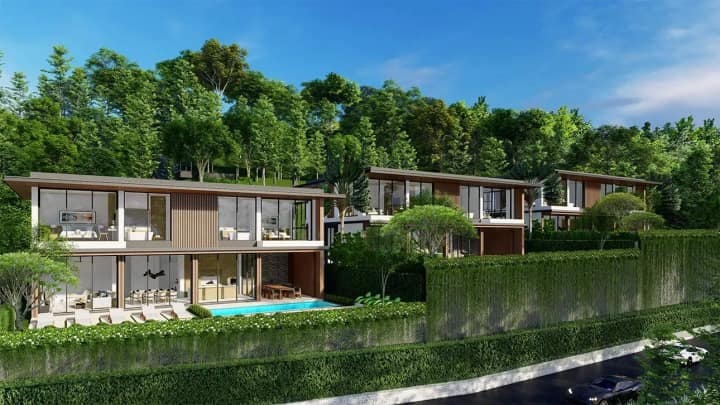
- Self-managed villa — higher potential income in high season, but also a heavier load: finding tenants, garden and pool upkeep, repairs — either handled personally or through a separate management company for an extra fee.
For a retiree who’d rather not spend time on operational matters, the rental-pool format in a condo project is usually the calmer choice. How the pool works and how to calculate yield is covered in rental management programme and how to calculate ROI on Phuket; run the numbers for your own budget in the yield calculator.
7. Where to live: the area matters
For a retiree, the area matters just as much as for a family with kids — only the criteria differ: quiet, access to healthcare, even pavements, minimal nightlife noise.
- Layan — a quiet north-west corner of the island, one of the most low-key beaches, with golf courses and clinics nearby; good for those who want quiet without full isolation.
- Bang Tao — a neighbouring cluster with more developed infrastructure: restaurants, supermarkets and spas within a short drive.
Both areas give access to major hospitals within 15–25 minutes by car — without the noise and dense development typical of tourist hubs like Patong.
8. How much per month: a retiree’s budget
An indicative monthly budget for one retiree who already owns housing in the Layan–Bang Tao area (excluding mortgage payments — the housing is already owned):
| Item | Benchmark, $/month |
|---|---|
| Utilities (electricity, water, internet) | 100–200 |
| Condo common-area fee | 50–150 |
| Health insurance | 100–250 |
| Food (markets + cafés) | 250–400 |
| Transport (scooter/taxi) | 60–120 |
| Total, excluding one-off costs | ~560–1,120 |
Factoring in visa fees, one-off setup costs and a buffer for the unexpected, a comfortable benchmark is $1,300–2,000/month. A detailed calculation method and scenarios are in budget for one person in Thailand.
9. Pitfalls
- A visa lapses quietly. If a renewal is missed, stay status is lost regardless of owning property — track deadlines well in advance.
- Leasehold without legal review. A lease on the land under a villa needs separate due diligence, especially if the asset is meant to pass to heirs.
- No insurance “until the first incident”. Savings from skipping insurance last exactly until the first hospitalisation — after that, costs can exceed the savings many times over.
- Inheritance without a will. Without a Thai will covering local assets, transferring property to heirs takes longer and requires more formalities — see inheritance of Thai property.
- Guaranteed yield as bait. The 8–10% benchmark through a 60/40 pool is a model, not a fixed-rate guarantee; the actual figure depends on seasonal occupancy.
10. Mini case and conclusion
A buyer, aged 61, from the UK. Goal: winter on Phuket for 5–6 months a year, and rent out the unit the rest of the time for hands-off income. The choice landed on a ready studio in phase 1 of Layan Green Park on resale — the unit enters the rental pool immediately, income starts from the first season, and Layan beach is a 2-minute walk away. The condo’s freehold status resolved the inheritance question: the retiree drew up a Thai will covering this asset separately from the will at home. The long-stay visa was arranged in parallel, not tied to the purchase itself.
For those willing to wait until 2028 for a larger format (1–3 bedrooms, private pools), the alternative is Layan Verde, still under construction with an instalment plan.
If you’d like to work through your own situation — the right housing format, current pricing and compatibility with your visa track — leave a request and the Layan Real Estate team will match a unit to your budget and goal.
This material is informational and does not constitute legal or visa advice. Visa requirements change periodically — confirm current conditions with a qualified specialist before filing. Property prices are per the price list as of 01.09.2026 — verify at the time of the deal.