A solo expat or digital nomad budgets differently from a couple or a family: there’s no school line item, but also no one to split rent and utilities with. This guide breaks down the numbers specifically for a single person: what life in Thailand really costs by category, how Phuket, Bangkok and Chiang Mai compare for someone living alone, and three budget scenarios for 2026 — from minimal to premium.
Contents
- Who counts a “solo” budget
- Housing: renting a studio vs owning
- Food and everyday expenses for one
- Transport for a single person
- Utilities, connectivity, insurance
- Visa and legal status
- Phuket vs Bangkok vs Chiang Mai for one
- Three budget scenarios for a single person
- Pitfalls
- Case study and conclusion
1. Who counts a “solo” budget
“Single” in Thailand usually covers a few different profiles, each with a different spending structure:
- digital nomad — income in foreign currency, works from a coworking space or home, flexible travel schedule;
- snowbird — arrives for 3–6 months during high season, often rents short-term or by the month;
- long-term relocator — moves for years, rents or buys housing, arranges a long-term visa;
- solo retiree — fixed income, prioritises healthcare and stability, often chooses Phuket or Chiang Mai.
All four share the same base categories (housing, food, transport, connectivity, insurance), but weight each one differently. Below is the budget broken down in order of importance for a single person.
2. Housing: renting a studio vs owning
Housing is almost always the largest line item for a single person.
| Housing type | Bangkok | Phuket (Layan/Bang Tao) | Chiang Mai |
|---|---|---|---|
| Studio/1BR rent | $700–1200/mo | $600–1500/mo | $350–600/mo |
| Shared room | $250–450/mo | $300–600/mo | $150–350/mo |
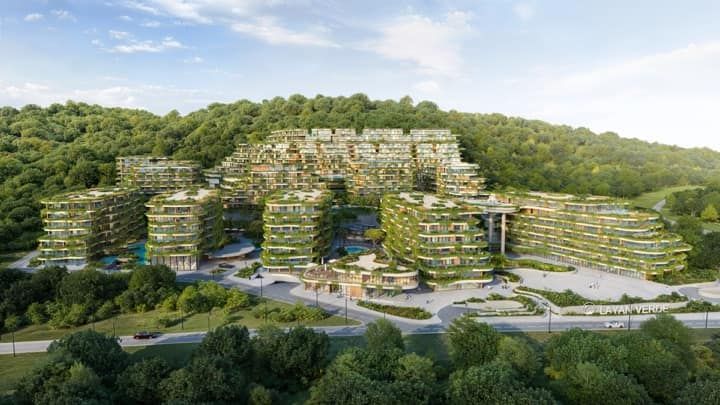
| Studio ownership (rental-pool project, from) | — | from $235,995 (Layan Verde) | — |
For one person, a studio or 1BR is almost always a better deal than a villa: less floor area means less air conditioning, lower utilities and a lower rent. In Phuket the lower bound of rent is lower than in Bangkok, but the range is wider due to seasonality and proximity to the sea — more detail in rent prices in Thailand.
For someone who doesn’t plan to live in the unit year-round, ownership works differently than it does for a family: a studio in a rental-pool project can be rented out through the management company during travel or seasonal absences. The owner receives 60% of the pool’s net profit — a ~8–10% net annual benchmark with a ~12-year payback. The full methodology is in how to calculate ROI in Phuket and the yield calculator.
3. Food and everyday expenses for one
Controlling food spend is easier alone than for a family — smaller volume and more flexibility in choice:
- street food and markets — dishes from $1.5–3, the most affordable option in any city;
- Thai cafés and food courts — $3–6 a meal, convenient for one, no need to cook for several;
- Western restaurants and delivery — $10–25 per outing;
- cooking at home — often costs more per portion for a single person than street food, due to grocery package sizes.
Someone eating locally spends $150–250/month; someone oriented toward Western food and restaurants spends $400–700/month. The gap between regions is small, except for imported items, which cost more in Phuket due to island logistics — more detail in cost of living in Thailand.
4. Transport for a single person
Transport is usually cheaper for one person than for a couple or family running several routes:
- Bangkok — the BTS/MRT cover the centre; transport for one person costs $30–60/month without a personal car;
- Phuket — renting a bike ($60–100/month) covers most of a single person’s needs; a car ($400–700/month) is needed less often than for a family;
- Chiang Mai — a compact city where a bike at $50–80/month covers nearly all trips.
For a single person, a bike in Phuket is almost always more rational than a car, unless you regularly transport other people or large loads. More on the island’s logistics in getting around Phuket.
5. Utilities, connectivity, insurance
| Item | Range/mo (single person) | Comment |
|---|---|---|
| Electricity (studio, with AC) | $50–100 | Smaller floor area means a lighter AC load |
| Water | $5–10 | Usually fixed and low |
| Internet + mobile | $20–30 | Fibre is available everywhere, including resort areas |
| Health insurance (adult) | $100–300 | Rises with age and coverage level |
For a single person, health insurance is nearly mandatory, not optional: the public system is built for residents, and private clinics — the best option for a foreigner without local family nearby — run on insurance or direct payment, which bites hard without cover. More in healthcare in Phuket.
6. Visa and legal status
A single person has to sort out their visa status alone, without leaning on a spouse’s work visa or a corporate sponsor for a child at school. The options, by time and money cost:
- tourist visa with extensions — lowest upfront cost, but regular visa runs and a hard limit on duration;
- remote-work/entrepreneur visa — tied to income or employment;
- Thailand Elite visa — a one-time cost that removes years of visa runs and isn’t tied to an employer. Full breakdown in Thailand Elite visa.
For a single person planning to stay in the country more than 6–12 months a year, a long-term visa’s cost is usually offset by the time and stress saved on visa runs — budget it as its own line item, not a one-off expense.
7. Phuket vs Bangkok vs Chiang Mai for one
The three cities suit a single person differently:
| Region | Pros for a single person | Cons for a single person |
|---|---|---|
| Bangkok | Cheap transport, a huge choice of food and leisure, a large expat community | Smog, traffic, no sea nearby |
| Phuket | Sea and beach within walking distance, a calmer pace, income from ownership via a rental pool | Higher beachside rent, needs a bike/car, seasonal pricing |
| Chiang Mai | The cheapest option, a large digital-nomad community | No sea, further from an international airport with frequent flights |
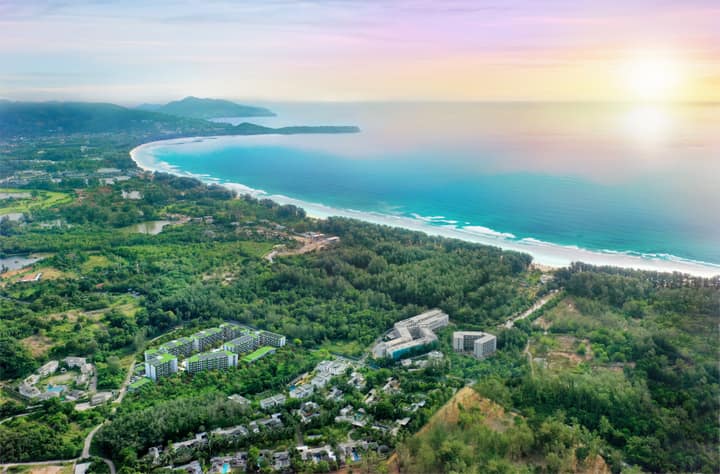
For a single person who values the sea and isn’t drawn to Bangkok’s pace, Phuket offsets higher rent with savings on transport and leisure when living near existing infrastructure — for example in Layan or Bang Tao, where markets, cafés and clinics are within walking distance of the beach.
8. Three budget scenarios for a single person
| Scenario | Profile | Budget/mo |
|---|---|---|
| Minimal | Local food, a bike, a room or studio away from the centre, no insurance | $700–1000 |
| Comfortable | Mixed cuisine, bike/taxi, 1BR near infrastructure, basic insurance | $1300–2200 |
| Premium | Beachside housing or a serviced project, full insurance, a car, restaurants | $2500–3500+ |
The gap between scenarios runs 3–5x, so a “national average” figure is nearly useless for planning — budget for your own profile and city from the section above.
9. Pitfalls
- Basing your budget on a couple’s or family’s figure, halved. A studio rental for one isn’t half the cost of a 2BR for a couple — the savings are smaller than they look.
- Skimping on insurance. For a single person without cover, a sudden hospitalisation is the fastest way to wipe out months of budget.
- Forgetting visa costs. Visa runs, extension fees and agent services add up to a noticeable sum over a year if a long-term status isn’t planned ahead.
- Underestimating seasonality in Phuket. Rent and short-term costs on the island swing ±15–20% between high and low season.
- Treating housing as a pure expense. For someone who travels frequently or leaves the country for months, a studio in a rental-pool project can generate income exactly during the periods it would otherwise sit empty.
10. Case study and conclusion
A digital nomad from Europe budgeted around the “average” figure of $1000/month from generic articles about Thailand and planned to rent a studio in Phuket. A detailed calculation including a bike, insurance and living near the beach put a comfortable budget at $1700/month — higher than expected, but still noticeably below the cost of living in their home European capital. Instead of a long-term rental, they considered buying a studio in the Layan Green Park project: part of the year the owner uses the unit themselves (up to 30 days of free stay a year under the pool’s terms), and for the rest of the time it’s rented out through the rental pool, partly offsetting holding costs.
Conclusion: for a single person, Thailand can cost anywhere from $800 to $3000 a month — the difference comes down to the city and comfort level, not the country itself. Chiang Mai is the cheapest option, Bangkok is predictable thanks to its transport, and Phuket offers the sea next to your home along with the chance to turn housing into a partially self-funding asset through ownership instead of rent.
I can help put together a budget for your scenario and find a studio in Phuket that works for daily life and earns income while you’re away — leave a request or see the Layan Real Estate page.
This material is informational. Figures are approximate ranges for 2026; actual costs depend on lifestyle, district and exchange rates — this is not financial advice.