Pattaya and Phuket are the two resorts that most often end up on the same shortlist for a property buyer in Thailand. Both sit on the coast, both live off tourism, and both have decades of history with foreign buyers. That’s where the similarity ends: these are markets built on different logic — a different type of investor at the entry point, a different income model, and different liquidity on exit. Pattaya is closer to Bangkok and wins on transaction volume; Phuket is farther away but wins on price, asset quality and a transparent rental system. Here’s a side-by-side breakdown so the choice rests on numbers, not a random tip from a travel agent.
Contents
1. Two markets, two logics
Pattaya is Thailand’s oldest mass-market resort for foreign buyers: condominium construction has been underway here for decades, the market is huge by unit count but uneven in quality — from brand-new towers to seriously ageing stock from the 1990s and 2000s. It’s a high-turnover market: according to REIC data cited by Nation Thailand, in the first half of 2026 Chonburi province (home to Pattaya) led the country in the number of condominium ownership transfers to foreigners — 1,167 units, or 36% of all foreign transactions in Thailand for the period.
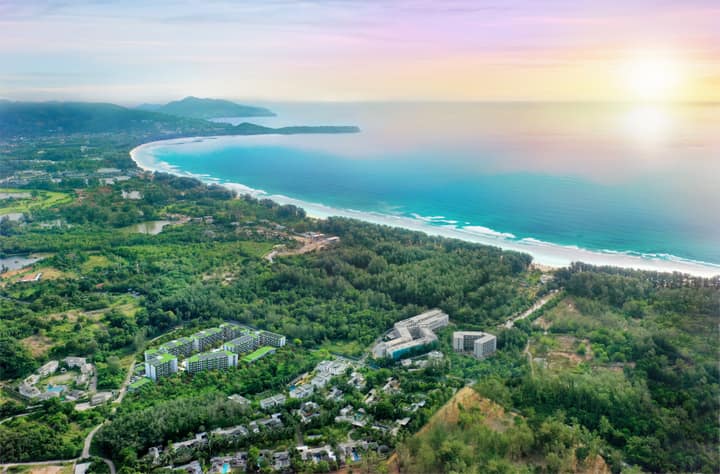
Phuket is a different kind of market. There are fewer deals in absolute terms, but a higher average value: the same REIC data shows Phuket posting the strongest growth in the value of foreign purchases nationwide — up 34.9% year-on-year, driven by demand for expensive and luxury housing. In other words, Pattaya wins on market volume, Phuket on market quality and capitalisation. For an investor these are two different tools: a large, liquid but uneven mass market versus a smaller, pricier and more systematic one.
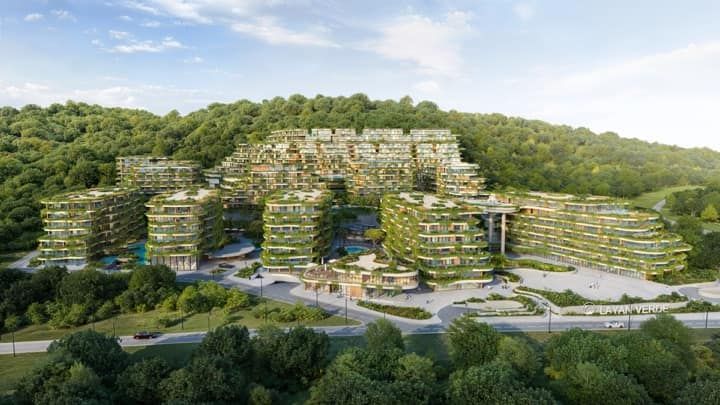
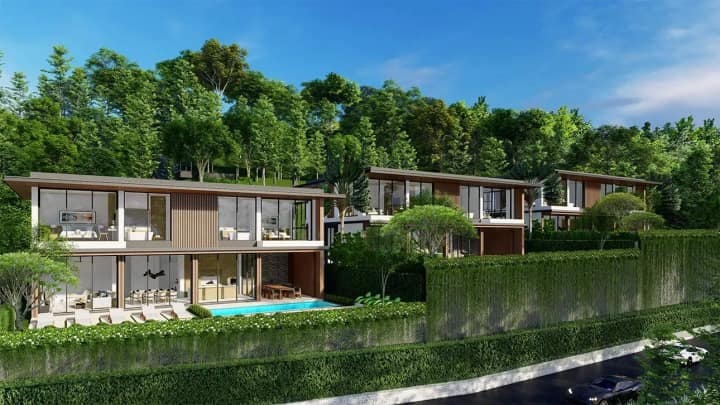
Phuket’s large modern segment is condo-hotels with a unified rental-pool model, such as Layan Verde and Layan Green Park near Layan beach. For a full quantitative breakdown of the island, see the Phuket market in 2026.
2. Logistics: getting there
Logistics is the first thing an investor should look at — it shapes tourist flow, the cost of shipping construction materials, and ultimate liquidity.
- Pattaya. About 150 km from Bangkok; the drive along Motorway 7 takes roughly 1.5–2 hours by car or bus. The main entry point for tourists and investors is Bangkok’s Suvarnabhumi Airport, followed by a road transfer. Pattaya technically has its own airport, U-Tapao (joint civil-military use, ~40 km from the city), but its current throughput is around 3.7 million passengers a year across two terminals with one operating 3,500 m runway, and the vast majority of international flights still route through Bangkok. According to the Eastern Economic Corridor Office (EECO), the government is building a second 3,505 m runway and expects to grow the airport’s capacity to up to 60 million passengers a year at full build-out — but that’s a long-term horizon, not the current reality.
- Phuket (HKT). An international airport with direct flights from Europe, China, Russia, India and the Middle East, dozens of destinations, no additional transfer through Bangkok required.
The practical difference: Pattaya’s proximity to Bangkok gives easy access to domestic Thai demand, weekend trips and day visitors — but also a heavier dependence on that specific Bangkok audience. Phuket’s direct international airport creates a broader tenant geography: the island receives guests directly, bypassing the capital.
3. Entry price
| Parameter | Phuket | Pattaya |
|---|---|---|
| Dominant format | Condo-hotels with rental pools, and villas | Condominiums (decades of construction, mixed vintage) |
| Typical entry (condo) | From ~$140–230k with installments in new projects | Wide spread: from budget units in older stock to pricey new beachfront towers |
| Quality of new supply | Large single-developer projects with district-level infrastructure | Fragmented market — from boutique towers to mass-market complexes |
| Developer installments | Standard (35%+35%+30% and similar schemes) | Available on new builds, more variable given the number of developers |
For example, Layan Green Park — an eco condo-hotel near Layan beach: phase 1 (248 units) sold out and has been operating since 2024, with only resales now on the market from THB 4,800,000 ($142,602) for a studio; phase 2 (296 units) is on sale with handover in 2026, entry from $224,043 for a studio. Layan Verde offers premium studios from 36.2 sqm starting at $235,995. Pattaya has less comparable supply at that scale and consistency of terms: the market is more fragmented across many developers and decades of buildings of varying quality, so comparing an “average price per sqm” between the two cities is close to meaningless without accounting for a building’s age and location.
4. Yield and management model
- Phuket. The flagship model is a rental pool: identical unit types are pooled, and owners receive 60% of net profit, with the management company taking 40%. The benchmark for completed properties is ~8–10% net a year, with payback around 12 years. See the methodology in how to calculate ROI.
- Pattaya. Large public rental pools at the scale of Phuket’s branded projects are far less common. Management of an individual unit — through a local operator, a short-term rental agency, or independently — dominates instead. Yield figures quoted across the market vary widely from building to building, and the actual outcome depends more on the specific manager and the condition of the specific building than on a transparent pool formula.
The difference is structural: in Phuket’s modern segment, income is primarily a system (pool, reporting, a management company with a unified policy); in Pattaya it’s more often a specific unit and a specific manager, which makes the yield forecast less predictable, all else being equal.
5. Ownership structure and the foreign quota
The legal framework in Thailand is identical for both resorts: a foreigner can own a condominium as freehold within the 49%-of-floor-area quota, while land under a villa is only accessible through leasehold or permitted structures. See freehold vs leasehold for details.
The difference isn’t in the law — it’s in how long and how densely each market has been built up:
- Pattaya has been built up with condominiums for longer and across many more individual projects, so in many popular, well-established buildings the 49% foreign quota is already used up — a free freehold unit in a good location has to be found among a limited set of available lots or on the secondary market.
- On Phuket, especially in newer districts near Layan and Bang Tao beaches, fresh projects open the quota from scratch, so the choice of freehold options in new beachfront developments is typically wider.
6. Tourist flow and target audience
Pattaya has historically been geared toward close, mass-market demand: Bangkok residents on weekend trips, short package tours, and a large flow of Chinese and Russian visitors drawn to affordable seaside travel a couple of hours from the capital. That drives high transaction frequency, but also intense competition in supply — the rental market here is dense and price-sensitive.
Phuket draws a longer-haul and more diverse traveller — direct flights create demand from Europe, the Middle East, India and China simultaneously, without dependence on a single source. According to REIC data, this wealthier and more diverse flow is reflected in the deal structure: the 34.9% year-on-year rise in the price of foreign purchases on Phuket in the first half of 2026 was tied to demand for expensive and luxury housing, not to a rise in the number of transactions.
For an owner this matters directly: in Pattaya, higher short-term rental turnover comes from Bangkok proximity, but so does more pricing pressure from competing supply; on Phuket, a more diverse and, on average, wealthier audience supports a higher average rental ticket.
7. Infrastructure and quality of life
Both resorts have long outgrown the “beach town” label and offer developed infrastructure — malls, hospitals, international schools. But the shape of the built environment differs: Pattaya is a dense, urbanised resort with a high concentration of high-rises along the coastline and a prominent nightlife industry in its central district, which doesn’t suit every buyer profile.
Phuket is noticeably larger in area and more varied by district: quiet residential zones near Layan beach sit alongside the livelier Bang Tao and the tourist-heavy Patong, letting a buyer choose the format that fits the goal — from an investment asset in a calm area to a property with maximum tourist footfall. For a detailed district guide, see where to stay in Phuket.
8. Comparison table
| Parameter | Phuket | Pattaya |
|---|---|---|
| Access | Direct international airport, HKT | Via Bangkok (Suvarnabhumi) + 1.5–2h road transfer; U-Tapao is growing but limited |
| Foreign transactions (H1 2026) | Fewer in absolute numbers | 1,167 units, 36% of the national market (REIC/Nation Thailand) |
| Growth in value of foreign transactions (H1 2026) | +34.9% year-on-year (REIC/Nation Thailand) | Leader by volume, not by value growth rate |
| Income model | Rental pool, ~8–10% net, unified formula | Individual management, higher forecast volatility |
| Foreign quota in new projects | More often opened fresh | Often already used up in popular buildings |
| Target tourist | Long-haul, diverse | Short-haul, mass-market, tied to Bangkok |
| Age of housing stock | Mostly new construction in developing districts | Mixed — from new builds to 1990s–2000s stock |
9. Pitfalls
- Comparing resorts on price per sqm alone. Pattaya spans everything from brand-new beachfront towers to worn 20–30-year-old stock — an average price is misleading without accounting for a building’s age and condition.
- Treating U-Tapao as a ready alternative to Suvarnabhumi. The airport is genuinely growing, but at its current throughput of about 3.7 million passengers a year and a single operating runway, most international flights still route through Bangkok — don’t bake future capacity into today’s liquidity assumptions.
- Expecting pool-level yield while self-managing a unit. Without a rental-pool system with a transparent formula, income in Pattaya depends on a specific manager rather than a guaranteed rate — verify actual figures against a specific building’s reporting.
- Ignoring the foreign quota in Pattaya’s older buildings. A freehold unit in a well-established building may be physically unavailable to a foreigner if the 49% quota is already used up — check this before placing a deposit.
- Underestimating the difference in tourist flow. Pattaya’s closer, more mass-market demand is more sensitive to Bangkok’s economy and domestic tourism than to international flights directly — a different risk profile than Phuket’s.
10. Case study: choosing between the resorts
An investor with a budget of around $220,000 was weighing a completed condominium in central Pattaya against a studio in a condo-hotel under construction on Phuket. The Pattaya unit looked appealing on price per sqm and proximity to Bangkok — convenient for personal visits. But due diligence found the building was constructed in the early 2000s, the 49% foreign quota was fully used up, and a free freehold lot was only available on the secondary market from a private seller with no transparent rental history; management was offered on an individual basis with no pool and no fixed income formula. The studio near Layan beach on Phuket, by contrast, belonged to a fresh project with an open quota, installments during construction, and a ready 60/40 rental-pool model with a benchmark of ~8–10% net after launch. The investor chose Phuket — not because Pattaya is “worse,” but because for the goal of “passive income with a clear formula,” Pattaya’s secondary and uneven market demanded more manual verification and offered a less predictable outcome.
Bottom line: Pattaya and Phuket solve different investor problems. Pattaya offers volume, proximity to Bangkok and a wide choice of budget options, but with more fragmented stock quality and management. Phuket offers fewer deals but a higher average ticket, direct international access and a mature income system through rental pools. For a “buy it and collect transparent passive income” strategy, the arguments currently favour Phuket; for a “cheap entry near the capital” strategy, Pattaya is worth a close look — but always with a check on the quota and the building’s age.
I can help compare specific Phuket properties for your budget and goal, with a yield calculation in the ROI calculator — or let’s discuss strategy through Layan Real Estate.
Find the right fit for your strategy
By submitting the form, you agree to the privacy policy.