A second home by the sea isn’t the same thing as an investment condo bought purely “for rent.” An investment condo is bought for the numbers in a rental-pool report and often goes unseen by its owner for years. A second home is a compromise: the family lives in it for a few weeks or months a year, and the rest of the time the unit works and earns income. On Phuket this model comes together especially naturally — the climate allows year-round living, and the rental market is structured so that an owner’s absence doesn’t mean the property sits idle. Here’s why people buy a second home at all, how a condo differs from a villa in this scenario, and how to make sense of the ownership formats.
Contents
- Second home vs investment condo: what’s the difference
- Why people buy a second home by the sea
- Condo or villa: what’s easier to manage remotely
- The hybrid model: live in it and earn from it
- Freehold or leasehold for a second home
- Where to choose: Layan vs Bang Tao
- Ownership budget: what comes beyond the purchase
- Visa: how long can you stay in your own home
- Second-home pitfalls
- Mini case and next step
1. Second home vs investment condo: what’s the difference
Formally it’s the same type of property — the difference is in the purpose of the purchase and how yield is calculated.
- Investment condo. The owner doesn’t plan to live in it, the unit joins the rental pool from day one, and the whole focus is on the numbers: yield, payback period, resale liquidity.
- Second home. The owner reserves part of the year for themselves — a holiday, wintering, family visits — and plugs the same rental pool in for the rest of the time. Yield here isn’t the sole goal but a way to offset upkeep and lower the effective cost of ownership.
The difference affects which project fits: for a second home, interiors and “lifestyle” infrastructure (spa, restaurants, coworking) matter more, not just the pool profit-split formula — although that still matters too.
2. Why people buy a second home by the sea
The reasons rarely come down to just one:
- Climate and a change of season. The chance to spend part of the year — often the low season back home — in a warm climate by the sea.
- A base for the family. Owned housing for visits from children, parents, friends — no booked hotels or high-season markups.
- Asset diversification. Part of a portfolio moves out of cash and deposits into a physical asset in another jurisdiction — Phuket property has traditionally held up well against local inflation.
- Planning ahead. Many buy a second home 5–15 years before a planned relocation or retirement — more on this scenario in the article on property in Thailand for retirees.
- Income that partly offsets upkeep. Unlike a house back home that sits empty without its owner, a condo in a rental pool keeps working and paying — that’s what sets a second home on Phuket apart from a dacha or an apartment in Europe.
3. Condo or villa: what’s easier to manage remotely
The key question for a second home isn’t just price — it’s how much personal involvement in management is needed while the owner isn’t in the country.
| Parameter | Condo in a rental pool | Villa under private management |
|---|---|---|
| Management while owner is away | Handled by the complex’s management company | Needs a separate manager/agency |
| Who rents it out | A pool of identical units, bookings distributed automatically | Individual bookings, depend on the specific manager |
| Infrastructure | Pools, spa, restaurants, reception — shared | Only what’s on the villa’s own plot |
| Typical yield | ~8–10% net through the pool (60% to the owner, 40% to the management company) | Higher per-night rate, but less stable and occupancy-dependent |
| Personal involvement | Minimal — the unit simply joins the pool | Constant oversight: security, garden, pool, repairs |
| Entry threshold | Lower (studios and 1-bedroom units) | Higher (separate land and construction) |
For a second home the owner visits periodically, a condo in a complex with a ready-made rental-pool model removes the main headache — no need to hire and oversee a separate service team.
4. The hybrid model: live in it and earn from it
This is exactly where a condo-hotel format like Layan Green Park works: the unit is formally part of the rental pool, but the owner keeps a personal stay window — usually up to 30 days a year, typically during the low season (May–October), when rental demand is lower anyway. The rest of the time the apartment works in the pool of identical units.
The mechanics are simple and transparent:
- The pool combines income and costs across all identical units in the building.
- The owner receives 60% of the pool’s net profit, the management company keeps 40% for operating work (bookings, cleaning, reception, marketing).
- The yield benchmark is roughly 8–10% net per year, with a payback period of about 12 years.
- The owner’s own stay doesn’t remove the unit from the pool entirely — it’s simply pulled off the booking calendar for those days.
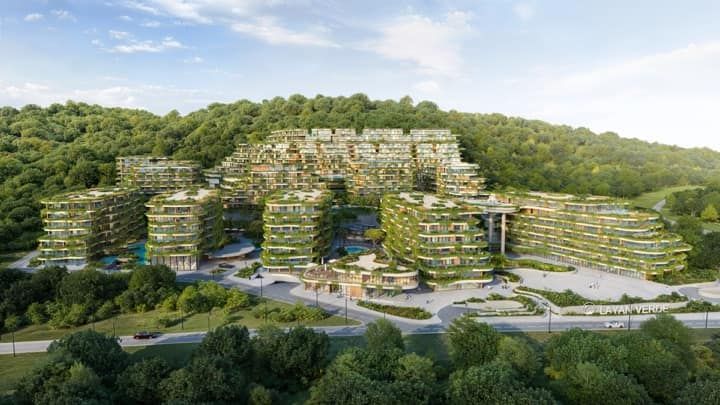
The same principle applies at Layan Verde — 774 residences on 7.5 hectares, 700 metres from Layan beach, completion in 2028. The main difference is the format: Layan Verde is residences with apartments across several classes, while Layan Green Park is a certified eco condo-hotel. For how the pool split works and what’s included in the management company’s 40% share, see the article on the rental management programme. Run your own numbers in the yield calculator.
5. Freehold or leasehold for a second home
The ownership format depends on the type of property:
- Condo. Foreigners can hold freehold — full ownership of the unit — within a building’s 49% foreign-ownership quota. This is the simplest and clearest option for a second home, both to buy and to pass on.
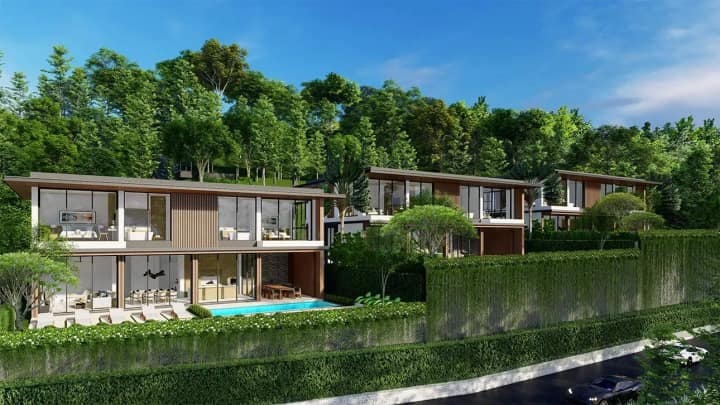
- Villa on land. Freehold on land isn’t available to foreigners under Thai law. Instead, leasehold is used (a long-term land lease, typically 30 years with renewal rights) or ownership through a Thai company structure with restrictions. The differences in rights, inheritance and risk are covered in detail in freehold vs leasehold.
For a second home meant to be passed down to children or held for decades, a freehold condo is structurally simpler — less paperwork on renewal and inheritance.
This material is not legal advice. Consult a Thai lawyer about your specific property and family situation before choosing an ownership structure.
6. Where to choose: Layan vs Bang Tao
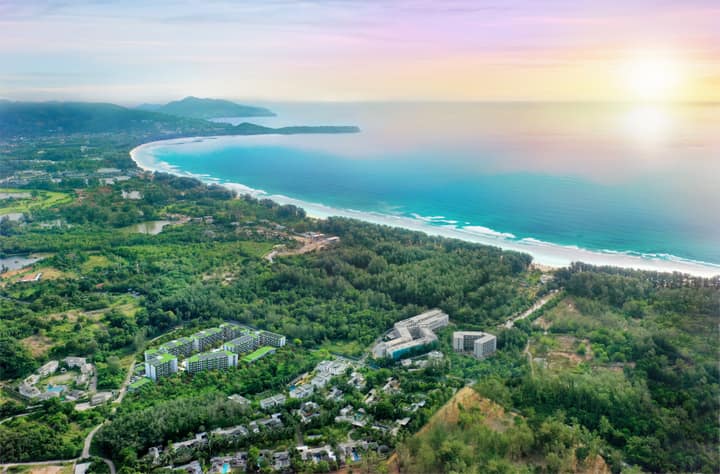
Both districts on Phuket’s west coast are popular specifically for the “second home” format: developed infrastructure, close to the beach, but a different atmosphere.
| Parameter | Layan | Bang Tao |
|---|---|---|
| Atmosphere | Quieter, more intimate, less tourist traffic | Livelier, more restaurants and venues |
| Distance to the beach (for area projects) | From 700 m (Layan Verde) to a 2-minute walk (Layan Green Park) | Varies by project |
| Infrastructure | Growing along with new projects | Already established — Boat Avenue, golf courses |
| Best for | Families who value privacy and nature | Those who want an active life within walking distance |
A detailed comparison is in the article Layan vs Bang Tao. To learn how the developer operates across both districts, see the VillaCarte Group page.
7. Ownership budget: what comes beyond the purchase
A second home isn’t a one-off payment — it’s a set of recurring costs. For a rental-pool condo these are partly offset by pool income, but they still need their own budget line:
- Common-area fee. Upkeep of pools, lobby, security, landscaping — usually calculated from the unit’s floor area.
- Utilities for the days you stay. Electricity and water during personal stays — at Layan Green Park this is partly reduced thanks to the EDGE certification (up to 40% savings on utilities from the building’s energy-efficient design).
- Unit insurance. Optional, but sensible for a property the owner isn’t in year-round.
- Flights and logistics. Regular family visits are a cost line that’s often left out of the plan.
- Deal commission. When buying through a partner — market-rate commission, exact terms discussed at the meeting.
8. Visa: how long can you stay in your own home
Owning property by itself doesn’t grant the right to a long-term stay in Thailand — a common point of confusion among second-home buyers. Staying in your own condo longer than the visa-free period requires one of the long-stay visas — tourist, retirement, or Thailand Privilege. A detailed breakdown of the options, and what buying property does and doesn’t give you in terms of status, is in the article visas for property owners in Thailand.
This material is not visa advice — visa rules change, so confirm current conditions with a migration specialist before travelling.
9. Second-home pitfalls
- Buying on emotion without budgeting for upkeep. A nice view doesn’t cancel out the monthly common-area fee and utilities — budget for the full cost of ownership, not just the purchase price.
- Expecting guaranteed rental income every month. Rental-pool income depends on occupancy and season — 8–10% is an annual benchmark, not a fixed monthly payout.
- A villa held “at a distance” without a manager. Even a good villa quickly loses its condition without constant oversight — factor in management costs when choosing the format.
- Mixing up visa status and ownership. Buying property doesn’t automatically extend your legal stay — a visa is arranged separately.
- A hidden cost from “your own” days in high season. If your personal stay falls in peak months, the unit loses out on rental income — confirm the terms of the stay window in advance.
10. Mini case and next step
A family from London wanted a way to spend winters by the sea without letting a spare flat back home sit empty and unproductive. They chose a 1-bedroom apartment at Layan Green Park: for part of the year — three winter months — the family lives in it themselves, and the rest of the time the unit works in the rental pool. The end result: pool income partly covers the common-area fee and utilities, and a share of net profit still lands in the owner’s account even after their own 90 days of stay.
A second home by the sea isn’t an alternative to an investment condo — it’s a separate format: part of your capital works for you as an asset, and part of the year works for your own time off. If you’d like to compare condo and villa options against your budget and planned time on-site, leave a request and we’ll send the current price list and a yield estimate that accounts for your own stay days.
This material is for informational purposes only and is not a public offer or investment, legal or visa advice. Prices are as of the 01.09.2026 price list — verify current figures at the time of the deal.