In the first half of 2026, Russians bought 820 properties in Thailand — up 46.4% year-on-year — while the amount invested grew even faster, up 84.5% to $60.7 million. Three independent sources confirm the same trend, and for a second straight quarter Phuket remains the top destination, drawing almost two-thirds of all inquiries. Here’s what’s driving the growth, what it costs to get in right now, and why raw demand isn’t the same thing as predictable yield.
Contents
1. The H1 numbers
According to analytics firm Sunway Estates, cited by Kommersant, Russians closed 820 property deals in Thailand between January and June 2026 — up 46.4% on the same period in 2025. Total investment reached $60.7 million (about 2.05 billion baht) — up 84.5% year-on-year.
The gap between the growth in deal count (+46.4%) and the growth in money invested (+84.5%) is telling on its own: Russians aren’t just buying more often, they’re buying more expensive property on average than a year ago.
2. Three sources, one trend
Kommersant’s report doesn’t rely on a single source — it cites three independent ones, and all point the same way:
| Source | Metric |
|---|---|
| Sunway Estates | 820 deals in H1 2026, +46.4% YoY; $60.7M volume, +84.5% YoY |
| Prian.ru | 41% growth in inquiries |
| Tranio | Q2 2026 inquiries up 30.5% YoY — a five-year high |
When a listings portal, a deal analytics firm, and an inquiry aggregator independently record the same growth over the same period, that lowers the odds the number is a fluke or an artifact of one source’s methodology.
3. Why Phuket: 63.2%
Tranio breaks down where the demand actually goes. In Q2 2026, Russian buyer inquiries split as follows:
| Destination | Share of inquiries, Q2 2026 |
|---|---|
| Phuket | 63.2% |
| Pattaya (Chonburi) | 21.1% |
| Bangkok | 7.9% |
| Surat Thani | 7.9% |
Nearly two-thirds of Russian buyer interest in Thai property is concentrated on a single island. This isn’t new out of nowhere: Phuket’s share of overall foreign condo demand on the island had already topped 40% versus Bangkok’s 26% in earlier Colliers data — the new Tranio figures show that within the Russian buyer segment specifically, that concentration runs even higher.
4. What’s driving the growth
Kommersant and the agencies it cites point to two factors at once, not one:
- Geopolitics narrows the list of alternatives. Other destinations popular with Russian buyers — the Middle East, Montenegro, Turkey — are losing some appeal amid regional tension and rising prices, redirecting part of that capital toward Thailand.
- Thai government infrastructure investment. Ongoing infrastructure upgrades (including transport access to the island) add to the case for Phuket as a more predictable destination against volatility elsewhere.
Buyers themselves also cite practical reasons: a welcoming stance toward foreigners, a month of visa-free entry, and the absence of the source-of-funds scrutiny that complicates transfers into some other jurisdictions.
5. Entry price: what it takes right now
According to Oleg Sukhin, head of agency New Home Phuket, the minimum entry point into the market currently looks like this:
| Property type | Size | Price from | Location |
|---|---|---|---|
| Apartment (budget segment) | 30–33 sqm | ₽12–13 million | 300–500m from the sea |
| House/villa (base segment) | ~200 sqm | from ₽30 million | — |
Intermark Global managing partner Irina Mosheva gives a different benchmark — the level of a typical deal rather than the floor price: $100,000–120,000, with a down payment of roughly 30% ($40,000–50,000). The gap between the two figures is straightforward: New Home Phuket’s numbers mark the bottom of the budget resale segment, while Intermark’s estimate covers a broader sample of deals, including higher-quality assets.
For a fuller breakdown of what actually sets a specific property’s price — location, developer, construction stage — see “Where to start investing in Phuket property”.
6. Restrictions that get overlooked
Rising demand is no reason to forget the structural limits every foreign buyer faces in Thailand:
- Foreigners can’t own land outright. Only leasehold is available, typically up to 30 years — this applies to villas and land-titled homes, not to condominiums held in full freehold.
- A freehold quota applies to condominiums. Foreigners may own no more than 49% of a building’s total saleable area — see the full breakdown of ownership structures in “Can a foreigner buy property in Phuket”.
- Property doesn’t come with a visa. Owning an asset by itself doesn’t extend your stay beyond the standard 30-day visa exemption (plus a possible 30-day extension at an immigration office, with no further extension available). See the available visa routes for property owners in “Thailand visas for property owners”. This isn’t legal or visa advice — check the specific route with a qualified lawyer for your situation.
7. Raw demand vs managed yield
The Sunway Estates and Tranio statistics answer “how many people are buying,” not “how much are they earning.” Those are two different questions, and growth in the first doesn’t guarantee an answer to the second.
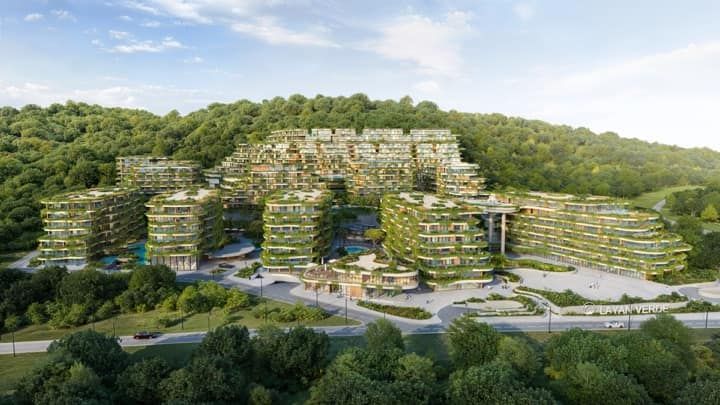
| Resale purchase, no income model | Rental pool (Layan Verde, Layan Green Park) | |
|---|---|---|
| Who arranges the rental | The owner or a private agent | A management company, pooled across units |
| Yield | Individual, depends on the owner’s effort | Benchmark ~8–10% net annual (owner receives 60% of the pool’s net profit) |
| Reporting transparency | Whatever you agree with your agent | Regular pool reporting |
| Payback | Not guaranteed | Benchmark ~12 years |
For the calculation method behind a standalone yield, see “How to calculate ROI in Phuket”; for how the pool model itself works, see “How Phuket’s rental management program works”.
8. Pitfalls
- “46% demand growth means prices are guaranteed to rise.” More deals is a signal of overall market interest, not a guarantee that any specific property’s price or yield will rise. Location, developer and legal cleanliness of the ownership structure still matter more than the general news cycle — a broader rundown of 2026 market drivers is in “Phuket real estate market 2026”.
- Confusing “entry from ₽12–13 million” with ready-made income. The minimum entry price in the budget resale segment says nothing about whether that specific unit has a rental model, reporting, or a management company behind it.
- Ignoring the difference between resale and off-plan installment purchases. Different market segments require different diligence: due diligence on a resale unit and vetting a developer mid-construction are not the same exercise.
9. Mini case
In the summer of 2026, an investor from St. Petersburg was comparing two options with a similar budget of around $150,000: a finished resale studio in Patong with no rental income model, and a resale unit in Layan Green Park’s phase 1, already enrolled in a working rental pool. On paper, both count toward the “Russian buys property in Phuket” statistics behind much of the growth described in this article. In practice, they’re different deals: the first requires the buyer to organize their own rental income, while the second already comes structured through a pool with transparent reporting and an 8–10% net benchmark.
10. Conclusion and next step
The rise in Russian demand for Thai property is a real trend confirmed by three independent sources: 820 deals and $60.7 million invested in the first half of 2026, nearly two-thirds of it on Phuket. But deal statistics answer “where is the capital going,” not “what yield will you actually get on a specific unit” — that still depends on location, ownership structure, and whether the unit sits inside a managed rental model.
Happy to walk you through how your specific budget and goals line up with the parameters and yields of Layan Verde and Layan Green Park in Layan — next to Bang Tao: leave a request or run your own numbers in the yield calculator.
A Phuket market breakdown for your budget and goals
By submitting this form you agree to the privacy policy.
This material is informational and based on data from Sunway Estates, Prian.ru and Tranio as published by Kommersant, plus other open sources at the time of publication; it is not investment, legal or visa advice, nor a guarantee of returns.