On 7 September 2026, Thailand’s Department of Business Development (DBD) published a national figure that market participants had only been guessing at all year: exactly how much land and how many condo units are actually held by foreign-invested companies across the country. The number is 1,064,265 rai of land and 76,840 condominium units, current to 4 September 2026. This isn’t a story about a raid or an arrest — it’s the first clear quantitative picture of the backdrop against which the crackdown on nominee land-holding structures, which we’ve already covered through the Chiang Mai and Koh Samui raids, is unfolding. Below is what these figures mean, how they connect to the DBD’s earlier 18 August announcement, and what follows for anyone who owns a villa in Thailand through a Thai company.
Contents
- What the DBD published on 7 September
- The numbers: how much land and how many condos foreign companies hold
- Three tiers of foreign ownership
- A continuation, not a new campaign
- Lawful structure vs. what investigators are looking for
- Geography: where the holdings are concentrated — and where Phuket fits
- What doesn’t change for freehold condos and leasehold villas
- Penalties: what a proven scheme carries
- Pitfalls
- Mini case study and takeaway
1. What the DBD published on 7 September
DBD director-general Poonpong Naiyanapakorn presented the result of a joint reconciliation between three agencies — the Department of Business Development, the Department of Lands, and the Department of Provincial Administration. Previously, each agency only saw its own slice of the data: the DBD held the corporate registry and shareholder records, the Department of Lands held title deeds and transactions, and the Department of Provincial Administration held local registrations. By merging the databases, officials answered a question that couldn’t otherwise be answered: how much land in the country is actually controlled by companies with foreign capital, regardless of which province the land sits in or which legal entity holds the title.
Out of 144,706 legal entities recorded as holding property, 125,622 fall under direct DBD supervision — meaning they show signs of foreign participation that warrant scrutiny. This is no longer a narrow sample from a single raid but a full nationwide cross-section, a fundamentally different scale from earlier news pegs like the Chiang Mai raids, which involved 31 companies in one province.
2. The numbers: how much land and how many condos foreign companies hold
Companies with foreign participation — from a minority stake up to full ownership — hold 305,838 property titles, which the DBD and Thai media describe as 24.10% of all titles reviewed and 23.62% of the area within the merged dataset.
| Metric | Value |
|---|---|
| Data current as of | 4 September 2026 |
| Land controlled by foreign-invested companies | 1,064,265 rai (≈1,700 sq km) |
| Share of Thailand’s total land area | ≈0.33% |
| Condominium units | 76,840 |
| Property titles held by these companies | 305,838 |
| Total entities on record holding property | 144,706 |
| Of which under DBD supervision | 125,622 |
Against the country’s total land area, 0.33% looks modest. But that doesn’t mean it’s insignificant: land tied to foreign capital isn’t spread evenly across the country — it’s concentrated in a narrow set of provinces with high land values, resort areas and industrial zones alike — so in money terms and building density, this share carries far more weight than the raw percentage suggests.
3. Three tiers of foreign ownership
The DBD splits all 36,277 companies in the at-risk group into three tiers by actual foreign capital share — and the split maps directly onto what Thailand’s Foreign Business Act treats as lawful versus not.
| Foreign capital share | Companies | Property titles | Land |
|---|---|---|---|
| Up to 49% (the legal ceiling) | 31,516 | 287,176 | 901,596 rai |
| 49.01–99.99% | 1,311 | — (within the combined dataset) | 59,077 rai |
| 100% (wholly foreign-owned) | 3,450 | 10,029 | 103,591 rai |
A notable detail: companies with foreign ownership at or below 49% — a formally lawful structure — control the overwhelming majority of both land and condo units within this group (media reports citing the DBD put it at roughly 85% of the land and 96% of the condo units). That doesn’t mean all of them break the law: a stake up to 49% is permitted on its own. The question the DBD is asking next is whether that 49% is real, or whether the Thai portion of the capital is nominal.
4. A continuation, not a new campaign
Comparing the 7 September figures with what the DBD announced on 18 August 2026 shows this is the same dataset, now broken down further. On 18 August, Poonpong Naiyanapakorn had already cited a national total of 36,277 foreign-linked legal entities holding land: 31,516 at up to 49% foreign ownership and 4,761 above that threshold. Three weeks later, the “above 49%” category was split into 1,311 (at 49.01–99.99%) plus 3,450 (wholly foreign-owned) — the same 4,761 in total. What was added were rai of land and condo unit counts, absent from the August announcement.
The right way to read this: no new investigation has appeared — the existing one has been expanded and translated into concrete figures for land and housing, which are easier to communicate than an abstract company count. We’ve watched the same process unfold through 2026:
- 12 July 2026 — raids on Koh Samui and Koh Pha-ngan targeting a foreign-funded investment network.
- 20 July 2026 — the fifth phase of the campaign, raids across 18 addresses in Chiang Mai (31 companies under direct review) — covered in a separate article.
- 18 August 2026 — the DBD names a national figure for the first time: 36,277 entities.
- 7 September 2026 — the same figure broken down into rai of land, condo units and ownership-tier subcategories.
The logic is consistent: from targeted police raids in individual provinces toward a systematic administrative reconciliation of databases nationwide. The second approach is more dangerous for nominee schemes precisely because it doesn’t depend on whether a particular province happens to fall into the scope of a given raid.
5. Lawful structure vs. what investigators are looking for
The DBD spells out its test for distinguishing a lawful structure from one that breaches the Foreign Business Act plainly: if a venture is genuinely jointly funded by Thai and foreign capital and the foreign stake doesn’t exceed 49%, it’s lawful. If, instead, the capital is effectively all foreign and the Thai 51% exists only on paper, with no real money contributed and no say in decisions, that’s grounds for investigation and legal consequences.
| Feature | Lawful structure | Nominee scheme (under scrutiny) |
|---|---|---|
| Thai shareholder stake | ≥51%, genuine ownership | ≥51% nominal, no real interest |
| Source of funds for the Thai share | Thai shareholder contributes their own portion or an agreed equivalent | 100% of the money comes from the foreigner; the Thai share is fictitious |
| Company’s economic activity | Real (rental, services, asset management) | Often absent — the company exists only to hold land |
| Thai shareholders’ awareness | Aware of their stake, involved in decisions | Often unaware they’re listed as shareholders |
| Legal status | Lawful | Unlawful — a breach of the Foreign Business Act |
We covered this structure in detail, and how it’s set up lawfully, in «Villa Ownership Through a Thai Company» — it remains accurate after the September data: the company-ownership model itself isn’t being abolished or restricted; what’s under scrutiny is specific schemes for circumventing the rules, not the corporate vehicle as such.
6. Geography: where the holdings are concentrated — and where Phuket fits
The September release breaks down geography into just two large clusters: Eastern Economic Corridor provinces (Chon Buri, Rayong — an industrial zone with large foreign investment) lead in wholly foreign-owned companies, while Bangkok leads in companies with foreign ownership up to 49%. There’s no separate line for Phuket in this release.
That doesn’t mean the resort islands are out of the picture. An earlier DBD statement from 18 August 2026 explicitly listed 16 provinces accounting for 35,154 of the entities under review — Bangkok, surrounding provinces, and tourist hubs together in one list. And 2026’s enforcement track record already shows where investigators are looking first: 12 July on Koh Samui and Koh Pha-ngan, 20 July in Chiang Mai, both cases with a clear focus on resort areas with a high share of foreign capital in real estate. By market structure — a large share of villas on leased land and company-held ownership, a high concentration of foreign buyers — Phuket resembles the already-scrutinised islands far more than it resembles Chiang Mai or industrial Chon Buri, which keeps it a plausible next point of interest even though the September release doesn’t name it directly.
7. What doesn’t change for freehold condos and leasehold villas
It’s worth closing off a question many readers will have on seeing figures like “1,064,265 rai under foreign control”: does this touch the standard ownership methods used by the vast majority of buyers on Phuket?
- A freehold condo within a building’s 49% foreign quota is registered directly to the foreign individual, with no Thai company and no Thai shareholders involved. This category doesn’t intersect with the DBD’s investigation at all — there are no nominees, because there’s no need to introduce them into the structure.
- Leasehold land and villas (a long-term lease of up to 30 years with renewal rights) are also registered directly to the foreigner as lessee, without a company and without Thai “shareholders.” We covered this model in detail in «Freehold vs. Leasehold in Thailand»; it, too, is unrelated to the risk category investigators are pursuing.
- Villa-and-land ownership through a Thai company is the only one of the three mass-market models that can formally fall under scrutiny if the structure was assembled incorrectly. That’s precisely why the September data is aimed primarily at this category of owners, not at the market as a whole.
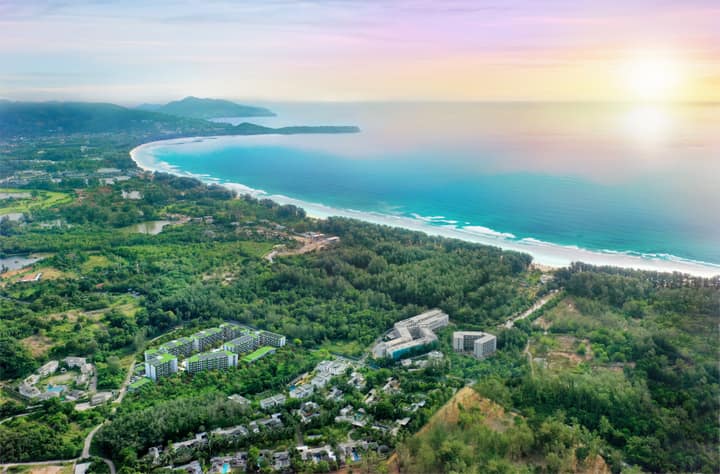
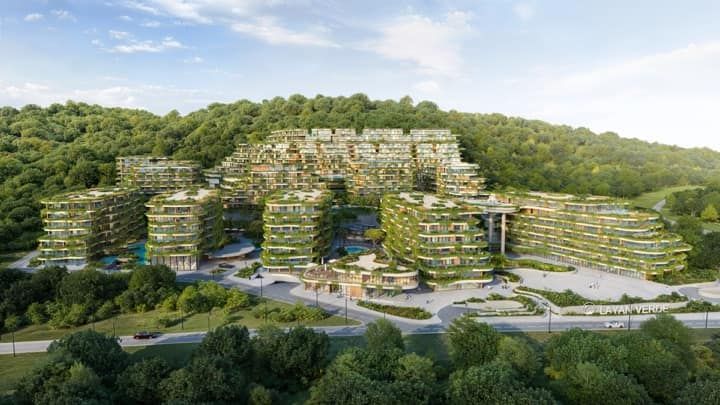
Projects at Layan Beach — Layan Verde and Layan Green Park — are sold mostly under a building’s freehold quota or as leasehold, which for a typical studio or condo buyer takes the question of nominee structures off the table entirely: it simply doesn’t arise under that form of transaction.
8. Penalties: what a proven scheme carries
The DBD and Thai media describe the consequences of a proven nominee scheme by reference to the Foreign Business Act:
| Violation | Penalty |
|---|---|
| Using a Thai nominee to hold land | Up to 3 years in prison |
| The same violation | Fine of THB 100,000 to 1,000,000 |
| Land acquired in breach of the law | Forced sale within 180 days to 1 year |
An important caveat worth keeping in mind: these penalties apply to a proven scheme after investigation and a court ruling — not automatically to any company with a foreign shareholder holding up to 49%, which is fully lawful on its own. The DBD explicitly states that foreign participation is not, by itself, a sign of wrongdoing; scrutiny applies where there are specific grounds to suspect a nominee scheme — above all, the source of funds and whether the Thai side’s participation is genuine.
9. Pitfalls
- “My company has been set up for years — this doesn’t concern me.” The registration date says nothing about whether the Thai shareholders are genuine. The DBD’s database reconciliation makes no exception for a company’s age — if anything, older structures set up without proper verification of the capital’s origin are statistically more likely to turn out to be nominee arrangements.
- Conflating the national statistic with personal risk. 1,064,265 rai is an aggregate figure for the whole country, the bulk of which sits with lawful structures at up to 49% foreign ownership. A company’s presence in this statistic doesn’t itself mean a violation — what matters is whether the Thai shareholders inside that specific company are genuine.
- Confusing freehold/leasehold with company-based ownership. Some of the anxiety around this kind of news comes from owners of freehold condos and leasehold villas, whom the investigation doesn’t concern in the first place — they don’t use Thai nominee shareholders as part of their structure at all.
- Skipping a review of an existing structure. If a company was set up turnkey by an agent years ago without transparent documentation of where the Thai share’s capital came from, waiting for scrutiny to reach the relevant province isn’t a strategy. An audit costs an order of magnitude less than a forced sale within 180 days.
10. Mini case study and takeaway
An investor from Moscow holds a villa with land on Phuket, set up five years ago through a Thai company with four Thai shareholders sourced by the agent handling the deal. After the news of the DBD’s September statistics, the investor commissioned an independent audit of the structure from a Thai lawyer unconnected to the original transaction. The review found that two of the four Thai shareholders had genuinely contributed their share of capital and had attended the company’s annual meetings — formally and in substance the structure met the legal requirements, even though it had been set up without much fanfare at the time. The audit took about two weeks and cost a fraction of the potential legal costs or a forced asset sale — and, more importantly, gave the investor a written opinion that can be presented to a future buyer when the villa is eventually resold.
The DBD’s September data isn’t an alarm bell for the market as a whole, and it’s no reason for panic among owners of freehold condos or leasehold villas, whom the investigation doesn’t concern by the very definition of their deal structure. It’s the first precise quantitative picture of just how large the layer of foreign-capital companies holding Thai land actually is, and confirmation that the crackdown on nominee schemes is moving forward not through isolated raids but through a systematic, nationwide database reconciliation. For an owner holding a villa through a Thai company, the practical takeaway is simple: don’t wait for scrutiny to reach your province — check with a lawyer now, while you can still do it calmly and on your own terms.
I can walk you through how ownership is structured on specific projects at Layan Beach — freehold and leasehold, with no Thai nominee shareholders involved — and connect you with an independent lawyer to audit an existing structure: leave a request.
Ownership structure audit — before or after a deal
By submitting this form, you agree to our privacy policy.
This material is informational and does not constitute legal advice. The analysis is based on official DBD Thailand data and public media reports as of publication; for an assessment of a specific ownership structure, consult a licensed Thai lawyer.