The most unpleasant story a condo buyer in Phuket can tell goes like this: the apartment is chosen, the deposit paid, the contract signed, and only at the transfer stage does it turn out that freehold cannot be registered to a foreigner because the building’s foreign quota is used up. The money is tied up, the timeline is blown, and two options remain: switch to another form of ownership or argue about a refund. All of it could have been found out a week before the first transfer. In this article we explain what the 49% quota is, who counts as a “foreigner”, how the quota is calculated, which documents to ask the seller for and in what order to check them, how new-build and resale differ, and which traps come up most often.
This is not legal advice. The material is for general information. Thai law and land-office practice change, and the details depend on the specific building. Before paying any money, consult a licensed Thai lawyer.
Contents
- What the foreign quota is
- Who counts as a foreigner
- How the 49% is calculated
- Step-by-step quota check
- Documents and money: FET and proof of funds
- New-build vs resale: where the risk is higher
- If there is no quota: leasehold and other formats
- Traps
- Mini-case: two studios in one building
- Conclusion and next step
1. What the foreign quota is
A foreigner in Thailand cannot buy land, but can hold freehold title to an apartment in a registered condominium. The Condominium Act (B.E. 2522, enacted in 1979 and since amended) sets a condition: the total area of units owned by foreigners must not exceed 49% of the total area of all units in the condominium. The remaining 51% or more must be held by Thai nationals and Thai persons.
The logic is simple: the state wants a Thai majority to be preserved in multi-unit buildings. Three practical conclusions follow for the buyer:
- the quota is a shared resource of the building, not a personal right. It is taken by whoever registers their ownership first;
- the quota is counted by floor area, not by number of apartments: one large apartment uses up as much as several studios;
- the check is performed by the land office at registration, that is, at the very end of the deal, when the money has already been paid.
That last point is the main source of problems. This is why your own check must come before the official one: before the deposit and, ideally, before you choose a unit. We covered the basic differences between freehold and a lease in Freehold vs leasehold in Thailand; here we focus on the quota itself.
2. Who counts as a foreigner
The definition is wider than “a person with a foreign passport”. The following may count toward the quota:
| Buyer | Counts toward the foreign quota? | Comment |
|---|---|---|
| Individual without Thai nationality | Generally yes | This is the standard freehold route for foreigners |
| Thai company with foreign participation | Depends on the share and the shareholders | With a significant foreign share the law treats the company as a foreign person |
| Thai company wholly owned by Thais | No | But if the real money is foreign, this is a nominee arrangement, not ownership |
| Foreigner holding through a leasehold | No | A lease does not give title to the unit and is outside the quota |
| Foundation or foreign legal entity | Yes | Registration proceeds as for a foreign owner |
Separate questions are the status of a Thai spouse, permanent residence (PR) and dual citizenship. There are no universal answers here: classification as a “foreigner” depends on the specific provision of the law and the office’s practice, and a mistake is expensive. For more on why “we will buy through a Thai company” does not solve the problem, see Thai company and villa: how it works and where the risks are.
3. How the 49% is calculated
The formula is this: the area of all units registered to foreigners divided by the total area of all units in the condominium. The result must not exceed 49%. Several nuances are easy to forget:
- The denominator is the area of the units, not of the whole site. Common property (lobbies, pools, corridors) is not included.
- The unit of account is the registered condominium. If a project consists of several buildings or phases, you need to find out whether they are registered together or separately. That determines whether the quota is shared across the whole project or split by phase.
- The quota is dynamic. If a foreign owner sells a unit to a Thai, quota is freed up. If a Thai sells to a foreigner, it is used.
- The headroom is measured in square metres. “3% of the quota left” in a large project may mean several dozen studios; in a small one it may mean a single apartment.
So an answer of “there is quota” without numbers is worth nothing. You need three figures: the total area of the units, the area already registered to foreigners, and the area of your unit. Only these show whether you fit within 49%.
4. Step-by-step quota check
The order we recommend to clients, and follow ourselves when selecting properties:
- Ask how the project is registered. One condominium or several, whether the building registration document has already been issued, and at what stage registration is.
- Request a written quota statement. From the developer (for a new-build) or from the condominium juristic person (for a completed building): total unit area, area held by foreign owners, free balance. Ask for the date of the statement.
- Match it to your unit. The area of your apartment according to the documents must fit into the balance with a margin: while you are processing the deal, another buyer may take the quota.
- Check the chanote and encumbrances. Rights to the land under the building and the status of the unit are a separate check, which we described in How to verify a chanote title.
- Write the quota into the contract. There should be a clause stating that the seller guarantees freehold can be registered in your name, and that if it cannot for reasons beyond your control you receive a full refund or the right to switch to another format.
- Agree the payment format. Money from abroad in foreign currency, not “cash in Thailand” — more on this below.
- Have a lawyer do the final check. The lawyer reconciles the statement, the contract, the seller’s documents and the registration timeline.
If at any step the seller avoids giving a written answer, that is already an answer: proceed only with an official statement. The general framework for checking a deal is in the due diligence checklist for Phuket property.
5. Documents and money: FET and proof of funds
The quota is not the only condition for a foreigner to register freehold. The land office also checks where the money came from. To buy a condo with freehold title, a foreigner must prove that the funds were brought in from abroad in foreign currency and converted into baht in Thailand. The proof is the bank’s FET form (Foreign Exchange Transaction, formerly Tor Tor 3), or a bank letter confirming the credit of foreign currency when the amount is below the threshold the bank applies for the form. Details and typical errors are in the article FET in Thailand.
A working document set for a foreign buyer usually looks like this:
| Document | Why it is needed | When to prepare |
|---|---|---|
| Passport and buyer details | Identification, contract | From day one |
| Quota statement | Confirmation that free 49% remains | Before the deposit |
| FET or bank letter | Origin of the currency | When transferring payments |
| Sale and purchase agreement | Terms, refund, guarantees | Before signing |
| Chanote and building data | Land rights and unit status | Before the deposit |
| Certificate of no arrears on common-area fees | Clean deal on resale | Before transfer |
The practical conclusion: send the money in a way that lets you obtain an FET in your own name. A transfer from a third party, a payment in the wrong currency or cash inside the country can close off freehold registration even when the quota exists. For the sequence of payments, see the article on payment methods for property.
6. New-build vs resale: where the risk is higher
The quota risk is structured differently in each scenario.
| Scenario | Main risk | How to protect yourself |
|---|---|---|
| New-build, building not yet registered | The quota is “open”, but the developer may sell more to foreigners than fits | Written guarantee, refund clause, check of the registration sequence |
| New-build close to handover | The quota is nearly used, the balance is in doubt | A fresh statement dated on the day of the deal |
| Resale from a foreigner | The sale frees their quota, but the order of transfer matters | Agree that the quota is accounted for at registration |
| Resale from a Thai | The unit increases the foreign share | Statement of the current balance |
| Older building | Quota data may be incomplete or out of date | Request to the condo juristic person and a check at the office |
For an off-plan buyer there is a non-obvious point: the contract with the developer is signed long before registration. While the building is under construction, the final quota distribution cannot be verified. So the contract does the work, not the calculation: a registration guarantee, a deposit refund and a procedure if the quota falls short. More on deposits in Deposits and reservations in Thailand.
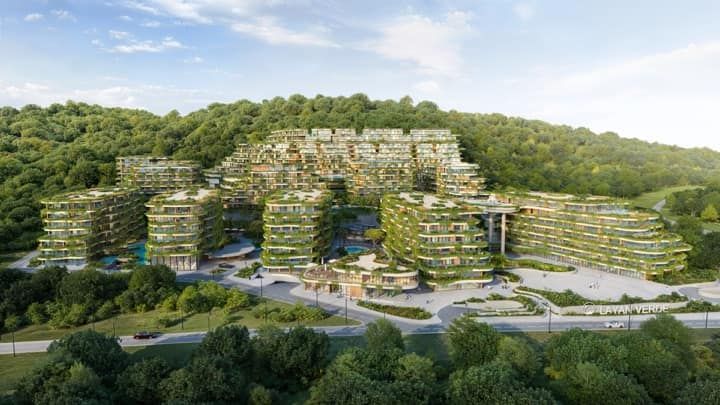
In the catalog the ownership form at Layan Verde and Layan Green Park is listed as freehold / leasehold. That means both an ownership format and a lease format are possible for a specific unit. Whether free quota exists for the chosen unit is not a general statement but a document requested before your deposit. At Layan Green Park the entire phase 1 price list consists of resales, so the check follows the chain of the specific unit; for phase 2 and Layan Verde we check with the developer. Starting prices: Layan Verde studios from $235,995, and Layan Green Park phase 2 studios from $224,043.
7. If there is no quota: leasehold and other formats
If the statement shows there is no quota, a foreigner still has other lawful formats. None of them equals freehold in liquidity and rights, so compare calmly rather than out of fear of losing the deal:
- Leasehold on the unit. A lease, usually for 30 years with an agreed right of renewal. The quota is not used. At Layan Verde, leasehold registration costs 1.1% every 30 years according to the catalog. Renewal terms and the procedure for transferring the right must be written into the contract.
- Waiting for quota to be freed. The quota is dynamic, but waiting while your deposit is in limbo is not the best tactic.
- Another unit or another project. It is often easier to pick a building with headroom than to fight for the remainder.
- Nominee arrangements. Registering on the “Thai side” with a foreigner’s money is not a solution but a breach of the law. Thai authorities are consistently cracking down on nominee ownership; see our overview in How to avoid scams when buying property in Thailand.
For an investor the liquidity question ultimately matters more than the legal term. A confident exit on resale exists in buildings where both sellers and buyers understand the ownership structure; we covered this in the article on exit strategies.
8. Traps
The most frequent mistakes we see in practice:
- A verbal answer instead of a statement. “There is quota, don’t worry” is not a document. Ask for a date, figures and a signature.
- Checking the quota only at the end. The land office checks it at registration, but by then the money is already paid. Your check comes before the deposit.
- A deposit with no refund clause. If the contract does not say what happens when registration is impossible, the dispute will favour the seller.
- Confusing “freehold is possible” with “quota is available”. A building may allow foreign freehold in principle, but for your particular unit there may be no balance left.
- Ignoring phases and buildings. A project with several buildings may have several registrations and a different quota in each.
- Sending money the wrong way. Wrong currency, the payer is not you, no FET or bank letter. Freehold registration may become impossible.
- Registering through a “Thai friend”. This breaks the law and means losing control of the asset: in a dispute you cannot prove your rights.
- Estimating by eye. The quota is counted by area, not by apartments; other people’s claims that “plenty is left” must be checked with figures.
- Forgetting the quota on resale. The buyer of your apartment goes through the same check. If you sell to a foreigner in a building where the quota is nearly full, the deal may drag on.
9. Mini-case: two studios in one building
An illustrative scenario, not a real transaction. Two buyers choose studios of the same area in one condo under construction. The first asks the developer for a written quota statement; the second trusts the manager’s word.
| Step | Buyer A | Buyer B |
|---|---|---|
| Quota check | Requested a statement with figures and a date | Accepted a verbal answer |
| Contract | Added a refund clause for when registration is impossible | Signed the standard contract |
| Payment | Sent currency from their own account and obtained an FET | Paid in instalments from different people |
| Transfer of title | Check passed, title registered | Land office demanded documents that do not exist |
| Outcome | Freehold in their own name | Time, negotiations and a risk of the deal collapsing |
The difference between the buyers is not luck but sequence. Everything buyer A did takes a few days and costs nothing compared with the risks. This is the order we build into our own support process: documents are requested before the deposit, not after. The remaining purchase steps are described in the step-by-step guide to buying property in Phuket.
10. Conclusion and next step
The 49% quota is neither a formality nor a reason to avoid condos. It is a rule of the game that must be checked before the deposit. If free quota is confirmed by a statement, the contract protects your money, and the transfer is arranged so that an FET can be obtained, freehold registration goes smoothly. If there is no quota, you are left with leasehold or another building.
Checklist before the deposit:
- Find out how the condominium is registered and how many registrations it has.
- Request a written quota statement with figures and a date.
- Compare your unit’s area with the free balance.
- Check the chanote and the status of the unit.
- Add a registration guarantee and a deposit refund to the contract.
- Send money in a way that lets you obtain an FET or bank letter in your own name.
- Reject any nominee arrangement.
- Have a Thai lawyer do the final check.
If you need to compare projects by yield, start with the ROI section and the Layan and Bang Tao areas. For a deal with a verified structure, look at Layan Verde or Layan Green Park: the yield benchmark through the rental pool is about 8–10% net to the owner (60% of the pool’s net profit); this is a target figure, not a guarantee. We work as an agency, selecting properties to your brief; the partner commission is at market rate, with terms discussed at a meeting.
Next step: leave a request and, before your deposit, we will request the quota statement for the chosen unit so that you see figures rather than promises.
This material is not legal advice and does not replace the opinion of a Thai lawyer.