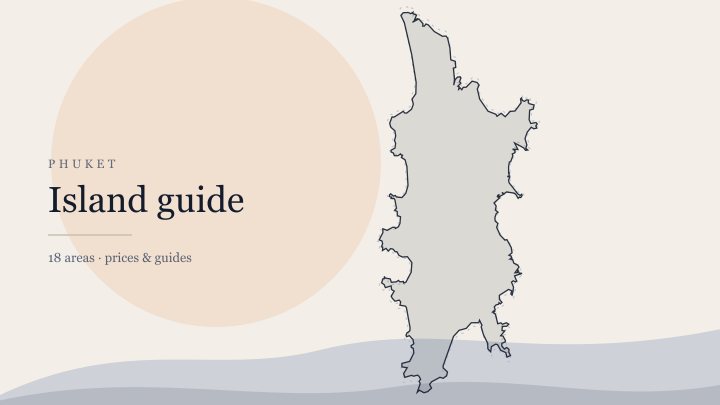
Phuket stretches about 48 km from north to south, and the single word “Phuket” hides a good dozen property markets with different prices, infrastructure and rental models. This article is a map in text form: the island is split into five belts, and for each one you’ll find the entry price, the logistics and whether there is a clear income model for investors. Where a deeper dive on a specific beach exists, the link is right in the text.
Contents
- How to read this map
- North: Naithon and Nai Yang
- Western premium coast: Layan, Bang Tao, Surin, Kamala
- Patong: tourist hub and nightlife
- South: Rawai and Nai Harn
- Phuket Town and the east coast
- Summary table for every belt
- Which belt fits which goal
- Pitfalls of reading the map
- Mini case study and takeaway
1. How to read this map
Before comparing beaches, separate two questions on paper: where do you want to live, and where do you want to earn. Those are not always the same district. Here are the three criteria worth reading the island’s map by:
- Entry price. Prices on Phuket range from a $50,000 condo in Phuket Town to villas worth several million dollars on the cliffs of Kamala and Cape Panwa.
- Income model. Part of the island has managed rental pools with transparent reporting; the rest relies on self-management or scattered hotel and agency programs.
- Logistics. From the airport to the island’s furthest point is over an hour’s drive — a real factor both for living there yourself and for a guest comparing rental options.
2. North: Naithon and Nai Yang
The northernmost part of the west coast, a couple of kilometres from the airport: Naithon and Nai Yang are quiet beaches with almost no dense development, minimal infrastructure, and a land-and-villa market with no standardized pricing. The airport is 5–15 minutes away — the fastest logistics on the island; Layan and Bang Tao are 20–30 minutes.
There is no managed rental pool here — renting happens on your own or through a local agent, with a variable outcome. For an investor this is an early, fragmented market; for living near the airport yourself, it’s a strong option if infrastructure is secondary.
3. Western premium coast: Layan, Bang Tao, Surin, Kamala
This belt has the island’s most developed infrastructure and the highest rental demand — and within it, entry price and income model vary sharply:
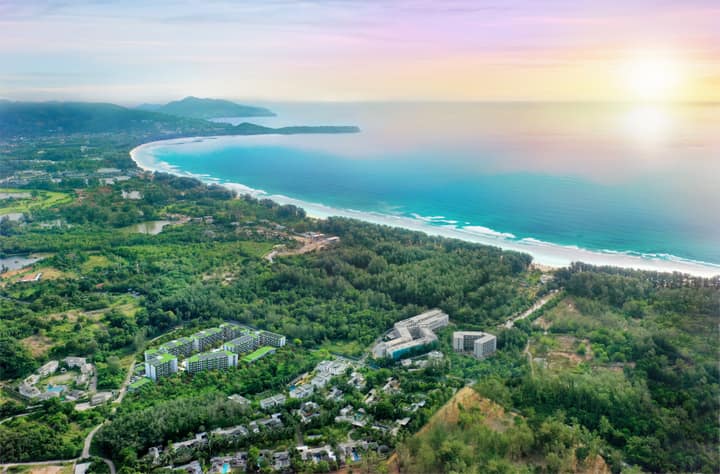
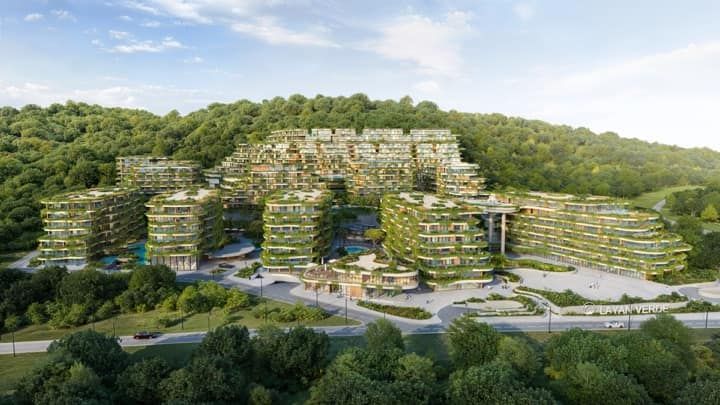
- Layan — the cleanest, least crowded beach in the belt, ~20 minutes from the airport. The only place on the island with a transparent 60/40 rental pool model, running across two projects — Layan Verde (studios from $235,995, completion 2028) and Layan Green Park (Phase 1 resale from $142,602, Phase 2 from $224,043). The yield benchmark is ~8–10% net per year, with an ~12-year payback.
- Bang Tao and Laguna — the island’s largest resort hub: Boat Avenue, the Laguna Phuket golf resort, international schools and clinics. ~30 minutes from the airport. Yield here is quoted per project — from resort programs with a developer forecast of ~6–8% per year to individual properties with no unified reporting.
- Surin — the belt’s most prestigious and expensive beach, “Phuket’s Beverly Hills”: villas, beach clubs, the highest entry price among western beaches. There is no unified rental pool here — renting is typically self-managed or through an agent.
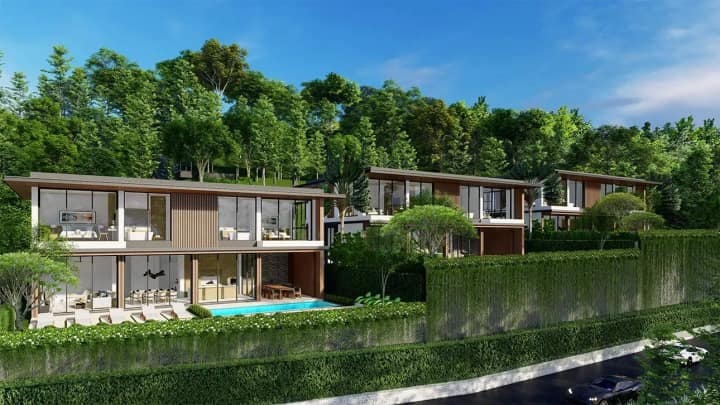
- Kamala — a transitional district between Surin and Patong: condos further inland from $130,000, view units from $250,000, “millionaire’s mile” villas and branded residences from ~$1 million (a Twinpalms Residences MontAzure resale starts from ~18 million THB).
4. Patong: tourist hub and nightlife
Patong is Phuket’s main tourist hub: Bangla Road, the highest density of hotels and venues, and the highest short-term rental occupancy on the island. Housing is mostly older stock from the 1990s–2000s, priced from $60,000 for a studio to $130,000–300,000 for larger formats. The airport is 45–50 minutes away.
There is no unified managed income model here — the market runs on self-managed rentals through agencies serving short-term tourist demand. Resale liquidity is narrower than in the western premium districts, since the buyer pool is more specific.
5. South: Rawai and Nai Harn
Rawai and Nai Harn form the island’s southernmost point, home to a long-term expat community and one of the island’s best beaches at Nai Harn. Rawai runs from $100,000 to $180,000; Nai Harn from $400,000 to $700,000 and up for a villa near the lagoon. The main trade-off is logistics: 60–75 minutes to the airport, noticeably longer than from the west.
Rental here is mostly long-term and self-managed, with no unified pool model. It suits those who rank lifestyle and entry price above proximity to the airport.
6. Phuket Town and the east coast
Phuket Town is the old town without sea views, but with the most affordable long-term rental on the island: condos from $50,000–70,000, a house up to $150,000. The airport is 30–35 minutes away.
The east coast (Cape Panwa, Ko Kaew) offers quiet bays, the Boat Lagoon and Royal Phuket Marina marinas, and views of the mainland rather than the open ocean. Condos near the marina start from $120,000–150,000, villas from $400,000, and Cape Panwa’s top clifftop villas from $2–4 million. Airport time: Ko Kaew 35–40 minutes, Cape Panwa 55–60 minutes. There is no unified rental pool here either — villas almost nowhere on the island run in a shared pool, so yield is calculated individually.
7. Summary table for every belt
| Belt | District | Entry price | Income model | Airport |
|---|---|---|---|---|
| North | Naithon, Nai Yang | Land and villas, no set price | Self-managed rental | 5–15 min |
| West-premium | Layan | From $142,602 (resale) | 60/40 rental pool, ~8–10% net | ~20 min |
| West-premium | Bang Tao / Laguna | From ~$172,300 (resale) | Resort programs, ~6–8% (forecast) | ~30 min |
| West-premium | Surin | Highest on the west coast | Self-managed / via agent | 25–35 min |
| West-premium | Kamala | From $130,000 | Self-managed / via agent | ~40 min |
| Tourist hub | Patong | From $60,000 | Self-managed, short-term | 45–50 min |
| South | Rawai | From $100,000 | Self-managed, long-term | 60–75 min |
| South | Nai Harn | From $400,000 | Self-managed, long-term | 60–75 min |
| City | Phuket Town | From $50,000 | Self-managed, long-term | 30–35 min |
| East | Ko Kaew / Cape Panwa | From $120,000 | Individual, no pool | 35–60 min |
| Buyer profile | Priority | Recommended belt |
|---|---|---|
| Investor seeking a clear income model | Transparent pool reporting | Layan |
| Family relocating | Schools, clinics, safety | Bang Tao, Kamala |
| Status and representative use | Location prestige | Surin |
| Short-term rental for tourists | Maximum occupancy | Patong |
| Long-term living on a budget | Community, affordability | Rawai, Phuket Town |
| Boat and marina | Yacht infrastructure | Ko Kaew |
Actual yield depends on the specific property — run the numbers for your budget in the yield calculator.
8. Which belt fits which goal
Five common requests and the map’s answer to each:
- “I want passive income with clear reporting” — the west coast, Layan: the only place on the island with one 60/40 rental pool model across two neighbouring projects.
- “I’m relocating with my family for the long term” — Bang Tao or Kamala: schools, clinics and calm beaches within a short walk or drive.
- “Status and beachfront prestige matter” — Surin: the west coast’s most prestigious, and most expensive, beach.
- “I want to rent nightly to tourists” — Patong: maximum year-round occupancy, but self-managed.
- “My budget is limited, sea view is optional” — Phuket Town: the most affordable long-term rental and city infrastructure.
9. Pitfalls of reading the map
- Confusing “cheap” with “high-yield.” A low entry price in Patong or Phuket Town doesn’t mean high yield — without a managed pool, the rental outcome depends entirely on who manages the property and how.
- Judging distance from a “generic center.” Phuket has no single center — measure distance from an actual point (the airport, your office, your favourite beach), not from an abstract “island.”
- Assuming neighbouring beaches are alike. Surin and Kamala border each other but are different price segments with different rental audiences — the same is true of Layan and Bang Tao.
- Ignoring the income model for the sake of a view. A villa with a better view on the cliffs of Panwa or Kamala can deliver a less predictable income than a modest studio in Layan’s managed pool.
- Not checking the property format. The same district can offer both a hotel-branded condo and a standalone villa — the two have fundamentally different economics, covered in condo vs villa for investors.
10. Mini case study and takeaway
A buyer with a budget of around $300,000 considered three options across different belts on the map: a villa in Rawai for personal living in the south (community, budget, but 60–75 minutes to the airport), a view condo in Kamala on the “millionaire’s mile” (status, but self-managed rental with no pool), and a studio plus part of the budget in Phase 2 of Layan Green Park in Layan (a managed 60/40 rental pool, ~8–10% net). In the end the budget was split: the smaller share went to the Layan studio as a predictable income asset, the rest to a villa for personal use in the south, where logistics matter less for an investor but matter a great deal for lifestyle.
Takeaway: Phuket’s map isn’t about the “best” district — it’s about which belt matches your specific goal. For income with a transparent model, it’s the west coast, specifically Layan. For infrastructure and family life, it’s Bang Tao and Kamala. For status, it’s Surin. For budget, it’s Phuket Town and the south.
We can help you find the right district and the right property for your goal and budget — from a studio in Layan’s rental pool to a villa for your own life in any belt on the island. Browse the VillaCarte Group portfolio or leave a request — let’s calculate the yield for your scenario.