Rawai and Nai Harn occupy the southernmost tip of Phuket — two neighbouring areas with completely different characters in one place: a fishing village with a pier to nearby islands and one of the island’s oldest long-term expat communities, and a quiet bay with a lagoon regularly named one of the island’s best beaches. Here’s what drives life in south Phuket, what property costs there, and why logistics is the main trade-off to weigh before buying.
Contents
1. What Rawai and Nai Harn are, and who they suit
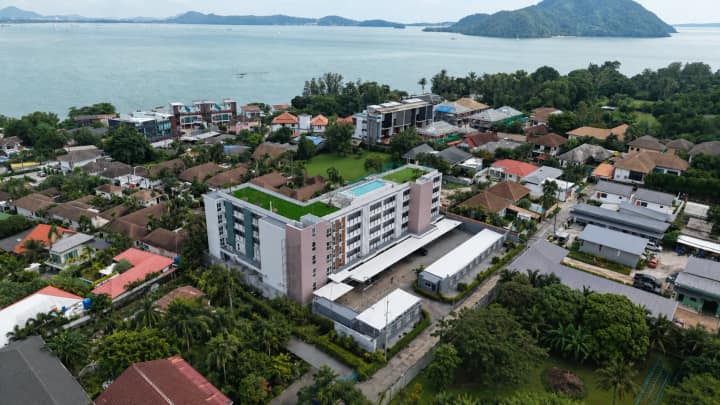
Rawai and Nai Harn are neighbouring areas at Phuket’s southernmost point, near Promthep Cape, the island’s famous sunset viewpoint. Rawai is historically a fishing village: a pier with boats to nearby islands, a seafood market, an unhurried daily rhythm. Nai Harn is a more closed-off spot with a lagoon and a beach, where development is limited by land owned by the Royal Thai Navy.
Who the south suits:
- Long-term expats and winterers who value an established community, affordable rents and a calm pace without the west coast’s tourist density.
- Sailing and watersports enthusiasts — Nai Harn hosts a yacht club base and was historically a start/finish point for the King’s Cup Regatta.
- Buyers of a “lifestyle” villa willing to trade a more modest local infrastructure for quiet and nature.
- Not for anyone who needs to be close to the airport — this is the island’s most remote point from it.
Investors who need transparent, predictable yield through a managed pool, rather than a purely lifestyle purchase, should compare the south with Layan up in the north of the island.
2. Beaches: fishing pier versus lagoon
Rawai beach is shallow, rocky at low tide and densely packed with fishing and tour boats — it’s not well suited for swimming, but it is a working pier, with boats departing for Coral Island (Koh Hey) and Koh Lon, both with clear water and coral reefs, 20–30 minutes away.
Nai Harn, 5–10 minutes from Rawai, is a different story: a wide bay with soft sand, calm, clear water in high season (November–April), and views of Promthep Cape on one side. Part of the coastline is taken up by the freshwater Nai Harn Lake — a popular spot for morning runs and picnics among locals and expats. Waves and currents pick up from May to October, when even experienced swimmers stay cautious.
3. Community and atmosphere
Rawai is one of Phuket’s oldest hubs of long-term emigration: families, digital nomads and retirees have lived here for years, and a dense network of yoga and Muay Thai studios, healthy-food cafés and expat social clubs has grown up around it. The atmosphere isn’t a tourist resort but a lived-in village with a recognisable rhythm: the market, the pier, neighbours you know by face.
Nai Harn is quieter and less crowded even in high season — development on Navy land is physically restricted, so no large hotels or dense resort infrastructure have appeared here. For anyone seeking seclusion by one of the island’s most beautiful beaches without the crowds, that’s a rare combination on Phuket.
4. Infrastructure
The south’s own infrastructure is local and practical: a seafood market and Sunday market in Rawai, supermarkets, pharmacies, private clinics. Chalong, 10 minutes away, adds the large Wat Chalong temple, a yacht and boat-tour pier, and Chalong International Hospital.
For large malls, international-standard hospitals like Bangkok Hospital Phuket and a dense restaurant scene, people head to Kata and Karon (15–20 minutes) or Phuket Town (25–30 minutes). Island-wide logistics are covered in how to get around Phuket.
5. The property market
The south’s market is mostly villas and land plots, with far fewer multi-storey condo complexes than on the west coast. Entry prices diverge noticeably between the two areas:
| Segment | Location | Entry price |
|---|---|---|
| Lifestyle villas | Rawai, set back from the coast | from ~$180,000 |
| Land plots | Rawai and the foothills | from ~$100,000 |
| Hillside view villas | Nai Harn, slopes near the lake | from ~$400,000 |
| Beachfront and lagoon villas | Nai Harn, first line | from ~$700,000–1M |
Limited land supply in Nai Harn, due to the military-owned territory, keeps prices higher than in neighbouring Rawai while also supporting liquidity — few new large-scale projects can physically appear here.
6. Logistics: the south’s main trade-off
Rawai and Nai Harn sit at Phuket’s southernmost point, and that defines the area’s main trade-off. Chalong is about 10 minutes away, Kata and Karon 15–20 minutes, Phuket Town 25–30 minutes, Patong 30–35 minutes. But the airport, up in the north of the island, is 60–75 minutes depending on traffic — noticeably longer than from the west coast (Bang Tao, Surin, Layan — 20–35 minutes).
For anyone who flies often, or rents out a property to tourists on direct flights, that difference is felt on every trip. For anyone living in the south full-time and not tied to the airport, the trade-off runs the other way: quiet and nature against distance.
7. Rental and yield
The south’s rental audience is mostly long-term: winterers on 1–6 month stays, digital nomads, expat families. Short-term tourist rental exists too, especially near Nai Harn beach in high season, but without a single managed model comparable across the whole area — rates and occupancy vary widely from villa to villa, depending on the owner or a local agency.
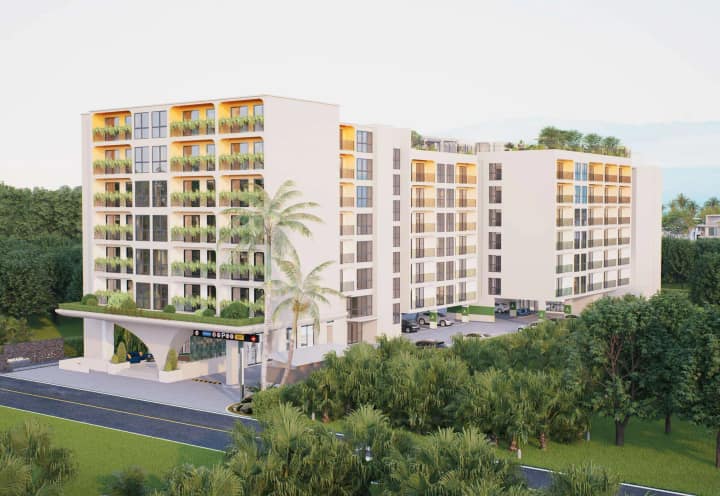
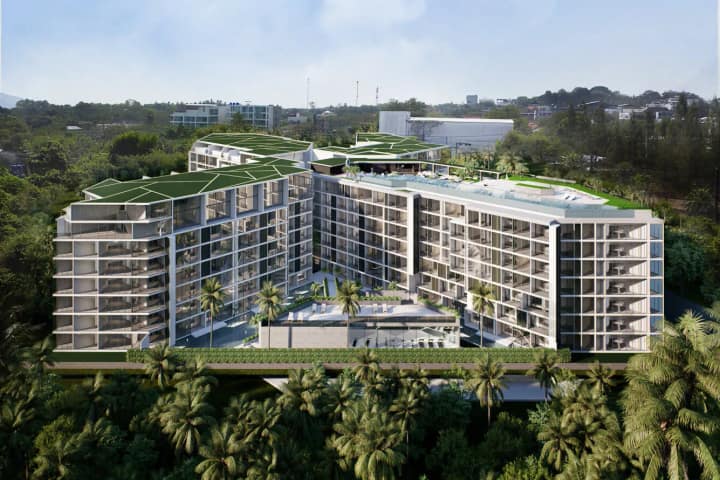
Neighbouring Layan up north runs a different model: the owner pools a unit with similar apartments and receives 60% of the pool’s net profit — a benchmark of around 8–10% net per year, with payback around 12 years. That’s how the already-operating Layan Green Park works — Phuket’s first eco condo-hotel with EDGE certification (up to 40% savings on utilities) — and the under-construction Layan Verde will follow the same model: 774 residences on 7.5 ha, 700 m from Layan beach, delivery in 2028. More on the difference in approach in self-managed rental vs. the rental pool; run your own scenario in the yield calculator.
8. Comparing with other areas
| Criterion | Rawai | Nai Harn | Layan (north) |
|---|---|---|---|
| Character | Fishing village, expat community | Lagoon, restricted development | Quiet, growing resort |
| Entry price | From ~$100,000 (land) | From ~$400,000 (villas) | Mid, thanks to new builds |
| Swimming beach | Poorly suited | One of the island’s best | Calm, family-friendly |
| Rental model | Long-term, self-managed | Mixed, no single pool | Rental pool, ~8–10% net |
| To airport | ≈60–75 min | ≈60–75 min | ≈20–30 min |
A full overview of every area on the island is in where to stay in Phuket.
9. Pitfalls
- Buying a villa in Rawai “by the sea” expecting a beach lifestyle. Rawai beach isn’t for swimming — if beach access matters, look at properties closer to Nai Harn or Kata.
- Underestimating the airport distance. 60–75 minutes noticeably affects both personal flights and a property’s appeal for tourist rental with limited holiday time.
- Expecting Nai Harn to develop like the west coast. Navy-owned land physically limits new construction — a plus for quiet, but it narrows the choice of finished projects and large-deal liquidity.
- Expecting pool-level yield without checking the specific villa’s model. The south runs mostly self-managed rentals — verify occupancy history and the management agreement rather than relying on area-wide figures.
- Skipping land and title checks when buying a plot. Due diligence matters even more for villas and land in the south — general methodology in due diligence in Phuket.
10. Mini case and takeaway
Mini case. A retired couple was looking for a villa for full-time living with a community and sea proximity, without needing to be near the airport — they fly once a year. Rawai fit perfectly: a villa 10 minutes from the market and pier, expat neighbours, an established base of clinics and cafés, and an entry budget of around $190,000. The couple placed the investment portion of their capital separately — into a studio at the under-construction Layan Verde up north, where a transparent rental-pool model gives a yield benchmark of ~8–10% net without the need to manage a rental themselves.
Takeaway: Rawai and Nai Harn are Phuket’s southern edge for anyone choosing lifestyle and community over tourist infrastructure or airport proximity. Rawai offers an affordable entry point and a fishing-village character; Nai Harn offers one of the island’s best beaches with restricted, low-key development. For investing with transparent, predictable yield, it makes more sense to compare against Layan’s projects up north, where the management model already runs and can be verified.
We’ll help you find the right fit — from a lifestyle villa in the south to a rental-pool unit in Layan for income. Browse the project portfolio at VillaCarte Group or leave a request below.
Find the right area and property in south Phuket
By submitting the form, you agree to the privacy policy.