Patong is Phuket’s best-known and most densely built resort area: Bangla Road, kilometres of beach, thousands of hotels and condos, and the island’s largest tourist flow. For an investor, that’s both the main selling point and the main source of risk. Here’s what buying in Patong actually means — with numbers, pitfalls and an honest comparison against the alternatives up north.
Contents
- What Patong is, and who it suits
- Bangla Road and nightlife: what it means for an investment
- Tourist flow — the area’s core asset
- The property market: prices and an aging stock
- Foreign quota and legal nuances
- Logistics and infrastructure
- Rental and yield: self-managed versus a managed pool
- Comparing with other areas
- Pitfalls
- Mini case and takeaway
1. What Patong is, and who it suits
Patong is historically Phuket’s first, and still its largest, tourist hub: a three-kilometre beach, the island’s main entertainment strip, and the highest density of hotels, condos and shops anywhere on Phuket. It’s the opposite of quiet areas like Rawai or Layan — crowded, loud, and priced for every budget.
Who Patong suits:
- Budget-segment investors who want a low entry price and strong resale liquidity driven by huge rental demand.
- Buyers ready to self-manage a property, or work closely with a local agency, and who want to control occupancy and rates themselves.
- Buyers targeting short-term rental to an active tourist crowd — younger travellers, groups, nightlife guests — rather than the family or premium segment.
- Not for anyone seeking a quiet seaside life, or transparent yield without personal involvement — the market here runs on different mechanics than the managed projects up north.
2. Bangla Road and nightlife: what it means for an investment
Bangla Road is the main reason Patong pulls in more tourists every year than any other area of the island. Bars, clubs, street food and shows run until morning, and the entire entertainment infrastructure is packed into one pedestrian block a couple hundred metres from the beach.
For an investor, that’s a double-edged sword. On one hand, it’s a steady stream of guests willing to pay for short-term rental near the nightlife, year-round rather than just in high season. On the other, the “loud area” reputation filters out part of the audience: families, middle-aged couples and the premium segment more often choose Bang Tao, Surin or Layan, where the infrastructure is calmer. A property 5–10 minutes’ walk from Bangla Road and one in a quiet Patong side street 15 minutes away are effectively two different investment stories aimed at different audiences.
3. Tourist flow — the area’s core asset
Tourist flow is what structurally sets Patong apart from every other area of Phuket. It’s the first spot most tourists hear about when planning a trip to the island, and one of the most recognisable resort brands in Southeast Asia. Hotel and condo-hotel occupancy here runs above the island average, and seasonality is smoothed out by a diverse audience — from budget backpackers to visitors from China, India, the Middle East and Australia.
It’s an edge that’s hard to replicate in newer areas: even growing demand in Layan or Bang Tao hasn’t come close to Patong’s raw tourist-flow numbers yet. But high tourist demand doesn’t automatically mean high owner income — a lot depends on who manages a given building, and how.
4. The property market: prices and an aging stock
Most of Patong was built in the 1990s and 2000s — a dense, in places dated stock, rarely refreshed with new beachfront projects due to a lack of available land. Because of the age and wear, the price per sqm is noticeably lower than in new builds up north, and quality varies widely — from units that need renovation to fully refurbished condo-hotels.
| Segment | Property type | Approximate entry price |
|---|---|---|
| Aging stock, unrenovated | Studio, 1990s–2000s buildings | from ~$60,000–80,000 |
| Renovated condos | Studio/1-bedroom in an updated complex | from ~$120,000–150,000 |
| Operator-managed condo-hotel | Unit under a chain’s management | from ~$150,000–200,000 |
| Hillside villa above Patong | With bay views | from ~$300,000 |
Prices are approximate and depend heavily on the specific building, floor and view — unlike new builds with a fixed price list, Patong’s resale market requires an individual check on every property.
5. Foreign quota and legal nuances
Under Thailand’s Condominium Act, foreigners may own at most 49% of a building’s area as freehold — the rest goes to Thai individuals or entities, or is sold to foreigners as leasehold. In new projects, the quota is usually wide open at launch, but in Patong’s older, large complexes, where units have been resold through agents for years, the foreign quota is often already used up — leaving leasehold as the only option on the same unit.
Checking the quota is a mandatory step before putting down a deposit — ask the complex’s management company for the current foreign-ownership percentage. General due-diligence methodology is covered in due diligence in Phuket, and the difference between freehold and leasehold is explained in detail in freehold vs leasehold in Thailand.
6. Logistics and infrastructure
Patong is self-sufficient: supermarkets, hospitals (including Patong Hospital and branches of major chains), international-level schools within a short drive via Kathu, banks, markets, and the entire tourist infrastructure within walking distance of most properties. That’s a plus for anyone who doesn’t want to depend on a car.
On the downside — traffic on the main streets in high season and in the evenings, and the distance to the airport: around 45–50 minutes depending on road conditions. Bang Tao and Laguna are 20–25 minutes away, Phuket Town about 25 minutes, and Layan up north 35–40 minutes. Island-wide logistics are covered in how to get around Phuket.
7. Rental and yield: self-managed versus a managed pool
There’s no single rental model comparable across Patong’s whole market. Some buildings run as condo-hotels with their own operator and a clear, though not always transparent, income-sharing scheme for the owner. Other units are rented out by owners directly or through local agencies — yield here depends directly on the owner’s personal involvement, management quality and competition: thousands of similar units within walking distance of each other push rates down in low season.
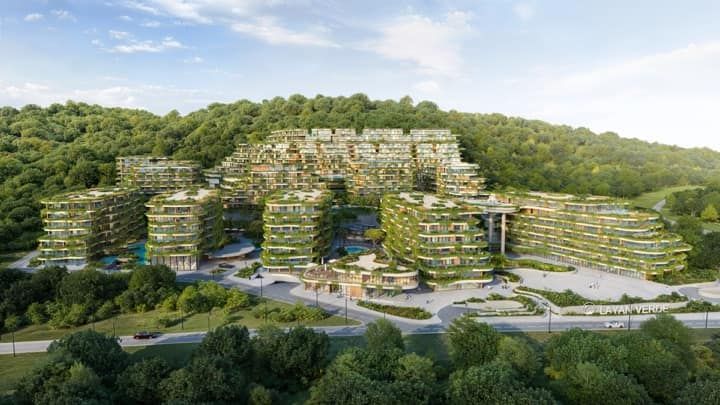
By comparison, Layan up north runs a transparent rental pool model: similar units are pooled together, and the owner receives 60% of the pool’s net profit — a benchmark of ~8–10% net per year, with payback around 12 years. That’s how the already-operating Layan Green Park works — Phuket’s first eco condo-hotel with EDGE certification (up to 40% savings on utilities) — and the under-construction Layan Verde will follow the same model: 774 residences on 7.5 ha, 700 m from Layan beach, delivery in 2028. The difference is fundamental: in Patong, yield is a function of your time and effort; in a managed pool, it’s a fixed share of the whole complex’s result. Run your own scenario in the yield calculator.
8. Comparing with other areas
| Criterion | Patong | Bang Tao | Layan (north) |
|---|---|---|---|
| Character | Main tourist hub, nightlife | Resort cluster, calmer | Quiet, growing area |
| Entry price | From ~$60,000 (aging stock) | Mid, thanks to new builds | Mid, thanks to new builds |
| Tourist flow | Highest on the island | High | Growing |
| Rental model | Mixed, no single pool | Partly managed | Rental pool, ~8–10% net |
| To airport | ≈45–50 min | ≈20 min | ≈20–30 min |
A full overview of every area on the island is in where to stay in Phuket, and a breakdown of investment potential by location is in best areas of Phuket for investment.
9. Pitfalls
- Buying “cheap” without checking the building’s condition. A low price per sqm in an aging building often reflects an upcoming major renovation, worn-out utilities, or issues with the management company — factor in future costs, not just the entry price.
- Skipping the foreign-quota check before the deposit. In popular older complexes, the quota may already be used up — leaving only leasehold available, which changes the whole financial model.
- Expecting managed-pool-level yield. Without a single rental model, an “8–10% a year” figure from a specific building’s marketing brochure should be verified against actual occupancy history, not promises.
- Underestimating unit competition. Thousands of similar condos within walking distance of each other means fierce price competition in low season — model yield on the average annual rate, not the peak rate.
- Confusing an investment purchase with a lifestyle purchase. The noise and density around Bangla Road is exactly what short-term tourists pay for, and exactly what full-time residents grow tired of — decide your goal before choosing a specific building.
10. Mini case and takeaway
Mini case. An investor with a budget of around $130,000 was considering a studio in a renovated condo-hotel 10 minutes from Bangla Road — the operator promised occupancy up to 75% and yield “around 10% a year.” On closer inspection, the advertised yield turned out to be calculated on the pool’s gross revenue, before deducting operating costs and the operator’s commission; the actual 3-year payout history to owners was closer to 5–6% net. The investor redirected the budget into a studio at the under-construction Layan Verde up north, where the 60/40 rental-pool model and the ~8–10% net benchmark are fixed in the contract, not a marketing deck.
Takeaway: Patong is a bet on volume, not transparency. The island’s largest tourist flow creates real rental demand, but the market stays fragmented — without a single managed model, yield depends heavily on the specific building, operator and the owner’s personal involvement. For anyone wanting verifiable yield without personal involvement, it makes more sense to compare Patong against Layan’s projects up north, where the management model already runs and is confirmed by contract.
We can review a specific property in Patong or find an alternative with transparent yield up north — browse the project portfolio at VillaCarte Group or leave a request below.
Evaluate a property in Patong or find an alternative
By submitting the form, you agree to the privacy policy.