Krabi and Phuket sit on the same Andaman coast of Thailand, and tourists often treat them as interchangeable destinations — limestone cliffs, longtail boats, diving. As property markets, though, they are entirely different stories. Krabi is a compact nature-driven resort: the vertical cliffs of Railay, popular with climbers worldwide, the Phi Phi islands, national parks, and a market still dominated by private villas on Thai-titled land. Phuket is an island with its own international airport, a mature condo-hotel industry, and a structured rental-pool income model. One market wins on unspoiled nature and a low entry price; the other wins on direct access to the world and managed yield. Here is a side-by-side breakdown so the choice rests on numbers, not a holiday impression.
Contents
- Two portraits of one coastline
- Logistics: air access and reach
- Entry price and market structure
- Yield and management model
- Ownership structure and the foreign quota
- Tourist flow and target audience
- Infrastructure and quality of life
- Comparison table
- Pitfalls
- Case study: choosing between the two resorts
1. Two portraits of one coastline
Krabi is a southern Thai province known first for its nature: the sheer limestone cliffs of Railay, popular with rock climbers from around the world, the Phi Phi islands (administratively part of the province), national parks and mangrove forests. Its tourism profile leans toward active travel — diving, climbing, boat tours through the bays — and quiet beach time without the club scene of larger resorts. The property market matches that profile: mostly villas and small complexes on Thai-titled land, without large-scale single-district development.
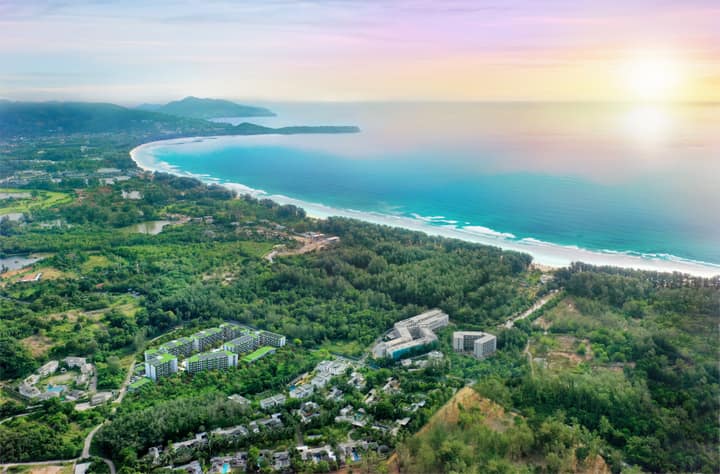
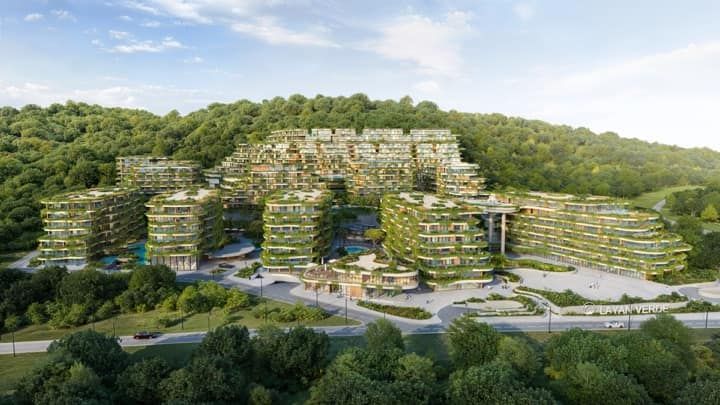
Phuket runs at a different scale. The island receives long-haul international tourists directly, with no Bangkok stopover, and is built up with modern condo-hotels running a unified income model — like Layan Verde and Layan Green Park near Layan beach. According to REIC data cited by Nation Thailand, in Q1 2026 foreign condominium ownership transfers nationwide fell 17.3% amid an economic slowdown — but demand mix shifted: purchases by Chinese buyers (the largest group) dropped 38.8%, while Russian buyers rose 33%, Indian buyers 40%, and Australian buyers 36.1%. That signals premium destinations with a structured management model, Phuket included, capturing a larger share of demand even as the overall market cools. A detailed quantitative look at the island is in our article on the Phuket market in 2026.
2. Logistics: air access and reach
Logistics shape tourist flow, owner profile, and eventual liquidity — it is the first thing worth checking when picking a resort.
- Krabi (KBV). Krabi Airport mainly serves domestic routes from Bangkok and other Thai cities plus a handful of regional international routes — Malaysia is the airport’s largest overseas market, with Kuala Lumpur and Singapore as the key destinations. Per Nation Thailand, during the Songkran 2026 peak (April 10–19) Krabi handled 95,000 passengers and 720 flights — more than any other airport in the Department of Airports (DOA) network, which serves the country’s regional routes. Important caveat: Phuket does not belong to this network — the island is served by the larger AOT operator with its own direct long-haul routes, so the absolute figures are not directly comparable.
- Phuket (HKT). A working international airport today, with direct flights from Europe, China, Russia, India and the Middle East, with no transfer through Bangkok or a regional hub.
The difference is fundamental: Krabi wins with a traveller who is already in Southeast Asia — a short hop from Bangkok, Kuala Lumpur or Singapore. Phuket wins on genuinely international demand — a direct long-haul flight opens up a far wider tenant geography and requires no transfer at all.
3. Entry price and market structure
| Parameter | Phuket | Krabi |
|---|---|---|
| Dominant format | Condo-hotels with rental pools, and villas | Villas and small complexes on Thai-titled land |
| Typical entry point (condo) | From ~$140–230K with instalments in new projects | Few large, standardised condo projects on the market |
| New-supply quality | Large single-developer projects with district-wide infrastructure | Mostly one-off villas and boutique complexes from various local developers |
| Developer instalments | Standard (35%+35%+30% and similar schemes) | Found occasionally, no consistent practice |
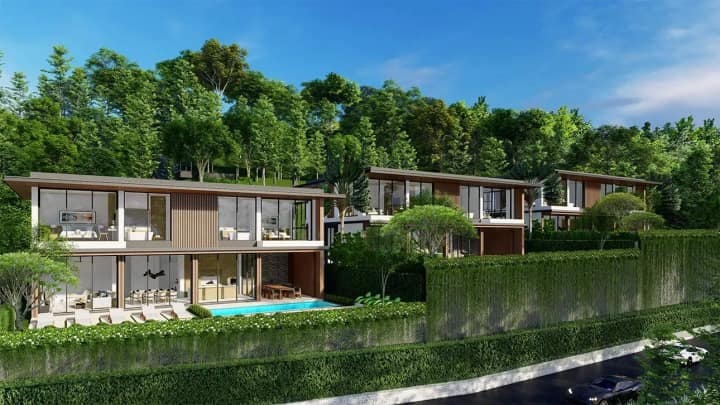
Layan Green Park, for example, is an eco condo-hotel near Layan beach: phase 1 (248 units) sold out with the developer and has been operating since 2024, with only resales now on the market from 4,800,000 THB ($142,602) for a studio; phase 2 (296 units) is on sale with 2026 handover, starting at $224,043 for a studio. Layan Verde offers premium studios from 36.2 sqm starting at $235,995. Krabi has virtually no comparably scaled, standardised supply: the market is highly fragmented across dozens of local developers and private villa sellers, and a significant share of listings is land and houses on leased or permitted land rather than pure freehold condominiums.
4. Yield and management model
- Phuket. The flagship model is a rental pool: identical unit types are pooled, owners receive 60% of net profit, the management company keeps 40%. The benchmark for completed properties is roughly 8–10% net a year, with payback around 12 years. See our ROI methodology for the calculation.
- Krabi. Large public rental pools at the scale of Phuket’s branded projects are practically absent here. Rental demand comes mainly from active-travel tourists — divers, climbers, island-hopping visitors — with pronounced seasonality (high season November–April). Management tends to be individual, through a local operator or self-managed, without a single profit-sharing formula.
The core difference: on Phuket, income in the modern segment is first and foremost a system (a pool, reporting, a management company with a unified policy); in Krabi it is more often a specific property and a specific owner, who either self-manages or hires a local manager without a standardised model.
5. Ownership structure and the foreign quota
Thailand’s legal framework is identical for both resorts: a foreigner can own a condominium in freehold within the 49%-of-floor-area quota, while land under a villa is only accessible via leasehold or a permitted ownership structure. See freehold vs leasehold for details.
The difference is practical, not legal:
- In Krabi, the overwhelming majority of supply is villas and houses on Thai-titled land — a format popular with locals and long-term residents, but for a foreigner it always means leasehold or a structure through a Thai company, never direct land ownership.
- On Phuket, particularly in the new districts near Layan and Bang Tao beaches, condo-hotels and condominiums are being built actively, opening the freehold quota fresh each time — meaning a wider selection of direct-ownership options in new beachside developments.
The campaign against nominee structures that bypass foreign land-ownership restrictions through formal Thai partners is spreading nationwide — not just in Phuket and Koh Samui, where it started most actively, but also in southern-coast resort provinces. Per Bangkok Post, the tightened scrutiny has led some foreign villa buyers in the country’s resort destinations to pause their purchase decisions until the enforcement practice becomes clearer.
6. Tourist flow and target audience
Krabi lives on active-travel demand: climbers head to Railay, divers and island-hoppers to Phi Phi and Koh Lanta (a neighbouring province logistically tied to Krabi), and couples and families come for quiet beach time without the club scene of larger resorts. A notable share of the tourist flow arrives from the region — Malaysia and Singapore — while another share takes a longer flight via a Bangkok transfer.
Phuket receives a longer-haul, more diverse tourist — direct flights bring demand from Europe, the Middle East, India and China simultaneously. Per REIC data (Nation Thailand), even amid the broader Q1 2026 market cooldown, demand for premium property with managed yield — precisely Phuket’s profile — shifted toward growing buyer groups (Russia, India, Australia), whereas Krabi does not stand out in this data as a distinct major cluster of foreign transactions.
For an owner, this cuts two ways: Krabi offers niche active-travel demand with pronounced seasonality and a lower average rental ticket; Phuket offers a year-round international flow with a higher average ticket and a structured income-sharing model.
7. Infrastructure and quality of life
Krabi is a compact, nature-focused resort: Krabi Town as the provincial centre, touristy Ao Nang with its promenade and night market, ferry links to the islands, a handful of private clinics, and a provincial-level hospital. There are no international schools or large shopping centres comparable to Phuket’s — this is a destination for those who value nature and an unhurried pace over urban infrastructure.
Phuket is noticeably larger and more varied by district: quiet residential zones near Layan beach sit alongside lively Bang Tao and touristy Patong, and the island has international schools, international-standard hospitals, and retail clusters like Boat Avenue. Our detailed guide is where to stay in Phuket.
8. Comparison table
| Parameter | Phuket | Krabi |
|---|---|---|
| Access | Direct international airport (HKT) | KBV — mainly domestic + regional international (Malaysia, Singapore) |
| Peak passenger flow (Songkran 2026, Nation Thailand) | Not part of the DOA network — served by AOT | 95,000 passengers, 720 flights — No.1 in the DOA network |
| Income model | Rental pool, ~8–10% net, unified formula | Individual management, higher forecast volatility |
| Foreign quota in new projects | Often reopened fresh in condo-hotels | Villa market — almost always leasehold |
| Target guest | Long-haul, diverse, year-round | Active travel (diving, climbing), regional + seasonal flow |
| International infrastructure (schools, hospitals) | Developed, international standard | Limited, provincial scale |
| Large developer projects with district infrastructure | Present — condo-hotels with hotel-style management | Rare, market is fragmented |
9. Pitfalls
- Confusing regional tourist flow with international demand. A large share of Krabi’s visitors arrive via Bangkok, Kuala Lumpur or Singapore — a different demand profile than Phuket’s direct long-haul tourist, and it affects season length and average rental ticket.
- Expecting pool-level yield while self-managing a villa in Krabi. Without a rental-pool system and a transparent formula, income depends on your own effort or a specific local manager, not a guaranteed rate.
- Confusing a villa on Thai land with a freehold condo. In Krabi, the overwhelming majority of supply is villas and houses, meaning leasehold or a structure through a Thai company for a foreigner, not direct ownership — confirm this before putting down a deposit.
- Underestimating seasonality. Krabi’s high season (November–April) is more pronounced than Phuket’s, where international tourist flow smooths out the low-season dip.
- Treating the nominee-structure crackdown as a Phuket-only issue. The campaign is spreading nationwide, including Krabi — per Bangkok Post, some foreign villa buyers in resort destinations have already paused decisions pending clearer enforcement practice.
10. Case study: choosing between the two resorts
An investor with a budget of roughly $220,000 was weighing a villa with cliff views near Ao Nang against a studio in an under-construction condo-hotel on Phuket. The Krabi villa was appealing for its nature — views of the limestone formations, quiet surroundings, proximity to beaches and islands for personal use. But due diligence revealed the land under the villa was structured as a 30-year leasehold with a renewal option, there was no management company with a public profit-sharing model, and rental was proposed either self-managed or through a local agent with no transparent reporting — plus a pronounced seasonal dip during the rainy period. The studio near Layan beach on Phuket, by contrast, belonged to a fresh project with an open freehold quota, construction-period instalments, and a ready-made 60/40 rental-pool model benchmarked at roughly 8–10% net after launch. The investor chose Phuket — not because Krabi is “worse” for a getaway, but because for the goal of “transparent passive income without hands-on management,” Phuket’s system proved more predictable.
Bottom line: Krabi and Phuket solve different problems. Krabi offers unspoiled nature, active-travel tourism, and a market still dominated by villas on Thai land without a mature managed-rental system. Phuket offers direct international access, a mature condo-hotel industry, and structured income through rental pools. For a “buy and collect managed passive income” strategy, the numbers currently favour Phuket; for a “quiet second home among cliffs and islands” strategy, Krabi deserves a close look — with mandatory checks on ownership structure and rental management model.
I can help compare specific Phuket properties against your budget and goal, with a yield calculation in the ROI calculator — or let’s discuss strategy through Layan Real Estate.
Get matched to your strategy
By submitting this form, you agree to our privacy policy.