Quick answer: for a comparable lifestyle Phuket is usually 10–20% more expensive than Bangkok — the beach premium on housing, taxi dependence and high-season swings outweigh the capital’s pricey downtown. Bangkok wins on daily costs; Phuket wins on what you get for the money: sea, air and space instead of traffic.
Phuket or Bangkok — almost everyone planning a move or a property purchase in Thailand asks this question. Formally it’s one country and one currency, but in practice it’s two different financial worlds: a 10-million-strong metropolis with a metro and an office economy versus a tourist island with the sea and seasonal price swings. This guide gives a direct comparison across every budget line, tables with figures, and scenarios for a single person, a couple and a family for 2026.
Contents
1. Two different life scenarios
Bangkok is a capital with the BTS/MRT metro, international offices, thousands of cafés and restaurants for every budget, and almost no dependence on the tourist calendar. Phuket is an island whose economy runs on tourism: high season (November–April) pushes up housing, taxi and some service prices, while low season (May–October) brings discounts. A full country-wide budget breakdown, including Chiang Mai, is in cost of living in Thailand; here the focus is only on the two main hubs for investors and expats.
2. Housing: renting vs owning
Housing is the largest budget line in both cities, but the pricing logic differs: in Bangkok price is set by proximity to a metro line, in Phuket by proximity to the sea.
| Housing type | Bangkok (centre) | Phuket (Layan/Bang Tao) |
|---|---|---|
| Studio/1BR rent | $700–1200/mo | $600–1500/mo |
| Villa/house 2–3BR rent | $1200–2500/mo | $1500–4000/mo |
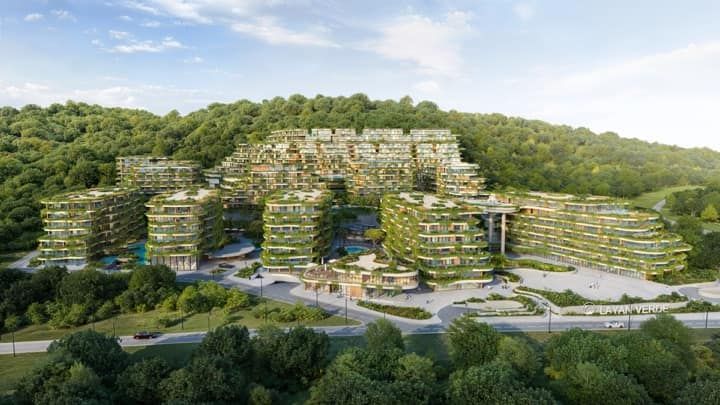
| New condo in a rental-pool project (from) | — | from $235,995 (Layan Verde) |
In Phuket the lower bound of rent is lower than in Bangkok — but the upper bound is markedly higher: a beachfront villa costs multiples of a comparably sized apartment in downtown Bangkok. Rent on the island is also strongly seasonal (see the detailed breakdown in rent prices in Thailand), while Bangkok rates stay stable year-round.
Ownership changes the calculation fully only in Phuket: a unit in a rental-pool complex can be rented out while the owner is away — the owner receives 60% of the pool’s net profit, a ~8–10% net annual benchmark with a ~12-year payback. The full methodology is in how to calculate ROI in Phuket and the yield calculator.
3. Food and everyday expenses
For basic groceries and street food the gap between the two cities is small — Thailand’s food market is fairly uniform. Differences show up at the edges of the range:
- Bangkok — a huge choice of budget cafés and food courts for every taste; competition keeps mid-tier prices low: dishes from $1.5, a café meal $3–6.
- Phuket — street food and markets are no pricier than in Bangkok, but imported groceries and tourist restaurants cost noticeably more due to island logistics and resort markups in areas like Patong; in Layan and Bang Tao the selection is more local and price levels calmer.
Someone eating locally spends $150–250/month in either city; someone oriented toward Western food and restaurants in Phuket typically spends 15–25% more than the same lifestyle in Bangkok.
4. Transport and logistics
This is where the gap is most visible:
- Bangkok — the BTS and MRT cover the business centre and most residential districts; transport costs are among the lowest in the region: $30–60/month without a personal car.
- Phuket — there is no conventional public transport: the standard is renting a bike ($60–100/month) or a car ($400–700/month). Living near existing infrastructure (Layan–Bang Tao) cuts the number of trips and partly offsets the lack of a metro.
More on the island in getting around Phuket. Those moving frequently between the two cities should also budget for flights — domestic Bangkok–Phuket routes are a separate line item for anyone keeping housing in both locations.
5. Utilities, connectivity and healthcare
| Item | Bangkok | Phuket |
|---|---|---|
| Electricity (with AC) | $70–140/mo | $80–150/mo |
| Water | $5–10/mo | $5–15/mo |
| Internet + mobile | $20–30/mo | $20–35/mo |
| Health insurance (adult) | $100–250/mo | $120–300/mo |
Utilities don’t differ much: the main variable in both cities is how much the air conditioner runs. Private healthcare skews higher-end and pricier on average in Phuket due to resort-style clinic positioning, though quality is comparable; Bangkok offers more choice of international-standard multi-specialty hospitals at mid-range prices. More in healthcare in Phuket.
6. Schools and the family budget
An international school is usually the largest line item in a family’s budget in either city: $8,000 to $20,000+ a year per child. The difference isn’t so much price as choice:
- Bangkok — dozens of schools across British, American and IB programmes, and a wider mid-price segment thanks to market scale;
- Phuket — fewer schools, but quality keeps rising alongside demand from families relocating to the island; several schools cluster near the Layan–Bang Tao area.
The full overview is in international schools in Phuket.
7. Work, remote income and tax residency
The two cities’ economies are fundamentally different. Bangkok is a labour market with local baht salaries, international-company headquarters and a developed office culture. Phuket runs on tourism and increasingly on remote work: the island has long been popular with digital nomads and entrepreneurs earning foreign income. Either way, long-term stays call for planning visa status in advance — the Thailand Elite visa, for instance, isn’t tied to an employer and works equally well in both cities. The specifics of working from the island, including tax residency, are covered in Phuket for remote workers.
8. Budget scenarios: Phuket vs Bangkok
| Scenario | Bangkok/mo | Phuket/mo |
|---|---|---|
| Single, modest | $700–1000 | $750–1050 |
| Single, comfortable | $1300–1900 | $1500–2200 |
| Couple, comfortable | $2200–2800 | $2500–3200 |
| Family with a child (intl. school) | $3800–5500 | $4000–6000+ |
The gap between the two cities holds within 10–20% in Bangkok’s favour at almost every budget level — except beachfront housing, where Phuket pulls noticeably ahead. Offsetting that, the island costs less time and money on commuting if you live near existing infrastructure rather than far from the sea.
9. Pitfalls
- Comparing a “blended average” without a scenario. The gap between a modest and a family budget is 4–6x in either city.
- Ignoring seasonality in Phuket. Rent and short-term costs on the island swing ±15–20% between high and low season; Bangkok barely moves.
- Underestimating transport in Phuket. No metro means mandatory spend on a bike or car — a line item Bangkok may not have at all.
- Forgetting that housing in Phuket can generate income. In Bangkok rent is a pure expense; on the island a unit in a rental-pool project (e.g. Layan Green Park) can partly or fully offset its holding costs.
- Not budgeting for flights between the two cities. Anyone keeping ties to both Bangkok and Phuket needs to plan for this as a recurring line item.
10. Case study and conclusion
A family with a child was choosing between Bangkok and Phuket for a move of 5+ years. Bangkok won on transport and school choice but lost on quality of life: smog, traffic, no sea near home. Phuket demanded a higher housing budget but saved on transport by picking a district near existing infrastructure, and it opened the option of buying instead of renting. The family chose Phuket and, instead of a long-term villa rental, bought an installment-plan unit in a project near Layan Beach: the holding costs are partly offset by rental income through the pool during time away, and the asset itself appreciates during construction.
Conclusion: Bangkok is more predictable and on average 10–20% cheaper across most budget lines, but Phuket offers what a metropolis cannot — the sea next to your home and the chance to turn housing into an asset yielding ~8–10% net through ownership instead of rent.
I can help compare a budget for your scenario and find a Phuket property that lowers housing costs and earns income while you’re away — leave a request or see the Layan Real Estate page.
This material is informational. Figures are approximate ranges for 2026; actual costs depend on lifestyle, district and exchange rates — this is not financial or tax advice.