Buying a villa in Thailand as a foreigner is possible, but the villa building and the land beneath it are not the same legal asset. The deal therefore starts with ownership structure, not the view or floor plan: what can be registered to you, who holds the land, which rights survive a resale or inheritance, and what must be checked before reservation. Here is the process from lawful structure to registration, real budgets and the pitfalls that stop first-time foreign buyers.
Contents
- Can a foreigner buy a villa in Thailand?
- Villa, building and land ownership structures
- Where to buy: an overview of Thailand’s regions
- The buying process step by step
- Money: currency transfer and FET
- How much it costs: budgets by unit type
- Yield: why investors pick Phuket
- Pitfalls for a first-time buyer
- Mini case: from a broad search to a specific project
- Conclusion and next step
1. Can a foreigner buy a villa in Thailand?
Yes. A foreign buyer can own the villa building separately, but under the general rule cannot register the underlying Thai land directly in their own name. Thai law has a narrow residential-land exception — up to one rai after at least THB 40 million of qualifying investment and ministerial approval — but it is not the normal retail-villa route.
The practical structures to examine are:
- Registered land lease. The common villa route is a lease registered at the Land Department for up to 30 years. A contract may discuss renewal, but a later term needs the lessor’s consent and a new registrable agreement; do not value “30+30+30” as if all 90 years were already registered.
- Separate building ownership. The foreign buyer can own the house itself if the construction, sale and registration documents establish that ownership separately from the land.
- Superficies or other registered rights. Depending on the transaction, counsel may use a registered right supporting separate ownership and use of the building; the deed wording and duration matter.
- A genuine Thai company. A Thai-controlled company with real shareholders, paid-up capital, governance and a legitimate business may own land. Thai nominee shareholders used only to hide foreign control are prohibited and are not a lawful villa-buying shortcut.
- Condominium comparison. A registered condominium unit is simpler: foreigners may collectively own up to 49% of the building’s total unit area as freehold, subject to the buyer and money-transfer requirements.
For a full breakdown of every ownership form and what to check in the contract, see can a foreigner buy property in Phuket.
2. Villa, building and land ownership structures
The property type directly determines the available ownership form and the entry threshold:
- Condominium (apartment). The simplest path for a foreigner — freehold within the quota, the lowest entry threshold, usually already backed by a developer’s rental programme.
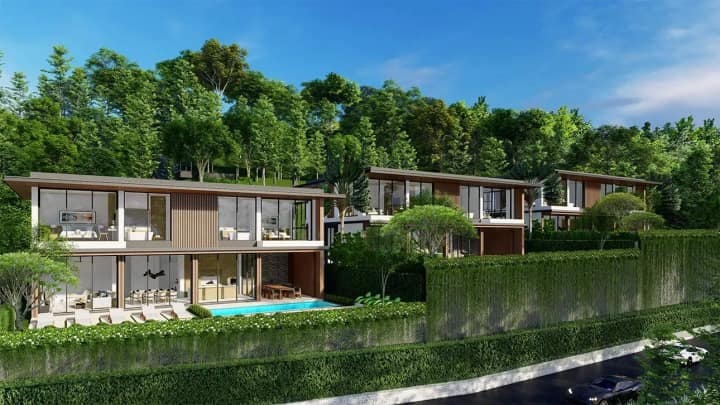
- Villa with land. The building can be registered separately to the foreign buyer, while the land normally sits under a registered lease or another independently reviewed lawful structure. The entry threshold is higher — details in how much does a house cost in Thailand.
- Townhouse. Legally closer to a villa (it comes with land) but cheaper and more compact — a common choice for living rather than investment.
For a pure investment with managed rental income, most buyers choose a condominium — fewer operational concerns and a clear income model.
3. Where to buy: an overview of Thailand’s regions
Ownership law is the same across the country, but the markets differ sharply in purpose, liquidity, and rental model:
| Region | What it’s bought for | Entry budget | Market feature |
|---|---|---|---|
| Phuket | Investment + seasonal living | from $90,000 | Mature rental-pool market, high tourist flow, a shortage of new builds near the best beaches |
| Bangkok | Residency, long-term rental to tenants | from $80,000 | The largest housing market, but an oversupply of new builds in some districts |
| Pattaya | Budget investment, resort rental | from $60,000 | Lower entry price, less premium positioning |
| Koh Samui | Resort property, niche market | from $100,000 | Fewer new-build listings, harder logistics (an island with no bridge) |
| Chiang Mai | Long-term living, not a tourist rental market | from $60,000 | Not a resort market, weaker for short-term rental |
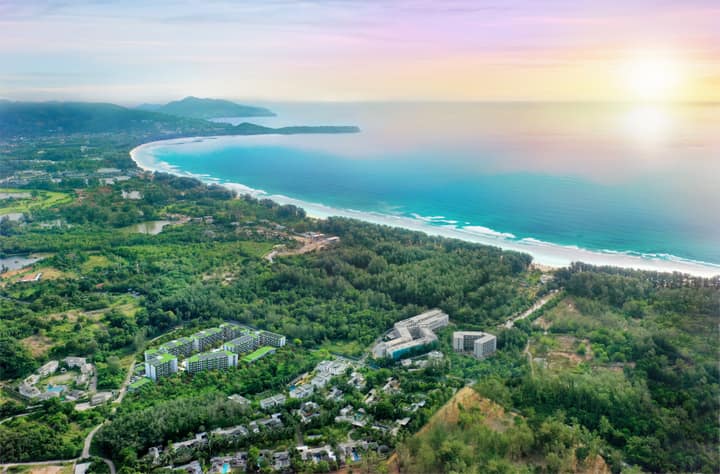
For an investor targeting managed income, Phuket stands out for combining tourist flow, a mature rental-pool infrastructure, and locations like Layan and Bang Tao, where demand for new beachfront builds consistently outpaces supply.
4. How a foreigner buys a villa in Thailand: step by step
Regardless of region, the deal follows the same logic: choose a unit → reserve → verify documents → sign the contract → pay → register title. In short:
- Choose a unit for your goal — living, rental, or both.
- Reservation — locks in the price and takes the unit off the market.
- Due diligence — checking the developer, title, and ownership form.
- Contract and payment — a lump sum (resale) or installments by construction stage (new build).
- Registration at the Land Department and handover of the unit.
A full step-by-step breakdown with documents and timelines is in the property-buying process in Phuket.
Villa due-diligence checklist before reservation
Do not treat a generic developer review as due diligence on your exact plot and contract. Before a non-refundable reservation, independently verify:
- Land title and seller: the chanote number, registered owner, mortgages, court orders and other encumbrances.
- Access and utilities: a registered road easement, utility rights and any shared-infrastructure obligations.
- Building legality: construction permit, approved plans, completion status and evidence supporting separate building ownership.
- Lease terms: the exact first registered term, rent and prepayment, assignment, inheritance, termination, renewal mechanics and who must consent later.
- Company substance, if proposed: real Thai shareholders and funding, governance, tax and accounting obligations, and confirmation that no nominee arrangement is being used.
- Project approvals and contract: zoning, environmental approvals where applicable, construction milestones, default remedies, handover standards and the governing-language clause.
Use an independent Thai lawyer acting for the buyer, not only the developer’s sales lawyer. This guide explains the framework but is not a substitute for advice on a particular title or agreement.
5. Money: currency transfer and FET
Technically the most fragile step in the deal. For freehold registration, funds must enter Thailand in foreign currency — the bank issues an FET certificate (Foreign Exchange Transaction), without which the Land Department will not register a foreigner’s ownership. Practical rules:
- Transfer the amount with the payment purpose “property purchase”, in USD/EUR, not in baht.
- Request the FET from the bank right after the funds arrive.
- A standard land lease does not use the condominium foreign-freehold quota or the FET evidence required for a foreign-freehold condo transfer. Still keep the complete bank trail and follow the contract, bank and anti-money-laundering requirements for the transaction.
The full mechanics of the transfer are covered in FET and foreign currency transfer to Thailand. A mortgage from a Thai bank is nearly impossible for foreigners to obtain — almost all deals are funded with own capital or a developer’s installment plan.
6. How much it costs: budgets by unit type
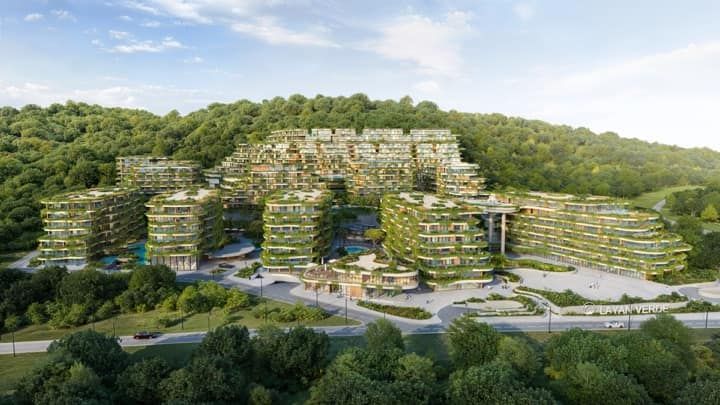
A benchmark from the current price list (as of 1 September 2026) on two Phuket projects near Layan beach — same developer, different construction stage:
| Unit type | Layan Verde (completion 2028) | Layan Green Park, phase 2 (completion 2026) |
|---|---|---|
| Studio | premium, from 36.2 m², from $235,995 | from 36.7 m², from $224,043 |
| 1 bedroom | from $331,796 | from 43.7 m², from $279,489 |
| 2 bedroom | from $549,915 | from 55.6 m², from $348,968 |
| 3 bedroom / duplex | from $924,533 | 3-bedroom from $852,351, duplexes from $1,115,354 |
| With private pool | from $667,050 | — |
| Penthouse | up to ~$4.1M | — |
For comparison: resales in the already-operating phase 1 of Layan Green Park (completed 2024, fully sold out by the developer, prices up ~100%) start from $142,602 for a 30.3 m² studio — a finished unit that enters the rental pool immediately.
7. Yield: why investors pick Phuket
The key difference between Phuket and most of Thailand’s regions is a mature rental pool model: same-type units are pooled together, and the developer manages occupancy and income distribution. The owner receives 60% of the pool’s net profit, the management company 40%, with a benchmark of ~8–10% net annual yield and payback around 12 years. The format takes operational tasks off the owner’s hands — finding tenants, cleaning, grounds upkeep.
For the exact calculation method for your own budget, see how to calculate ROI in Phuket, and run your own numbers in the yield calculator.
8. Pitfalls for a first-time buyer
- Treating “property in Thailand” as one market. Bangkok, Phuket, Pattaya, and Koh Samui run on different demand and liquidity rules — a “buy wherever’s cheapest” strategy often ends in low yield and weak resale.
- Not checking the freehold quota upfront. The best units within the 49% quota go first — if you don’t confirm the remaining quota at the time of reservation, you may end up with leasehold instead of the expected freehold.
- Transferring funds in baht. Without a foreign-currency transfer, the bank won’t issue an FET, and freehold registration for a foreigner gets blocked.
- Buying a villa without land due diligence. Title, encumbrances, and the land ownership form under a villa need a separate check — skipping this step is risky.
- Treating a company as a paper workaround. A company must have genuine lawful ownership, shareholders, funding and compliance. Using Thai nominee shareholders to conceal foreign control is prohibited.
- Expecting yield without a rental pool. Managing rentals yourself takes time and presence; without a management programme, the 8–10% figure isn’t guaranteed.
9. Mini case: from a broad search to a specific project
An investor from Kazakhstan started with a broad “property in Thailand” search and was comparing four cities at once — Bangkok, Pattaya, Koh Samui, and Phuket. After comparing rental models, the choice narrowed to Phuket: only there was a mature rental-pool infrastructure with transparent reporting and working properties — not just promises on renders. Within Phuket, the deciding factor was location — Layan beach, where demand for new beachfront builds outpaces supply. In the end, a $230,000 budget closed a premium studio at Layan Verde during construction, betting on value growth by the 2028 completion and a subsequent entry into the rental pool.
Takeaway: narrowing from “country” to “region” to “specific project” saves months of comparison and lowers the risk of buying an illiquid asset.
10. Conclusion and next step
Buying a home in Thailand as a foreigner is legal and fairly straightforward — the real question is choosing the right ownership form, region, and income model for your goal. For investment with predictable rental income, Phuket and the Layan location remain among the most well-supported choices in the 2026 market.
I’ll send a selection of available units matching your budget, with a yield calculation and current freehold-quota status — leave a request or browse the VillaCarte Group catalogue, plus the project pages for Layan Verde and Layan Green Park.
This material is for informational purposes only and does not constitute legal or investment advice. Prices and availability are quoted from the 1 September 2026 price list — verify at the time of the deal.