Bangkok Post and Cushman & Wakefield Thailand published H1 2026 data: the average price of new condominiums in Greater Bangkok reached 120,364 baht/sqm — near the pre-pandemic 2019 level. At first glance that reads as a market recovery. But behind the number is a different story: the segment is oversupplied by hundreds of thousands of units, developers are fleeing a Bangkok middle class locked out by mortgage banks, and they are increasingly putting capital into Phuket instead. Here is what the number actually means — and why it matters directly for the property market on the island’s west coast.
Contents
- What was published
- The numbers: prices near the 2018 peak
- Why the price rise is not a sign of a healthy market
- Where developers and capital are going
- Why Phuket specifically
- Not to be confused with villa price growth
- What this means for investors in Layan and Bang Tao
- Pitfalls
- Mini case
- Conclusion and next step
1. What was published
On 9 July 2026, Bangkok Post published a report citing Cushman & Wakefield Thailand data: the average price of new condominiums in Greater Bangkok in H1 2026 came close to the pre-pandemic level — the second-highest figure on record after the 2018 peak. The data is commented on by Surachet Kongcheep, head of research at Cushman & Wakefield Thailand.
2. The numbers: prices near the 2018 peak
| Period | Average new condo price, baht/sqm |
|---|---|
| 2018 (historical peak) | 126,373 |
| 2019 | 120,633 |
| 2020 (pandemic) | 92,920 |
| End of 2025 | 110,000 |
| H1 2026 | 120,364 (+9.4% vs end-2025) |
| Q1 2026 | 90,308 |
| Q2 2026 | 150,420 |
The jump between Q1 and Q2 2026 is not a sign of accelerating demand — it reflects a change in the launch mix: about 90% of new Q2 projects are concentrated along the BTS Sukhumvit line outside the central business district and target a pricier buyer segment.
3. Why the price rise is not a sign of a healthy market
Alongside the rising average price of new lots, the market carries a structural burden that never made the headline:
- Greater Bangkok still has about 350,000 unsold condominium units (Knight Frank Thailand data) — at an average transfer rate of roughly 60,000 units a year, clearing that stock will take 5-6 years.
- Only 6,174 new units launched in Q1 2026, and none of them in Bangkok’s central business district.
- The booking rate on new launches fell to 24.3%, down from 43.8% the previous quarter.
- Over 68% of new lots are priced below 80,000 baht/sqm — developers keep chasing the budget buyer even where they cannot find one.
Surachet Kongcheep frames it this way: this downturn differs from previous cycles because middle- and lower-income buyers simply cannot get mortgage approval — banks tightened criteria after several years of rising defaults. That is why the average price is climbing (the remaining sample skews toward expensive lots), not because the market as a whole has strengthened.
4. Where developers and capital are going
Major developers are responding to an oversupplied, mortgage-locked Bangkok with geographic diversification. Sansiri, one of Thailand’s largest developers, allocated 2 billion baht for land acquisition focused specifically on Phuket — the company cites strong foreign demand as the reason. Kiatnakin Phatra Securities analysts forecast Phuket price growth of 8-10% annually in 2026, versus 5-7% for Bangkok.
According to KKP Bank, the island steadily absorbs about 1,000 condominium transfers to foreign buyers a year, up 10% in 2025. For regional comparison: foreign transfers rose 220% in Surat Thani and 66% in Prachuap Khiri Khan, while Chiang Mai fell 28% and Chonburi fell 15%. Phuket is one of the few regional markets outside Bangkok showing steady growth.
5. Why Phuket specifically
The difference between Bangkok and Phuket is not location quality — it is buyer structure:
| Parameter | Bangkok condo market (mid-income segment) | Phuket condo market |
|---|---|---|
| Main buyer | Thai middle class, mortgage purchase | Foreign buyer, more often cash or developer instalments |
| Demand constraint | Mortgage approval from Thai banks | Currency rates and general interest in the region — not Thai mortgage credit |
| Demand type | First home, buy-to-let for local tenants | Resort and long-term rental, relocation, second home |
| 2025-2026 trend | Oversupply, falling bookings | Rising transfers to foreign buyers (+10% year-on-year) |
| Demand shift | Stagnation | Move from short-term resort rental toward long-term family residency, as international schools expand |
Phuket’s foreign buyer is largely independent of the Thai mortgage market — which is exactly why the island keeps growing while the Bangkok segment tied to local mortgages stalls.
6. Not to be confused with villa price growth
It is important not to conflate this news with another figure we covered earlier: 12-18% annual price growth for villas in Bang Tao, Cherng Talay, Layan, and Kamala, per Knight Frank Thailand. These are two distinct signals:
- 12-18% a year — specifically premium villas in the listed west-coast locations (data as of early July 2026).
- 8-10% a year — a forecast for the Phuket condominium market overall, without a location breakdown (Kiatnakin Phatra Securities forecast).
The two figures do not contradict each other — they describe the same underlying process from different angles: capital and buyers moving out of an overheated, mortgage-dependent Bangkok and toward Phuket, where growth is faster and demand more resilient. But the specific percentages apply to different market segments and should not be conflated.
7. What this means for investors in Layan and Bang Tao
- Phuket demand rests on foreign buyers who are not exposed to tightening Thai mortgage lending — the risk currently choking Bangkok’s mid-market segment does not apply to the island in the same way.
- Major developers (Sansiri and others) are consciously redirecting capital and land budgets to Phuket — institutional confirmation of the thesis, not just retail demand.
- The shift from resort rental toward long-term family residency on Phuket favours projects built for living, not only vacationing — see our article on calculating villa rental yield.
- Treat the overall Phuket price forecast (8-10% annually) as a conservative market-wide benchmark — specific locations near Layan beach may show stronger dynamics, as the villa price data already suggests.
8. Pitfalls
- Average price ≠ market health. The rise in Bangkok’s average new-lot price reflects a shift in the launch mix toward pricier units, not evidence that demand rose across all price categories.
- Bangkok’s oversupply does not automatically transfer to Phuket. These are different markets with different buyer structures — there is no direct parallel between Bangkok’s 350,000 unsold units and Phuket’s situation, but it is still worth tracking new-launch volumes on the island quarter by quarter, as covered in our article on common investor mistakes in Phuket.
- A forecast is not a guarantee. The 8-10% annual figure for Phuket is a 2026 forecast from Kiatnakin Phatra Securities analysts, not a locked-in fact — check quarterly data rather than treating an annual forecast as certain.
- Not every developer on Phuket is equally reliable. Capital inflow into the region does not remove the need to vet a specific developer and project — see how to choose a developer in Phuket.
9. Mini case
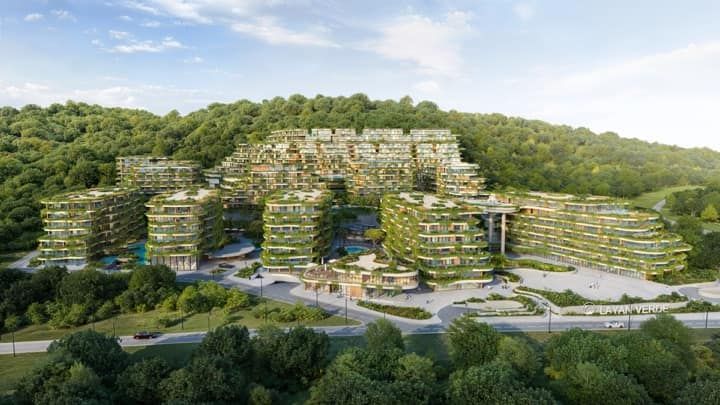
An investor weighing a studio at Layan Verde was torn in 2025 between Phuket and a Bangkok condo as the “more liquid” capital-city asset. By mid-2026 the picture cleared up: the Bangkok condo market carries 350,000 unsold units and a dependency on Thai mortgage credit, while Phuket is drawing in institutional capital (Sansiri and other developers) alongside steady growth in foreign transfers. The nominally “more liquid” capital-city asset turned out, in practice, to be the riskier bet over a multi-year horizon — precisely because of a structural glut invisible in headlines about rising average prices.
10. Conclusion and next step
The headline “Bangkok condo prices near the 2018 peak” reads like good news for Thailand’s property market overall. In reality it signals unhealthy bifurcation: affordable housing is locked out by mortgage credit, 350,000 units will take 5-6 years to find buyers, and developers and capital are openly pivoting to Phuket, where growth rests on foreign demand rather than local mortgage lending. For an investor in projects near Layan beach, this is not a reason to rush — it is another institutional confirmation of the chosen direction.
I can send current figures for specific projects and run the numbers for your budget — leave a request or explore Layan Verde and Layan Green Park. For the partner network and terms, see the Layan Real Estate page.
This material is informational and not investment advice. Figures and forecasts are cited from sources as of July 2026; verify current statistics before making a decision.