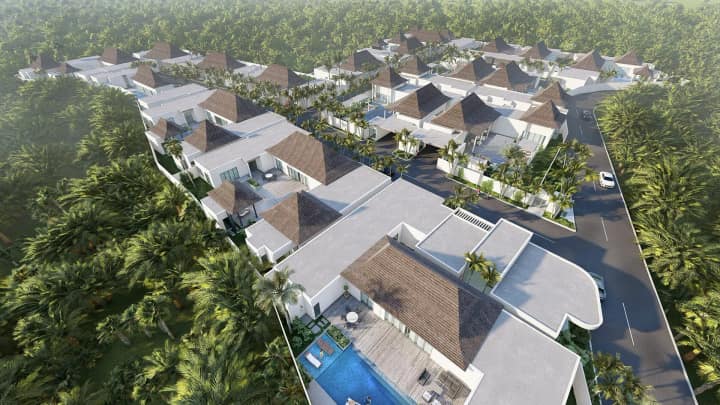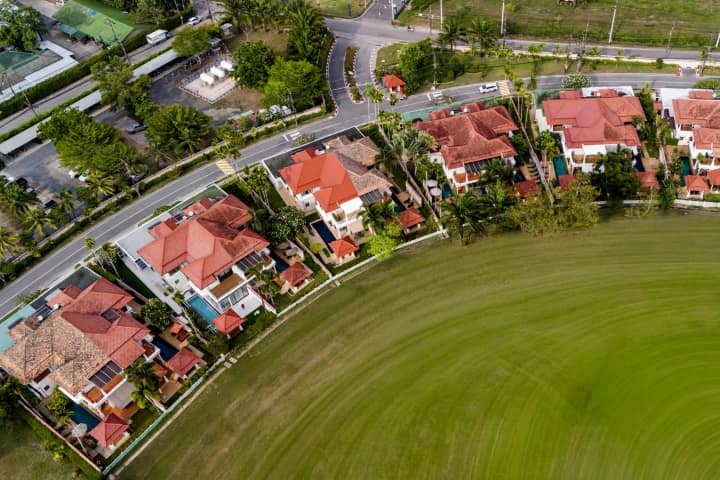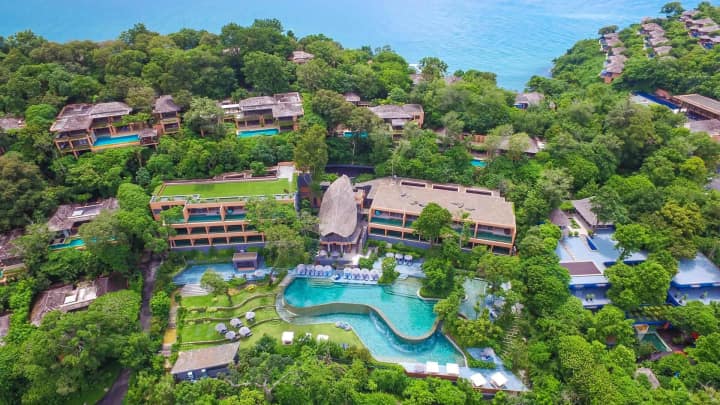
The most expensive mistake when buying a villa in Phuket does not happen while choosing the area or haggling over the price. It happens when the buyer does not understand what exactly they are buying in legal terms. The photos of the villa, the pool and the sea view are what you see. But what is registered at the Land Department is something else: a plot, a structure, a right of use, a lease, or a share in a condominium. Each of these has its own term, its own protection, its own taxes and its own resale options.
This article puts in one place all the structures used in practice to put a villa in a foreigner’s hands: buying a unit in a condominium within the quota, a land leasehold with ownership of the house, superficies, usufruct, a Thai company and family arrangements. We look at what each gives, what it costs, where the traps are, what a document check looks like, and which route fits your goal: living in it, renting it out or reselling.
This material is not legal advice: laws and Land Department practice change, and a specific transaction needs review by an independent Thai lawyer.
Contents
- The basic rule: land and the foreigner
- Five ways to hold a villa
- Condominium and the 49% quota: buying a villa “freehold”
- Leasehold: leased land and an owned house
- Superficies and usufruct: what they mean in practice
- The Thai company: when it makes sense
- Branded residences and ownership structure
- Costs and taxes in the transaction
- Traps
- Mini case and choosing a structure
1. The basic rule: land and the foreigner
The main restriction has not changed: a foreigner generally cannot own a plot of land in Thailand. The Land Code sets this out, and the Department of Lands (dol.go.th) applies the definition of “foreigner” broadly: not only a person with a foreign passport but also a foreign legal entity and a Thai company in which foreigners in practice control the capital or votes.
From this follows the conclusion on which the whole topic rests. A villa purchase by a foreigner is almost always a combination of two separate questions:
- Who owns the structure (the house, the villa). A building can belong to a foreigner. That is permitted, but the protection of that right is weaker than that of a landowner.
- On what right you use the land beneath it. This can be a lease, superficies, usufruct or participation in a condominium.
For beginners, the basics are in the article on how a foreigner buys property in Phuket. Here we go deeper into specific constructions.
2. Five ways to hold a villa
First the overall map, then the details of each route.
| Structure | What you get | Term | Main risk |
|---|---|---|---|
| Unit in a condominium (freehold, 49% quota) | Ownership of the unit and a share of common areas | No term | Quota used up, only leasehold remains |
| Leasehold + ownership of the house | Leased land, house in your name | Up to 30 years by law | Renewal is not secured by law, the term runs down |
| Superficies | Ownership of structures on someone else’s land | Up to 30 years or for life | Needs registration and a clean landowner title |
| Usufruct | Right to use property and take its income | Usually for life | Not inherited as ownership |
| Thai company | The company holds the land | No term | Scrutiny of Thai shareholders, nominee risk |
No route is better than the others in the abstract. The choice depends on whether the project has condominium status, how long you need the asset, whether you plan to resell or pass it on by inheritance, and how much you value simplicity. A detailed comparison of owning versus leasing is in the article Freehold vs leasehold in Thailand.
3. Condominium and the 49% quota: buying a villa “freehold”
The Condominium Act lets foreigners own units outright, but no more than 49% of the total floor area of the building or registered complex. The other 51% is the Thai quota. For villas this is an important nuance: a “villa owned by a foreigner” is possible only if the project is registered as a condominium and the villa is one of its units.
What this means in practice:
- You buy a unit, not a plot. On the condominium title you appear as owner of the unit and a share of the common areas.
- Before the deal you must check whether any foreign quota remains. If it is used up, the unit can be sold to a foreigner only as leasehold. There is a separate guide: how to check a condominium’s quota.
- The money must arrive from abroad in foreign currency, and the bank issues proof: the FET form (or Tor Tor 3 for amounts of USD 20,000 and above). Without this document you will not be able to repatriate sale proceeds later. Details are in the article on FET and foreign currency.
- Regular charges (CAM fee) and a one-off sinking fund apply to the common areas.
Pros: an asset with no term, normal resale, a clear title. Cons: a limited quota and dependence on the condominium’s management company. If you are still choosing a format, read the condo vs villa comparison for Phuket.
4. Leasehold: leased land and an owned house
Leasehold is the most common construction for villas on separate plots. The scheme: the landowner (a Thai owner or developer) leases you the land for up to 30 years, and the house either belongs to you (through superficies or house registration) or is part of the leased object.
What you need to know:
- The term cannot exceed 30 years under Thai law. Contract clauses for “another 30+30 years” are common, but their legal force is disputed: only the first registered term can be treated as reliable.
- A lease of more than three years must be registered at the Land Department. An unregistered lease is weakly protected.
- A fee is charged for registration. In the Layan Verde catalogue entry it is 1.1% every 30 years, listed among the owner costs of leasehold units.
- The asset’s value runs down over time: the less term remains, the harder it is to sell. A resale buyer counts the remaining years.
- Terms matter: the right to sublet, to transfer, to mortgage, and what happens on the death of the lessee.
According to the catalogue, both formats, freehold and leasehold, are available in Layan Verde and Layan Green Park within the foreign quota. As described for Layan Verde, leasehold gives a more flexible entry and is usually converted to freehold later while quota remains. These are project-specific terms: confirm the status of the specific unit in the contract before the deal. Project breakdowns: Layan Verde and Layan Green Park. Area: Layan.
5. Superficies and usufruct: what they mean in practice
These two constructions appear in villa structures more often than buyers think, because they are what allows land and house to be separated.
Superficies is ownership of structures standing on someone else’s land. You can own the villa while using the land under a registered right. The term is up to 30 years or for life (per the contract text), registered at the Land Department. More in the article on superficies in Thailand.
Usufruct is the right to use another person’s property and take its income, as a rule for life. It suits, for example, a family home where the land is owned by a Thai-citizen spouse. But usufruct is not inherited as ownership. Details are in the article usufruct in Thailand.
| Parameter | Superficies | Usufruct | Leasehold |
|---|---|---|---|
| What is created | Ownership of structures | Right of use and income | Lease of land |
| Term | Up to 30 years or for life | Usually for life | Up to 30 years |
| Registration | Land Department | Land Department | Land Department |
| Inheritance | Per contract terms | Not inherited as ownership | Per contract terms |
| Fits | Own villa on someone else’s land | Family arrangements | Typical purchase from a developer |
Choosing one of them “by feel” is not an option: the wording of the contract determines what you actually receive. All three need an independent lawyer.
6. The Thai company: when it makes sense
A Thai company can own land, and many people use this. But the Land Department checks whether foreigners actually control it. If foreigners hold a significant share of capital or votes, the company is treated as foreign and cannot acquire land.
The scheme with “nominee” Thai shareholders who formally hold 51% while in practice acting on a foreigner’s instructions is illegal. Enforcement tightened in 2026: see the news item on nominee structure inspections. So any talk of the “we’ll put it in a company and it will all be clean” kind deserves scepticism.
When a company can be justified:
- the Thai shareholders have real funds whose source can be documented;
- they have a real role in the business (the company carries on actual activity rather than existing for one villa);
- you budget for running it: accounting, audit, tax filings, annual fees;
- you understand how to exit the structure on sale.
Details are in the article Thai company for a villa and the separate analysis of offshore structures. Company registry: dbd.go.th.
7. Branded residences and ownership structure
Branded residences in Phuket are, as a rule, set up as a condominium managed by a hotel operator. Legally these are the same units raising the same questions as in section 3: the project’s status, available foreign quota, freehold or leasehold, service costs, and rights to join a rental programme.
Questions to ask before signing:
- exactly which format is my unit, freehold or leasehold, and for what term;
- how participation in the rental programme (rental pool) is documented and who holds the right to use the unit in season;
- which charges fall on the owner (CAM fee, sinking fund, taxes);
- what happens if the operator changes.
For projects by VillaCarte Group, the developer of Layan Verde and Layan Green Park, the catalogue discloses owner costs: Layan Verde has a CAM fee of 85 THB/m² per month and a one-off fund of 850 THB/m², Layan Green Park a CAM fee of 75 THB/m² per month and a fund of 650 THB/m². Yield through the rental pool is the developer’s target of ~8–10% net (60% of the pool’s net profit to the owner); it is a forecast, not a promise. Entry to Layan Verde is currently from $235,995, and to Layan Green Park phase 2 from $224,043.
8. Costs and taxes in the transaction
The structure determines what you pay. Below is an orientation by item; check specific rates, appraised values and exemptions with a lawyer and the Revenue Department (rd.go.th) as of the deal date.
| Item | What it is | Who usually pays |
|---|---|---|
| Transfer fee | State fee on registration at the Land Department, based on appraised value | Usually split by agreement |
| Specific business tax or stamp duty | One of the two, depending on how long the seller held the property | Usually the seller |
| Seller’s income tax | Tax on income from the sale | Seller |
| Leasehold registration | Fee based on the total rent | Per contract |
| Lawyer and checks | Due diligence, contracts, registration | Buyer |
| CAM fee and sinking fund | Upkeep of the project’s common areas | Owner |
The full list of costs is in the article what it costs to buy property in Phuket. To understand yield, see the calculator at /#roi.
9. Traps
- “Ownership for 90 years.” It is three 30-year terms, but renewal is not secured by law. Count only the first term.
- An unregistered lease. A contract over three years without registration does not protect you from a new landowner.
- Nominee shareholders. If the scheme relies on “friendly people”, it is not a structure but a risk of losing the asset and facing penalties.
- The quota is already used up. You are sold “freehold” while the actual quota has run out. Check the quota before reserving.
- The house is registered to the wrong person. The contract is signed with someone who is not the owner on the documents.
- Seller and lawyer are the same person. The lawyer must be independent.
- No building permit or completion certificate. A structure without papers can neither be sold nor insured.
- Encumbrances and mortgages. The plot may be mortgaged to a bank.
- No proof of foreign currency. Without FET or Tor Tor 3, taking money out after a sale is problematic.
- Paying before checking. Reservations and deposits must be tied to the results of the check: see deposits and reservations.
A document checklist is in the articles due diligence before buying and how to verify a chanote.
10. Mini case and choosing a structure
Mini case (generalised, not a specific deal). A buyer wants a villa “in full” and picks a project on a separate plot. They are offered a deal “through a company”. The lawyer asks to see who the Thai shareholders are and where their money comes from. It turns out the shareholders are the seller’s employees with no real investment. The buyer declines and moves to a condominium unit with foreign quota remaining, receives a title for the unit and FET proof. The price per square metre is higher, but there is no legal uncertainty and a clear exit on resale.
How to choose a structure:
| Your goal | What usually fits | What to look at |
|---|---|---|
| Live in it and rent it out, no term | Condominium unit, freehold | Remaining 49% quota |
| Cheaper entry or quota used up | Leasehold | Term, registration, right to transfer |
| Own villa on someone else’s land | Superficies + registered right | Clean landowner title |
| Family arrangement with a Thai spouse | Usufruct or family agreement | Inheritance, marital property (article) |
| Business asset, several properties | Thai company | Real shareholders, running costs |
If the project offers a rental programme, estimate the final net yield after all charges. For orientation: ~8–10% net per year and a payback of about 12 years are the developer’s target figures for the Layan projects, not a result that can be promised.
Summary. The structure of the deal is not a formality but the basis of everything else: the term, the resale price, taxes and the safety of the asset. Define your goal first, then choose the legal form, then check the documents, and only then transfer money.
Next step. Layan Real Estate is an independent real estate agency covering all of Phuket: we select options from different developers, show open price lists and help compare ownership structures. The purchase contract is signed directly with the developer at its price list; the terms of our support are a market commission, details at a meeting. Write to us on the /agency page and we will fit a format to your goal and prepare a list of questions for your lawyer. Yield calculation: /#roi; area: Bang Tao.
This material is for information only and is not legal advice. Engage an independent Thai lawyer before any deal.