A foreigner cannot buy land in Phuket directly, yet very often wants exactly that: their own house, their own plot, their own pool. In these conversations lawyers name several tools — a lease, usufruct, ownership through a Thai company. There is also a lesser-known one: superficies (the building right, Thai สิทธิเหนือพื้นดิน). The idea is simple: the land belongs to one person and the house on it to another, and this is recorded in the register. It sounds like an ideal solution, but it has its own limits and pitfalls. In this article we look at how superficies works under the Civil and Commercial Code, how it differs from leasehold and usufruct, how it is registered, what happens on sale and inheritance, and who it genuinely suits.
Not legal advice. This material is for general information. Thai law and land office practice change, and the structure of a deal depends on the documents for the specific plot. Consult a licensed Thai lawyer before you sign anything.
Contents
- What superficies is
- How superficies is registered
- Term: no lease cap, but caveats
- What the holder can and cannot do
- Superficies, usufruct, leasehold and a company compared
- Transfer, sale and inheritance
- Points specific to foreigners
- Traps: what can go wrong
- Mini-case: a house on a Thai family’s land
- Conclusion and next step
1. What superficies is
Superficies is a real right under which a landowner allows another person to own buildings, structures or plantations on, above or under the land. The institution sits in Book IV of the Thai Civil and Commercial Code; an English translation of the Code is available at Thailand Law Forum. In everyday speech it is often called a “building right” or “right to a structure”.
The key idea is the separation of land and buildings. Normally in Thai law whatever is built on a plot is treated as part of it. Superficies breaks that link: the land stays with the owner and the house belongs to the holder of the superficies. That is why it comes up when someone wants to build a home on a plot they cannot, or do not want to, buy.
What to keep in mind:
- The landowner and the house owner are different people. The foreigner does not become the owner of the plot.
- It is not a lease. A lease is a contractual relationship with a landlord; superficies is a right registered in the land register and attached to the plot.
- It is not usufruct. Usufruct is the right to use someone else’s property and take income from it; superficies is the right to own the buildings themselves.
- Registration is mandatory. For real estate, a right without an entry at the Land Department (dol.go.th) gives you no protection.
| Situation | What the foreigner has | Main risk |
|---|---|---|
| Built a house on someone’s land with no paperwork | The house physically exists, no right to the land | Any dispute with the owner leaves you without a home |
| Superficies registered on the title deed | A registered right to your own building | Dependence on the contract and on the landowner’s good faith |
| 30-year leasehold | Right to use the land and building for a term | The term is finite; renewal must be written in and registered |
| Freehold condo | Ownership of the unit and a share of common property | Foreign quota, maintenance costs |
The practical conclusion: superficies is a tool for custom-built homes, not for buying a finished apartment in a project. If you want a clear, liquid structure, compare it with the options in freehold vs leasehold in Thailand.
2. How superficies is registered
Like other real rights over immovable property, superficies needs a written contract and registration before a Land Department official. Without registration you are left with a purely contractual arrangement “on trust”, which will not protect you against a new landowner.
In practice the sequence looks like this:
- Title check. You need a high-level document — a chanote (Nor Sor 4 Jor). On plots with a weaker title, registering real rights is either impossible or unreliable.
- Encumbrance check. Mortgages, leases, usufruct, boundary disputes — everything should be visible in the land office records. We covered the step-by-step routine in the article on due diligence in Phuket.
- The contract creating the superficies. It fixes the plot and boundaries, the list of permitted buildings, the term or lifetime, the fee, transfer rights, the fate of the buildings when the right ends, taxes and costs, and termination conditions.
- Registration at the land office. The parties attend the office for the plot’s location, file the documents and pay the fees. The office sets the fee amount, so budget for it after a lawyer’s advice rather than from forum figures.
- The entry on the chanote. The superficies is noted on the land title — your proof when the owner later sells the plot to a third party.
One more tip: get a translation of the contract and make sure the Thai text filed with the office matches the English version. In a dispute the Thai version carries the weight.
3. Term: no lease cap, but caveats
For many people the appeal of superficies is the absence of the 30-year limit that applies to an ordinary lease. The Code allows superficies either for a fixed term or for the lifetime of the holder. But “no cap” does not mean “any term and any conditions”: in practice land offices and courts look at the real economic substance of the deal.
| Parameter | Fixed-term superficies | Lifetime superficies |
|---|---|---|
| Term | Fixed in the contract | Until the holder’s death |
| End | On expiry | On the holder’s death |
| Renewal | Only by a new agreement and registration | Not needed |
| Risk profile | The end date is known | The date depends on age and health |
| Effect on resale price | The shorter the remaining term, the lower the price | The older the holder, the lower the price |
What happens to the house when the right ends is a separate question and must be settled in advance. Options include demolition and removal, transfer of the building to the landowner with or without compensation, or a buy-out. If the contract is silent, you risk a dispute at the very moment you have the least leverage. We compare exit routes in the article on exit strategies in Phuket.
4. What the holder can and cannot do
The scope of rights is set by the contract within the law. A typical picture looks like this.
Can do (unless the contract prohibits it):
- build and maintain a house, pool and outbuildings on the agreed area;
- live in the house and rent it out — it is your property;
- transfer the right to another person and leave it by inheritance, unless agreed otherwise;
- defend the right against third parties, including a new owner of the plot.
Cannot do:
- dispose of the land as an owner: sell it, mortgage it or change its use;
- build beyond what the contract allows;
- use superficies as a screen under which all the value of the land effectively belongs to the foreigner while the Thai “owner” is a nominee.
The last point is the most serious. In 2026 the authorities are checking nominee land-ownership structures (we covered this in the piece on the nominee crackdown). A superficies drawn up for 90 years with a token fee and irrevocable terms may be treated as an attempt to get around the law. The contract should make real economic sense for both sides: a market fee, clear terms and the owner’s rights respected.
5. Superficies, usufruct, leasehold and a company compared
Superficies rarely stands alone: it is chosen against other ways to secure a right to a plot. The table below summarises general principles (specific terms depend on the documents and office practice):
| Criterion | Superficies | Usufruct | Leasehold | Thai company |
|---|---|---|---|---|
| What the foreigner gets | Ownership of the buildings | Right to use and take income | Right to use the land and buildings | Indirect control through shares |
| Landowner | Third party | Third party | Landlord | The company |
| Term | Fixed term or lifetime | Fixed term or lifetime | Usually up to 30 years + renewal | Indefinite while the company exists |
| Inheritance | Generally possible unless the contract forbids it | Usually no | Depends on the contract | Via shares |
| Registration | Land Department | Land Department | Land Department | Company registration |
| Main risk | Structure seen as circumvention | Right ends on death | Finite term | Challenges over nominee shareholders |
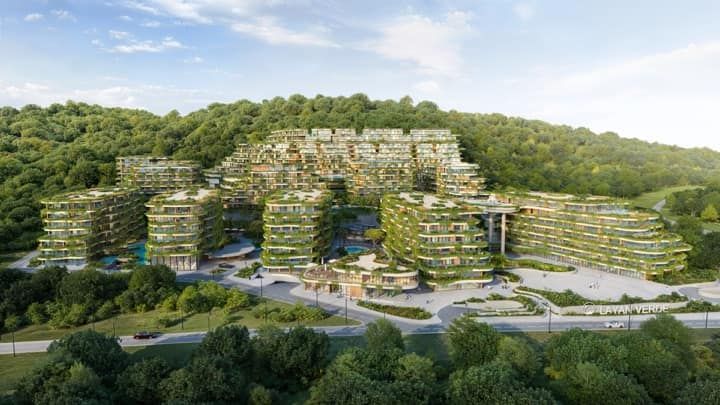
To see the difference in practice, compare with finished projects. In the Layan Verde catalog the ownership form is freehold / leasehold: studios start from $235,995, with an instalment plan for the construction period (35% or 50% upfront plus five payments), completion in December 2028, and leasehold registration costs 1.1% every 30 years. In Layan Green Park the ownership form is the same; phase 2 studios start from $224,043, and all of phase 1 is resale. In both cases the buyer gets the project’s ready-made legal structure and does not build a house. Superficies only makes sense where you build on a specific plot.
6. Transfer, sale and inheritance
Here superficies compares favourably with usufruct. Under the general rule of the Civil and Commercial Code, superficies can be transferred and passes by inheritance unless the instrument creating the right provides otherwise. For a family planning to leave the house to their children, this is a significant plus. For more on how inheritance of property works in Thailand generally, see inheritance of Thai property.
There are nuances to check in advance:
- The contract may restrict transfer. The landowner may include a ban or require their consent — and your liquidity drops.
- Few buyers. The resale market for building rights is narrow. A buyer takes on dependence on the landowner and the remaining term, so the price is usually lower than the price of ownership.
- Financing. Banks are reluctant to accept such a right as collateral. Mortgages for foreigners are limited anyway — see mortgages for foreigners in Thailand.
- Foreign heirs. If the right passes to a foreign heir, the admissibility of the structure again comes before the land office.
- Sale of the land by the owner. A registered superficies survives a change of plot owner — but only if it is entered on the title deed. This is another reason not to rely on verbal agreements.
7. Points specific to foreigners
The land law restricts foreigners’ acquisition of land, and any structure that in effect circumvents the restriction risks being challenged. Superficies formally does not transfer the land: the Thai side remains the owner. But the admissibility of a particular deal depends on several factors.
- Office practice. Different land offices treat registering superficies in favour of a foreigner differently. There is no universal answer, and what passed in one place may not pass in another.
- Economic substance. The fee for the right should be at market level and the terms reasonable. A token price and irrevocable terms raise eyebrows.
- Source of funds. Foreign money for a property deal is processed through a bank with proof of the currency being brought in. See the article on FET and foreign currency.
- Taxes. Registering the right, the fee paid to the landowner and later renting out the house all have tax consequences; see rental income tax in Thailand.
- Visa. Superficies does not by itself give a right to reside; your visa status must be settled separately (see visas for property owners).
8. Traps: what can go wrong
- No registration. A paper “for a hundred years” signed without an entry at the land office does not protect you against a new owner.
- Weak title to the land. If the seller holds not a chanote but a weaker document, you are building on a shaky foundation.
- Vague boundaries of the right. The contract does not specify the plot or the list of buildings — later a dispute about what you may build.
- No fate for the buildings. The contract is silent on what happens to the house when the term ends.
- Transfer is restricted and you missed it. A clause requiring the owner’s consent reduces liquidity to zero.
- A screen structure. A nominee owner, token fee and irrevocable terms are a direct route to challenges from the authorities.
- Translation mismatch. The English text promises one thing, the Thai another; the Thai prevails.
- A single source of advice. A lawyer paid by the land seller or the plot developer is not protecting you.
- Costs without a plan. Taxes, fees, upkeep and insurance of the house stay with you — build them into the calculation, as we showed in the cost of buying in Phuket.
9. Mini-case: a house on a Thai family’s land
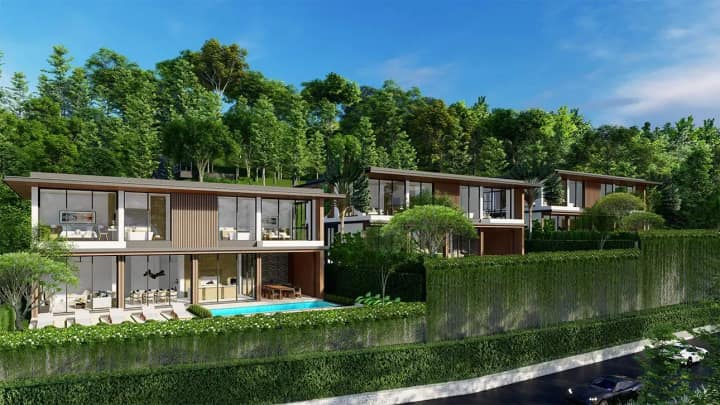
An illustrative scenario, not a real transaction. A buyer from Europe wants to build a villa on a plot owned by the family of their Thai partner. They cannot buy the land and do not want to give money for a “purchase in her name”: if the relationship ends, they risk losing everything.
What lawyers discuss in such a situation:
| Step | What is done |
|---|---|
| 1. Check the land | Chanote, encumbrances, boundaries, road access |
| 2. Choose the tool | Superficies for the house, a separate agreement on the fee, and if needed a leasehold or usufruct on the plot |
| 3. Contract | Plot, list of buildings, term, fee, transfer rights, fate of the house when the term ends |
| 4. Registration | Entry at the land office and a note on the chanote |
| 5. Will | A separate will for the case of death, taking the right and Thai succession law into account |
| 6. Budget | Fees, taxes, construction, insurance, upkeep |
The outcome of such a scenario depends on office practice and the documents. If the option passes, the buyer holds a registered right to their own house. If not, they learn this before spending money on construction and compare the alternative: a finished property where the ownership structure is already worked out. For many investors this turns out to be the more sensible path, as we wrote in new build vs resale in Phuket.
10. Conclusion and next step
Superficies is not “a way for a foreigner to buy land” and not a guaranteed substitute for ownership. It is a registered right to own buildings on someone else’s land, which under the general rule can be transferred and inherited, but depends on the contract, the plot owner’s good faith and land office practice. It works where you build a custom home on a plot whose rights are securely confirmed, and it is a poor fit where you want a simple, liquid investment.
Checklist before deciding:
- Define your goal: live there, earn income, grow capital or pass it to family.
- Check the title (chanote) and encumbrances before signing anything.
- Record the plot, list of buildings, term and fee in the contract.
- Write down what happens to the house when the term ends.
- Make sure the Thai and English texts match.
- Register the right at the land office and verify the entry on the chanote.
- Plan for death, sale of the land and the end of the relationship.
- Calculate taxes and costs before the first payment.
If your goal is income and a clear exit, start from the goal and the budget, not from the legal construction. Compare yields on the ROI section, look at the Layan and Bang Tao areas, and then write to us: we will select options for your brief, and a licensed Thai lawyer will check the ownership structure. The partner commission is at market rate, with terms discussed at a meeting.
Next step: request a consultation — we will select projects with a clear ownership structure, for example Layan Verde or Layan Green Park, and tell you honestly when another tool is the better choice.
This material is not legal advice and does not replace the opinion of a Thai lawyer.