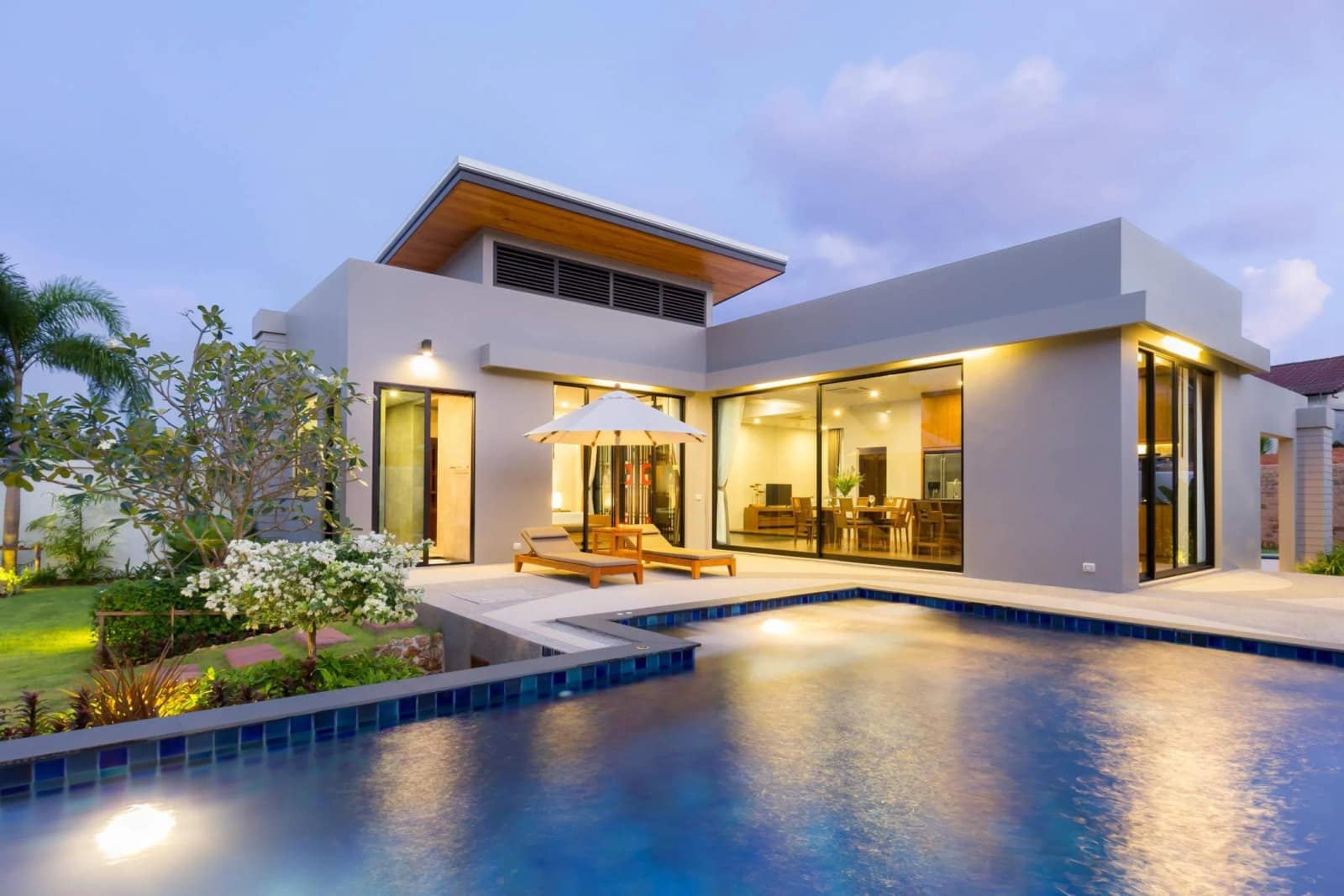
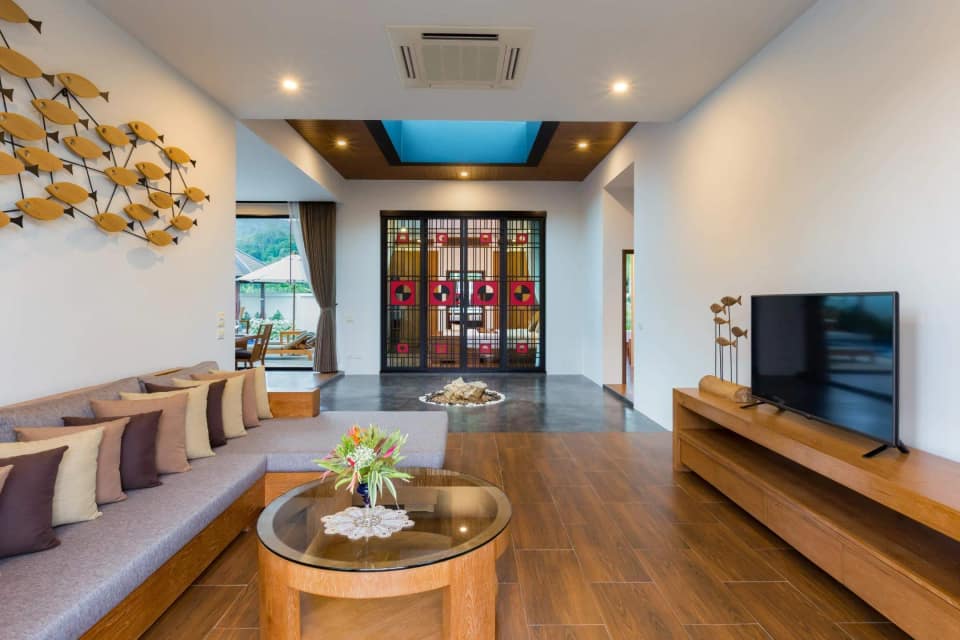
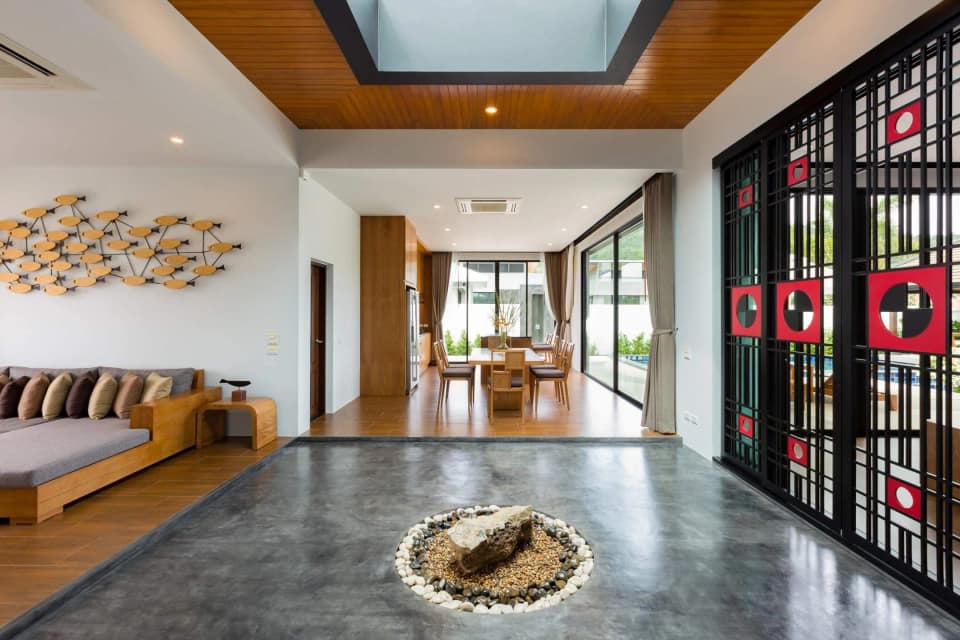
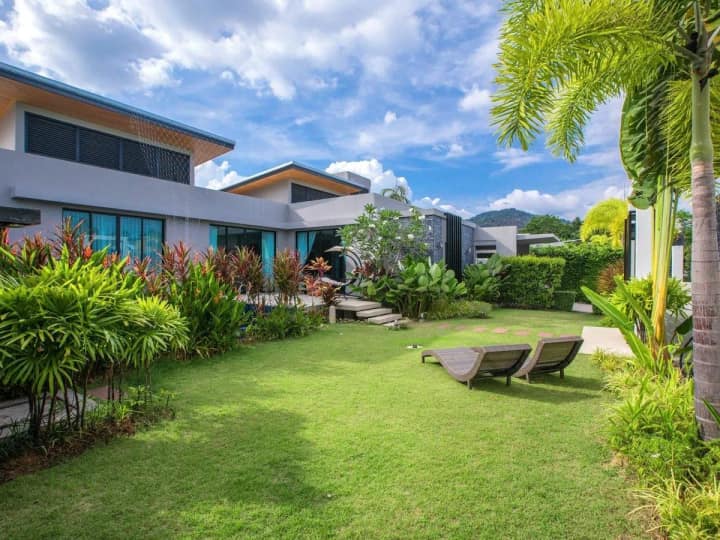
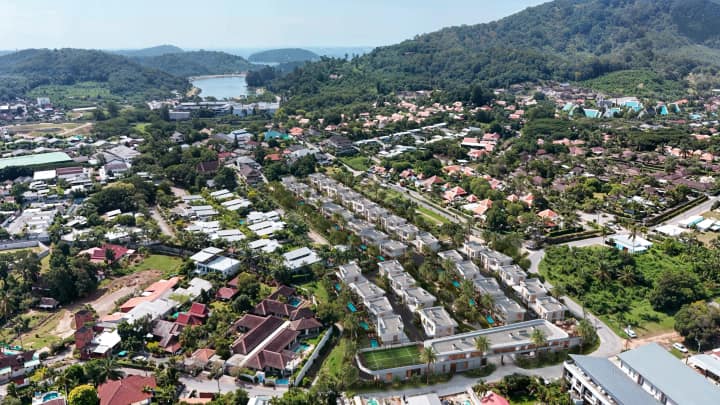
Baan Boondharik II is a gated estate of 13 two-storey Zen-style villas on ~7 rai near Nai Harn, the phase that followed Baan Boondharik I within the Nai Harn Baan-Bua estate. Houses run 323–390 sqm on plots of 544–758 sqm, each with a private pool and Thai sala, and 3-meter ceilings.
Location and surroundings
The area is the same as at the neighboring Baan Boondharik I phase: a quiet southern district near Nai Harn beach, a lagoon and a casuarina grove, with well-developed basic infrastructure within walking distance. The beach is about 3.3 km away (roughly a 7-minute drive), and HKT airport around 48 km (~1 hour). In the same estate, our catalog also lists Baan Boondharik I — a more compact, more affordable single-storey phase from the same developer.
Economics and pricing
Entry starts from ~$812,538 for a two-storey villa of 323–390 sqm on a plot up to 758 sqm — roughly a quarter more than the neighboring Baan Boondharik I (from ~$650,625), but the house is noticeably more spacious: two storeys, en-suite bathrooms per bedroom, a terrace and a Thai sala by the pool. The projected yield is stated at ~4% per year — lower than Baan Boondharik I’s ~5%, so from a pure investment standpoint the neighboring phase looks more efficient; Baan Boondharik II suits buyers looking for a more spacious home for their own use better.
Stage, developer and risks
The developer is the same All About Residence Co., Ltd., active on the Phuket market since 1999 and with direct experience delivering the preceding Baan Boondharik I phase. The project was fully completed in December 2015 — a finished property with nearly a decade of operating history. As with the neighboring phase, the ownership structure is leasehold only; the developer does not offer direct freehold.
Who it suits: a buyer who wants a more spacious villa (two storeys, over 300 sqm) in the same quiet Nai Harn district as Baan Boondharik I, and is willing to pay more for space at a somewhat more modest rental projection. Before reservation we’ll check the land lease agreement, leasehold renewal terms, and the management company’s current occupancy based on how neighboring phases of the estate are actually performing.