Phuket and Chiang Mai are the two most talked-about destinations for moving to Thailand, but they are two entirely different Thailands. One is a tropical island with beaches, an international airport, and a structured property-income model. The other is a city in a mountain basin in the north, with hundreds of temples, a low cost of living by local standards, and a reputation as the digital-nomad capital — plus an annual burning season that in 2026 pushed the city to the top of the world’s worst air-quality rankings. For anyone weighing a move and a property purchase, both factors matter equally: climate and quality of life determine where you’ll actually want to be, and market structure determines what happens to your money. Here is a side-by-side breakdown by the facts, not the “both are great in their own way” fog.
Contents
1. Two different Thailands
Chiang Mai is the ancient capital of the Lanna Kingdom, founded in 1296: hundreds of Buddhist temples inside the square walls of the Old City, craft villages in the surrounding countryside, and the mountains of Doi Suthep and Doi Inthanon within half an hour to an hour’s drive. Since the mid-2010s, the city has become a global Mecca for digital nomads — a low cost of living, solid internet, and dozens of coworking spaces in the Nimman district made it one of the first cities anyone researching “cheap and good” in Asia hears about. It is also a major university town (Chiang Mai University and several others) and a popular retirement spot for older Scandinavians, Americans and Japanese.
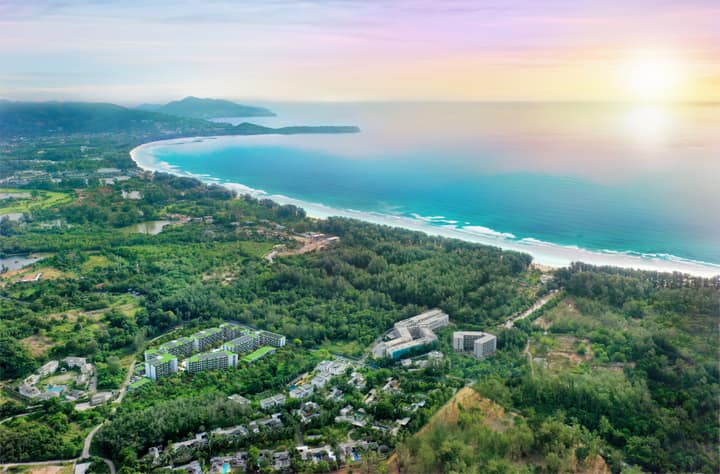
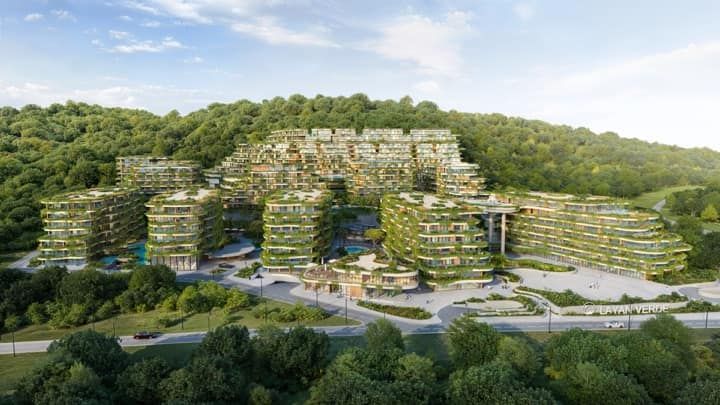
Phuket runs on a different kind of economy. The island lives off direct international tourism: HKT airport receives flights from Europe, Russia, India and the Middle East with no Bangkok stopover, and its west coast is built up with a condo-hotel industry running a unified income-sharing model — like Layan Verde and Layan Green Park near Layan beach. Chiang Mai has no sea at all — the nearest coastline is hundreds of kilometres away, and that is not a side detail but the structural reason the two cities can’t really be compared head-on: one sells a beach and a flight, the other sells mountains, temples and a low budget. A detailed quantitative look at the island is in our article on the Phuket market in 2026.
2. Logistics and access
- Chiang Mai (CNX). A major regional airport: the busiest route by far is domestic, to Bangkok; international direct routes include Seoul, Taipei, Osaka, Abu Dhabi, and several Chinese cities (Beijing, Guangzhou, Shanghai, Kunming, Xi’an). There are no direct flights from Europe, Russia or India — those require a connection through Bangkok or another Asian hub. Bangkok to Chiang Mai is about 700 km, a flight of a little over an hour.
- Phuket (HKT). A working international airport today, with direct flights from Europe, Russia, India and the Middle East, no Bangkok transfer required. The distance from the capital is roughly 860 km, offset by the island’s own direct international connections.
The difference matters both for an investor and for anyone simply choosing where to live: Chiang Mai is well plugged into domestic Thai and East Asian logistics (China, Korea, Taiwan) but requires a connection for almost everyone else. Phuket receives visitors and potential tenants directly from a far wider geography, including long-haul markets — which in turn gives it a broader, more diverse pool of potential renters.
3. Climate and air quality: the burning season
This is the section that romantic write-ups about Chiang Mai often skip, but it has a direct effect on both quality of life and rentability.
Chiang Mai sits in a mountain basin — geographically pleasant for cool winter evenings, but dangerous once the air stops moving. Every year, typically from February through May, northern Thailand and neighbouring Myanmar burn: agricultural field burning and forest fires create a haze that pools in the basin and can linger for weeks. Spring 2026 was a record: according to Nation Thailand, on 7 April 2026 Chiang Mai topped IQAir’s global ranking of the world’s most polluted cities with an Air Quality Index (AQI) of 209 — “very unhealthy” — ahead of Hanoi and Riyadh. A few days earlier, on 2 April 2026, the city ranked 2nd worldwide with an AQI of 231 in the municipal zone, trailing only Dakar, while Hang Dong district recorded an AQI of 269. Authorities advised residents to avoid outdoor activity and use N95 masks and indoor air purifiers.
| Parameter | Phuket | Chiang Mai |
|---|---|---|
| Climate type | Tropical maritime — a wet season and a dry season | Tropical savanna (mountains), cooler winters, a dry season with fires |
| Smog season | Practically none — the island is swept by sea breeze | February–May, every year; AQI up to 209–231 in 2026, world’s-worst rankings |
| Peak heat | Moderately hot year-round near the sea, offset by breeze | March–April — the hottest and smokiest part of the year at once |
| “Cool” season | November–February — more comfortable, slightly drier | November–January — cool evenings, the year’s best air |
For anyone planning to live in Chiang Mai year-round rather than visit, three to four months of haze a year is not an abstraction — it’s a genuine health factor, with local media themselves tracking spikes in respiratory complaints during these periods. Phuket has no structural equivalent of this seasonal event: the island is ringed by sea, not by mountains that trap smoke.
4. Property market and entry price
The two markets differ not just in climate but in who buys there and why. According to KKP Bank data cited by Nation Thailand, foreign buyers diverged sharply by destination in 2025: Phuket added 10% in foreign ownership transfers (around 1,000 deals a year), Samui an eye-catching 220%, Hua Hin (Prachuap Khiri Khan) 66% — while Chiang Mai lost 28% and Pattaya (Chonburi) lost 15%.
| Parameter | Phuket | Chiang Mai |
|---|---|---|
| Foreign deal growth, 2025 (KKP Bank/Nation Thailand) | +10% (≈1,000 deals/year) | −28% |
| Dominant format | Beachside condo-hotels with rental pools, villas | Mid-rise condominiums, houses and townhouses in the Old City and suburbs |
| Typical buyer | Yield-focused investor + relocating families (growing share, tied to international-school expansion) | Digital nomad, student, expat retiree — usually a long-term tenant rather than a buyer |
| Large single-developer projects with district infrastructure | The standard format — Layan Verde, Layan Green Park | Rare — the market is fragmented across local developers of varying scale |
| Developer instalment plans | Standard on new-builds (35%+35%+30% and similar schemes) | Found here and there, with no unified practice |
For an investor looking at Phuket new-builds, entry points include Layan Verde studios from $235,995 with construction-period instalments (handover 2028), or a ready resale studio in the operating phase 1 of Layan Green Park from THB 4,800,000 THB ($142,602), or a phase 2 studio in the same project from $224,043 with 2026 handover. Chiang Mai has practically nothing comparable in scale or standardisation: the city has been built up by dozens of local developers over several decades, a large share of the housing stock is low- or mid-rise with no unified management structure, and houses and townhouses in the Old City and outskirts more often sit on Thai-titled land rather than being registered as condominiums with an open foreign quota.
🔗 How to choose a developer on Phuket → · Phuket payment methods →
5. Yield and management model
- Phuket. The flagship model is a rental pool: identical unit types are pooled, owners receive 60% of net profit, the management company keeps 40%. The benchmark for completed properties is roughly 8–10% net a year, with payback around 12 years. See our ROI methodology for the calculation.
- Chiang Mai. Public rental pools at the scale of Phuket’s branded projects are practically absent here. Long-term rental demand comes from local university students, digital nomads staying a month to six months, and expat retirees — a steady but low-ticket flow, without the year-round international tourist volume that feeds Phuket’s model. Management is almost always individual: owners either self-manage through local groups and agencies or hire a manager, without a unified profit-sharing formula or consolidated pool reporting.
The core difference mirrors other Phuket-versus-mainland comparisons: on the island, income in the modern segment is a system (a pool, reporting, a management company with a unified policy); in Chiang Mai it is a specific property and a specific owner, where yield depends on personal effort and the local long-term rental market rather than a verifiable formula.
6. Ownership structure and the foreign quota
Thailand’s legal framework is uniform nationwide: a foreigner can own a condominium in freehold within the 49%-of-floor-area quota, while land under a house is only accessible via leasehold or a permitted ownership structure. See freehold vs leasehold for details.
The difference is practical, not legal:
- Chiang Mai has a notably higher share of houses, townhouses and villas on Thai-titled land — especially in and around the Old City, historically built up with private houses rather than condominiums. For a foreigner, that always means leasehold or a structure through a Thai company, never direct land ownership.
- On Phuket, particularly in the new districts near Layan and Bang Tao beaches, condo-hotels and condominiums are being built actively, reopening the freehold quota fresh with every new project — meaning a wider, more readily available selection of direct-ownership options in new beachside developments.
7. Cost of living and community
Chiang Mai’s reputation as one of Asia’s most affordable cities for a foreigner wasn’t built on nothing: for years the city was the poster child of the digital-nomad movement precisely because of its low cost of housing, food and services compared to beach resorts and Bangkok. The Nimman district alone concentrates dozens of coworking spaces, cafés and short courses — infrastructure built specifically around remote work and long-but-not-permanent stays.
Phuket runs on a different economy: the island earns from tourism and structured rental income, so day-to-day costs — especially in tourist zones and near beaches — run higher than in Chiang Mai, a general pattern for resort destinations versus mainland cities covered in detail in our cost of living in Thailand article. In exchange, the island offers year-round sea access, international schools near beaches like Layan and Bang Tao, and a growing share of families relocating not for a month of remote work but for years — a shift KKP Bank itself flags as one driver of Phuket’s resilient demand.
For anyone treating remote work as the main reason to relocate, both cities have something to offer: Chiang Mai brings an established community and a low budget threshold, while Phuket brings the DTV visa for remote workers combined with a beach lifestyle and the option to invest in property with a transparent income model rather than just renting. More on remote work from the island is in Phuket for remote workers.
8. Pitfalls
- Underestimating the burning season. For three to four months a year (February–May), Chiang Mai’s air quality can be among the worst in the world — not a one-off event but an annual pattern worth weighing before picking a move-in date, or before deciding to live there year-round at all.
- Confusing percentage growth with market scale. Samui’s +220% or Hua Hin’s +66% are measured off a base far smaller than Phuket’s; conversely, Chiang Mai’s −28% is a decline in an already-established but non-systematic market, not the collapse of a major player.
- Expecting pool-level yield while self-managing a Chiang Mai property. Without a rental-pool system and a transparent formula, income depends on personal effort or a local agent, not a guaranteed rate.
- Confusing a house on Thai land with a freehold condo. Chiang Mai’s high share of villas and townhouses usually means leasehold for a foreigner, not direct ownership — confirm this before putting down a deposit.
- Treating CNX’s regional air links as full international access. Direct flights to Korea, Taiwan, Japan and China are not the same as the direct access to Europe, Russia or India that Phuket already has.
- Viewing Chiang Mai purely as a budget alternative. The city solves “live cheaply among mountains and temples,” not “own an asset with a transparent income model” — these are different goals, and one shouldn’t substitute for the other.
9. Comparison table
| Parameter | Phuket | Chiang Mai |
|---|---|---|
| Access | Direct international airport (HKT) from Europe, Russia, India, the Middle East | CNX — regional hub: Bangkok plus Korea, Taiwan, Japan, China; Europe requires a connection |
| Climate and air | Tropical maritime, no seasonal smog | February–May burning season, AQI up to 209–231 in 2026 (Nation Thailand/IQAir) |
| Foreign deal growth, 2025 | +10% (≈1,000/year, KKP Bank) | −28% (KKP Bank) |
| Income model | Rental pool, ~8–10% net, unified formula | Individual long-term rental, no unified formula |
| Foreign quota in new projects | Often reopened fresh in beachside condo-hotels | Notable market share is houses/townhouses on Thai land (leasehold) |
| Target resident/tenant | Tourist and relocating family, year-round international flow | Student, digital nomad, expat retiree |
| Day-to-day cost of living | Higher — resort economy | Lower — mainland university city |
| Community | Beach and expat-family, growing international-school presence | Nomad and student, dozens of coworking spaces in Nimman |
10. Case study and conclusion
A family with a school-age child was weighing a rented villa in Chiang Mai against buying a studio in an under-construction project near Layan beach on Phuket. Chiang Mai was appealing for its low rental and schooling budget, mountains, and unhurried pace. But planning a few years ahead surfaced two issues: first, every spring for two to three months the city’s air becomes among the worst in the world, and with an asthmatic child that turned out to be decisive; second, rented housing is an expense, not an asset, and Chiang Mai offered no clear path to turn a living budget into ownership with predictable income. The Layan-area studio on Phuket, by contrast, belonged to a project with construction-period instalments, an open freehold quota, and a ready-made 60/40 rental-pool model — the family gained not just cleaner air and a beach within walking distance, but an asset they could rent out whenever they weren’t living on the island themselves. The family chose Phuket — not because Chiang Mai is “worse” to live in generally, but because for their specific goal (a child’s health plus property as an asset, not just a rental expense) the island proved the better fit.
Bottom line. Phuket and Chiang Mai solve different problems for different audiences. Chiang Mai means a low budget, temples, mountains and a digital-nomad community, but with an annual burning season that in 2026 made the city a world’s-worst-air-quality outlier, and without a structured investment-income model — its market lost foreign buyers in 2025 (−28%) rather than gaining them. Phuket means direct international access, a year-round maritime climate with no seasonal smog, and a mature condo-hotel industry with a transparent rental-pool model — against which the island’s foreign demand grew 10% in 2025. For a “live cheap and work remotely” move, Chiang Mai remains competitive; for a move built around an asset, health, and stable infrastructure, the arguments favour Phuket.
I can help compare specific options against your budget and relocation goal, with a yield calculation in the ROI calculator — or let’s discuss strategy through Layan Real Estate.
Get matched to your strategy
By submitting this form, you agree to our privacy policy.