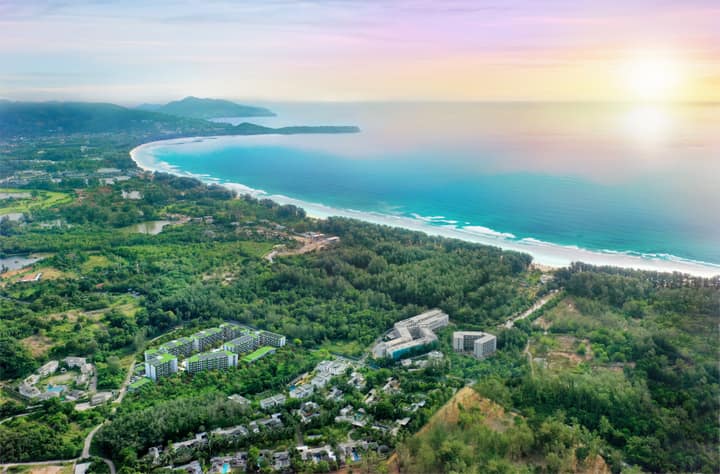
“Phuket, Chiang Mai or Hua Hin?” is a question almost everyone planning retirement in Thailand ends up asking. Formally, all three cities are equally accessible under the same retirement visa, but they run on very different scripts: an island with the sea and premium infrastructure, a calm mainland city by the mountains with the cheapest budget in the country, and a beach resort a couple of hours from Bangkok for those who want a beach without the hustle. Here is the breakdown by climate, money, healthcare, visa and property — so the choice is deliberate, not based on a random forum post.
Contents
- Three contenders: what sets them apart
- Climate and seasonality
- Cost of living: comparing budgets
- Healthcare and insurance
- The retirement visa — the same across all three cities
- Expat community, language and lifestyle
- Transport and logistics: flights home
- Property: market, rental, yield
- Traps when choosing a place
- Mini case and takeaway
1. Three contenders: what sets them apart
| Parameter | Phuket | Chiang Mai | Hua Hin |
|---|---|---|---|
| Geography | Island, Andaman Sea | Mainland, northern mountains | Mainland, Gulf of Thailand coast |
| Airport | International, direct flights from Europe, Asia, the Middle East | International, mostly regional and domestic flights | Small regional field, main access is via Bangkok |
| Character | Resort, premium infrastructure, a pronounced high season | Calm city, culture, mountains, an even pace year-round | Quiet beach town, Thai royal family residence |
| Property market | Developed, resort rentals, ready projects with rental pools | Mostly long-term rental and owner-occupied housing | Mixed: villas for personal use plus weekend rentals from Bangkok |
Each of the three cities fills its own niche, and from here the difference shows up in concrete numbers rather than just a general vibe.
Hua Hin or Phuket for retirement: the short answer
Choose Hua Hin if your priority is a quieter mainland beach town, easier road access to Bangkok and a lower monthly housing budget. Choose Phuket if direct international flights, a broader choice of private healthcare, international services and a managed rental market matter more than keeping costs as low as possible.
| Decision factor | Hua Hin is the stronger fit when… | Phuket is the stronger fit when… |
|---|---|---|
| Daily pace | You want a quieter mainland town with fewer resort-season crowds | You want a larger international community and more year-round services |
| Travel | Most trips already route through Bangkok and a 2.5–3 hour transfer is acceptable | You value direct international and regional flights from the island |
| Healthcare | Routine private care locally plus access to Bangkok for complex cases is sufficient | You want a denser local choice of international-standard hospitals and specialists |
| Housing budget | Lower rent and owner-occupied housing are the priority | Beach proximity, premium infrastructure and managed resort property justify a higher budget |
| Property while away | The home is mainly for personal use | You want the option of professional resort management and a rental pool |
For most retirees, the decision is therefore not “which beach is better?” but whether Bangkok access and a calmer budget outweigh airport convenience, healthcare depth and property management. Test both places during the season in which you expect to live there before committing to a long lease or purchase.
2. Climate and seasonality
- Phuket — tropical maritime climate: high season November–April (dry, comfortable, up to 33°C), low season May–October (rain and high humidity, but without sharp cold snaps).
- Chiang Mai — drier and noticeably cooler in the cold season (November–February, nights can drop to 15°C), but with a known air quality issue in March–April from seasonal crop burning in the region.
- Hua Hin — climatically similar to Phuket, but drier overall in the rainy season and without the north’s pronounced smog period.
For anyone sensitive to air quality, Chiang Mai’s spring smog is a common reason to end up choosing Phuket or Hua Hin instead, despite the higher budget.
3. Cost of living: comparing budgets
| City | Comfortable budget for one person/month | What’s pricier, what’s cheaper |
|---|---|---|
| Phuket | $1,500–2,200 | Pricier seaside housing and personal transport, offset by fewer errands if you live near the beach and amenities |
| Chiang Mai | $900–1,400 | The cheapest option in the country: rent, food and transport are all well below average |
| Hua Hin | $1,100–1,700 | Sits between the other two — cheaper than Phuket, but without Chiang Mai’s community scale and density of services |
The gap between cities is mostly the housing line: beachfront property on the first line is consistently pricier than a mainland city without a beach. For the full line-by-line breakdown, see cost of living in Thailand and how much money you need to retire in Thailand.
4. Healthcare and insurance
All three cities have major international-standard private hospitals — this isn’t a factor where one city is radically worse. But there are nuances:
- Phuket and Chiang Mai — roughly on par in clinic density and specialisation, both draw medical tourists from the region.
- Hua Hin — hospitals are good quality but less specialised; complex cases are sometimes referred to Bangkok (2.5–3 hours by car).
- Insurance cost doesn’t depend on the city — budget $100–300+/month per adult depending on age and coverage, and O-A holders must show insurance on entry if applying abroad.
For more on clinics and consultation costs, see healthcare in Phuket.
5. The retirement visa — the same across all three cities
The good news: the visa isn’t tied to a specific city. The Thailand retirement visa (Non-O/O-A) requires a deposit from 800,000 THB or verified income from 65,000 THB/month — and it works identically whether you live by the sea or in the mountains. Renewal simply happens at the immigration office of whichever city you actually live in.
For some profiles, alternatives work out better: DTV for remote workers who don’t necessarily meet the 50+ age bar, or LTR for wealthier applicants — assets from $1 million or income from $40,000–80,000/year for the Wealthy Pensioner category. How the visa choice changes the capital you need is covered in how much money you need to retire in Thailand.
6. Expat community, language and lifestyle
- Chiang Mai — the country’s largest community of long-term expats and digital nomads: English- and Russian-speaking clubs, coworking spaces, regular meetups on practically any topic.
- Phuket — an international resort community with strong seasonality: busy and lively in winter, quieter in summer; solid family infrastructure — international schools, English-speaking service in tourist zones.
- Hua Hin — a smaller, more mixed community: Scandinavian and European retirees, well-off Thais from Bangkok on weekends, a quieter and less “event-driven” rhythm.
The language barrier in day-to-day life is broadly similar across all three — English is enough in tourist and expat zones, and Thai helps outside them everywhere alike.
7. Transport and logistics: flights home
For anyone planning regular family visits, logistics aren’t a minor factor:
- Phuket — an international airport with direct flights from Europe, the Middle East and regional Asian hubs; getting around the island means a scooter or a car — details in getting around Phuket.
- Chiang Mai — an international airport, but long-haul flights more often connect through Bangkok.
- Hua Hin — no major international airport: access is via Bangkok (a 2.5–3 hour transfer by car or train), convenient if you often fly through Suvarnabhumi anyway, but inconvenient for direct flights from home.
8. Property: market, rental, yield
This is where the three cities diverge the most. Chiang Mai and Hua Hin are mostly markets for owner-occupied housing and local long-term rental. Phuket is the only one of the three with a developed managed resort-property format, where a ready unit can earn income rather than just cost money.
| City | Market format | Owner yield |
|---|---|---|
| Phuket | Resort condos and villas, managed rental pools | Reference ~8–10% net a year, payback ~12 years |
| Chiang Mai | Long-term rental, local demand | Lower, no organised resort pool |
| Hua Hin | Mixed: owner-occupied villas + weekend rentals | Spotty, no large-scale managed model |
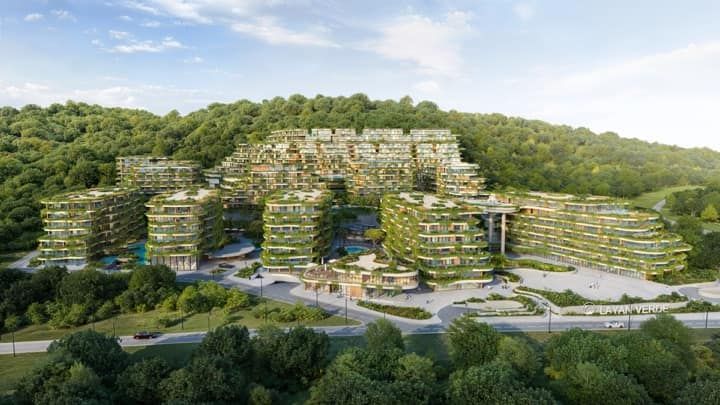
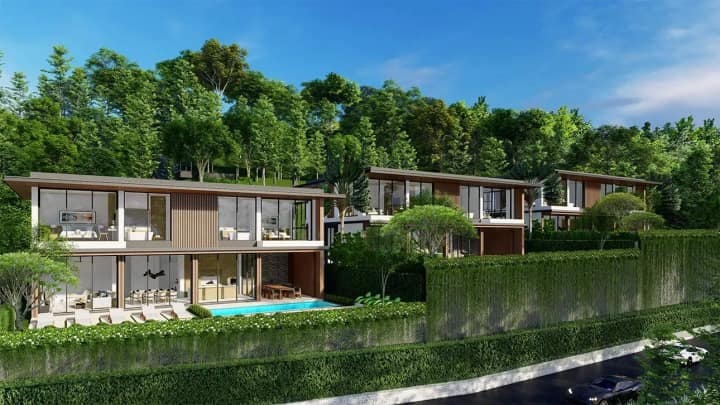
In Phuket this runs on the 60/40 model: the owner receives 60% of the rental pool’s net profit, the management company 40%. A ready unit at Layan Green Park near Layan beach — Phuket’s first eco condo-hotel with EDGE certification (up to 40% savings on utilities) — is available now, while Layan Verde, under construction 700m from the same beach, is due for delivery in 2028. Both sit near Bang Tao, a district with developed infrastructure. For prices by region, see Thailand property prices by region, and for retiree-specific options, see property in Thailand for retirees. Run your own yield scenario in the ROI calculator.
9. Traps when choosing a place
- Choosing from online reviews without scouting in person. Seasonality, humidity and noise only register in real life — a minimum 2–4 week trial stay before deciding is essential.
- Ignoring Chiang Mai’s smog until after moving. March–April isn’t an abstract detail — it’s months of genuinely degraded air quality, critical for anyone with asthma or heart conditions.
- Underestimating Hua Hin’s logistics. There are no direct flights from Europe — every trip home adds a transfer through Bangkok.
- Confusing the visa with property. Buying a condo in any of the three cities doesn’t replace the visa criteria — they’re two independent processes.
- Treating the budget as a “national average.” Actual costs vary sharply by city and season — an averaged figure from an online article is almost always misleading.
10. Mini case and takeaway
A couple, aged 58 and 56, Ukrainian nationals. Their first year they tried Chiang Mai — they liked the budget and community, but the spring smog turned out to be unexpectedly hard on one spouse’s asthma. Their second season they spent in Hua Hin — quieter and by the sea, but the logistics of flying to their children in Europe via Bangkok wore them down. They ended up choosing Phuket: they bought a ready resale studio in Phase 1 of Layan Green Park, and the unit went straight into the rental pool. Direct flights made family visits simpler, and rental income during their time away partly covers the monthly budget.
Takeaway: there is no single “best” city for retirement in Thailand — there’s the one that fits your specific budget, health and flight frequency. Chiang Mai wins on money, Hua Hin wins on quiet beach living close to Bangkok, and Phuket wins on the combination of direct flights, healthcare, and the only real rental-income tool of the three.
Let’s match a city and housing format to your scenario, and run the budget and yield numbers — leave a request and the Layan Real Estate team will help you compare options in detail.
This material is for informational purposes only and does not constitute legal, financial or visa advice. Visa requirements and costs change periodically — confirm current conditions with a qualified specialist before relocating. Property prices are as of the 01.09.2026 price list — verify at the time of the deal.