“Has anyone actually bought this, and how did it go?” is the most common question before a first deal in Phuket. The honest answer has two parts. First, public, verifiable reviews of specific purchases are scarce, and where they exist they are hard to tell apart from advertising. Second, most deals fall into three typical scenarios: a person buys a studio as a first asset, a family buys an apartment “to live in and to rent out”, and an investor builds a portfolio from two units with different logic. So instead of invented raptures, we walked through these three scenarios using real price lists and developer terms: with payments, owner costs, questions for the seller and the mistakes people make most often.
An important caveat up front: Oleg, the Mironov family and Marina are fictional. These are modelled scenarios, not stories from real clients. All prices and terms come from the catalog, and the calculations are simple arithmetic you can repeat on a calculator.
Contents
- How to read these stories
- Story 1: Oleg and a studio in a ready complex
- Oleg’s numbers: what he pays and what he might earn
- Story 2: the Mironov family and an apartment at Layan Verde
- The family’s payment schedule
- Story 3: Marina and a two-unit portfolio
- Three scenarios in one table
- Traps
- Mini-case: how one question changed Oleg’s choice
- Conclusion and next step
1. How to read these stories
A Phuket property purchase almost always has three variables: budget, horizon and goal. The budget sets the class of unit. The horizon decides between a ready or an under-construction property. The goal is income, capital growth or personal use. If you know the answers to these three questions, the choice narrows from dozens of projects to two or three options.
We took two projects by the developer VillaCarte Group because the catalog holds complete open data on them: prices, floor areas, payment schedule and owner costs. That does not mean the rest of the market is worse — worked examples simply need numbers you can verify. In a real selection we compare offers from different developers across the island, and a project comparison is only one of the tools.
Keep these points in mind while reading:
- Yield is a developer benchmark. Under the programme terms the owner receives 60% of the pool’s net profit and the management company 40%; the benchmark is ~8–10% net per year. It is a forecast, not a promise.
- Price lists change. Prices in the article are filled in from the catalog on the publication date, and historical figures carry the price-list date.
- A purchase is always a deal between you and the developer (or a private owner in a resale). The agency helps to select and check, but you sign the contract directly.
If you need real opinions rather than scenarios, read our guide on how to look for reviews of Phuket purchases, and test any “success story” by the same criteria as advertising.
2. Story 1: Oleg and a studio in a ready complex
Oleg is 34, works remotely and wants a first asset in Phuket. His budget is limited: he is ready to lock up a larger sum only once and without a loan. He does not plan to live on the island permanently, but he would like to spend a few weeks a year here. What matters most to him is not waiting three years for construction and seeing the asset work.
He looks at two options:
- A studio in the under-construction Layan Verde — from $235,995, handover December 2028, instalments during construction.
- A resale studio in the operating phase 1 of Layan Green Park — from $142,602, full payment, ready immediately.
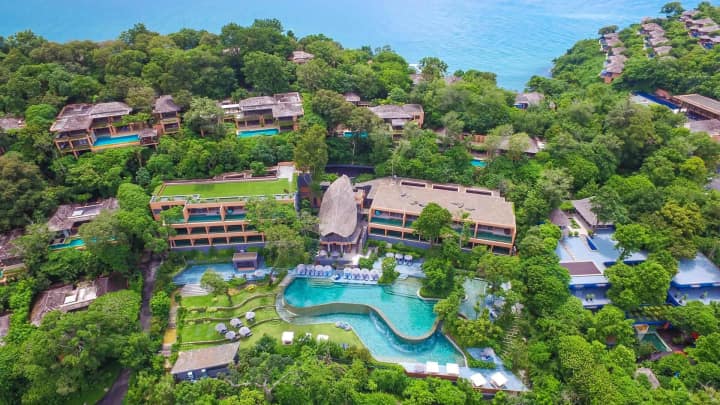
Phase 1 of Layan Green Park (248 units) was sold out by the developer before construction finished and has operated since 2024, so only resales from private owners remain on the market. The details of that story are in the case study of the sold-out phase 1. For Oleg this is a plus: the complex already welcomes guests, the restaurants, spa and fitness work, and the pool terms are visible in practice.
The deciding arguments for him:
- Distance to the beach. From Layan Green Park to Layan beach is about 700 metres — two minutes by shuttle.
- Restaurants and service on site: a club restaurant, a bakery, three lounge bars, a gym, a sauna and a spa.
- Personal stays. The programme allows up to 30 days of owner stay per year in the May–October period — exactly what Oleg needs.
He chooses the resale. Not because it is “more correct”, but because his goal is a ready asset with no waiting. The same format with instalments at Layan Verde would be better on the payment schedule, but Oleg does not need an instalment plan — he needs a working unit.
3. Oleg’s numbers: what he pays and what he might earn
Let us calculate Oleg’s scenario from catalog data. A 30 m² studio in phase 1 costs 4,800,000 THB ($142,602), paid in full, a resale from the owner.
| Item | Calculation | Result |
|---|---|---|
| Studio price | resale price list of 21.07.2026 | $142,602 |
| CAM fee (maintenance) | 75 THB/m² × 30 m² per month | 2,250 THB per month |
| Sinking fund (one-off) | 650 THB/m² × 30 m² | 19,500 THB |
| Utilities | at the state tariff; the EDGE certificate means up to 40% savings | depends on consumption |
| Tax on rental income | at personal-income rates | calculated separately |
Now income. If we take the programme benchmark of ~8–10% net per year, then on 142,602 dollars that is roughly $11,400 to $14,300 a year. This is arithmetic from a benchmark, not a forecast for a specific unit: the actual result depends on pool occupancy, the season and the costs deducted before the owner’s 60% is calculated. Payback at this level is around 12 years — a working figure, not quick money.
What Oleg should ask the seller before paying:
- Past pool reports for the specific unit: revenue, costs, owner payouts.
- Whether any CAM fee or sinking fund arrears exist from earlier periods.
- What encumbrances are on the unit and how the transfer of title goes through the Land Department (dol.go.th).
- Whether the unit keeps access to the pool programme after the owner changes.
More on calculating payback is in our ROI calculation guide, and on upkeep in the piece about the CAM fee and sinking fund. For Oleg the key conclusion is simple: a studio is not “buy and forget” but an asset with a clear monthly burden that must be budgeted up front.
4. Story 2: the Mironov family and an apartment at Layan Verde
The Mironovs are a family of four. They do not want to rent the home out all year and do not expect to live on the island permanently: the goal is their own place in Phuket that brings income while they are away. Their budget is larger than Oleg’s, but they are not ready to pay the whole sum at once. A handover in three years does not frighten them.
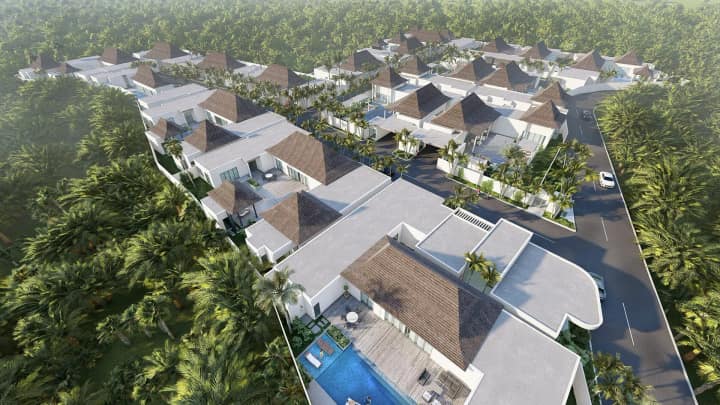
Layan Verde suits them: a district of 7.5 hectares with 774 residences, a community mall, an ocean club and lagoon pools; the Layan beach is about 700 metres away (~9 minutes on foot) and the airport about 20 minutes by car. Handover is planned for December 2028.
Choosing the layout for the family:
- A studio does not work: there is no room for four.
- One bedroom is also too small.
- Two bedrooms in the premium class from 100.5 m² — from $549,915 on the price list of 01.09.2026. This is enough floor area for a family and enough volume to rent out when the family is away.
- Three bedrooms from 152.7 m² — from $924,533; for the Mironovs that is already excessive.
The key argument for Layan Verde is an instalment plan tied to construction stages. The Mironovs pay not the whole sum at once but in parts as construction progresses. That reduces the risk of “freezing” a large sum right at the start. But instalments have a flip side: the property is handed over only in December 2028, and the family will not receive rental income before then.
Leasehold or freehold? Both options are available to foreign buyers within the foreign quota. Leasehold gives a more flexible entry and is usually converted to freehold later while quota remains. But leasehold has its own cost: a 1.1% registration every 30 years. More on the differences in our piece on freehold vs leasehold. For the Mironovs it matters that the quota is confirmed before the reservation is paid.
5. The family’s payment schedule
The developer offers two instalment schemes. Let us calculate both for a two-bedroom apartment priced from $549,915 (price list of 01.09.2026).
| Parameter | 35% scheme | 50% scheme |
|---|---|---|
| First payment | 35% — about $192,470 | 50% — about $274,958 |
| Further payments | 5 payments of 13% every six months — about $71,489 each | 5 payments of 10% every six months — about $54,992 each |
| Total | 100% | 100% |
| Reservation | 200,000 THB (included in the total) | 200,000 THB (included in the total) |
Both schedules run through the construction period and are tied to stages. The Mironovs choose the 35% scheme: a smaller first payment but larger five subsequent ones. The difference between the schemes is about liquidity: the more paid up front, the lighter the burden later.
Owner costs after handover for their apartment:
- CAM fee: 85 THB/m² × 100.5 m² — about 8,540 THB per month.
- Sinking fund: 850 THB/m² × 100.5 m² — about 85,400 THB one-off.
- Leasehold registration: 1.1% every 30 years, if that format is chosen.
What the family should not miss: the terms on which the price is fixed must be clarified before signing the contract, and the price list for new units keeps rising — in the catalog, Layan Verde studios went up from $224,776 to $235,995. That is not income for the Mironovs, only an indicator that an early entry is usually cheaper than a late one; the developer’s forecasts for value growth during construction are precisely forecasts.
The family should also clarify in advance whether they can use the apartment themselves in season, how that fits with the pool’s operation and on what terms the apartment is included in the rental. Better to ask these questions before signing the contract than after handover. On how management programmes work, see our guide to the rental pool and the comparison of self-managed rental vs a pool.
6. Story 3: Marina and a two-unit portfolio
Marina is an investor with property experience in another country. She does not need a home for herself: she is looking for spread risk. Her budget is about $380,000, and she does not want to put everything into one type of asset.
Her logic: split the money across two units with different roles.
- A ready resale in the operating Layan Green Park — a studio from $142,602. Role: cash flow from the first season.
- A studio in the under-construction Layan Verde — from $235,995, handover December 2028, instalments during construction. Role: capital growth up to handover.
The sum of the two entries: $142,602 + $235,995 = $378,597 at the price lists in force at the time of calculation. The first purchase must be paid at once, the second in parts, so Marina plans her cash flow like this:
- Today: full payment for the resale plus the 200,000 THB reservation at Layan Verde.
- During construction: payments on the 35% scheme — the first about $82,600, then five payments of 13% (about $30,680 each) every six months.
- From the first season: income from the resale studio goes toward the Layan Verde payments. This is a hypothesis, not a calculation: at the ~8–10% net benchmark it comes to roughly $11,400–14,300 a year — less than one half-yearly payment.
The last point matters: a studio’s income does not cover the construction payments, and Marina must hold a separate reserve. This is exactly the mistake that happens most often: investors assume a ready unit “pays for” the one under construction. It does not — it only lightens the load.
Why this particular pair? A resale in an operating complex shows real pool figures, and Marina gets data for assessing the second purchase. The under-construction project offers a chance of capital growth — the developer forecasts about +45% over the construction period, but that is a forecast. The principle is covered in our piece on diversification in Phuket and in the comparison of ready vs off-plan.
Marina also considers one more alternative: a phase 2 studio at Layan Green Park (handover 2026) at $224,043. But phase 2 has no instalment plan, and the price is higher than a phase 1 resale — so for her goal it is not the best entry: paying more, and all at once.
7. Three scenarios in one table
| Parameter | Oleg | The Mironovs | Marina |
|---|---|---|---|
| Goal | ready asset and income | family home + rental when away | diversification and capital growth |
| Horizon | quick entry, no waiting | handover December 2028 | mixed: now and by 2028 |
| Choice | studio resale, Layan Green Park | 2 bedrooms, Layan Verde | LGP resale + Layan Verde studio |
| Payment | in full | 35% instalments | in full + instalments |
| Main risk | CAM burden and seasonality | construction time, liquidity | too little reserve for payments |
| What to check | pool reports, CAM arrears | payment schedule, quota | reserve for 2 years ahead |
The table shows the main point: the choice is set by the goal, not by a project ranking. The same project can be a good decision for Marina and a poor one for Oleg if their horizons differ. There is no universal “best” unit.
To decide on the area, compare Layan and Bang Tao: for some, a quiet beach and fewer people matter more; for others, developed infrastructure and more resale supply. We covered these areas in Layan vs Bang Tao.
8. Traps
The three scenarios point to traps that repeat from buyer to buyer:
- Confusing a benchmark with a promise. ~8–10% net is a developer programme, not a fixed payout. Any presentation that calls yield fixed should put you on guard; a detailed breakdown is in our article on promised rental yield.
- Forgotten costs. CAM, sinking fund, utilities, taxes. For a 30 m² studio the CAM alone is 2,250 THB a month, and it must be accounted for before net yield is calculated.
- Instalments as “free money”. An instalment plan lowers the entry threshold but not the cost of the asset. Each payment is tied to construction stages, and a missed payment may have consequences under the contract.
- Buying with no reserve. Marina’s scenario shows that one unit’s income does not cover the payments on another. A reserve for 12–24 months is not excess caution.
- Unconfirmed quota. When buying freehold, a foreigner needs free quota in the project. Check it before the reservation — here is how.
- A resale without a title check. A private seller means private risks: encumbrances, debts, unregistered paperwork. Before paying you need a document check and a safe payment arrangement, for example via a deposit or escrow.
- Comparing by price per square metre. A studio at $142,602 and a studio at $235,995 are different products: a ready operating complex versus a district under construction.
- Calculating in a single currency. Instalment payments are made in baht while the budget is often in dollars; exchange-rate swings change the real price. Market rates are published by the Bank of Thailand.
9. Mini-case: how one question changed Oleg’s choice
Back to Oleg. At first he wanted a phase 2 studio at Layan Green Park: price $224,043, handover in 2026, a new building. Taking new instead of a resale seemed logical.
We suggested putting three figures side by side:
| Option | Price | Payment | Status |
|---|---|---|---|
| Phase 2 studio, from 36.7 m² | $224,043 | at the current price list, no instalments | handover 2026 |
| Phase 1 resale studio, from 30 m² | $142,602 | in full | operating since 2024 |
| Layan Verde studio, from 36.2 m² | $235,995 | 35% or 50% instalments | handover 2028 |
After that Oleg asked one question: “What do I get for the price difference between phase 2 and the resale?” The answer was honest and mixed: phase 2 gives a larger floor area (36.7 versus 30 m²) and a new building, but the phase 1 resale is cheaper and immediately gives data on the pool. For Oleg’s goal — a first asset with no waiting and no budget overload — the second option fit better.
He also asked to see the cost per metre: for a 36.7 m² studio the CAM fee at 75 THB/m² would be about 2,750 THB a month and the sinking fund about 23,900 THB one-off. The difference in upkeep is small, but it is visible in advance.
The outcome: Oleg would buy the resale — not because it is “better”, but because the question about the price difference brought him back to his own goal. This is the most useful move in any scenario: when you hesitate between options, ask what exactly you are paying the difference for.
10. Conclusion and next step
The three stories show one thing: in Phuket there is no universally right purchase, only the purchase that fits your goal, horizon and budget. Oleg needs a ready asset — a resale in the operating Layan Green Park fits. The Mironovs need a home with instalments and a 2028 handover — Layan Verde fits. Marina wants a portfolio — a combination of both fits. All three scenarios share only the questions: what is included in the price, which costs fall on the owner, which documents the deal rests on, and what you will do if the result is below the benchmark.
To start, open the Layan Verde overview and the Layan Green Park overview, try the calculator in the payback section and compare units with your own budget. If you have not settled on a format, read about a studio versus a larger apartment, and for the overall flow of a deal see the guide to the buying process.
Want to go through your own scenario? Layan Real Estate is an independent real estate agency covering all of Phuket. Tell us your budget, horizon and goal — we will compare options across different developers, show open price lists and calculate the payments and owner costs. You sign the purchase contract directly with the developer. Details are on the agency page.
This material is for information only, is not legal or tax advice and contains no individual investment recommendation. The characters are fictional and the scenarios are modelled on public price lists; yield figures are per the developer’s data and forecast and may differ from actual results.