“Rainy season” is a phrase that scares people more than it should. In practice it isn’t a tropical downpour that never stops — it’s the May-to-October window when the southwest monsoon brings short, intense showers to the Andaman coast, interspersed with sunshine. For a visitor that means cheaper rates and smaller crowds. For a property owner it’s a season that calls for specific preparation, from site drainage to insurance cover. Let’s go through the weather month by month with real 2026 examples, checklists for both sides, how the island’s districts differ, and how all of this feeds into rental income.
Contents
- When the rainy season is, and what it actually means
- Weather by month
- Roads and infrastructure: what happens in heavy downpours
- The sea, flags and swimming in the rainy season
- Owner checklist: preparing a villa or condo
- What renters and travellers should factor in
- How the rainy season affects rental income
- Phuket districts: where the rain feels different
- Rainy-season pitfalls
- Mini case and takeaway
1. When the rainy season is, and what it actually means
By the calendar, Phuket’s rainy season runs roughly May to October, the period when the southwest monsoon prevails over the Andaman Sea. The edges are approximate: isolated heavy storms can hit as early as April, and by late October rainfall is noticeably lighter than at the September peak. From a tourism and rental standpoint this same stretch is called the low season — the full economics of seasonality are covered in the article on Phuket’s high and low rental seasons; here we’ll focus on the weather itself and what it practically means for two different readers.
The first and biggest misconception is that “rainy season” means a wet sky around the clock. In reality the typical pattern is an intense but short downpour, more often in the afternoon or at night, with plenty of sun and heat in between. The island doesn’t go dormant: restaurants, beaches, excursions and construction all keep running as usual, just with local downpours and occasionally rougher seas factored in.
This article is split into two practical tracks. The first is what matters to an owner: preparing a villa or condo for humidity and rain, insurance, low-season maintenance. The second is what matters to a renter or traveller: trip planning, road and sea safety, day-to-day weather expectations. At the end there’s a district-by-district table and a mini case showing that real flood risk comes down to a specific site and its drainage, not the “season” in the abstract.
2. Weather by month
| Month | Rainfall pattern | What it means in practice |
|---|---|---|
| April | The first heavy storms possible late in the month | Technically still dry season, peak heat |
| May | The first sustained downpours, rising humidity | Official start of the low season, still plenty of sun |
| June | Intermittent rain, more often in the afternoon | Short showers, with ordinary beach weather in between |
| July | Uneven, isolated heavy downpours possible | See the 2026 example in section 3 below |
| August | Rain continues, coincides with European school holidays | A local bump in tourist flow despite the weather |
| September | Statistically the wettest month | Most storm warnings are issued around this time |
| October | Rainfall tapering off | Transition month into the dry season |
| November | Usually already dry | High season begins |
The table describes a typical multi-year pattern, not a guaranteed forecast for any given year — actual weather in any month of the season can swing either way. The practical takeaway is simple: September is the most demanding month for rainfall intensity and storm warnings, while May and October are the gentlest points of entry into and exit from the low season. Management companies at complexes like Layan Green Park typically schedule owner-occupancy days and planned unit maintenance for exactly this September–October window — more on that in section 5.
3. Roads and infrastructure: what happens in heavy downpours
Phuket’s drainage system is built for a typical season’s rainfall, but during particularly intense downpours water in low-lying areas and near canals can briefly spill onto roads. This isn’t rare and it isn’t a catastrophe — it’s part of the island’s normal annual cycle, one that local services prepare for in advance. Still, warnings shouldn’t be ignored: here are two concrete examples from 2026 that show how it plays out.
1 July 2026. Heavy rain that began around 4:00 am flooded roads in Patong (Kathu district) and at several points in the Muang district — hitting both a touristy west-coast area and the island’s inland core near Phuket Town on the same morning. The water level in the Bang Yai canal (more than 20 km long) rose by over 3 metres, and authorities warned of the risk of the water spilling beyond the channel into neighbouring communities, advising drivers to avoid flooded stretches while around-the-clock drainage work continued (Bangkok Post; Khaosod English).
16–20 September 2026. Thailand’s Department of Disaster Prevention and Mitigation (DDPM) declared a nationwide five-day high-alert period over the risk of flash floods, landslides, forest run-off and localised waterlogging. Phuket was explicitly named among six southern provinces (alongside Ranong, Phang Nga, Krabi, Trang and Satun) also facing rough seas. Over the same period, the Thai Meteorological Department issued a bulletin on Andaman Sea waves of 2–3 metres, exceeding 3 metres during thunderstorms, and advised small boats to stay ashore (Nation Thailand).
The practical takeaway for both owners and renters is the same: flooding in Phuket is almost always localised, tied to specific low-lying spots and canal routes, and usually clears within a few hours once the rain stops. A sensible response is not panic but simple habits — check local news and warnings before travelling on days with an announced storm alert, never drive onto an obviously flooded road (the risk of a stalled engine and loss of control is real for a car and even more so for a scooter), and build a time buffer into your route during the heaviest part of a downpour. Road risks on the island more broadly are covered in the Phuket safety guide.
4. The sea, flags and swimming in the rainy season
The southwest monsoon strengthens swell and rip currents specifically on the open west coast — Patong, Kata, Karon, Kamala, Surin, Bang Tao. Lifeguards are on duty at only five of the island’s beaches, and only from 8:00 am to 6:00 pm; the detailed statistics and flag rules are covered in the Phuket safety guide and won’t be repeated here — what matters is that the rainy season is statistically linked to a rise in incidents involving tourists who ignored a red flag.
Add to this the official 2026 storm data: in mid-September the Thai Meteorological Department recorded Andaman Sea waves of 2–3 metres (exceeding 3 metres during thunderstorms) and advised small-boat captains not to go out, to act cautiously and to avoid thunderstorm activity (Nation Thailand). This is directly relevant to anyone planning an island-hopping trip, diving or fishing during the rainy season — plan the route with a buffer and check the current bulletin on the day of departure rather than relying on a week-old forecast.
The practical bottom line for both audiences: the rainy season doesn’t make swimming in Phuket unsafe by default, but it does noticeably narrow the window of safe conditions on the west-coast beaches. Respecting the flags, checking storm warnings before boat trips, and life jackets on small vessels aren’t formalities — they’re a sensible habit specifically during this part of the year.
5. Owner checklist: preparing a villa or condo
| Task | Frequency | Why it matters |
|---|---|---|
| Check the roof, gutters and storm drains | Before the season (March–April) | Clogged gutters and drains are the main cause of leaks during heavy rain |
| Clear the property’s drainage channels | Before the season and after every heavy downpour | Standing water means mosquitoes, soil erosion and foundation flooding risk |
| Check backup power | Before the season | Storms regularly cause brief power outages |
| Run dehumidifiers in a vacant unit | Monthly through the low season | Humidity above 80% quickly damages furniture, electronics and textiles |
| Check whether the insurance policy covers water damage | Before the season | Not every policy includes flood or leak damage |
| Schedule maintenance and owner stays | September–October | The quietest period for occupancy — easiest window to take a unit offline |
In managed complexes, part of this work is covered by the management company through the CAM fee — a recurring charge for maintaining common areas and grounds. At Layan Green Park it’s 75 THB/sqm per month, at Layan Verde it’s 85 THB/sqm per month; both cover drainage and landscaping for the shared grounds, not repairs inside a specific unit. The one-off sinking fund (650 THB/sqm at LGP, 850 THB/sqm at Layan Verde) covers capital works on the building as a whole, not a leak in one apartment — that remains the owner’s personal insurance to cover. A detailed breakdown of these cost lines is in the article on CAM fees and sinking funds.
It’s also worth factoring in a specific project’s climate credentials. Layan Green Park’s international EDGE certification delivers up to 40% savings on utility bills — directly relevant to an owner running a dehumidifier or air conditioner in a vacant unit through the whole low season: the savings on the electricity bill here are a measurable line item, not marketing. More on energy efficiency and bills is in the article on utility bills in Phuket.
6. What renters and travellers should factor in
For a guest planning a trip or a long-stay rental in Phuket during the rainy season, the practical checklist looks different:
- Check the cancellation terms. On days with an announced storm warning, plans sometimes need to change — a flexible cancellation policy removes unnecessary stress.
- Pack a light rain jacket and a waterproof phone case, especially if you’re getting around by scooter — short but intense downpours can catch you off guard faster than expected.
- Have a backup plan for a rainy day. Malls, spas, cafés and indoor attractions run as usual — the low season isn’t about sitting in your room, it’s about a flexible itinerary.
- Ask the host or agency about the property’s flooding history and whether it has backup power — especially for a standalone villa rather than a unit inside a managed complex with its own infrastructure.
- Use the low season’s price advantage. Rates are usually softer, availability is higher, and long stays are easier to negotiate — a comparison of rental formats is in the article on short-term vs long-term rental in Phuket.
- Respect the beach flags even when few people are in the water — a rip current doesn’t get weaker just because there are fewer tourists around (more in section 4 and in the island safety guide).
For anyone considering Phuket for a multi-month stay specifically during the low season — remote workers, families on an extended break, relocators — the rainy season is often the best-value window: fewer tourists, lower rental rates and lower prices on many services, while the island’s infrastructure runs at full capacity.
7. How the rainy season affects rental income
In short: occupancy and rates in the low season (May–October) are on average softer than in high season, but the period is far from “dead” — part of the demand is replaced by long-stay guests, relocators and remote workers, and good management smooths the dips through a channel mix and dynamic pricing. The full methodology for calculating annual yield adjusted for seasonality — including building downside, base and upside cases month by month — is covered separately in the article on Phuket rental seasons; we won’t duplicate it here, and will instead focus on what specifically relates to the rainy-season weather factor.
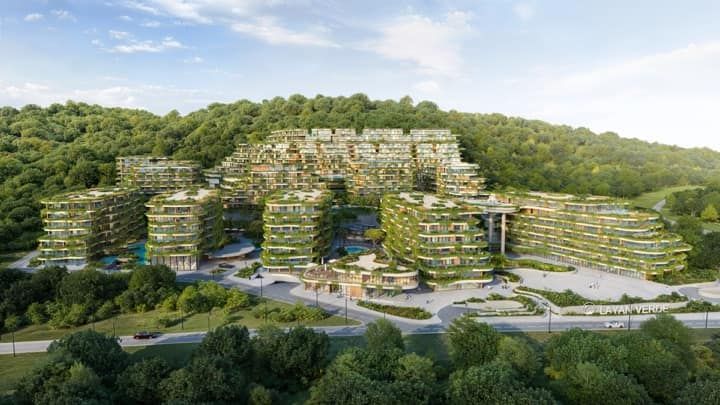
A completed asset and one under construction differ fundamentally here. A completed resale studio in Layan Green Park’s phase 1 (from $142,602), already in the rental pool since 2024, absorbs seasonal swings through established booking channels and a professional guest mix — that’s a verifiable track record, not a forecast. A buyer at the under-construction Layan Verde (from $235,995, handover in 2028) will only see how the rainy season affects their specific unit after launch — so in a yield model for that project, seasonality should be treated as an assumption rather than a confirmed fact, using the operating record of the same developer’s phase 1 LGP as the closest available benchmark.
Separately: part of an owner’s costs doesn’t depend on the weather and keeps accruing regardless of occupancy — the CAM fee, sinking fund, insurance, accounting and taxes. That’s why a correct annual model can show near-zero cash flow in a specific rainy month while the year as a whole comes out healthy — that’s fine as long as a reserve for the weak months has been built in from the start. How the rental pool itself works is covered in the article on Phuket’s rental management programme, and the yield calculation method is in how to calculate ROI. You can run your own model, seasonality included, in the yield calculator.
8. Phuket districts: where the rain feels different
The rainy season is the same calendar event across the whole island, but its consequences vary noticeably by district — and here it’s important to separate two different risks: sea conditions and road flooding.
| District | Sea in the monsoon | Road-flooding risk | Note |
|---|---|---|---|
| Patong | Strong waves and rip currents | Elevated | Dense older development; flooding on 1 July 2026 (Kathu district) |
| Kata / Karon | Strong waves and rip currents | Moderate | Popular open west-coast beaches, similar sea picture to Patong |
| Kamala | Strong waves | Moderate | Lower building density than Patong |
| Surin / Bang Tao / Layan | Strong waves, but wider bays | Low–moderate | Planned development with engineered drainage (the Laguna cluster) |
| Rawai / Nai Harn (south) | Weaker in sheltered bays | Moderate | Leeward side of some southern beaches |
| Phuket Town / Muang | Not coastal | Elevated | Flooding on 1 July 2026 — risk is driven by terrain, not the sea |
| East (Panwa, Koh Kaew) | Calm sea | Low | The island’s leeward, most sheltered side by sea |
The key takeaway from the table: road-flooding risk depends on the terrain and drainage of a specific spot, not on whether it’s the west or east of the island — on 1 July 2026, flooding was recorded simultaneously in touristy Patong on the west coast and in the inland Muang district near Phuket Town. Sea conditions during the rainy season are a different story entirely: they’re clearly stronger on the open west coast, which faces directly into the Andaman Sea and the southwest monsoon, while the island’s east side (Panwa, Koh Kaew) and part of the southern bays (Rawai, Nai Harn) sit in a natural wind shadow and are usually calmer.
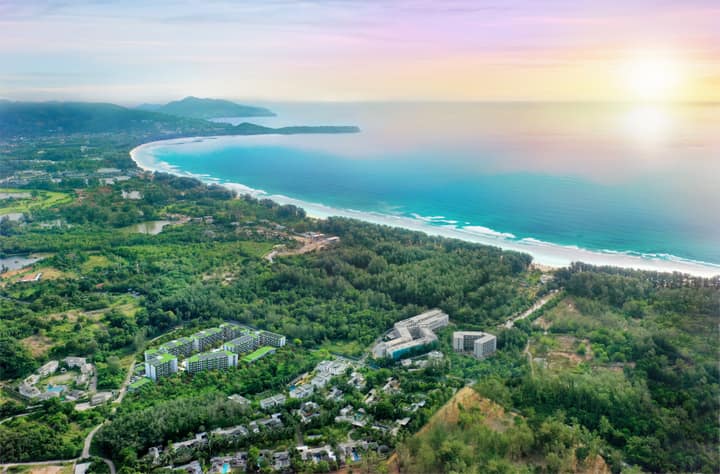
Layan and northern Bang Tao neatly combine both factors: the beach is open enough that summer brings real waves and flag discipline matters, but the district was built to a plan — with engineered drainage maintained by Laguna Phuket and modern complexes like Layan Green Park and Layan Verde. A detailed guide to these beaches is in the articles on Layan beach and Bang Tao, and a broader coastal comparison is in west vs east Phuket and beachfront vs hillside. An investment-focused look at touristy but vulnerable Patong is in a separate article on Patong for investors, and for the southern districts there’s the guide to Rawai and Nai Harn and the east coast. A live look at the Layan district and neighbouring Bang Tao is on the site’s area pages.
9. Rainy-season pitfalls
- Treating rain as a reason to avoid Phuket altogether. That just forfeits better rates and quieter beaches — the actual weather is almost always milder than expected.
- Viewing a property only in the dry season. Ask the seller or agency for photos and the site’s flooding history — that’s part of the pre-deal check covered in the article on due diligence in Phuket.
- Assuming the CAM fee or sinking fund covers water damage inside a unit. These are funds for common areas and building-wide capital works, not the owner’s personal contents insurance — see section 5.
- Driving onto an obviously flooded road. The risk of a stalled engine, loss of traction and damage to a car or scooter is real and rises specifically at the peak of a downpour.
- Leaving a unit vacant for months without a dehumidifier. High humidity noticeably damages furniture, electronics and textiles within weeks — especially in units without continuous air conditioning.
- Ignoring the red flag because the beach looks empty. Low season crowds don’t make the current weaker — this stays the main seasonal swimming risk.
- Planning a boat trip without checking the current bulletin. The 2–3 metre Andaman Sea swell the meteorological service warned about in September 2026 isn’t a rare exception — it’s part of the normal seasonal backdrop.
10. Mini case and takeaway
On 1 July 2026, a heavy downpour that started early in the morning flooded roads in two different parts of the island at once: touristy Patong (Kathu district) and the inland Muang district near Phuket Town, with the Bang Yai canal rising by more than 3 metres. That same day, owners of resale studios in Layan Green Park’s working phase 1 — 700 metres from Layan beach, on grounds with their own engineered drainage system managed by the same company that runs the rental pool — reported no problems reaching the complex. The difference here isn’t “lucky weather”: both districts got the exact same downpour on the exact same morning. The difference is the terrain of the specific site, the quality of the drainage, and whether that factor was considered when choosing the location in the first place, back at the purchase stage.
That’s the article’s main practical takeaway. The rainy season in Phuket is a calendar fact the island lives with for half the year — not an anomaly, and not a reason to delay a trip or a purchase. The weather genuinely affects three things: road conditions during the peak hours of heavy downpours, sea conditions on the open west-coast beaches, and occupancy in the low season — and all three are manageable once you know what to look for. An owner needs the roof, drainage and insurance checklist from section 5; a renter needs date flexibility and flag discipline from sections 4 and 6; and anyone choosing a location to buy needs to understand that flood risk is set by the terrain of a specific site, not by an abstract side of the island.
We’ll help you choose a district and a property with seasonality and site drainage in mind — from Layan Green Park’s already-working, proven phase 1 to the under-construction Layan Verde with its construction-period payment plan. Leave a request or reach out directly to Layan Real Estate.
This material is for information only and is not meteorological, travel or legal advice. Weather data and examples are drawn from the sources listed above as of the publication date; check current official warnings and the specific property’s terms before you travel or transact.