Thailand and Turkey regularly land on the same shortlist for an investor scouting property outside their home country with an eye on rental income, currency diversification and, possibly, a second citizenship or residency. Both markets have run on tourism and foreign capital for decades, both sell a Mediterranean or tropical lifestyle at international property expos, and both have seen foreign transaction volumes rise noticeably in recent years. But the underlying nature of the two markets differs: Turkey is a large economy spanning two continents with its own currency that has been through a period of high inflation, plus a citizenship-by-investment programme; Phuket is a resort island within Thailand’s economy, with a relatively stable baht, a foreign quota on condo freehold, and developer rental pools. We compare both markets using one method — from entry price to currency risk — so the decision rests on numbers rather than a brochure sunset behind minarets or palm trees.
Contents
- Two markets, different nature
- Entry price and typical product
- Ownership structure for a foreigner
- Yield and rental management models
- Taxes, fees and cost of ownership
- Citizenship and visas through property
- Currency, macro and natural-hazard risk
- Infrastructure, logistics and quality of life
- Traps
- Case: choosing between Thailand and Turkey
1. Two markets, different nature
Turkey and Thailand are comparable in population scale but have fundamentally different real estate market structures for a foreign investor.
- Turkey. A country spanning two continents with a population of over 85 million and a real estate market counted in hundreds of thousands of transactions a year across the whole country — from commercial real estate in Istanbul to the resort provinces of Antalya, Muğla (Bodrum) and Mersin. A single national title registrar — the General Directorate of Land Registry and Cadastre (TKGM), under the relevant ministry — records property rights and processes transactions with foreigners. The market responds not just to tourist demand but to Turkey’s own macroeconomics: inflation, the lira exchange rate, central bank policy and regional capital flows.
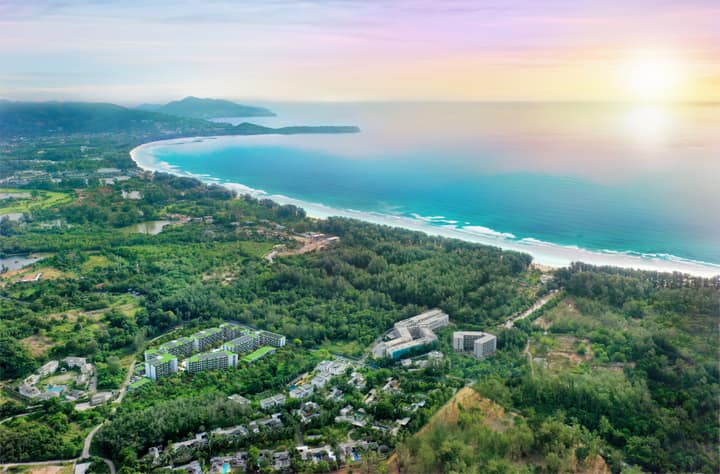
- Phuket (Thailand). A resort island where real estate is part of the tourism industry: demand is shaped by tourist arrivals, air connectivity and Thailand’s visa policy, not by global capital flows in a pure sense. The Department of Lands is likewise a single national title registrar, but the market structure differs: not a diversified economy with property across dozens of cities, but resort condo-hotels and villas near specific beaches on one island.
It is worth not confusing “country” with “market.” For a foreign investor, Turkey in practice splits into several different stories: Istanbul is urban real estate with its own business logic, while Antalya, Bodrum and Alanya are resort rentals closer in spirit to Phuket. Phuket is one of several resort destinations in Thailand alongside Samui, Hua Hin and Pattaya; for a comparison of destinations within Thailand itself, see Thailand property prices by region, and for a broader international view see Thailand vs Dubai and Thailand vs Bali.
2. Entry price and typical product
The base product on the two markets differs, and the comparison should not be an abstract price per square metre but what an investor with a given budget actually buys, and what income model comes with it.
| Parameter | Thailand (Phuket) | Turkey (resort coast) |
|---|---|---|
| Typical format | Condo-hotel / residence in a rental pool | Apartment in a residential complex or villa, often without a single management model |
| Starting entry | Studio from $235,995 (construction-period instalments) | Small apartment in areas away from the coast in Antalya or Alanya — the entry-level segment |
| Ready asset | Layan Green Park resale studio — $142,602, paid in full, joins the pool immediately | Ready seafront units in Bodrum and Antalya’s first line — comparable to or above the Phuket entry point |
| Developer instalments | Available on projects under construction (35% / 50% up front) | Widely offered by Turkish developers, often with a flexible schedule through to handover |
| Market density | Resort condo-hotels near specific beaches | A huge range of formats and developers across dozens of cities and towns |
Phuket sells a ready-made resort product: a unit in a building with its own infrastructure, where the developer controls construction and handover and a management company runs the income. Turkey sells a market with a far wider spread of quality: next to a solid project from an international developer in Bodrum, it is easy to find a cheap residential complex with no unified rental model and no transparent operating history — the due-diligence bar is higher, because the resort-product standardisation seen in Thailand’s flagship projects simply does not exist across the Turkish market.
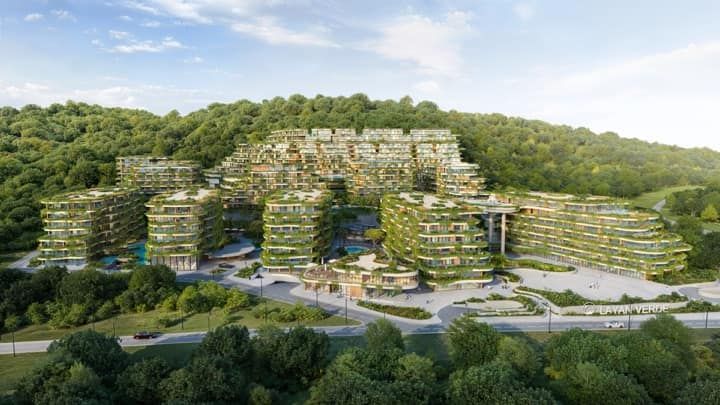
Cash flow timing deserves separate attention. Turkish developers often offer a long schedule with payments continuing after handover — this reduces the burden in the moment but stretches currency exposure across the whole instalment period if payments are pegged to the lira rather than a hard currency. On Phuket, instalments are usually limited to the construction period: at Layan Verde this means 35% or 50% up front with the balance due by the 2028 handover, calculated in dollar-equivalent terms. Compare not just the final price but the currency in which the payment schedule is denominated.
3. Ownership structure for a foreigner
Both markets look similar at first glance — “a foreigner can own property directly” — but the details diverge fundamentally.
Turkey. Since 2012, a simplified reciprocity principle has applied: citizens of most countries (around 180 states) can register full ownership (mülkiyet) of an apartment or house almost anywhere in the country — closer to classic freehold than Thailand’s structure. Restrictions are narrow: a foreigner cannot own more than 30 hectares nationwide, and in any given district the share of property owned by foreigners cannot exceed 10% of the total housing stock; purchases in military and border security zones are separately restricted. Registration goes through TKGM with a mandatory official valuation of the property.
Thailand. A foreigner can hold freehold ownership of a condominium within a quota — up to 49% of a building’s area can be owned directly by foreigners, registered through the Department of Lands nationwide. Once the quota is used up, or for a villa on land, leasehold is available: a registrable 30-year land lease with renewal options. For a detailed breakdown of the two forms, see freehold vs leasehold in Thailand.
| Criterion | Thailand | Turkey |
|---|---|---|
| Freehold equivalent for foreigners | Condo within the 49% quota, nationwide | Full ownership (mülkiyet) almost nationwide |
| Base alternative | Leasehold, 30 years + renewals | Not needed — freehold available directly within the limits |
| Geographic restrictions | No land quota outside the condo building itself | 10% foreign-ownership cap per district, ban in border/military zones |
| Local company required | No, for freehold condos | No, for a standard apartment or villa purchase |
| Single national registry | Yes, the Department of Lands | Yes, TKGM (Turkey’s Land Registry and Cadastre) |
Bottom line: on the formal breadth of rights, Turkey’s system looks simpler — freehold with almost no restrictions nationwide, without quotas or leasehold. In practice, though, this is not a guarantee of deal quality for the investor: broad ownership rights do not replace due diligence on the specific developer and building, while Thailand’s quota-plus-leasehold system is a predictable mechanism specifically for the resort-condo product that Layan Verde and Layan Green Park represent.
4. Yield and rental management models
Income generation is structured differently on the two markets, which affects not just the yield figure but also the currency in which an investor actually receives it.
Thailand. The main instrument on flagship projects is the rental pool: like-for-like units are pooled together, a management company lets them out, and net profit is split under a formula, typically 60% to the owner / 40% to the management company. At Layan Verde and Layan Green Park this targets ~8–10% net per year — the programme’s target figure, backed by an operating track record at the completed Layan Green Park phase 1 since 2024. For the methodology behind your own return, see how to calculate ROI on Phuket.
Turkey. There is no standard industry-wide rental pool with a fixed distribution formula on the mass resort market — management is usually handled through a local agent or a short-term rental platform for a commission, and some owners let their property themselves during the high season (May–October on the Aegean and Mediterranean coasts). Consultants typically quote gross yield in popular tourist provinces such as Antalya as a wide range — but the crucial caveat for an overseas investor is that this figure is almost always calculated in lira, whereas the actual result depends on the lira’s exchange rate against the investor’s own currency at the time income is withdrawn, not the nominal rental percentage.
| Parameter | Thailand (flagship pool) | Turkey (typical resort unit) |
|---|---|---|
| Management model | Developer’s rental pool | Local agent, short-term rental platform, or self-managed |
| Distribution formula | 60% owner / 40% management company | Turnover-based commission, terms vary by operator |
| Yield currency | US dollars (price and income quoted in USD) | Turkish lira — conversion to hard currency is a separate step |
| Reporting transparency | Management company reports, verifiable pool track record | Depends on the specific agent or platform |
| Owner workload | Minimal — the pool manages everything | Higher: finding tenants, managing seasonality, transferring funds |
Practical takeaway: on Phuket, yield is usually a ready-made formula written into the contract with the developer’s management company, quoted in dollars and backed by a payout history. In Turkey, even an attractive gross yield percentage quoted in lira needs to be converted into the investor’s target currency first before it can fairly be compared with Thailand’s ~8–10% net — otherwise the comparison is flawed by construction.
5. Taxes, fees and cost of ownership
Turkey. At registration, a title deed fee (tapu harcı) is due — in practice typically around 4% of the declared property value, usually split between buyer and seller by agreement. An annual property tax (emlak vergisi) applies — the rate depends on the property type and municipality status (metropolitan municipalities double the rate) and is usually up to about 0.6% of assessed value for non-residential property and lower for residential. A first-time buyer paying in foreign currency can qualify for a VAT exemption on the property, subject to conditions including holding the property for at least a year. Capital gains tax does not apply if the property has been held for more than 5 years; selling earlier means the gain is taxed on a progressive income-tax scale.
Thailand. A transfer fee at the Department of Lands is due on the transaction (split by negotiation with the seller), rental income is typically taxed via withholding at source for a non-resident, and capital gains tax plus a specific business tax apply if sold within five years of ownership. Completed projects carry a monthly CAM fee for common areas (Layan Verde: 85 THB/sqm per month; Layan Green Park: 75 THB/sqm per month) and a one-off sinking fund (850 and 650 THB/sqm respectively). For a detailed breakdown, see property taxes in Thailand and sinking fund and CAM fees.
| Cost item | Thailand (Phuket) | Turkey |
|---|---|---|
| Registration fee | Department of Lands transfer fee | Tapu harcı, typically ~4% (split by parties) |
| Annual property tax | No separate ownership tax (aside from CAM/sinking fund) | Emlak vergisi — up to ~0.6% of assessed value, depends on municipality |
| Personal income tax on rental | Withholding tax on rental income for non-residents | Progressive income tax on rental income |
| Capital gains tax | Applies on sale, including specific business tax under 5 years | Exempt after 5 years of ownership; otherwise a progressive scale |
| Common areas / repair fund | CAM fee + sinking fund (known upfront from the price list) | Homeowners’ association fee (aidat) set by the building’s owners’ assembly |
Both markets require building ownership costs into the model upfront. The difference is that Thailand’s cost structure is standardised at the project level and known from the price list before the deal, while Turkey’s aidat and emlak vergisi rate depend on the specific municipality and the owners’ assembly’s decisions — these figures need to be checked building by building rather than estimated from a country-wide average.
6. Citizenship and visas through property
This is where the two markets diverge the most, and for many buyers it matters as much as yield.
Turkey. Buying property above the threshold set by national rules — $400,000 since June 2022 (raised from $250,000) — opens the path to Turkish citizenship by investment. Conditions include a commitment not to sell the property for at least 3 years, an official valuation, and payment via bank transfer — the process is administered through the Land Registry (TKGM) and relevant government bodies. This is one of the best-known direct routes in the world from a property purchase to a third-country passport, and it is what sets Turkey apart from most resort markets.
Thailand. Buying a condo or villa on its own grants neither a visa nor citizenship. Instead, a separate line-up of instruments is used: the LTR — a visa for wealthy residents, retirees and remote professionals with tax benefits on foreign income (details in the LTR visa overview); the DTV — a 5-year visa for digital nomads; and the classic Non-O/O-A retirement visa. None of these is granted automatically for buying property, and Thai citizenship through investment does not exist as a legal route at all.
| Parameter | Turkey: citizenship by investment | Thailand: LTR |
|---|---|---|
| Who it suits | An investor above the property investment threshold | Wealthy residents, retirees, remote professionals |
| Financial threshold | From $400,000 in property (since June 2022) | Depends on the LTR category, usually not tied to a specific property |
| End status | Turkish citizenship (passport) | Long-term resident visa, not citizenship |
| Link to the property | Direct — status is granted for the investment, minimum 3-year hold | Not required |
| Tax benefit | The programme itself carries no separate tax benefit | Exemption from tax on foreign income, subject to conditions |
Practical takeaway: if the end goal is a second passport, Turkey offers a direct, well-known route through property that Thailand simply does not have. If the priority is flexible long-term residency with tax benefits on foreign income and no obligation to hold a specific property for 3 years, Thailand’s visa line-up — the LTR in particular — solves that specific problem instead.
7. Currency, macro and natural-hazard risk
This is the section where the difference between the two markets shows up most sharply, and where an investor needs to pay close attention to the details.
Turkey. The Turkish lira went through a prolonged period of high inflation and significant depreciation against the dollar and euro in 2021–2023. Since 2023, the Central Bank of the Republic of Türkiye (TCMB) has kept its policy rate at one of the highest levels in the world specifically to curb inflation and stabilise the currency — the regulator itself publishes the rate path and official inflation statistics. For a property owner, this means even a stable or growing rental income in lira, and local holding costs (emlak vergisi, aidat), need constant reconversion into the target currency rather than reliance on the nominal figures in a listing. A separate factor is seismic activity: Turkey sits at the intersection of major tectonic fault lines, including the North Anatolian Fault, and the catastrophic February 2023 earthquake in the country’s south-eastern provinces was a stark reminder of the importance of checking a specific building’s seismic-code compliance, especially outside the well-built coastal resort zones.
Thailand. The Thai baht has historically been noticeably more stable against the dollar than the Turkish lira, and Phuket’s flagship projects quote both price and yield in dollars, which removes part of the currency risk from the investor at the contract level. Phuket island itself sits outside the main seismic-hazard zones of the mainland region. Thailand’s own risks lie elsewhere — the island economy’s dependence on tourist flow and air connectivity, plus tightening scrutiny of nominee ownership structures (see section 9).
| Risk factor | Thailand (Phuket) | Turkey |
|---|---|---|
| Currency stability | Baht relatively stable vs. dollar; flagship prices quoted in USD | Lira went through a period of high inflation and sharp depreciation vs. dollar |
| Official currency/rate source | — | Central Bank of the Republic of Türkiye (TCMB) |
| Seismic risk | Island sits outside the main seismic-hazard zones | Country sits on active fault lines (North Anatolian and others) |
| Main structural risk | Nominee Thai companies bypassing land law | Lira exchange-rate swings and inflation-linked local costs |
Practical takeaway: when comparing nominal yield percentages, an investor in Turkey needs to separately calculate the currency-risk effect over the full holding horizon — this variable alone can outweigh the yield gap between the two markets in either direction.
8. Infrastructure, logistics and quality of life
- Airports and flights. Phuket has an international airport (HKT) with direct flights to Europe, Asia and the Middle East, 15–25 minutes from the west coast, including the Layan and Bang Tao areas. Turkey’s coast is served by several major airports — Antalya (AYT), with dense seasonal charter and scheduled traffic from Europe, Milas-Bodrum (BJV), and Istanbul’s hubs for the rest of the country.
- Healthcare and schools. Phuket has a network of international-standard private clinics (Bangkok Hospital Phuket) and international schools 20–25 minutes from most resort areas. In Turkey’s resort provinces, healthcare and education infrastructure is concentrated mainly in major cities (Antalya, Istanbul); smaller coastal towns have a noticeably narrower choice of international schools.
- Climate. Phuket has a tropical climate with dry and wet seasons, and the swimming season on the west coast coincides with peak tourist season. Turkey’s Mediterranean and Aegean coasts have a subtropical climate with hot, dry summers and a mild, often rainy winter; the high rental season is shorter and more tightly tied to the summer months than on Phuket.
- Cost of daily life. Both destinations are noticeably cheaper than northern Europe for everyday expenses, but the cost structure differs: in Turkey, local prices are denominated in lira and exposed to domestic inflation, so the real cost of living in hard currency can shift faster than on Phuket, where day-to-day costs are more predictable for a holder of dollar savings.
- Overall environment. Phuket combines resort infrastructure with a growing residential environment: supermarkets, restaurants, retail clusters like Boat Avenue near Bang Tao. Turkey’s resort towns have an established tourism infrastructure with a long history of mass European tourism and a wide choice of dining and entertainment, but life outside peak season is far more seasonal.
9. Traps
- Comparing gross yield in lira with net yield in dollars. A rental percentage calculated in Turkish lira and Thailand’s ~8–10% net in dollars are figures of a different nature; convert the Turkish figure into your target currency at the real exchange rate on the date funds are withdrawn before comparing.
- Not checking the emlak vergisi and aidat history over several years. Both charges are set at municipality and owners’-assembly level respectively and can rise year over year — check the trend, not just the current figure.
- Underestimating the 3-year holding requirement under the citizenship programme. The commitment not to sell for at least 3 years is a legal condition, not a formality; an early sale can put an already-granted status at risk.
- Not requesting a building’s seismic compliance certificate. Especially outside the well-built coastal resort zones — construction quality and seismic-code compliance should be verified separately from attractive marketing renders.
- Believing in “guaranteed yield” without a source. The 60/40 formula at Thailand’s flagship pools is part of a contract with a verifiable track record; figures without a contract and reporting are marketing on either market.
- Underestimating Thailand’s nominee-ownership schemes. Holding a villa through a Thai company “for show” is an area of heightened regulatory attention since 2025–2026; freehold condos within the quota and direct leasehold do not create that problem at all.
- Ignoring the difference between a visa and citizenship goal. Turkey’s programme grants a passport once conditions on a specific property are met; Thailand’s LTR and DTV are a different type of resident visa, not tied to a transaction, and comparing them directly as “the same thing” is methodologically wrong.
10. Case: choosing between Thailand and Turkey
An investor with a budget of around $250,000 was considering an apartment in a new complex on the Antalya coast with citizenship by investment in mind, alongside a studio in a working condo-hotel on Phuket. The Turkish option won on end status — a real route to a third-country passport at the $400,000 threshold (the budget would have needed to increase for the full programme) and on nominally broad ownership rights with almost no quota restrictions. But due diligence turned up some details: the advertised rental yield was quoted in lira with no dollar conversion, the emlak vergisi and aidat history for the complex had not been requested from the seller in advance, and the building’s seismic compliance certificate was only provided on separate request.
The Layan Green Park studio resale near Layan beach, by contrast, joined a working rental pool immediately under the 60/40 formula with a target of ~8–10% net in dollars, freehold was registered within the quota with no company required, and CAM fee and sinking fund were known upfront from the price list. The investor chose Phuket — not because the Turkish asset was bad, but because the goal was predictable passive ownership with income in hard currency, without having to recalculate local inflation every year. For an investor with a different goal — say, a second citizenship as the top priority, with willingness to manage lira currency risk — the calculation could well have favoured Turkey.
Bottom line. Thailand and Turkey are not head-to-head competitors but different models of owning property abroad. Turkey suits an investor whose priority is a second passport through a specific investment amount, and who is prepared to manage lira currency risk and check seismic compliance separately. Phuket, and Thailand more broadly, suits those who value yield and pricing in dollars, a ready-made net-income formula in the contract with a management company, and a resort quality of life without needing to track a local currency’s swings. For a broader comparison, see Thailand vs Dubai and Thailand vs Bali, which cover the same questions for other market pairs, and Thai company villa ownership for a detailed look at nominee ownership structures in Thailand.
Happy to help compare specific properties on Phuket against your budget and goal, with a return calculation in the ROI calculator — or let’s discuss strategy through Layan Real Estate.
Tailored to your strategy
By submitting this form, you agree to the privacy policy.