Thailand and Bali regularly land on the same shortlist for anyone hunting tropical-beach property with rental income. Both live off tourism, both offer entry from $150–250k, both sell that “paradise story” glow that markets well in ads. That’s where the similarity ends: the two countries differ in ownership structure, visa and tax regime, the maturity of their rental-management markets, and in what’s changing in the law right now — Indonesia is fine-tuning its Second Home Visa and tourist levy, while Thailand is tightening enforcement against nominee ownership structures. We compare both markets using one method, from entry price to exit strategy, so the decision rests on numbers rather than a general sense that “it’s pretty there too.”
Contents
- Two markets, different nature
- Entry price and property formats
- Ownership structure for a foreigner
- Yield and rental management models
- Taxes, fees and ownership costs
- Visas and residency
- Regulatory environment and risk, 2024–2026
- Infrastructure, logistics and quality of life
- Pitfalls
- Case: choosing between Thailand and Bali
1. Two markets, different nature
Thailand and Bali differ in scale, institutional maturity, and the logic of their market cycle.
- Thailand. A country with a full judicial and land system: the Land Department maintains a single title registry nationwide, including Phuket — a resort island, but with mainland-grade ownership security. Freehold condo ownership within the foreign quota is a standard, many-times-tested scheme.
- Bali. A single island province of Indonesia with its own cultural and administrative specifics inside national Indonesian law. A foreigner doesn’t buy land directly — they get a right of use (Hak Pakai) or build through their own company (PT PMA), because Hak Milik, the Indonesian equivalent of freehold, is reserved for citizens.
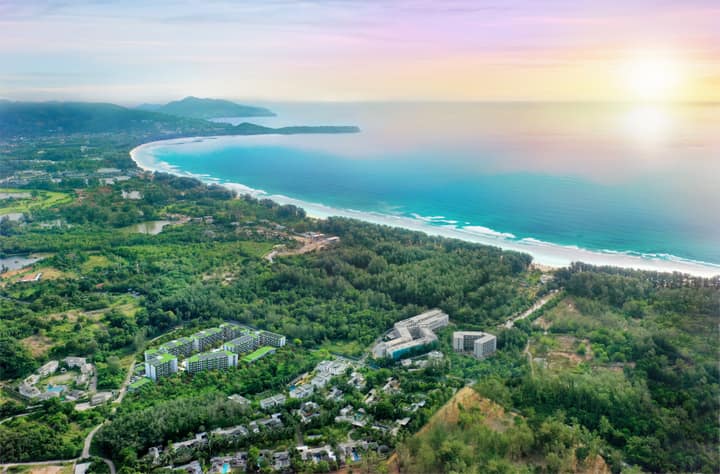
There’s also a difference in the nature of demand. Phuket is part of Thailand’s wider resort property market alongside Samui, Hua Hin and Pattaya; for a comparison of destinations within the country itself, see Thailand property prices by region, or, if you’re weighing the capital as an alternative to a resort, Phuket vs Bangkok for investment. Bali, by contrast, is effectively a separate national property market within Indonesia, concentrated in a handful of zones in the island’s south and centre (Canggu, Seminyak, Uluwatu, Ubud) — the rest of the country barely enters an investor’s field of view. That means “Bali” in an investment conversation isn’t all of Indonesia, but one specific island with local rules that can differ from mainland provinces.
2. Entry price and property formats
The base format differs between the two markets, so the comparison shouldn’t be “price per square metre in a vacuum” but the typical product people actually buy.
| Parameter | Thailand (Phuket) | Bali |
|---|---|---|
| Typical format | Condo-hotel / residence in a rental pool | Standalone villa with a pool |
| Starting entry | Studio from $235,995 (instalments during construction) | Villa in up-and-coming zones — from ~$150–200k; notably higher in Canggu/Seminyak |
| Ready asset | Layan Green Park phase 1 resale — $142,602, full payment, enters the pool immediately | Ready villa — full payment, management more often individual |
| Developer instalments | Available on projects under construction (35% / 50% upfront) | Less common and less standardised |
| Land included in the purchase | No — you buy a unit within a building | Usually yes — the villa sits on its own plot |
Phuket sells a finished product: a unit inside a building with shared infrastructure, where construction, engineering, and handover are controlled by the developer, and income management by an operating company. Bali more often sells an asset for a personal project: land or a villa, where the investor either entrusts construction and subsequent rental to a local contractor and operator, or does it themselves. The difference isn’t about which is more or less expensive — it’s about how many operational decisions remain with the buyer after signing the contract.
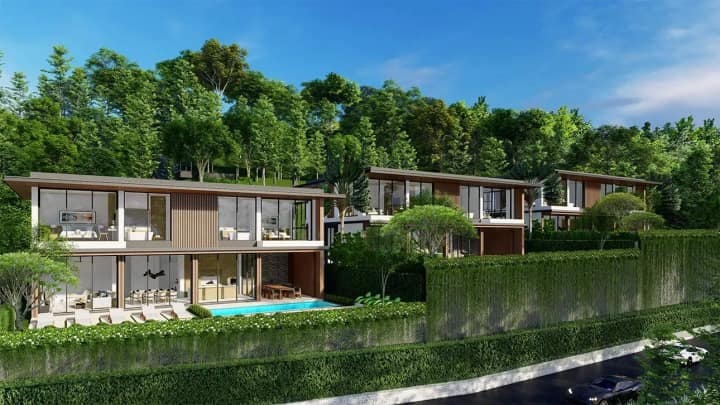
Size and privacy are worth calling out separately: a Bali villa is, on average, larger than a condo unit and almost always comes with its own pool and plot — closer in format to a Phuket villa with a private pool than to a compact condo-hotel studio. Compare format to format, not island to island, and the entry-price gap narrows.
3. Ownership structure for a foreigner
This is where the two markets diverge most fundamentally, and it’s worth understanding before you look at a single listing.
Thailand. A foreigner can hold a condominium as freehold within the quota — 49% of a building’s area can belong directly to foreign owners, registered through the Land Department. Once the quota is used up, or for a villa on land, leasehold applies: a registered land lease for 30 years with the option to renew. For a full breakdown of the two forms, see leasehold vs freehold in Thailand. Owning a villa through a Thai company formally exists, but authorities are tightening enforcement against nominee structures set up “for show” — details in owning a villa through a Thai company.
Bali. The full equivalent of freehold — Hak Milik — is reserved by Indonesian law for citizens only. A foreigner has two legal routes:
- Hak Pakai (“right of use”) — obtainable directly by an individual who meets the relevant visa conditions; closest in spirit to Thai leasehold, but processed under different procedures of Indonesia’s land agency (BPN).
- PT PMA + HGB — a foreigner sets up an Indonesian company with foreign capital (Perseroan Terbatas Penanaman Modal Asing), which registers Hak Guna Bangunan (“right to build”) on the land: typically for 30 years, extendable by another 20, with subsequent re-registration — lawyers describe a potential ownership horizon of up to ~80 years, but that is not one continuous title, rather a chain of renewals dependent on local law at each stage.
| Criterion | Thailand | Bali |
|---|---|---|
| Freehold equivalent for a foreigner | Condo within a 49% quota | Not available (Hak Milik is citizens-only) |
| Base alternative | 30-year leasehold + renewals | Hak Pakai (individual) or HGB via PT PMA |
| Local company required | No, for freehold condos | Usually yes, if the property is run as a rental business rather than personal use |
| Single national registry | Yes, Land Department | Yes, BPN, but procedures mix with Bali’s provincial rules |
Bottom line: Thailand’s system is structurally simpler for a foreigner — one clear freehold mechanism for condos, one clear leasehold mechanism for land. Bali’s requires either visa-linked Hak Pakai status or setting up and maintaining a company for HGB — an extra legal and accounting layer that buying a Phuket condo doesn’t have.
4. Yield and rental management models
The two markets generate rental income differently, and that affects not just the yield figure but how much work falls on the owner.
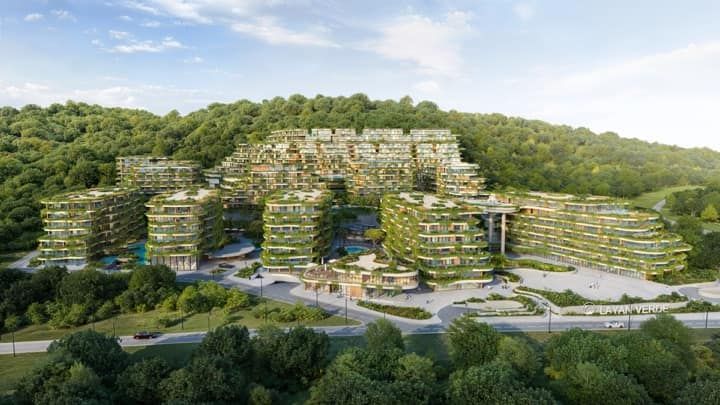
Thailand. The main tool on flagship projects is the rental pool: like-for-like units are pooled together, a management company rents them out and distributes net profit under a formula, typically 60% to the owner / 40% to management. At Layan Verde and Layan Green Park this targets a benchmark of ~8–10% net per year — a programme target confirmed by working operations at Layan Green Park’s completed phase 1 since 2024. Across our catalogue of 348 Phuket projects, the median developer-forecast yield is 6% a year (range 3–15%); for the methodology, see how to calculate ROI on Phuket, and for what “guaranteed yield” actually means, see guaranteed rental yield: what’s behind it.
Bali. There’s no standard industry-wide rental pool with a fixed formula on the mass villa market — management is more often individual: through a local management company taking a commission on turnover, or self-managed. Market consultants, including Knight Frank Indonesia, commonly quote gross yields for villas in top locations (Seminyak, Canggu) in the 7–12% per year range — but that’s income before deducting management, villa staff (gardener, cleaning, security — a standard set for a standalone house), and taxes, not a net figure to the owner. Comparing that gross rate directly with Thailand’s ~8–10% net is methodologically wrong — first reduce both figures to the same denominator: income after all costs.
| Parameter | Thailand (flagship pool) | Bali (typical villa) |
|---|---|---|
| Management model | Developer’s rental pool | Local operator or self-managed |
| Distribution formula | 60% owner / 40% management | Commission on turnover, terms vary by operator |
| Quoted benchmark | ~8–10% net | ~7–12% gross (before costs) |
| Reporting transparency | Management-company reporting, verifiable pool history | Depends on the specific operator |
| Owner workload | Minimal — the pool handles everything | Higher: staffing, cost control for the villa |
Practical takeaway: on Phuket, yield is usually a ready-made formula in the contract with the developer’s management company. On Bali, it’s a negotiating position with a specific operator, where the final net figure depends heavily on management quality and requires separate due diligence on the operator itself, not just the property.
5. Taxes, fees and ownership costs
Thailand. A Land Department transfer fee on the transaction (split with the seller by negotiation), rental income tax typically withheld at source for a non-resident, capital gains tax and specific business tax on resale within five years of ownership. Completed projects carry a monthly CAM fee for common areas (85 THB/m² a month at Layan Verde, 75 THB/m² at Layan Green Park) and a one-off sinking fund (850 and 650 THB/m² respectively). For a full breakdown, see property taxes in Thailand, rental income tax, and sinking fund and CAM; the 180-day tax residency rule and its consequences are covered in 180 days and tax residency.
Bali. Owning through a PT PMA adds a corporate layer: registration and annual company-maintenance costs, bookkeeping, and HGB renewal fees. There’s also a Bali-specific levy that Phuket doesn’t have — the Pungutan Wisatawan Asing foreign tourist levy: since 14 February 2024, every foreign tourist entering the island pays a one-off IDR 150,000 (≈$10) via the Love Bali portal. Formally it’s a levy on the tourist, not the property owner, but in practice it gets folded into the cost of a stay and slightly affects a villa’s price competitiveness against a hotel room.
| Cost item | Thailand (Phuket) | Bali |
|---|---|---|
| Transaction registration fee | Land Department transfer fee | BPN fees + notary (PPAT) |
| Ownership structure | No company required for freehold condos | Usually requires a PT PMA for renting as a business |
| Rental income tax | Withheld at source, for non-residents | Under Indonesian tax code, through the company |
| Recurring guest levy | No separate local levy | ≈$10 one-off foreign tourist levy (paid by the guest, not the owner) |
| Common areas / sinking fund | CAM fee + sinking fund (condo-hotel) | Usually none — the villa is serviced separately, costs fall to the owner |
Both markets require you to build costs into the model up front rather than calculating yield off a “gross” rate. The difference is that Thailand’s cost structure is standardised at the project level (CAM and sinking fund figures are known from the price list before the deal), while Bali’s is individual to each villa and depends on the staff the owner hires.
6. Visas and residency
Neither market grants a visa through purchase alone — both use separate visa categories.
Thailand offers a wide line-up: LTR — for wealthy residents, retirees and remote professionals, with tax benefits on foreign income (details in the LTR visa overview and LTR tax benefits); DTV — a 5-year visa for digital nomads (DTV breakdown); Thailand Privilege (Elite) — a paid multi-year membership visa (overview); and the classic Non-O/O-A retirement visa. For a practical look at visas for property owners, see Thailand visas for property owners.
Bali (Indonesia) has offered a Second Home Visa since December 2022: applicants show a deposit of at least IDR 2,000,000,000 (roughly $125–130k at current rates; the figure is fixed in rupiah, not dollars) held in a state-owned Indonesian bank, the application fee is IDR 3,000,000, and the visa runs for 5 or 10 years without the right to local employment. It’s not a “visa through property purchase” in the strict sense — the money must sit as a deposit rather than be invested in a property — though many investors effectively combine both goals: holding capital for the visa while separately hunting for a villa for income.
| Parameter | Thailand: LTR | Bali: Second Home Visa |
|---|---|---|
| Best suited to | Wealthy residents, retirees, remote professionals | Wealthy applicants with a large deposit |
| Financial threshold | Depends on the LTR category | IDR 2,000,000,000 deposit in a state bank |
| Duration | Renewable long-term status | 5 or 10 years |
| Tied to property | Not required | Not required (deposit, not purchase) |
| Tax benefit | Foreign-income tax exemption under qualifying conditions | The visa itself carries no separate tax benefit |
It’s also worth planning the logistics of the viewing trip itself: as of 15 September 2026, Thailand cut its visa-free stay from 60 to 30 days (see Thailand confirms the visa cut) — that doesn’t get in the way of a single viewing trip, but it’s worth planning entry dates ahead if the trip combines several tasks.
7. Regulatory environment and risk, 2024–2026
Both markets are currently going through tighter regulation — but in different areas.
Thailand. The Ministry of Commerce and related agencies are stepping up enforcement against nominee ownership structures — Thai companies that formally belong to Thai nationals but are, in effect, controlled by a foreigner sidestepping land law. Data consolidated by three agencies in September 2026 shows over a million rai of land and roughly 77,000 apartment units registered to companies with foreign participation — details, and what it does and doesn’t change for legitimate freehold condos within quota and leasehold villas, are covered in nominee-scheme crackdown: the land data. The key takeaway for a buyer: the investigation targets ownership through a company, not freehold condos within the 49% quota or direct leasehold registered to a foreigner — neither of those forms is affected.
Bali. Following destructive floods in September 2025, the provincial government formalised a construction moratorium across six regencies (Tabanan, Jembrana, Buleleng, Bangli, Karangasem, Klungkung) — but it doesn’t apply to Badung regency, home to the main tourist and investment zones (Canggu, Seminyak, Uluwatu, Pererenan). Separately, and island-wide, building on agricultural-zoned (“green zone”) land is banned without a formal rezoning process — regardless of the moratorium. For an investor, that means checking a specific plot’s zoning is mandatory every time, not something to take on a neighbourhood’s reputation.
| Risk factor | Thailand | Bali |
|---|---|---|
| Regulator’s current focus | Nominee Thai companies | Construction moratorium in select regencies + ban on building on agricultural land |
| Affects freehold condos in quota | No | Not comparable — there is no Hak Milik route for foreigners in the first place |
| Affects main tourist zones | No (within quota) | No (Badung is outside the moratorium), but zoning checks are mandatory |
| Source of buyer risk | Ownership scheme (nominee company) | Land status (zoning, plot category) |
8. Infrastructure, logistics and quality of life
- Airports and flights. Phuket has an international airport (HKT) with direct flights to Europe, Asia and the Middle East, 15–25 minutes from the west coast, including the Layan area. Bali’s Ngurah Rai international airport sits in the island’s south: close to Seminyak and Canggu, but the island’s road network is congested, and comparable distances to northern or eastern zones take noticeably longer than on Phuket.
- Healthcare and schools. Phuket has a network of international-standard private clinics (Bangkok Hospital Phuket) and international schools within 20–25 minutes of most resort areas. Bali’s healthcare and education infrastructure is concentrated mainly around Denpasar and Canggu, with quality and access more uneven across the island.
- Climate. Both islands are tropical with dry and wet seasons; Phuket’s west-coast swimming season lines up with peak tourist season, and Bali follows a similar pattern, though monsoon downpours in some years hit logistics and roads outside the main tourist zones harder.
- Community and environment. Phuket combines resort infrastructure with a growing residential environment for families: supermarkets, restaurants, retail clusters like Boat Avenue near Bang Tao. Bali has a strong niche community culture (wellness, digital nomads, surf scene), especially in Canggu and Ubud, but infrastructure for families with children is less consistent outside a handful of districts.
9. Pitfalls
- Confusing Hak Pakai with freehold. Even when a Bali agent markets a listing as “freehold,” a foreigner in fact receives a right of use or rights through a company — a different legal nature that affects inheritance, resale and tax.
- Comparing Bali’s gross yield with Phuket’s net yield. 7–12% gross on a villa and ~8–10% net on a Thai pool are different numbers; reduce both to “after all costs” first.
- Skimping on PT PMA legal support. The company requires annual filings and permit renewals — an unmaintained structure creates risk for the HGB title itself.
- Skipping the zoning check on a Bali plot. Land status (residential, commercial, agricultural) determines whether a villa can be built at all — this is the first item of due diligence, not a formality.
- Trusting “guaranteed yield” without a source. The 60/40 formula at Thailand’s flagship pools is part of a contract with a verifiable track record; figures without a contract and reporting are marketing on either market.
- Underestimating nominee schemes in Thailand. Owning a villa through a Thai company “for show” is under heightened scrutiny from authorities as of 2025–2026; freehold condos within quota and direct leasehold don’t create this exposure in the first place.
- Ignoring the difference in ownership horizon. Thai leasehold registers for 30 years with renewals under a clear procedure; Bali’s HGB is a chain of renewals (30+20 years and beyond) dependent on local regulation at the time of each renewal.
10. Case: choosing between Thailand and Bali
An investor with a budget of around $200k was weighing a villa in an up-and-coming Bali zone against a studio in a working condo-hotel on Phuket. The Bali villa won on size and privacy: its own pool, its own plot, a “home by the sea” rather than a unit in a building. But due diligence surfaced the details: the land could only be registered through a new PT PMA company with annual filings, the plot’s zoning required separate confirmation that the land wasn’t agricultural, and rental management would have to be handed to a local operator with no industry-standard income-split formula — the investor would only learn the actual net yield after a full operating season.
The resale studio at Layan Green Park near Layan beach, by contrast, entered a working rental pool immediately under the 60/40 formula with a ~8–10% net benchmark, freehold was registered within quota with no company required, and CAM fee and sinking fund were known upfront from the price list. The investor chose Phuket — not because the Bali villa was a bad asset, but because the goal was predictable passive ownership without setting up and running a foreign company. For an investor with a different goal — a personal home with full control over management and a willingness to run a local business — the math could easily favour Bali instead.
Bottom line. Thailand and Bali aren’t head-to-head competitors — they’re different models for investing in tropical property. Bali suits someone prepared for a more complex legal structure (Hak Pakai or PT PMA), self-management, and who values the growth potential of niche zones over predictability. Thailand, and Phuket in particular, is the choice for those who want a clear ownership structure, a ready-made income formula in the contract with a management company, and a market with a long transaction history. For a broader look, Phuket, Bali or Dubai works through the same questions with a third market added.
I’ll help compare specific Phuket properties against your budget and goal, with a yield calculation in the ROI calculator — or let’s talk strategy through Layan Real Estate.
Get a shortlist for your strategy
By submitting the form, you agree to the privacy policy.