Back in 2022, Portugal was an almost automatic entry on any list of “the easiest way for a foreigner to get EU residency and a passport through real estate.” Over the following three years that picture changed almost completely: in October 2023 the Golden Visa route through property purchase was closed, in January 2025 the favourable NHR tax regime was scrapped, and in May 2026 a new nationality law with a doubled residency requirement and a flat 7.5% purchase tax for non-residents both took effect. No single reform is fatal on its own, but together they change the entire logic of buying into Portuguese real estate — from “buy a studio in Lisbon, get an EU passport in 5 years” to a much longer and less predictable story. Phuket has had an incomparably calmer few years over the same period: scrutiny of nominee ownership structures has tightened, but the basic rules of ownership, rental and taxation have stayed the same. We compare both markets using one method — from entry price to regulatory risk — so the decision rests on the actual rules of 2026, not Portugal’s five-year-old reputation.
Contents
- Two markets after a wave of reforms
- Entry price and typical product
- Ownership structure for a foreigner
- Yield and rental management models
- Taxes, fees and cost of ownership
- Visas and citizenship through property
- Currency, macro and regulatory risk
- Infrastructure, logistics and quality of life
- Traps
- Case: choosing between Thailand and Portugal
1. Two markets after a wave of reforms
Portugal and Thailand play a similar role for real estate in their economies — tourism, foreign capital, resort regions — but the pace of rule changes over the last three years has been very different.
- Portugal. An EU and Schengen country of roughly 10.5 million people, whose real estate market was fuelled for decades by the Golden Visa programme (Autorização de Residência para Investimento, ARI). Since October 2023, residential property has been excluded from ARI; since January 2025, the favourable NHR tax regime has been abolished; and in May 2026, a new nationality law and a flat property-purchase tax for non-residents both took effect almost simultaneously. The property market regulator is the Instituto dos Registos e do Notariado (IRN) for registration and the Autoridade Tributária e Aduaneira (AT) for taxes; migration matters have been handled by AIMA since the end of 2023, replacing the disbanded SEF.
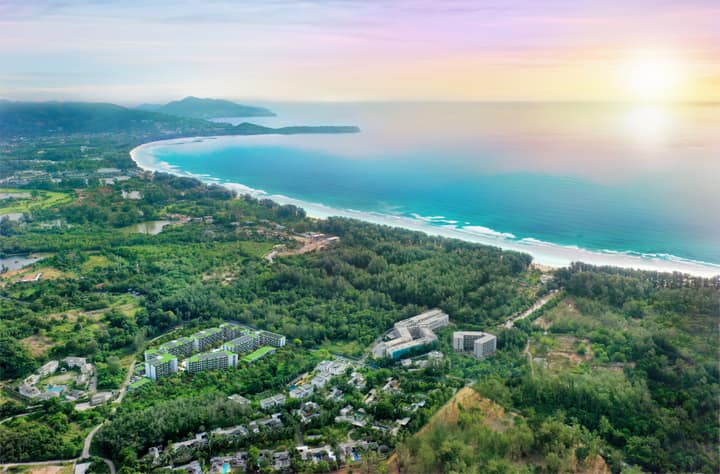
- Phuket (Thailand). A resort island where real estate is part of the tourism industry, and demand is shaped by tourist arrivals and air connectivity rather than citizenship programmes. The single national title registrar, the Department of Lands, has not changed in decades, and the only notable regulatory shift of 2025–2026 has been tighter scrutiny of nominee Thai companies used to bypass land law (see section 9) — not a revision of foreign owners’ basic rights.
It is worth not confusing “country” with “market”: Lisbon and its suburbs (Cascais, Oeiras) are urban real estate with the highest prices in the country, Porto is a more affordable north, and the Algarve is a resort south closer in spirit to Phuket in its tourist-rental model. For how Phuket stacks up against other international markets, see Thailand vs Dubai, Thailand vs Bali and Thailand vs Turkey, which apply the same method to other market pairs.
2. Entry price and typical product
The base product on the two markets differs, and the comparison should not be an abstract price per square metre but what an investor with a given budget actually gets.
| Parameter | Thailand (Phuket) | Portugal |
|---|---|---|
| Typical format | Condo-hotel / residence in a rental pool | Apartment in a residential building, often without a single rental management model |
| Median price | Studio from $235,995 (construction-period instalments) | ~€2,337/sqm nationwide (Q1 2026); ~€5,292/sqm in Lisbon |
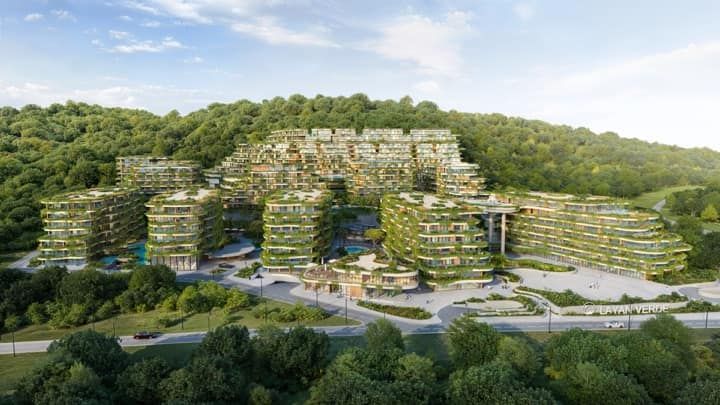
| Price trend | Rises with construction stage (Layan Verde studios up from $224,776 to $235,995) | +17.8% year-on-year in Q1 2026, alongside a 10.5% drop in transaction volume |
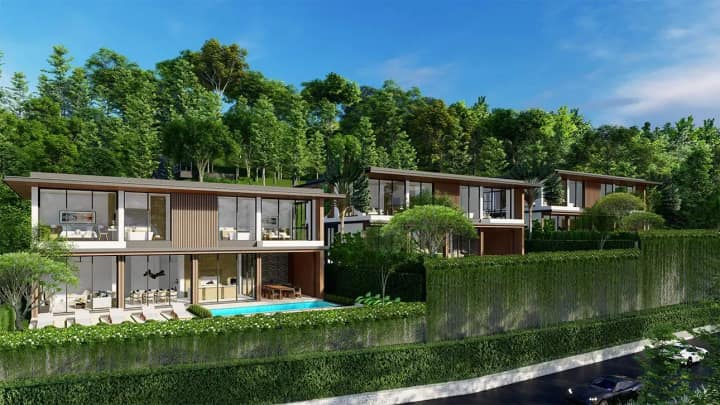
| Ready asset | Layan Green Park resale studio — $142,602, joins the pool immediately | A finished apartment in Porto or the Algarve — comparable to or above the Phuket entry point |
| Developer instalments | Available on projects under construction (35% / 50% up front) | Not typical on the resale market; new-builds vary by developer |
Phuket sells a ready-made resort product: a unit in a building with its own infrastructure, where the developer controls construction and handover and a management company runs the income. Portugal sells a mature, pan-European housing market, where resort-style logic applies mainly to the Algarve and the tourist districts of Lisbon and Porto, while the rest of the market runs on ordinary residential-stock rules — resident owners, local landlords, and no standardised income model.
The pace of price growth deserves separate attention. Portugal’s market is growing at double-digit rates in 2026 (+17.8% year-on-year, per Statistics Portugal, INE) while transaction volumes fall — a classic sign of supply lagging demand rather than growing demand meeting stable supply. On Phuket, the rise in Layan Verde and Layan Green Park studio prices is tied to specific construction milestones of a specific project, not to general housing-market inflation — these are processes of a different nature, and comparing their percentages directly is not a fair comparison.
3. Ownership structure for a foreigner
This is the one area where Portugal formally offers the broadest rights in this comparison — but that breadth is exactly what has made property a target for the reforms covered in sections 5–7.
Portugal. A foreigner of any nationality can own property under full ownership with almost no restrictions — no quota, no need to register a local company, no residency requirement for the buyer. The deal is registered through a notary and the IRN, and the buyer receives a título de propriedade — a full equivalent of freehold. The one real restriction to emerge in recent years is not on ownership itself but a higher purchase tax for non-residents (section 5).
Thailand. A foreigner can hold freehold ownership of a condominium within a quota — up to 49% of a building’s area can be owned directly by foreigners, registered through the Department of Lands nationwide. Once the quota is used up, or for a villa on land, leasehold is available: a registrable 30-year land lease with renewal options. For a detailed breakdown of the two forms, see freehold vs leasehold in Thailand.
| Criterion | Thailand | Portugal |
|---|---|---|
| Right available to foreigners | Freehold within the 49% quota (condo) or leasehold (villa) | Full ownership, no quota or restrictions |
| Local company required | No, for freehold condos | No |
| Geographic restrictions | No land quota outside the condo building itself | Almost none (aside from narrow border-zone rules) |
| Extra barrier for a non-resident | None at the ownership-right level | Flat 7.5% IMT purchase tax (since May 2026) |
| Single national registry | Yes, the Department of Lands | Yes, IRN (registration) + AT (taxes) |
Bottom line: on paper, Portugal’s ownership rights are simpler and broader than Thailand’s — no quota, no leasehold. In practice, though, wide foreign access to housing has become a political target amid Portugal’s housing crisis in major cities, and the barrier for a non-resident there is now built into the tax on the transaction rather than into ownership rights. Thailand’s quota-plus-leasehold system, by contrast, has run unchanged for years and remains a predictable mechanism specifically for the resort-condo product that Layan Verde and Layan Green Park represent.
4. Yield and rental management models
Income generation is fundamentally different on the two markets, which affects not just the yield figure but how much work an investor takes on.
Thailand. The main instrument on flagship projects is the rental pool: like-for-like units are pooled together, a management company lets them out, and net profit is split under a formula, typically 60% to the owner / 40% to the management company. At Layan Verde and Layan Green Park this targets ~8–10% net per year — the programme’s target figure, backed by an operating track record at the completed Layan Green Park phase 1 since 2024. For the methodology behind your own return, see how to calculate ROI on Phuket.
Portugal. There is no standard industry-wide rental pool with a fixed distribution formula — management usually runs through a local agency or a short-term rental platform for a commission, or the owner self-manages. Short-term tourist rentals require an Alojamento Local (AL) licence: since 2024, the power to regulate licences has shifted to municipalities (Decreto-Lei n.º 76/2024), which can impose “containment zones” — once a district’s AL-to-housing ratio hits 10%, new AL licences are suspended (“absolute containment”), and softer limits kick in from 5% (“relative containment”). Lisbon tightened its zones in December 2025, while Porto remains more accessible (districts such as Boavista, Campanhã and Lordelo). Since 20 May 2026, EU Regulation 2024/1028 requires platforms such as Airbnb and Booking to verify licence numbers and remove unlicensed listings.
| Parameter | Thailand (flagship pool) | Portugal (typical unit) |
|---|---|---|
| Management model | Developer’s rental pool | Local agent, an AL platform, or self-managed |
| Distribution formula | 60% owner / 40% management company | Turnover-based commission, terms vary by operator |
| Licence required | Not separately — part of the developer’s project | Yes, Alojamento Local, with municipal zone restrictions since 2024–2026 |
| Gross yield (benchmark) | Built into the target ~8–10% net | ~4.3–5% nationwide average; weaker in Lisbon (~3.8–4.3%), higher in Porto and the Algarve (~5–8%) |
| Reporting transparency | Management company reports, verifiable pool track record | Depends on the specific agent or platform |
Practical takeaway: on Phuket, yield is usually a ready-made formula written into the contract with the developer’s management company, backed by a verifiable payout history. In Portugal, a nominally higher gross yield almost never reaches Thailand’s net-yield benchmark, and earning it requires a separate AL licence and awareness of municipal zone restrictions — an administrative task Phuket removes from the investor by default.
5. Taxes, fees and cost of ownership
Portugal. Since 25 May 2026, Decreto-Lei n.º 97/2026 has applied: a non-tax-resident buyer of residential property pays a flat 7.5% IMT rate on the transaction price — regardless of the property’s value. Before this reform, a single progressive IMT scale (0–7.5%) applied to all buyers regardless of residency. Exemptions from the flat rate apply if the buyer becomes a Portuguese tax resident within 2 years of the purchase, lets the property under a moderate-rent long-term lease, or falls into a privileged category (for example, government officials acting in an official capacity). On top of that, stamp duty (Imposto do Selo) is due at a flat 0.8% of the price or assessed value (VPT), whichever is higher, for every buyer with no exceptions. The annual municipal ownership tax, IMI, is usually 0.3–0.45% of VPT depending on the municipality. On sale, capital gains tax applies: since 2023, non-residents get the same 50% exclusion on the taxable gain as residents (only half the gain is taxed, on a progressive scale keyed to the seller’s worldwide income for bracket purposes). Long-term rental income for a non-resident is taxed at a separate flat rate of around 25%.
Thailand. A transfer fee at the Department of Lands is due on the transaction (split by negotiation with the seller), rental income is typically taxed via withholding at source for a non-resident, and capital gains tax plus a specific business tax apply if sold within five years of ownership. Completed projects carry a monthly CAM fee for common areas (Layan Verde: 85 THB/sqm per month; Layan Green Park: 75 THB/sqm per month) and a one-off sinking fund (850 and 650 THB/sqm respectively). For a detailed breakdown, see property taxes in Thailand and sinking fund and CAM fees.
| Cost item | Thailand (Phuket) | Portugal |
|---|---|---|
| Tax/fee on purchase | Department of Lands transfer fee | IMT: flat 7.5% for a non-resident (since May 2026) + 0.8% stamp duty |
| Annual property tax | No separate ownership tax (aside from CAM/sinking fund) | IMI — 0.3–0.45% of assessed value (VPT) |
| Tax on rental income | Withholding tax for a non-resident | Flat rate ~25% for a non-resident |
| Capital gains tax | Applies on sale, including specific business tax under 5 years | 50% exclusion on the base (same as residents since 2023), remainder on a progressive scale |
| Common areas / repair fund | CAM fee + sinking fund (known upfront from the price list) | Not typical for standalone apartments outside condominiums; in residential complexes, a condomínio fee set by the owners’ assembly |
Both markets require building ownership costs into the model upfront. The difference is that Thailand’s cost structure is standardised at the project level and known from the price list before the deal, while Portugal’s is calculated individually based on the buyer’s residency status and can change after the purchase — exactly what happened with IMT in May 2026, when the rule changed for all new non-resident transactions at once.
6. Visas and citizenship through property
This is the section with the sharpest change over three years — what used to be Portugal’s headline argument now works very differently in 2026.
Portugal. The Golden Visa (ARI) route through buying residential property has been closed since 7 October 2023, under the “Mais Habitação” housing law. In 2026 the ARI programme is still active, but only through other channels: investment funds (from €500,000, minimum 5-year hold, no residential property allowed, at least 60% of the capital in companies headquartered in Portugal), scientific research support (from €500,000), cultural or heritage support (from €250,000), and job-creation or business-investment routes. The programme is administered by the AIMA migration agency. Separate from ARI, there are visas tied to a specific type of income: the D7 for those with passive income (pension, rent, dividends) of at least €920 a month plus proven savings of roughly €11,040; the D8 for remote workers with active income of at least €3,680 a month. Neither is tied directly to a property purchase. An even sharper change: since 19 May 2026, the new Nationality Law (Lei Orgânica 1/2026) has raised the standard period of legal residence required before naturalisation from 5 to 10 years (7 years for EU and CPLP citizens); applications filed before that date are still assessed under the old rule.
Thailand. Buying a condo or villa has never granted a visa on its own — a separate line-up of instruments is used instead: the LTR — a visa for wealthy residents, retirees and remote professionals with tax benefits on foreign income (details in the LTR visa overview); the DTV — a 5-year visa for digital nomads; and the classic Non-O/O-A retirement visa. Thai citizenship through investment does not exist as a legal route at all — this is not an alternative path, but a missing one.
| Parameter | Portugal in 2026 | Thailand |
|---|---|---|
| Residency via property purchase | Closed since October 2023 | Never existed |
| Alternative ARI routes | Funds from €500,000, research, culture, business | Not applicable |
| Residency required before citizenship | 10 years (7 for EU/CPLP) since May 2026 | Citizenship through investment does not exist |
| Income-based visa without buying a property | D7 (passive income from €920/month), D8 (from €3,680/month) | LTR, DTV — a similar income/status logic |
| End status | EU/Schengen residency, citizenship after many years | Long-term resident visa, not citizenship |
Practical takeaway: if five years ago buying an apartment in Lisbon was the fastest route to an EU passport, in 2026 it no longer is — property and migration status in Portugal are now fully decoupled, and the path to citizenship has doubled in length. Thailand is, in this sense, more honest about expectations: property there was never sold as a road to citizenship, and no illusions are being taken away from investors after the fact.
7. Currency, macro and regulatory risk
This is the section where the difference between the two markets shifts from “currency” to “how fast the rules change.”
Portugal. The euro is one of the world’s leading reserve currencies, and there is no classic currency crisis here as there is in Turkey. But between 2023 and 2026 the market went through at least four structural reforms, each directly changing conditions for a foreign property owner: closing the ARI route through housing (October 2023), abolishing the NHR tax regime (January 2025), a new nationality law with an extended residency requirement (May 2026), and a flat 7.5% IMT for non-residents (May 2026). That is regulatory risk — not a loss of asset value, but a change in the rules after a deal is done. There is also a natural-hazard factor: Lisbon and the country’s southern coast sit in the seismically active Azores–Gibraltar Fracture Zone, and the Great Lisbon Earthquake of 1755 (estimated magnitude 8.5–9) remains the region’s benchmark risk event and the basis for strict seismic-code requirements in modern construction.
Thailand. The Thai baht has historically been stable against the dollar, and Phuket’s flagship projects quote both price and yield in dollars, removing part of the currency risk from the investor at the contract level. The basic rules of ownership, rental and taxation on the island have not changed in years — the only current area of regulatory attention in 2025–2026 is nominee Thai companies used to bypass land law; freehold condos within the 49% quota and direct leasehold do not create that risk. Phuket sits outside the region’s main seismic-hazard zones.
| Risk factor | Thailand (Phuket) | Portugal |
|---|---|---|
| Currency stability | Baht relatively stable vs. dollar; flagship prices quoted in USD | Euro stable as a reserve currency; exchange-rate risk is modest |
| Regulatory risk for a foreign owner | Low — basic rules unchanged for years | High — 4 major reforms in 2023–2026 |
| Seismic risk | Island sits outside the main seismic-hazard zones | Lisbon and the south sit in the Azores–Gibraltar Fracture Zone (1755 earthquake) |
| Main structural risk | Nominee Thai companies bypassing land law | Fast-changing visa, citizenship and tax rules for non-residents |
Practical takeaway: an investor choosing Portugal needs to build into the model not just price and yield but the likelihood that visa, tax or citizenship rules will change after the purchase — over the past three years, that has happened regularly and without a long transition period for new transactions.
8. Infrastructure, logistics and quality of life
- Airports and flights. Phuket has an international airport (HKT) with direct flights to Europe, Asia and the Middle East, 15–25 minutes from the west coast, including the Layan and Bang Tao areas. Portugal is served by three major international airports — Lisbon (LIS), Porto (OPO) and Faro (FAO) for the Algarve — with dense connectivity across Europe thanks to EU membership.
- Legal status in the region. A Portuguese resident travels across the whole Schengen area visa-free — an advantage a Thai long-term visa cannot offer by definition: the LTR and DTV grant the right to live in Thailand, but do not automatically open neighbouring countries.
- Climate. Phuket has a tropical climate with dry and wet seasons, and the swimming season on the west coast coincides with peak tourist season. Portugal has a Mediterranean climate in the south (the Algarve) and a cooler Atlantic climate in the north (Porto); the high rental season is shorter and more tightly tied to the summer months than on Phuket.
- Healthcare and schools. Phuket has a network of international-standard private clinics (Bangkok Hospital Phuket) and international schools 20–25 minutes from most resort areas. Portugal has a public healthcare system (SNS) plus well-developed private care in Lisbon and Porto; international schools are concentrated in those same two cities and in the Algarve.
- Cost of daily life. Both destinations are noticeably cheaper than northern Europe, but Portugal has been catching up on housing and rental prices in recent years — a 17.8% year-on-year rise in house prices in early 2026 is also pushing up rents for local residents, while everyday costs on Phuket are rising far more slowly.
9. Traps
- Assuming Portugal’s “Golden Visa” is still about property. Since October 2023 it is not: the route through housing is closed, and the surviving ARI options (funds, research, culture) require a completely different type of investment and are not tied to a specific apartment.
- Planning on citizenship after 5 years of residency. Since 19 May 2026 the standard period is 10 years (7 for EU/CPLP citizens); relying on old articles online about “the fastest EU passport” no longer works.
- Not checking the AL zone at a specific address. In Lisbon, once a district hits 10% AL relative to its housing stock, new short-term rental licences are not issued at all — check the zone status before, not after, buying for tourist rental.
- Relying on the old NHR regime. It was abolished on 1 January 2025; the current IFICI is aimed at a narrow set of professions in science and innovation and no longer exempts foreign pensions the way NHR did.
- Not recalculating IMT under the new rule. A flat 7.5% for a non-resident since May 2026 applies regardless of the property price — this can end up noticeably more expensive than the old progressive-scale calculation still used by outdated online calculators.
- Underestimating Thailand’s nominee-ownership schemes. Holding a villa through a Thai company “for show” is an area of heightened regulatory attention since 2025–2026; freehold condos within the quota and direct leasehold do not create that problem at all.
- Believing in “guaranteed yield” without a source. The 60/40 formula at Thailand’s flagship pools is part of a contract with a verifiable track record; average percentages from articles about the Portuguese market are country-wide statistics, not a guarantee for a specific apartment.
10. Case: choosing between Thailand and Portugal
An investor with a budget of around $300,000 was looking at an apartment in Lisbon back in 2022, specifically for the Golden Visa and the prospect of an EU passport in 5 years. Returning to the idea in 2026, they found the calculation no longer worked: the ARI route through property has been closed since 2023, and the alternative is a €500,000-plus investment in a fund with no choice of a specific asset. Even buying the Lisbon apartment purely as an asset, at non-resident status they would now pay IMT at a flat 7.5% instead of the old progressive scale, could not let it without an AL licence, and the city’s gross yield sits at the low end of the country’s range, around 4%.
The Layan Green Park studio resale near Layan beach, by contrast, joined a working rental pool immediately under the 60/40 formula with a target of ~8–10% net in dollars, freehold was registered within the quota with no company required, and the deal terms had not changed since the purchase date. The investor chose Phuket — not because Portugal had stopped being an attractive place to live, but because the goal was predictable yield and stable entry rules, not a hypothetical EU passport that would now take twice as long as originally planned.
Bottom line. Thailand and Portugal are fundamentally different propositions for an investor in 2026. Portugal remains an EU country with full, quota-free ownership for foreigners, but over the last three years it has lost its headline advantage — a fast route to residency and citizenship through property — and gained a higher purchase tax for non-residents and zonal restrictions on tourist rentals in return. Phuket, and Thailand more broadly, suits those who value predictable dollar-denominated yield, a ready-made net-income formula in the contract with a management company, and stable rules that have not changed in years. For a broader comparison, see Thailand vs Dubai, Thailand vs Bali and Thailand vs Turkey, which cover the same questions for other market pairs, and Thai company villa ownership for a detailed look at nominee ownership structures in Thailand.
Happy to help compare specific properties on Phuket against your budget and goal, with a return calculation in the ROI calculator — or let’s discuss strategy through Layan Real Estate.
Tailored to your strategy
By submitting this form, you agree to the privacy policy.