Malaysia comes up regularly in conversations with investors alongside Thailand — but usually not as a resort alternative to Phuket, rather as a residency programme: Malaysia My Second Home (MM2H), relaunched in 2024 with four tiers and deposits ranging from $32,000 to $1,000,000. The comparison turns out to be unusual because the two countries are selling different things. Thailand offers a finished resort asset with a freehold quota on condos and structured income through a rental pool. Malaysia is a federation of states with its own land law, where a foreigner can own land and a house on it almost like a citizen (as long as the state’s minimum price is met) — but pays 30% RPGT on a sale within the first five years, a flat 30% on net rental income as a non-resident, and must keep part of their capital in a deposit for the visa. We compare both markets using the same method — from entry price to currency risk — so the decision rests on the structure of 2026 rules rather than general impressions of “cheap Malaysia” or “expensive Thailand.”
Contents
- Two markets, two different points of entry
- Entry price and typical product
- Ownership structure for a foreigner
- Yield and rental management models
- Taxes and fees
- MM2H vs Thai visas: two ways to get residency
- Currency, macro and political risk
- Infrastructure, logistics and quality of life
- Pitfalls
- Case: choosing between MM2H Silver and Phuket
1. Two markets, two different points of entry
Before comparing numbers, it is worth pinning down the difference in what a purchase actually accomplishes in each country.
- Malaysia. A federation of 13 states and 3 federal territories with its own common-law heritage, where each state sets its own minimum price for foreign buyers. The capital, Kuala Lumpur, is a business hub with no beach; Penang Island with its historic George Town (a UNESCO site) is the closest thing to a resort format; Johor Bahru, on the border with Singapore, runs on cross-border commuter logic and the Forest City special economic zone. For many foreigners, Malaysia is first and foremost the MM2H route: a long-term residency visa where a property purchase is one of two mandatory conditions alongside a fixed deposit.
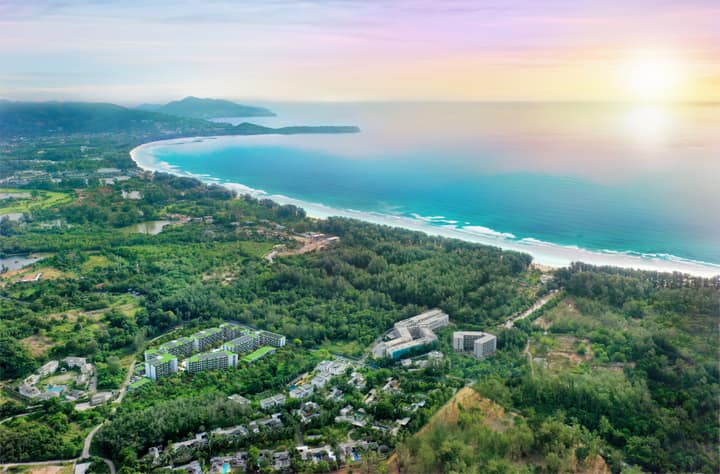
- Phuket (Thailand). An island where real estate is an established part of the tourism industry, and flagship projects sell not just square metres but a ready-made income model: a rental pool with a fixed payout formula. Basic ownership rules — a 49% freehold quota for condos, a 30-year leasehold for a villa on land — have not changed in decades.
The difference in what is actually on offer is the key point: Malaysia sells breadth of ownership rights and long-term residency through MM2H, Thailand sells a narrower but deeply built-out resort income model. If you want to see how Phuket stacks up against other international markets, the same method is applied to other pairs in Thailand vs Dubai, Thailand vs Vietnam and Thailand vs Turkey. For where to start as an investor, see investing in Phuket.
2. Entry price and typical product
On paper, Malaysia looks more accessible on minimum entry price for a foreign buyer, but the threshold varies sharply by state, and the product itself is structurally different — an ordinary residential condominium with no built-in rental model, not a resort condo-hotel.
| Region / state | Minimum price for a foreigner | Typical format |
|---|---|---|
| Penang (mainland), Melaka, Sarawak (outside Kuching) | RM 500,000 (~$119,000) | apartment (strata) |
| Kuala Lumpur | RM 1,000,000 (~$238,000) | any format |
| Johor (including Johor Bahru); lower in the Forest City SEZ | usually from RM 1,000,000; from RM 500,000 in Forest City | apartment/strata |
| Selangor | RM 1,500,000 strata / RM 2,000,000 landed | strata / landed |
| Penang Island (George Town and surroundings) | RM 3,000,000 for a landed house | landed |
| Phuket — Layan Green Park, resale studio | $142,602 | ready unit, enters the rental pool immediately |
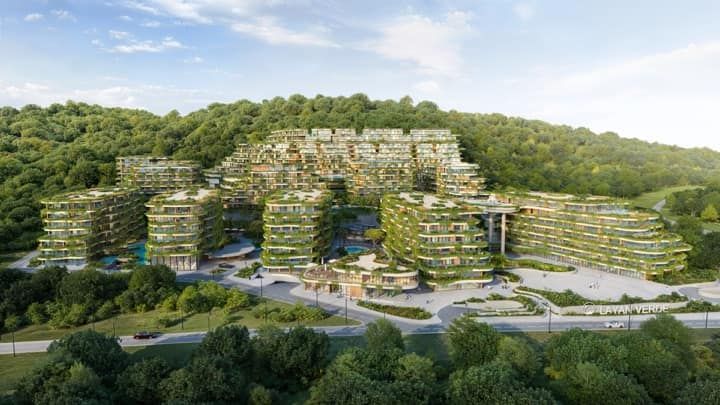
| Phuket — Layan Verde, launch pricing | $235,995 | off-plan, instalments through construction |
The conversion rate used here is roughly 4.20 MYR per $1 at time of publication; recalculate at the current rate before a deal. Malaysia’s RM 500,000 threshold on mainland Penang is formally lower than entry into Thailand’s flagships, but it buys an ordinary residential condo on the resale or primary market with no unified rental programme — any income you generate, you organise yourself. The Thai price at $235,995 or $142,602 is a finished product with an income formula fixed in the management contract and, in Layan Green Park’s case, a working phase 1 that has been operating since 2024. The trade-off between “home for yourself” and “income asset” in Phuket is covered in off-plan vs ready property, and the yield-calculation method is in how to calculate ROI in Phuket.
One further detail: Malaysia’s minimum price applies to any foreign buyer, not only MM2H visa holders. The MM2H tier adds a bank-deposit requirement on top of that threshold — buying property in Malaysia on its own does not grant residency, and residency through MM2H does not remove the need to separately find a property priced above the state’s minimum.
3. Ownership structure for a foreigner
This is the one section where Malaysia is structurally ahead of Thailand — worth stating plainly before moving to sections where the gap runs the other way.
Malaysia. A foreigner can hold freehold title — including land and a standalone house on it — in most states, provided the price is above the set minimum. The restriction works through a minimum price, not a percentage-of-building quota: there is no equivalent of Thailand’s 49% condo quota or Vietnam’s 30% building quota. Some states offer 99-year leasehold instead of freehold for certain land categories, but freehold is widely available, including for villas and townhouses. Registration is handled by each state’s own Land Office — there is no single national registrar in Malaysia comparable to Thailand’s Department of Lands, and rules and procedures differ from state to state.
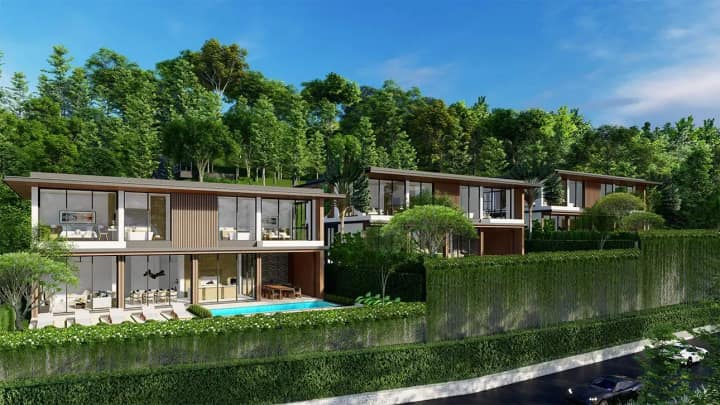
Thailand. A foreigner can hold freehold title to a condominium within a quota — up to 49% of a building’s floor area may be owned directly by foreign buyers, registered through a single national Department of Lands. For a villa on land, only leasehold is available — a registered 30-year land lease with an established renewal practice, not freehold. Details are in leasehold vs freehold in Thailand; on why owning a villa through a Thai company is not a substitute for a proper leasehold and creates legal risk, see Thai company villa ownership.
| Criterion | Malaysia | Thailand |
|---|---|---|
| Freehold for a foreigner | Yes, including land and a house — above the state’s price threshold | Condos only, within a 49% building quota |
| Access restriction | Minimum price by state | Percentage of building floor area (condo) or leasehold (villa) |
| House on land for a foreigner | Available as freehold in many states | Not available as freehold; only a 30-year land leasehold |
| Term of ownership | Perpetual (freehold) | Perpetual for freehold condos; 30 years + renewal for leasehold |
| Registrar | Each state’s own Land Office — rules differ | A single national Department of Lands |
Bottom line: in terms of the breadth of ownership rights, Malaysia is closer to a “standard” Western ownership model than Thailand is. But that breadth does not settle the question of income from the asset — and yield and its structure are exactly where the next section swings decisively toward Phuket.
4. Yield and rental management models
Here the gap favours Thailand, and it is structural rather than incidental.
Thailand. The main tool on Phuket’s flagship projects is a rental pool: same-type units are pooled together, a management company lets them out and distributes net profit by formula, typically 60% to the owner / 40% to the manager. At Layan Verde and Layan Green Park that targets roughly 8–10% net annually — a target figure backed by the working operation of Layan Green Park’s delivered phase 1 since 2024. More on the mechanics in Phuket rental management programmes.
Malaysia. There is no industry-wide standard comparable to Thailand’s 60/40 formula. Industry surveys put the national average gross rental yield at around 5.3% a year (Q1 2026): Kuala Lumpur averages around 4.9% (a range of 2.9–7% depending on location and unit type), Johor Bahru around 5.3%, Penang 5–6%. Management is overwhelmingly self-run or handled through a local agency, with no single public payout formula and no occupancy guarantee. The key word is “gross”: that figure sits before the flat 30% tax on net income for non-residents (section 5) and before the service charge on common areas.
| Parameter | Malaysia (typical condo) | Thailand (Phuket flagship pool) |
|---|---|---|
| Management model | Self-managed or local agency, no unified formula | Developer’s rental pool, 60/40 formula in the contract |
| Advertised yield | Gross ~4.9–6% depending on region (KL/Johor Bahru/Penang) | Target ~8–10% net |
| Gross vs net | Gross — before 30% tax and management fees | Net — already after the manager’s share |
| Verifiable payout history | Case by case, per property and agent | Layan Green Park phase 1 pool has run since 2024 — verifiable history |
| Occupancy guarantee | Not typical | Fixed by contract; occupancy risk sits with the manager within the pool |
Practical takeaway: comparing “5.3% in Malaysia” with “8–10% in Phuket” directly does not work — these figures are not built the same way. Malaysia’s gross yield, after the 30% non-resident tax and typical management fees, tends to land noticeably lower than advertised; the Thai figure is already net. How seasons and occupancy work in Phuket is covered in rental seasons and occupancy.
5. Taxes and fees
Malaysia. From January 1, 2026, a foreign buyer (not a citizen or permanent resident) pays a flat 8% stamp duty on the transaction price when the transfer is registered — up from 4%, applying to transfer instruments executed from the start of 2026. On sale, Real Property Gains Tax (RPGT) applies: 30% of the gain within the first five years of ownership, 10% from the sixth year onward — and unlike Malaysian citizens, whose rate drops to zero after five years, a foreigner’s 10% rate never expires. Rental income for a non-resident (fewer than 182 days in the country) is taxed at a flat 30% of the net amount after deductible expenses (loan interest, quit rent, assessment tax, repairs) — with no personal reliefs or rebates available to residents. On top of that, small annual local charges apply — quit rent (a state land charge) and assessment tax (a municipal charge) — and condominiums also carry a service charge and sinking fund, the equivalent of Thailand’s CAM fee and sinking fund.
Thailand. The transfer fee at the Department of Lands runs around 2% of the assessed value, typically split with the seller by agreement. A sale within five years of ownership triggers a 3.3% specific business tax (SBT); after five years, a 0.5% stamp duty applies instead. Delivered projects carry a monthly CAM fee (85 THB/m² at Layan Verde, 75 THB/m² at Layan Green Park) and a one-off sinking fund (850 and 650 THB/m² respectively). The annual Land and Building Tax for residential property runs 0.02–0.3% of assessed (not market) value. Details are in property taxes in Thailand, capital gains tax in Thailand and sinking fund and CAM.
| Cost item | Malaysia (non-resident) | Thailand (Phuket) |
|---|---|---|
| Fee on purchase | 8% flat stamp duty (from 01.01.2026, was 4%) | ~2% transfer fee, split by agreement |
| Tax on rental income | Flat 30% of net income, no personal reliefs | Withholding at source, method depends on status |
| Tax on sale | RPGT 30% (years 1–5), 10% permanently from year 6 | SBT 3.3% (<5 years) or 0.5% stamp duty (≥5 years) |
| Annual property tax | Quit rent + assessment tax — small local charges | Land and Building Tax 0.02–0.3% of assessed value |
| Management fees on common areas | Service charge + sinking fund, set per building | CAM fee 75–85 THB/m²/month + sinking fund 650–850 THB/m² one-off |
Overall, Malaysia’s tax load on a non-resident is higher on entry (8% vs 2%) and noticeably higher on rental income (flat 30% vs source withholding under Thai rules) — which is exactly why the gross 5.3% yield from section 4 turns into a far more modest net figure after tax. This material is not a substitute for advice from a tax professional in each jurisdiction.
6. MM2H vs Thai visas: two ways to get residency
Malaysia. MM2H is a programme dating back to 1996, radically relaunched in 2024 under MOTAC and still in force in this form in 2026. There are four tiers, and each requires both a deposit and a property purchase:
| Tier | Deposit | Property (min.) | Visa term | Work/business |
|---|---|---|---|---|
| Special Economic Zone (Forest City, Johor, only) | $32,000 (50+) / $65,000 (21–49) | RM 500,000 (~$119,000) | per SEZ rules | no |
| Silver | $150,000 | RM 600,000 (~$143,000) | 10 years, stamped in 5-year blocks | no |
| Gold | $500,000 | RM 1,000,000 (~$238,000) | 15 years, stamped in 5-year blocks | no |
| Platinum | $1,000,000 | RM 2,000,000 (~$476,000) | 20 years, stamped in 5-year blocks | yes — the only tier |
After the first year, a visa holder can withdraw up to 50% of the deposit for a property purchase, medical care, education or tourism — the remainder stays locked for the whole visa term. The purchased property cannot be sold within 10 years, except when upgrading to a higher-value one. Applicants under 50 must spend a minimum of 90 days a year in Malaysia; for 50+, there is no minimum stay. Medical insurance is mandatory for everyone except applicants over 59. Applications can only be filed through a MOTAC-accredited agent.
Thailand. Buying property has never granted a visa on its own — Thailand runs a separate line of instruments with no deposit requirement: LTR — a visa for wealthy residents, pensioners and remote professionals with tax breaks on foreign income (details in the LTR visa guide); the classic Non-O/O-A retirement visa; and DTV for remote work.
The key structural difference: MM2H requires keeping substantial capital on deposit in a Malaysian bank for the entire visa term — money taken out of circulation, on top of the property price. Thai visas require no such deposit at all: LTR is tied to the applicant’s income, assets or pension, not to a separate frozen deposit. For an investor who wants all their capital working inside the property itself, that is a meaningful difference in capital efficiency.
7. Currency, macro and political risk
Malaysia. The ringgit (MYR) trades under a managed float controlled by Bank Negara Malaysia. Through 2025–2026 the currency behaved relatively steadily: year-end 2026 bank forecasts cluster in a 3.85–4.00-per-dollar range, with some analysts (MUFG, for one) even pencilling in strengthening to 3.70 on dollar weakness and steady domestic growth. This is not a systemic depreciation trend like several regional currencies show. But prices and rent in Malaysia are typically denominated in ringgit — the investor carries the currency risk when converting income back into their base currency.
Thailand. The Thai baht has historically been stable against the dollar, and Phuket’s flagship projects price and denominate yield directly in USD, removing part of the currency risk from the investor at the contract level. The island’s basic rules on ownership, rental and taxation have not changed in years; the one area regulators have focused on in 2025–2026 is nominee Thai companies used to circumvent land law (more in Thai company villa ownership).
| Risk factor | Malaysia | Thailand (Phuket) |
|---|---|---|
| Currency stability | Relatively steady; year-end 2026 forecast 3.85–4.00 per $1 | Historically stable; flagship prices in USD |
| Pricing/rent currency | Ringgit (MYR) | US dollar (for flagship projects) |
| Regulatory maturity | Established common-law heritage, but rules differ by state | Single national system, unchanged for years |
| Main structural risk | State-by-state rule differences complicate due diligence | Nominee Thai companies used to bypass land law |
Practical takeaway: Malaysia’s currency risk is moderate and not a systemic trend, but it still shows up in the calculations of an investor pricing income in dollars or euros — whereas Thailand’s model on Phuket’s flagship projects largely removes that variable at the contract stage.
8. Infrastructure, logistics and quality of life
- Airports and flights. Phuket has an international airport (HKT) with direct flights to Europe, Asia and the Middle East, 15–25 minutes from the west coast, including Layan and Bang Tao. Kuala Lumpur is a major aviation hub (KLIA) with a long-haul network comparable in reach to Bangkok’s; Penang and Johor Bahru have their own smaller airports focused mostly on regional routes.
- Resort format. Kuala Lumpur has no beach — it is a global business centre, not a resort. Closest to a resort format is Penang Island, with beaches on its northern coast and the historic George Town, but it clearly trails Phuket in the density of beach-tourism infrastructure. Johor Bahru runs on Singapore-commuter and special-economic-zone logic, not beach holidays.
- Healthcare and schools. Malaysia, especially Kuala Lumpur and Penang, is a recognised regional medical-tourism hub with international-standard private hospitals and a wide choice of international schools. Phuket has a network of private clinics (Bangkok Hospital Phuket) and international schools 20–25 minutes from most resort districts; on sheer number of options, Kuala Lumpur offers more choice than the island.
- Language environment. Malaysia, a former British colony, uses English widely as a second language in business, healthcare and education — for many foreigners that noticeably lowers the adaptation barrier compared to Thailand.
- Cost of daily life. Malaysia is broadly comparable to Thailand on basic living costs, with a clear gap between Kuala Lumpur (pricier) and smaller cities.
9. Pitfalls
- Confusing MM2H residency with investment yield. The MM2H deposit is the price of the right to live in Malaysia long-term, not a working asset — it earns no market return and part of it stays frozen for the whole visa term.
- Comparing Malaysia’s gross yield with Thailand’s net yield. 5.3% gross in Malaysia and 8–10% net in Phuket are figures built differently — subtract the flat 30% tax and management fees before comparing.
- Not checking the state-specific rule. The minimum price for a foreigner, the form of ownership (freehold or leasehold) and the registration process in Malaysia are all set at the state level — Kuala Lumpur’s rule does not apply in Selangor, and vice versa.
- Forgetting that a foreigner’s 10% RPGT never drops to zero. For Malaysian citizens, the sale tax is fully waived after five years of ownership; for a foreigner the minimum 10% rate applies regardless of how long the property is held.
- Planning to sell an MM2H property within the first 10 years without upgrading. The visa condition explicitly bars selling the purchased property during that period, except when moving to a higher-value one.
- Treating the English-language environment as a substitute for legal due diligence. A widely spoken second language lowers the language barrier, but it does not remove the need for title, encumbrance and developer due diligence — same as in Thailand.
- Leaving the 8% stamp duty out of the entry budget. After the rise from 4% in 2026, this is a sizeable share of the deal budget that is easy to miss when working off last year’s materials.
10. Case: choosing between MM2H Silver and Phuket
An investor with a budget of around $300,000 was weighing the MM2H Silver tier: a $150,000 deposit in a Malaysian bank plus a condo in Kuala Lumpur at RM 1,000,000 ($238,000, the capital’s minimum threshold) — the total ran over budget, so the search narrowed to a mainland Penang condo at the lower RM 500,000 ($119,000) threshold plus the $150,000 deposit, roughly $269,000 combined. Working with an agency, they modelled the expected return: a gross yield of 5–6% on Penang’s market against a $119,000 property is about $6,000–7,100 a year, of which around $4,000–5,000 remained after the flat 30% non-resident tax and the service charge — an effective net yield on the property itself of roughly 3.5–4.5% a year. The $150,000 deposit generated no return at all — it was the price of a 10-year visa with a 90-day annual minimum stay.
The same $300,000 budget played out differently in Phuket: a $235,995 studio at Layan Verde (off-plan, instalments through construction, delivery in 2028) or a ready $142,602 resale unit at Layan Green Park, which enters a working rental pool immediately, targeting roughly 8–10% net a year — freehold within the quota, no requirement for a separate frozen deposit, and no obligation to spend 90 days a year in the country. The investor ultimately split the task: part of the capital went into a ready income unit in Phuket for cash flow, while long-term regional residency was handled separately through Thailand’s LTR visa, which requires no frozen deposit.
Conclusion. Malaysia and Thailand solve different problems. MM2H is a mature, legally predictable route to multi-year residency with near-unrestricted freehold ownership, but it costs a fixed deposit, a 30/10% sale tax and a flat 30% rental tax for non-residents. Phuket is the choice for investors who want a verifiable, USD-denominated net yield through a structured rental pool with no obligation to lock capital in a deposit. Many investors combine both tools: Phuket property for income, a Thai visa or MM2H for residency, depending on where they actually plan to live. For a broader view, the same method is applied to other market pairs in Thailand vs Dubai, Thailand vs Vietnam and Thailand vs Turkey.
I can compare specific Phuket properties against your budget and goal, with a yield calculation in the ROI calculator — or we can talk strategy through Layan Real Estate. Our group’s own projects are Layan Verde and Layan Green Park.
Get a plan matched to your strategy
By submitting this form you agree to the privacy policy.
This material is for information purposes only and is not investment or legal advice. MM2H terms, tax rates and minimum prices across Malaysia’s states can change — confirm with a MOTAC-accredited agent and qualified lawyers in each country at the time of your transaction. Figures on Malaysia are drawn from official sources (MOTAC, LHDN — see “Sources”) and industry reports from Knight Frank, and should be verified at the date of your deal.